
Background and Qualification
The 2022 FIFA World Cup was the 22nd edition of the quadrennial world championship for national football teams organised by FIFA [1]. Qatar secured the hosting rights through a voting process that preceded the tournament, becoming the first Middle Eastern nation to host football's premier event. The qualification campaign spanned three years, with teams from all six FIFA confederations competing for 31 of the 32 available slots, while the host nation Qatar qualified automatically [1].
Host Nation Selection
Qatar's selection as host in 2010 generated significant discussion regarding climate, infrastructure, and human rights considerations. The nation committed to building new stadiums, transportation networks, and accommodation facilities to accommodate an estimated 1.5 million visitors during the tournament period [1].
Qualification Process
The qualification matches began in June 2021 and concluded in June 2022, featuring 211 teams vying for the limited spots. The format included group stages and knockout rounds within each confederation, with traditional powerhouses and emerging nations earning their places through competitive performance [1].
Tournament Format
The final tournament featured 32 teams divided into eight groups of four, playing a round-robin format where each team faced the others in their group. The top two teams from each group advanced to the round of 32, setting the stage for a month-long competition [1].
Group Stage Results
The group stage ran from 20 November to 2 December 2022, with 32 teams competing in eight groups designated A through H. Each team played three matches, earning three points for a win, one for a draw, and zero for a loss [1]. The group stage produced several notable results including Saudi Arabia's upset victory over Argentina, Japan's wins over Germany and Spain, and Morocco's historic progression [1].
Group A and B Dynamics
Group A featured Qatar, Ecuador, Senegal, and the Netherlands, with Ecuador and Senegal advancing. Group B included England, Iran, the United States, and Wales, with England finishing top followed by the United States [1].
Group C to H Outcomes
Group C saw Argentina, Mexico, Poland, and Saudi Arabia, with Argentina and Poland progressing despite the opening match defeat to Saudi Arabia. Group D featured France, Australia, Denmark, and Tunisia, with France and Denmark advancing. Group E contained Spain, Costa Rica, Germany, and Japan, where Germany's early exit and Japan's progression created major talking points [1]. Group F included Belgium, Canada, Morocco, and Croatia, with Belgium and Morocco advancing. Group G featured Brazil, Serbia, Switzerland, and Cameroon, with Brazil and Serbia progressing. Group H contained Portugal, Ghana, Uruguay, and South Korea, with Portugal and Uruguay advancing [1].
Notable Group Stage Records
Several teams set records during the group stage, including most goals scored, best defensive records, and highest point tallies. The group stage format ensured that even teams eliminated at this stage had played three competitive matches against top-level opposition [1].
Round of 16 and Quarter-Finals
The knockout stage began on 3 December 2022, with the round of 32 matches determining which teams would advance to the quarter-finals. The elimination format meant that defeat meant immediate departure from the tournament, creating high-stakes matches throughout this phase [1].
Round of 32 Results
The round of 32 featured matchups determined by group stage finishing positions, with group winners facing runners-up from other groups. Several favored teams faced stern tests, while underdogs seized opportunities to advance [1].
Quarter-Final Matchups
The quarter-finals, played between 9 and 10 December 2022, featured the eight remaining teams. These matches produced four finalists, with the winners advancing to the semi-finals [1]. The quarter-final stage is often where tournament favorites emerge or where unexpected eliminations occur.
Key Knockout Stage Narratives
The knockout stage witnessed several storylines including tactical adjustments, player performances under pressure, and the elimination of pre-tournament favorites. Each match carried the weight of a team's entire tournament journey resting on 90 minutes of play, with extra time and penalties awaiting drawn contests [1].
Semi-Finals and Final
The semi-finals were played on 13 and 14 December 2022, featuring Argentina versus Croatia and France versus Morocco. These matches determined the two finalists who would contest the championship match three days later [1].
Argentina vs Croatia Semi-Final
Argentina defeated Croatia 3-0 to advance to the final, with goals coming from Julián Álvarez, Enzo Fernández, and Alexis Mac Allister. The victory marked Argentina's third World Cup final appearance in six tournaments [1].
France vs Morocco Semi-Final
France defeated Morocco 2-0 to reach their second consecutive World Cup final. Goals from Randal Kolo Muani and Olivier Giroud secured the French victory, continuing their status as tournament contenders [1].
The 2022 FIFA World Cup final was held at Lusail Stadium in Lusail on 18 December 2022, featuring Argentina versus France [3].
Match Summary and Extra Time
The final ended in a 3-3 draw after extra time, with Argentina taking an early 2-0 lead through goals from Lionel Messi and Julian Alvarez. France fought back to level at 2-2, with goals from Randal Kolo Muani and Kylian Mbappé, who scored a spectacular bicycle kick. The match proceeded to a penalty shootout after no further goals were scored in extra time [3].
Penalty Shootout and Outcome
Argentina won 4-2 on penalties after a 3-3 draw following extra time. The shootout saw Argentina convert all four of their spot-kicks, while France missed two of their attempts. This victory gave Argentina their third World Cup title, their first since 1986 [3].
Awards and Recognition
Lionel Messi was named man of the match in the final for his performance throughout the game, including his role in both Argentine goals and the penalty shootout [3]. Szymon Marciniak served as the referee for the final, overseeing the match with 18,655 spectators in attendance at Lusail Stadium [3]. The match featured a total of 15 shots on target, 6 yellow cards, and 1 red card during extra time [3].
Tournament Statistics and Records
The 2022 FIFA World Cup concluded on 18 December 2022, with a total of 64 matches played across 29 days of competition. The tournament featured 32 teams, 172 goals scored, and an average of 2.69 goals per match [1]. Kylian Mbappé of France won the Golden Boot with 8 goals, while Lionel Messi of Argentina won the Golden Ball as the tournament's best player [1].
Golden Boot and Golden Ball Winners
Kylian Mbappé's 8 goals included a hat-trick in the final, making him only the second player in World Cup history to score a hat-trick in a final match. Lionel Messi's tournament performance featured 7 goals and 3 assists, earning him the Golden Ball ahead of Mbappé [1].
Young Player and Best Goal Awards
Julián Álvarez of Argentina won the Best Young Player award, while the Best Goal of the Tournament award went to Cody Gakpo of the Netherlands for his strike against Argentina in the group stage [1]. These awards recognized emerging talent and individual moments of quality throughout the competition.
Goalkeeper and Fair Play Recognition
Emiliano Martínez of Argentina won the Golden Glove as best goalkeeper, while the Fair Play Award was given to Japan for their conduct on and off the field throughout the tournament [1]. Martínez's performances in the final shootout were particularly notable in Argentina's victory.
Cultural and Social Context
The 2022 FIFA World Cup took place in Qatar, a nation with a population of approximately 2.9 million people, making it the smallest host nation by population in World Cup history [1]. The tournament was held during the Northern Hemisphere winter to avoid Qatar's extreme summer temperatures, with average daytime temperatures ranging from 22-30°C [1].
Stadium Infrastructure
Qatar built seven new stadiums and renovated one existing facility for the tournament, with Lusail Stadium serving as the final match venue. Several stadiums featured innovative cooling technologies and retractable roofs designed for player comfort and spectator experience [1]. The architectural designs incorporated traditional Qatari cultural elements while meeting modern football standards.
Broadcasting and Global Reach
The tournament was broadcast to an estimated global audience of billions across television and digital platforms, making it one of the most-watched sporting events in history [1]. The timing during the European football off-season meant that many top players were available for selection, though some leagues adjusted their schedules to accommodate player participation [1].
Legacy and Discussion
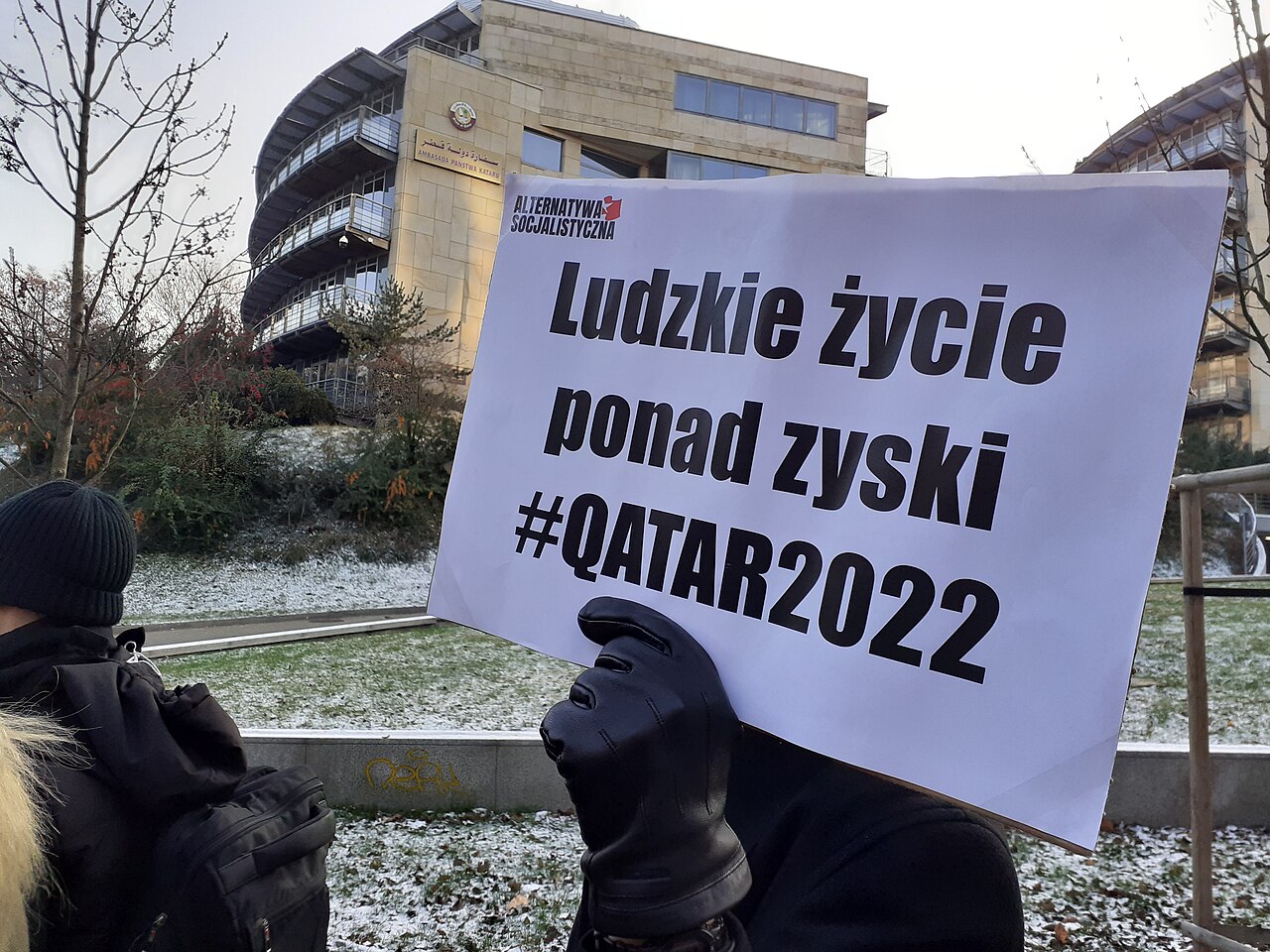
The World Cup sparked discussions regarding labor conditions, worker rights, and the environmental impact of building new infrastructure in a desert climate [1]. These conversations extended beyond sport to encompass broader questions about hosting major international events in diverse cultural contexts [1]. The tournament's legacy continues to be evaluated in terms of infrastructure utilization, economic impact, and social outcomes.
Argentina's Victory and Historical Significance
Argentina's victory marked their third FIFA World Cup title, joining Uruguay and Germany as the most successful nations in World Cup history [3]. The triumph came 36 years after their 1986 championship, with Lionel Messi finally securing the trophy that had eluded him in his fourth and final World Cup appearance [3].
Lionel Messi's Career Achievement
Lionel Messi's performance throughout the tournament, particularly in the final where he scored twice and was named man of the match, cemented his legacy as one of football's greatest players [3]. The victory completed Messi's collection of major international trophies, including the Copa América 2021 and the FIFA World Cup 2022 [3].
Final Match Heroics
Kylian Mbappé's hat-trick in the final, including a penalty and a bicycle kick, earned him the Golden Boot with 8 goals across the tournament [3]. The 3-3 draw after extra time and the subsequent penalty shootout victory for Argentina provided one of the most dramatic conclusions in World Cup final history [3].
Argentina's Path to Victory
Argentina's journey through the tournament included group stage matches, round of 16, quarter-final, and semi-final victories, culminating in the final triumph [3]. The team demonstrated resilience throughout, coming back from behind in several matches before their ultimate penalty shootout victory in the final [3].
Tournament Timeline and Key Dates
The 2022 FIFA World Cup took place in Qatar from 20 November to 18 December 2022, spanning exactly 29 days from opening match to final [1]. The tournament schedule was carefully planned to accommodate the winter timing, with the opening match between Qatar and Ecuador kicking off at Al Bayt Stadium on 20 November 2022 [1].
Group Stage Schedule
The group stage ran from 20 November to 2 December 2022, with each of the 32 teams playing three matches in a round-robin format within their eight groups [1]. The final group stage matches concluded on 2 December, with the best third-placed teams also advancing to the round of 32 [1].
Knockout Stage Progression
The round of 32 matches were played on 3 and 4 December 2022, followed by the quarter-finals on 9 and 10 December 2022 [1]. The semi-finals took place on 13 and 14 December 2022, setting up the much-anticipated final [1].
Final and Closing Ceremony
The championship match was held on 18 December 2022 at Lusail Stadium, with Argentina defeating France in the penalty shootout [3]. The tournament concluded with the closing ceremony, marking the end of the 22nd edition of the FIFA World Cup [1]. The date of 18 December also coincides with Qatar National Day [1].
Comparison with Previous and Future Tournaments
The 2022 FIFA World Cup was the 22nd edition of the tournament, first held in 1930, with the competition interrupted by World War II in 1942 and 1946 [1]. The tournament format of 32 teams has been consistent since 1998, with the 2026 edition set to expand to 48 teams [2].
Qatar 2022 vs Russia 2018
Compared to the 2018 Russia World Cup, the Qatar edition featured different climatic conditions, with matches played in winter rather than summer, and represented the first Middle Eastern hosting [1]. The 2018 tournament in Russia saw France defeat Croatia 4-2 in the final, while the 2022 final went to a penalty shootout after a 3-3 draw [1][3].
Qatar 2022 vs Future Editions
The success and challenges of the 2022 tournament will inform future World Cup host selections and tournament formats [1]. The expansion to 48 teams in 2026 will feature 48 nations competing across multiple host countries in the United States, Canada, and Mexico [2]. The lessons learned from Qatar 2022 regarding infrastructure, fan experience, and global engagement will shape the evolution of the world's most prestigious football tournament [1][2].
Historical Context
The 2022 tournament took place against the backdrop of evolving global football dynamics, including the rise of new footballing nations, changes in club competition structures, and the growing commercialization of the sport [1]. The quadrennial nature of the World Cup means each edition provides a unique snapshot of the sport's global state at that moment [1].