
Foundations and Core Process
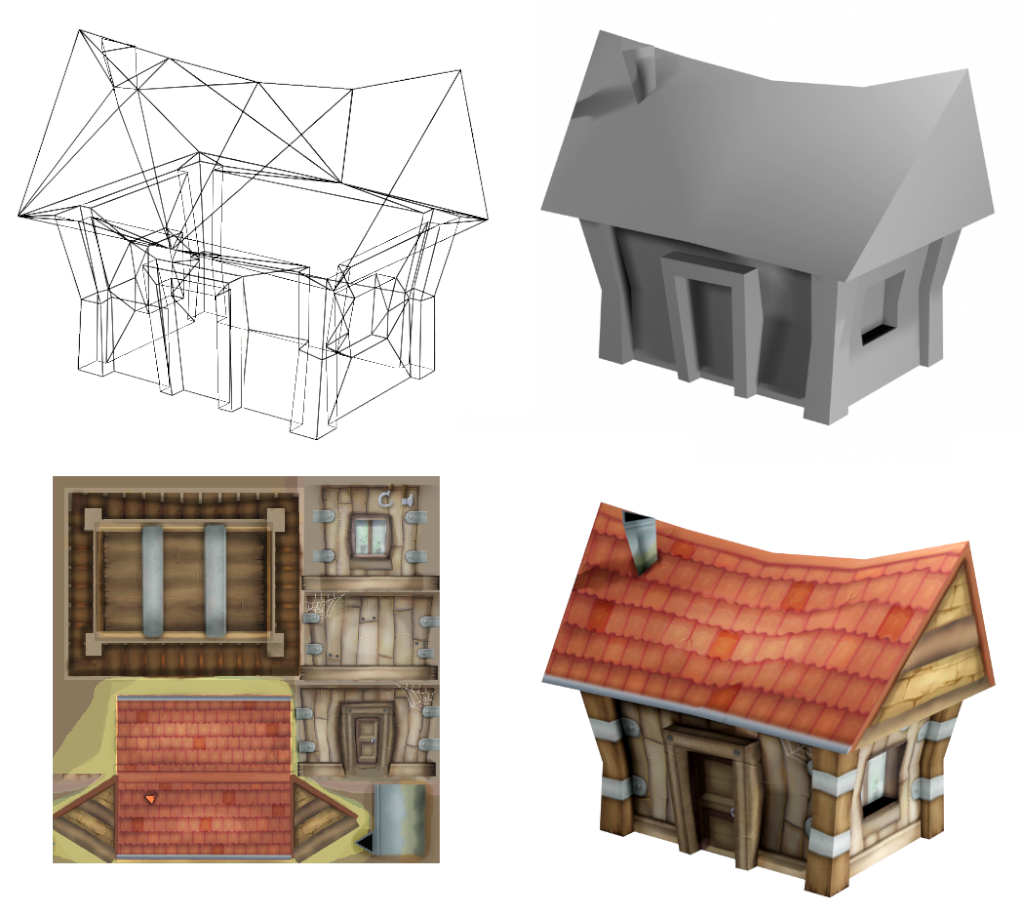
3D modeling is the process of developing a mathematical coordinate-based representation of a surface of an object in three dimensions via specialized software by manipulating edges, vertices, and polygons in a simulated 3D space [1]. This mathematical foundation allows artists to construct digital objects that can be manipulated, textured, and animated across entertainment pipelines. The process begins with defining points in 3D space connected by geometric entities such as triangles, lines, and curved surfaces [1]. Artists work with edges, vertices, and polygons to shape forms that exist as data rather than physical matter, enabling infinite iteration without material cost.
Manual and Algorithmic Creation Methods
3D models can be created manually, algorithmically through procedural modeling, or by scanning existing objects [1]. Manual modeling gives artists direct control over topology and form, while procedural generation uses scripts and algorithms to create complex structures systematically. Both approaches serve different production needs depending on project scope and artistic goals.
Texture Mapping and Surface Definition
Surfaces of 3D models may be further defined with texture mapping [1], which applies 2D images onto 3D geometry to provide color, detail, and surface characteristics without increasing polygon count. This technique allows artists to add realism, wear, and specific material properties to otherwise simple geometric forms, making them suitable for close-up rendering in films and games.
Software Ecosystem and Tools
Blender and Open Source Solutions
Blender is free and open source 3D creation software with comprehensive modeling tools, N-Gon support, edge slide, inset, grid and bridge fill, advanced sculpting tools, brushes, multi-resolution and dynamic subdivision, 3D painting, and Python scripting [2]. This comprehensive toolset has democratized professional 3D creation, allowing independent creators and small studios to access capabilities previously limited to expensive proprietary packages. The Python scripting interface enables automation, custom tool development, and integration with production pipelines.
Industry-Standard Applications
Beyond Blender, the industry employs a range of commercial software packages that specialize in different aspects of the modeling pipeline. These tools offer specialized features for character modeling, environment creation, hard-surface design, and procedural generation, each with strengths suited to particular entertainment applications. The choice of software often depends on studio workflow, pipeline integration, and specific project requirements.
Web-Based Viewing and Distribution Platforms
Sketchfab is a leading platform for 3D and AR on the web, offering a 3D viewer, market for buying and selling 3D models, and tools for augmented reality, virtual reality, and 3D configurators [3]. This platform has transformed how 3D models are shared, discovered, and experienced across the web, enabling artists to showcase work to global audiences without requiring viewers to install specialized software. The integrated AR and VR tools extend the reach of 3D content into immersive experiences accessible through web browsers and mobile devices.
Entertainment Applications and Use Cases
Video Games and Interactive Media
3D modeling is used extensively in video games where models represent characters, environments, props, and user interfaces [1]. The interactive nature of gaming requires optimized models that maintain visual fidelity while meeting real-time performance constraints. Game engines employ techniques like level-of-detail (LOD) systems, vertex shaders, and texture baking to ensure smooth rendering across diverse hardware configurations.
Visual Effects and Film Production
In visual effects and film, 3D modeling creates digital assets that integrate with live-action footage [1]. CGI characters, environments, and effects elements are built using modeling techniques and then rendered to match the lighting, color grading, and camera movement of the original plate. The seamless integration of modeled elements with real-world photography has become indistinguishable in modern blockbuster filmmaking.
Virtual Reality and Immersive Experiences
Virtual reality applications rely heavily on 3D modeling to create immersive environments that users can explore in six degrees of freedom [1]. The high performance requirements of VR demand models with optimized polygon counts and efficient texturing to maintain frame rates that prevent motion sickness. Interactive VR experiences often incorporate user-driven model manipulation and procedural generation to create dynamic, responsive virtual spaces.
Digital Fabrication and Physical Output
3D Printing from Digital Models
3D printing involves creating physical objects from digital 3D models [4], with applications including bioprinting, medical and dental uses, aerospace, education, metals, and materials. This technology bridges the gap between digital creation and physical production, allowing designers to prototype, manufacture, and distribute tangible objects directly from digital files. The additive manufacturing process builds objects layer by layer, enabling complex geometries that would be impossible or prohibitively expensive to produce through traditional methods.
3D Scanning and Reverse Engineering
3D scanning is used to create digital models from physical objects, with processes including photogrammetry and handheld or industrial scanners [5]. This reverse engineering approach captures real-world forms and converts them into editable digital data. Scanning preserves cultural heritage artifacts, creates accurate prototypes for modification, and provides source data for procedural modeling workflows that begin with real-world references.
Software Workflow for Scan Conversion
3D scanning software and photogrammetry software are used to convert raw scans into usable 3D models [5]. The conversion process involves aligning multiple scans, cleaning noise, filling holes, and optimizing topology for downstream applications. Modern photogrammetry solutions using multiple photographs can reconstruct detailed 3D geometry from 2D image sequences, making high-quality scanning accessible without specialized hardware.
Historical Development and Industry Adoption
Evolution from Wireframe to Solid Modeling
The history of 3D modeling traces the progression from simple wireframe representations to solid modeling with volume and surface continuity [1]. Early computer-aided design systems established the mathematical foundations, while later developments introduced NURBS (Non-Uniform Rational B-Splines) for smooth surface representation. This evolution enabled the creation of organic forms and precise mechanical components within the same modeling framework, expanding the technology's applicability across entertainment and engineering disciplines.
Mainstream Adoption in Entertainment
3D modeling achieved mainstream adoption in entertainment during the 1990s as computing power increased and software became more accessible [1]. The transition from rasterized 2D sprites to fully realized 3D environments transformed video game aesthetics, while film production embraced CGI for characters and effects previously impossible to capture practically. This period marked the technology's transition from specialized research tool to standard production element across media industries.
Open Source Movement and Democratization
The availability of free and open source 3D creation software like Blender has significantly lowered barriers to entry for aspiring artists and independent creators [2]. Community-driven development has fostered rapid feature implementation, bug fixing, and the creation of pipelines that rival commercial alternatives. This democratization has enabled diverse voices and perspectives to enter the 3D creation space, enriching the visual language of entertainment media.
Technical Workflows and Production Pipelines
Modeling to Rendering Pipeline
The standard pipeline begins with 3D modeling, where artists construct the geometry, followed by texturing, rigging, animation, and finally rendering [1]. Each stage passes data to the next, with models being optimized at each step for the target platform's capabilities. Rendering converts the 3D scene into 2D images through calculation of lighting, shadows, and material interactions, producing the final visual output viewed by audiences.
Procedural and Parametric Modeling
Procedural modeling generates geometry through algorithms and rules rather than manual vertex manipulation [1]. This approach enables the creation of complex, repetitive, or organic structures like cities, forests, or geological formations with controlled variation. Parametric modeling relates geometry to parameters that can be adjusted to change the entire form, useful for design iterations and version control in production environments.
Data Management and Version Control
3D production environments require robust data management systems to track model iterations, asset versions, and pipeline dependencies [2]. The Python scripting capabilities in Blender and other packages enable automation of repetitive tasks, batch processing, and custom pipeline integration. Effective version control ensures that team members work with the correct asset states and can revert or compare changes as needed.
Cultural Impact and Future Directions
Visual Language of Modern Entertainment
3D modeling has established a new visual language for contemporary entertainment, influencing how audiences perceive and interact with media [1]. The technology's capacity to create impossible geometries, realistic characters, and immersive environments has expanded storytelling possibilities across film, television, gaming, and interactive media. This visual vocabulary continues to evolve as artists and developers push the boundaries of what digital representations can communicate and experience.
Convergence with Emerging Technologies
The field of 3D modeling continues to converge with emerging technologies including real-time rendering, artificial intelligence, and spatial computing [1][2][3]. AI-assisted tools are beginning to automate routine tasks like retopology, UV unwrapping, and texture generation, while real-time engines enable immediate visualization of changes. Spatial computing platforms extend 3D content into physical spaces through AR and VR, creating hybrid experiences that blend digital and material realities.
Sustainability and Accessibility Considerations
As 3D modeling becomes ubiquitous in entertainment, considerations of computational efficiency, file size, and accessibility grow in importance [4][5]. Optimized models reduce rendering energy consumption, while accessible software lowers barriers to participation. The 3D printing applications demonstrate how digital models can serve sustainable manufacturing practices on demand, reducing waste compared to traditional subtractive production methods.