
Overview and Historical Roots
Advent is a four-week season dedicated to reflective preparation for the arrival of Jesus Christ's Nativity at Christmas time and Christ's expected return in the Second Coming [2]. The season's origins trace back to early Christian practices of preparation before Christmas, with the four-week structure becoming standardized by the Middle Ages [2].
Liturgical Development
The liturgical color for Advent is purple, symbolizing preparation and penance [3,4]. The Third Sunday of Advent is Gaudete Sunday, when rose-colored vestments may be worn instead of purple, representing the Sunday of rejoicing because the faithful have reached the midpoint of Advent [3,4]. This transition from penitential purple to rejoicing rose reflects the season's evolving spiritual emphasis.
Scriptural Foundations
Each week of Advent focuses on a different theme: hope, peace, joy, and love [2]. These themes guide the faithful through a progressive journey of spiritual preparation, with each week building upon the previous one toward the celebration of Christmas.
The Four Weeks of Advent
First Week: Hope
The First Sunday of Advent in 2026 falls on November 29th [2,4]. The first week traditionally focuses on hope, with the first candle of the Advent wreath lit to symbolize expectation and hope [4]. This initial lighting sets the tone for the entire season.
Second Week: Peace
The Second Sunday of Advent in 2026 falls on December 6th [2,4]. The second week focuses on peace, with the second purple candle lit alongside the first [4]. The progressive lighting of candles represents the growing expectation and hope as the season advances.
Third Week: Joy
The Third Sunday of Advent (Gaudete Sunday) in 2026 falls on December 13th [2,4]. Rose-colored vestments may be worn instead of purple, and the rose candle is lit representing the Sunday of rejoicing [4]. This midpoint celebration acknowledges that the faithful have reached the middle of their Advent journey.
Fourth Week: Love
The Fourth Sunday of Advent in 2026 falls on December 20th [2,4]. The fourth week focuses on love, with the final purple candle lit [4]. The progressive candle lighting throughout the four weeks symbolizes the growing expectation and hope culminating in Christmas Day.
Advent Wreath and Candle Traditions
Wreath Design and Symbolism
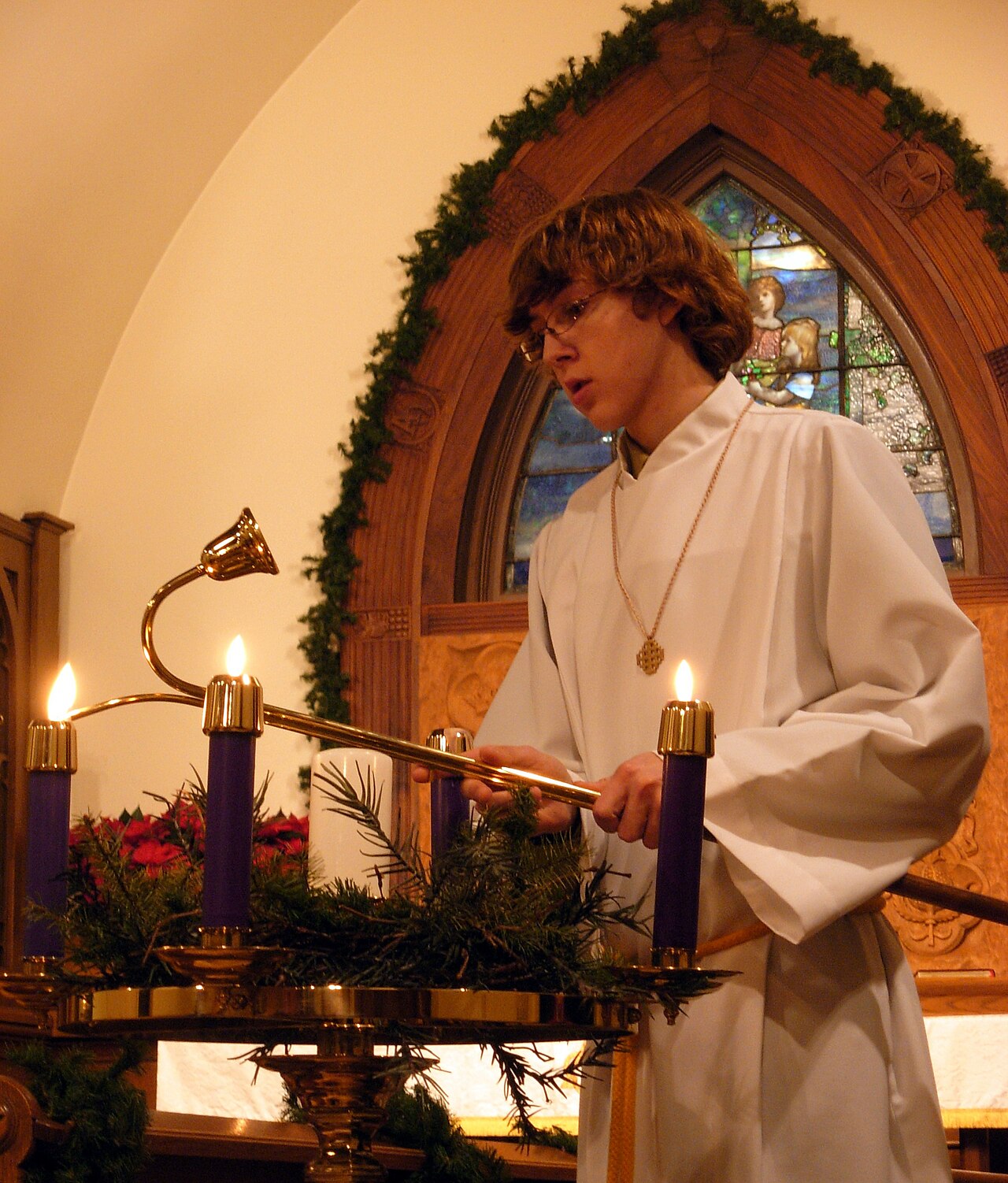
An Advent wreath is traditionally a circle of evergreen branches with four candles representing the four weeks of Advent [4]. The circular shape symbolizes God's eternal nature and the evergreen branches represent hope and new life even in winter [4]. The wreath serves as a visual countdown and spiritual focus for the season.
Candle Colors and Lighting Sequence
Ideally three candles are purple and one is rose, though white candles can also be used [4]. The candles are lit progressively, symbolizing expectation and hope [4]. The rose candle is lit on the third Sunday (Gaudete Sunday), representing the Sunday of rejoicing because the faithful have reached the midpoint of Advent [4]. The final days of Advent, from December 17 to December 24, focus on preparing for the Nativity of our Lord at Christmas [3,4].
Symbolic Meaning of Candle Lighting
The progressive lighting of the Advent candles represents the growing expectation and hope as Christmas approaches [4]. Each week's candle lighting builds upon the previous weeks, creating a visual and spiritual progression toward the celebration of Christ's birth. The rose candle's placement on Gaudete Sunday breaks the pattern of purple, signaling the season's midpoint.
Global Customs and Regional Practices
European Traditions
In some European countries, such as Germany, Advent customs include lighting candles and hanging special Advent wreaths [5]. These traditions have been practiced for centuries and vary by region, but the core elements of candle lighting and wreath-making remain consistent across many European cultures.
Advent Calendars
Advent calendars are a popular way to count down the days to Christmas in the Advent season [5]. Originally simple religious images with doors to open, modern Advent calendars now come in countless varieties containing chocolates, toys, or daily devotional reflections, making the countdown accessible to people of various backgrounds.
Public Holiday Status
The first Sunday of Advent is not a nationwide public holiday in countries such as Australia, Canada, the United Kingdom, and the United States [5]. Despite not being a public holiday, Advent is widely observed by Christians through church services, personal devotions, and family traditions that mark the season's beginning.
Eastern Christian Observances
Nativity Fast Differences
In many eastern Christian churches, the church year begins in September 1 so Advent begins at a different time to when it starts in the western churches [5]. This difference reflects the diverse liturgical calendars that have developed within Christianity over centuries, with Eastern and Western traditions marking seasonal preparations differently.
Nativity Fast Duration and Practices
The Eastern equivalent of Advent is called the Nativity Fast, which runs for 40 days [5]. This longer period of preparation differs from the Western four-week Advent, offering a more extended time of reflection, fasting, and spiritual preparation before Christmas celebrations begin.
Liturgical Variations
The differing start times and durations between Western Advent and Eastern Nativity Fast highlight the rich diversity within Christian liturgical practice [5]. While both seasons prepare believers for the celebration of Christ's birth, their structures, lengths, and specific observances reflect the unique theological and cultural developments of their respective traditions.
Key Devotional Practices
The O Antiphons
The 'O' Antiphons are sung during the period from December 17 to December 24 [3]. These ancient antiphons, each beginning with the interjection 'O', address Christ with various titles and themes, creating a focused devotional practice during the final days before Christmas. Their use during this specific period helps the faithful prepare spiritually for the Nativity.
Altar and Worship Adjustments
In some churches, rose-colored vestments may replace the purple and flowers may be placed on the altar on the third Sunday [5]. These visual changes in the worship space mark Gaudete Sunday as a distinct moment within the Advent season, signaling the shift from preparation to anticipation of Christmas.
Personal and Family Devotions
Families and individuals observe Advent through various personal devotional practices [5]. These may include daily Scripture readings, prayer services, lighting Advent candles at home, and using Advent calendars to maintain a spiritual focus throughout the season. Such practices help integrate the season's themes into daily life.
Theological Significance
Dual Focus of Preparation
Advent serves a dual purpose of preparing for both the celebration of Christ's Nativity at Christmas and His expected return in the Second Coming [2]. This dual focus reflects the season's origins in preparing believers for multiple aspects of Christ's relationship with humanity, both historical and eschatological.
Spiritual Journey Structure
The four-week structure of Advent creates a intentional spiritual journey [2]. Each week's theme builds upon the previous one, guiding participants through a progressive deepening of hope, peace, joy, and love. This structured approach helps believers maintain focus amid the commercial distractions often associated with the Christmas season.
Symbolic Color Progression
The progression from purple to rose and potentially white candles [4] mirrors the spiritual movement of the season. Purple's penitential character gives way to rose's note of rejoicing at the midpoint, and many traditions conclude with white symbolizing the purity and celebration of Christmas Day itself. This color symbolism provides visual cues for the season's spiritual progression.
Historical Evolution
Early Christian Practices
The four-week structure of Advent became standardized by the Middle Ages [2]. Before this standardization, Advent practices varied significantly across different Christian communities and regions. This standardization helped unify observances while allowing for local customs to develop within a common framework.
Reformation and Post-Reformation Changes
During and after the Reformation, Advent observances continued across various Christian denominations [2,3,4,5]. While some Protestant traditions modified certain Catholic practices, the core elements of four-week preparation, candle lighting, and thematic focus persisted across the broader Christian landscape.
Modern Commercial Integration
In modern times, Advent has integrated with various commercial practices [5]. Advent calendars, seasonal markets, and holiday shopping often begin during or immediately after Advent, creating a complex relationship between the season's spiritual purpose and contemporary commercial culture. This integration reflects how religious traditions adapt to changing societal contexts.
Comparative Analysis
Western vs. Eastern Traditions
The contrast between Western Advent's four-week structure and Eastern Nativity Fast's 40-day duration [5] highlights significant differences in liturgical calendar development. Both seasons prepare Christians for Christmas, but their lengths, start dates, and specific practices reflect the independent development of Eastern and Western Christian traditions over centuries.
Liturgical Color Symbolism
The use of purple for preparation and penance, with rose for the midpoint Gaudete Sunday [3,4], creates a distinctive color palette that sets Advent apart from other liturgical seasons [3,4]. This color scheme, combined with the progressive candle lighting, provides a visual language for understanding the season's spiritual progression and theological emphasis.
Global Consistency and Local Variation
While core Advent elements like the four-week structure, candle lighting, and thematic focus remain consistent globally [2,3,4,5], regional customs such as German wreath traditions [5] or Advent calendar variations [5] demonstrate how the season adapts to local cultures. This balance between universal practice and local expression allows Advent to remain relevant across diverse Christian communities worldwide.