
Overview
The continent's surrounding Southern Ocean supports diverse marine life including whales, seals, and penguins [1]. The Thwaites Glacier in West Antarctica remains a subject of intense scientific study due to its potential impact on sea level rise [3]. The lowest natural temperature ever recorded on Earth was -89.2°C (-128.6°F) at Vostok Station [1]. In January 2026, NASA's PUEO scientific balloon began its ascent after launch on 20 December 2025, and a new Australian ice core drill collected its first ice core at Dome C North for the MYIC project [3]. The Dutch-flagged vessel Plantijngracht departed for McMurdo Station with U.S. Military Sealift Command cargo, while the Bulgarian research vessel visited the Spanish Gabriel de Castilla Base on Deception Island [3]. Participants of the 34th Bulgarian Antarctic expedition celebrated Epiphany at St. Kliment Ohridski Base, and astrobiologist Dale Andersen and his team flew to Novolazarevskaya Station for research coordinated by the SETI Institute [3]. A new group of logistics personnel also arrived at an Antarctic research station that month [3].
Geography and Ice Sheet
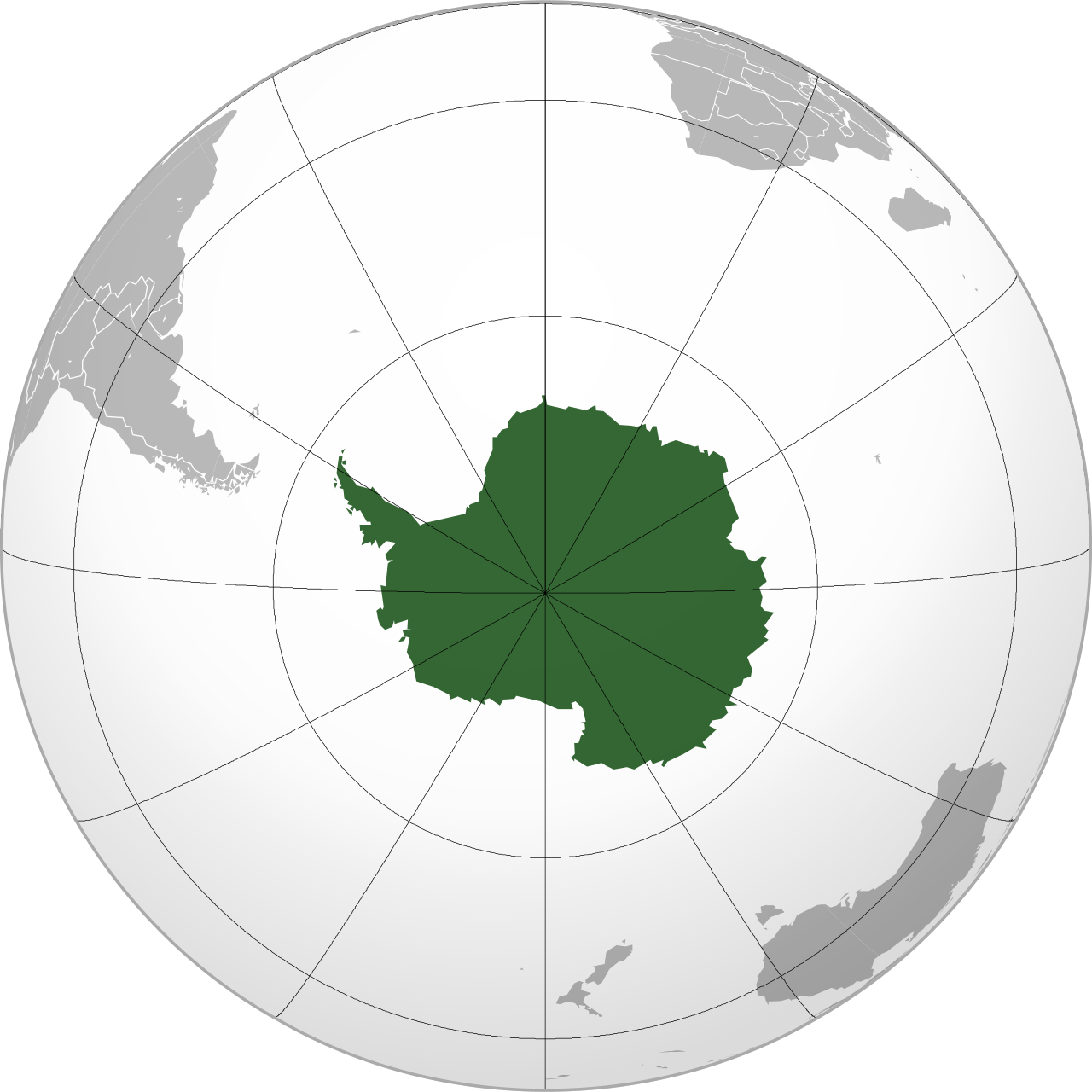
Antarctica's ice sheet is the largest single mass of ice on Earth, containing approximately 60% of the world's fresh water [1]. East Antarctica is largely composed of a high ice-covered plateau, while West Antarctica consists of an archipelago of ice-covered mountainous islands [2]. The Thwaites Glacier, often called the 'Doomsday Glacier,' is a subject of intense scientific study due to its potential impact on global sea level rise [3]. Its grounding line has been retreating rapidly, and its collapse could significantly raise ocean levels over centuries [3]. The continent's total area of approximately 5.5 million square miles (14.2 million square km) makes it the fifth-largest continent [2]. Seasonal sea ice expands the effective size of the continent during winter months, but the underlying landmass remains constant [1].
Ice Core Records
Climate and Environment
Antarctica's climate is the coldest, driest, and windiest of all continents [1]. The lowest natural temperature ever recorded on Earth was -89.2°C (-128.6°F) at Vostok Station [1]. The continent experiences extreme seasonal variation in daylight, with months of continuous darkness in winter and midnight sun in summer [1]. Despite its icy appearance, Antarctica is essentially a desert, with very low precipitation [1]. The surrounding Southern Ocean moderates some temperature extremes but also supports a unique marine ecosystem [1]. Recent warming trends on the Antarctic Peninsula have accelerated glacier retreat, particularly in West Antarctica [1]. The continent's albedo, or reflectivity, plays a crucial role in regulating global climate by reflecting sunlight back into space [1].
Ocean Ecosystem
Scientific Research and Stations
Antarctica hosts scientific research stations operated by many countries [1]. The Antarctic Treaty System governs international relations with respect to the continent, ensuring peaceful use and scientific cooperation [1]. Research stations span the continent, from coastal stations to inland bases like Vostok and Dome C [1]. In January 2026, astrobiologist Dale Andersen and his team flew to Novolazarevskaya Station for research coordinated by the SETI Institute, searching for signs of life in extreme environments [3]. The 34th Bulgarian Antarctic expedition celebrated Epiphany at St. Kliment Ohridski Base, demonstrating the international community's enduring presence [3]. New logistics personnel arrived at research stations that month to support ongoing operations [3]. The USCGC Polar Star's 50th anniversary of Operation Deep Freeze in January 2026 underscores the logistical challenges of sustaining a presence in Antarctica [3].
International Cooperation
Recent 2026 Activities
January 2026 was particularly active in Antarctic operations. The USCGC Polar Star celebrated 50 years of service amid Operation Deep Freeze, marking half a century of U.S. icebreaking support for the continent [3]. Glaciologist Heidi Sevestre and explorer Matthieu Tordeur reached the South Pole on a snowkiting expedition, achieving a first human-powered crossing using kite power [3]. The South Korean icebreaker RV Araon reached Thwaites Glacier with nearly 40 scientists aboard for intensive study [3]. NASA's PUEO scientific balloon began its ascent on 20 December 2025, conducting atmospheric research from the upper stratosphere [3]. A new Australian ice core drill collected its first ice core at Dome C North for the MYIC project [3]. The Bulgarian research vessel visited the Spanish Gabriel de Castilla Base on Deception Island [3]. Participants of the 34th Bulgarian Antarctic expedition celebrated Epiphany at St. Kliment Ohridski Base [3]. Astrobiologist Dale Andersen and his team flew to Novolazarevskaya Station for research coordinated by the SETI Institute [3]. These events collectively illustrate the breadth of international activity on the continent [3].
Wildlife and Marine Life
Although Antarctica has no native land mammals, its surrounding Southern Ocean supports diverse marine life including whales, seals, and penguins [1]. Krill, small shrimp-like crustaceans, forms the base of the Antarctic food web, supporting larger predators [1]. The Antarctic Treaty System includes measures to protect this unique ecosystem from overexploitation [1]. Commercial fishing is regulated to ensure sustainable populations of toothfish and other species [1]. Bird species such as the Antarctic petrel and snow petrel are adapted to the harsh conditions [1]. The 2026 Bulgarian research vessel visit to Deception Island highlights ongoing monitoring of wildlife populations in the Antarctic Peninsula region [3]. Climate change impacts on krill distribution could have cascading effects throughout the food web [1].
Naming and Political Status
The name 'Antarctica' derives from the Greek word meaning 'opposite to the Arctic' [1]. The continent has no permanent residents and no native population [1]. The Antarctic Treaty System governs international relations, effectively making Antarctica a scientific preserve and demilitarized zone [1]. No single nation owns the continent, though many countries maintain research stations [1]. In January 2026, the South Korean NGII announced 16 Korean names for geographic features around Jang Bogo Station, reflecting a practice of naming features after Korean explorers and contributors to Antarctic science [3]. This follows similar naming practices by other national programs [3]. The continent's political status is unique in international law, with the treaty system ensuring that scientific cooperation supersedes territorial claims [1].