
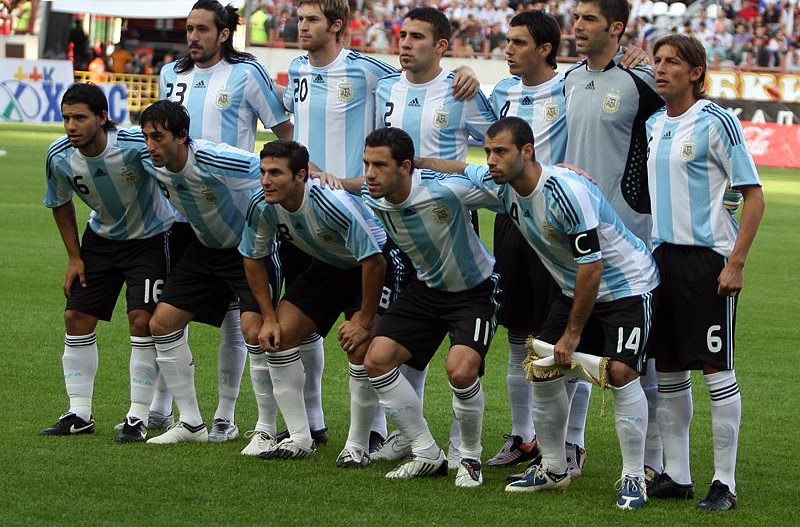
Overview and Team Identity
The Argentina national football team is the men's association football representative of the country, universally recognized by the nicknames "La Albiceleste" and "The White and Sky Blue" [1]. These monikers derive directly from the team's traditional striped jersey, which mirrors the national flag. The team's identity is not merely visual but deeply rooted in a culture of resilience and high-performance standards that have defined South American football for decades. The current era is characterized by a shift from individual stardom to collective institutional strength, marked by the departure of its most iconic figure and the stabilization of its technical leadership.
Visual Heritage and National Symbolism
The "White and Sky Blue" designation serves as a constant anchor for the team's brand identity, distinguishing it from other global powers like Brazil or Germany [1]. This visual consistency allows for immediate recognition in international markets, supporting commercial partnerships and fan engagement. The nickname "La Albiceleste" is particularly prevalent in Spanish-speaking media, reinforcing the cultural bond between the team and its domestic supporters. The team's kit history is a testament to this enduring identity, with the blue and white stripes remaining unchanged despite numerous design iterations over the years.
Institutional Context and Governance
Operating under the Argentine Football Association, the team functions as a key pillar of the nation's sporting diplomacy. The recent transition away from relying on a single superstar highlights a broader trend in national team management, where long-term structural planning is prioritized over short-term celebrity appeal. This institutional approach is evident in the current coaching appointments and roster selections, which aim to ensure continuity beyond the careers of current stars. The team's ability to maintain high performance levels while undergoing such a significant personnel change is a testament to the depth of its talent pool and the effectiveness of its scouting networks.
The Messi Era and Its Commercial Aftermath
The departure of Lionel Messi from the national team setup has triggered complex commercial and legal dynamics that extend beyond the pitch. In a notable development, Messi requested his legal counsel to draft a cease and desist letter days before Argentina's 7-0 home friendly win over Costa Rica on November 17 [2]. This legal action underscores the intense scrutiny and commercial value surrounding the team's most famous alumnus, even as he steps away from active international duty. The timing of this legal move, coinciding with a dominant on-field performance, highlights the parallel tracks of sporting success and commercial protection that define the modern national team landscape.
Legal Maneuvers and Brand Protection
The cease and desist letter issued by Messi's counsel was a strategic move to protect his personal brand and image rights during a period of heightened public attention [2]. This action reflects the broader trend of elite athletes asserting control over their commercial interests, particularly when transitioning from active play to ambassadorial roles. The legal framework surrounding player image rights in Argentina is complex, involving agreements between players, the national federation, and commercial partners. Messi's decision to engage legal counsel suggests a desire to clarify the boundaries of his involvement and the licensing of his likeness, ensuring that his legacy remains intact and commercially valuable.
Impact on Team Morale and Public Perception
Despite the legal and commercial turbulence surrounding Messi's exit, the team's performance on the field remained unaffected, as evidenced by the 7-0 victory over Costa Rica [2]. This result served as a powerful rebuttal to narratives suggesting that the team was overly dependent on its star player. The win demonstrated that the squad possessed the depth and tactical discipline to succeed without Messi, a crucial milestone for the team's future. The public reaction to this performance was overwhelmingly positive, with fans celebrating the team's collective effort and the emergence of new leaders. This shift in public perception marks a significant turning point in the team's identity, moving from a Messi-centric narrative to one of collective achievement.
Coaching Stability and Scaloni's Mandate
Lionel Scaloni has solidified his position as the architect of Argentina's current footballing era by stating he will stay on as coach until the 2030 World Cup [3]. This long-term commitment is a rare sight in the volatile world of international football, where coaching changes are often frequent and reactive. Scaloni's mandate extends through the next major tournament cycle, providing the stability necessary for implementing a coherent tactical philosophy and developing a new generation of players. This decision by the Argentine Football Association signals a confidence in Scaloni's project, recognizing that sustainable success requires time and consistency rather than short-term fixes.
Strategic Vision for the 2030 World Cup
Scaloni's extension through 2030 aligns with a broader strategy of building a team capable of competing at the highest level across multiple tournaments [3]. The 2030 World Cup will be a milestone event, celebrating the centenary of the tournament, and Argentina aims to be a contender. Scaloni's approach emphasizes adaptability and tactical flexibility, allowing the team to adjust to different opponents and conditions. This strategic vision is supported by the current squad's age structure, which balances experienced leaders with young talents. The coach's long-term mandate allows for a more patient development process, focusing on player growth and tactical refinement over immediate results.
Leadership Style and Player Development
Scaloni's leadership style is characterized by a strong emphasis on team unity and individual accountability [3]. He has been credited with transforming Argentina into a cohesive unit that can perform under pressure, as seen in their recent successes. His approach to player development involves close monitoring of players' performances in club football, ensuring that they are in peak form when called up for international duty. This methodical approach has resulted in a squad that is both tactically disciplined and emotionally resilient. Scaloni's ability to manage the egos of star players while fostering a collective spirit is a key factor in the team's sustained success.
Roster Dynamics and Player Selection
The Argentina roster for November 2026 friendlies marked a historic moment as the first squad without Lionel Messi, featuring matches against Uruguay and Costa Rica [4]. This selection list highlights the team's transition phase, where the focus has shifted to integrating new players and establishing a new identity without the presence of its most iconic figure. The decision to exclude Messi from the squad, despite his continued influence, reflects a deliberate strategy to accelerate the integration of younger players and reduce dependency on a single individual. The upcoming friendlies serve as a crucial testing ground for this new lineup, providing opportunities to assess the team's depth and tactical cohesion.
Integration of New Talents
The absence of Messi in the 2026 friendlies roster creates an opening for emerging talents to step into leadership roles [4]. Players who were previously overshadowed by Messi's presence now have the opportunity to showcase their abilities and establish themselves as key figures in the team. This shift is essential for the long-term health of the squad, ensuring that the team is not reliant on a single player for creative output and goal-scoring. The coaching staff is likely to use these friendlies to evaluate the readiness of these new players for high-stakes matches, providing them with the experience and confidence needed to perform at the international level.
Tactical Adjustments and Formation Changes
Without Messi, the team may need to adjust its tactical formation to suit the strengths of the available players [4]. Scaloni is known for his tactical flexibility, and the absence of a player of Messi's caliber may require a shift in the team's attacking approach. The team might rely more on collective movement and positional play rather than individual brilliance. This tactical evolution is a natural part of the transition process, allowing the team to develop a style that is sustainable and adaptable. The friendlies against Uruguay and Costa Rica will provide valuable insights into how the team can effectively execute these new tactical plans.
Key Player Assessments and Squad Depth
Coach Scaloni has provided detailed insights into the status of key players, emphasizing the importance of maintaining high performance levels for selection. Regarding Rodrigo De Paul, Scaloni stated that the player gave the team a lot and the door is not closed for his return if he is at 100% and competes [3]. This comment highlights the club's expectation that players must meet certain standards to be considered for the national team. De Paul's situation reflects the broader challenge of balancing player loyalty with performance requirements, a dynamic that is common in high-pressure international football environments.
Rodrigo De Paul's Status and Return Criteria
Scaloni's remarks on Rodrigo De Paul indicate a nuanced approach to player selection, where past contributions are acknowledged but current form is paramount [3]. The condition that De Paul must be at 100% and competing suggests that the coaching staff is looking for players who are physically and mentally ready to perform at the highest level. This stance is likely to motivate De Paul to work hard in his club career to regain his place in the squad. The team's depth in midfield is crucial, and De Paul's return would provide additional options for Scaloni in terms of tactical flexibility and defensive solidity.
Leandro Paredes and the Central Midfield Role
Scaloni described Leandro Paredes as the best central midfielder for the national team but noted that he must maintain the highest level [3]. This assessment underscores the high standards expected of players in key positions, where consistency and quality are essential. Paredes's status as the top choice for the central midfield role highlights his importance to the team's tactical structure. However, the condition that he must maintain the highest level indicates that his position is not guaranteed, and he must continue to perform well in club football to retain his place. This competitive environment within the squad ensures that all players are motivated to perform at their best.
Sanctions and Administrative Challenges
The selection of players for the national team is not solely based on sporting merit but is also influenced by administrative and disciplinary factors. Scaloni mentioned that if Leandro Paredes is well, he will be in the list regardless of sanction status [3]. This statement reveals the complex interplay between sporting decisions and administrative rules, where the coaching staff may prioritize the team's needs over disciplinary sanctions. The ability to select a player despite sanction status suggests that the Argentine Football Association has some flexibility in how it handles disciplinary cases, allowing for pragmatic decisions that benefit the team.
Navigating Disciplinary Rules
The reference to Paredes's sanction status highlights the challenges faced by national team managers in balancing disciplinary rules with sporting requirements [3]. In international football, players can be sanctioned for various reasons, including misconduct on or off the pitch. The ability to select a player despite such sanctions indicates that the federation has mechanisms in place to manage these situations in a way that minimizes the impact on the team's performance. This approach is likely to be controversial, as it may be seen as undermining the integrity of disciplinary processes, but it reflects the pragmatic reality of managing a high-performance team.
Impact on Team Cohesion and Morale
The decision to select a player despite sanction status can have significant implications for team cohesion and morale [3]. Other players may question the fairness of such decisions, potentially leading to internal tensions. However, if the selected player performs well, it can reinforce the team's culture of meritocracy and collective success. The coaching staff must carefully manage these dynamics, ensuring that all players feel valued and motivated to contribute to the team's goals. This balance between individual accountability and collective success is a key aspect of effective team management.
Recent Performance and Competitive Context
Argentina's recent performance has been marked by a combination of high-scoring victories and strategic adjustments to accommodate roster changes. The 7-0 home friendly win over Costa Rica on November 17 served as a demonstration of the team's attacking prowess and depth [2]. This result not only provided a morale boost for the team but also sent a strong message to future opponents about Argentina's competitive strength. The dominance displayed in this match highlights the team's ability to control games and create multiple scoring opportunities, a key attribute in high-stakes international competitions.
Analysis of the Costa Rica Victory
The 7-0 victory over Costa Rica was a testament to the team's tactical discipline and individual quality [2]. The match featured a balanced attack, with players from different positions contributing to the goal tally. This distribution of scoring duties indicates a well-coordinated team that can exploit weaknesses in the opposition's defense effectively. The home advantage also played a role, with the passionate support of the Argentine fans providing an extra boost to the team's performance. The result solidified the team's position as one of the top contenders in international football, setting the stage for upcoming competitive matches.
Preparation for Upcoming Tournaments
The recent friendly matches, including the win over Costa Rica, are part of a broader preparation strategy for upcoming tournaments [2]. These matches allow the coaching staff to test different tactical setups and player combinations, identifying areas for improvement before the start of formal competitions. The team's ability to perform consistently in friendlies is a positive indicator of its readiness for high-pressure matches. The focus on preparation and tactical refinement is essential for maintaining the team's competitive edge in the long run, ensuring that they are well-equipped to face the challenges of the World Cup and other major tournaments.
Commercial Landscape and Brand Management
The commercial landscape surrounding the Argentina national football team is complex, involving multiple stakeholders and high-value partnerships. The cease and desist letter issued by Lionel Messi's legal counsel highlights the importance of brand management and image rights in the modern football industry [2]. As the team transitions away from its most famous player, it must navigate the commercial implications of this change, ensuring that its brand remains strong and appealing to sponsors and fans. The team's ability to maintain its commercial value while undergoing significant roster changes is a key challenge for the Argentine Football Association.
Sponsorship and Marketing Strategies
The team's sponsorship deals are closely tied to its performance and the popularity of its players [2]. The departure of Messi, while a significant loss in terms of individual brand power, also presents an opportunity for the team to highlight its collective strength and the emergence of new stars. The Argentine Football Association is likely to adjust its marketing strategies to reflect this shift, focusing on the team's overall success and the contributions of its current squad. This approach can help to maintain the team's commercial appeal and attract new sponsorship opportunities, ensuring that the team remains a valuable asset in the global football market.
Fan Engagement and Digital Presence
The team's digital presence and fan engagement strategies are crucial for maintaining its brand in the digital age [2]. The transition from the Messi era to a new era requires a shift in narrative, focusing on the team's collective achievements and the stories of its current players. The Argentine Football Association is likely to leverage social media and other digital platforms to engage with fans, sharing behind-the-scenes content and highlighting the team's journey. This digital engagement can help to build a stronger connection between the team and its fans, ensuring that the team's brand remains relevant and appealing in a competitive media landscape.
Future Outlook and Long-Term Strategy
The future of the Argentina national football team is shaped by a combination of strategic planning, player development, and commercial management. Coach Scaloni's commitment to staying until the 2030 World Cup provides a stable foundation for the team's long-term growth [3]. The team's ability to adapt to the absence of Lionel Messi and integrate new talents is a key factor in its future success. The upcoming years will be crucial for the team to establish a new identity and maintain its position as a global football powerhouse.
Talent Development and Youth Integration
The integration of young players into the senior squad is a priority for the team's long-term success [4]. The absence of Messi in the 2026 friendlies roster highlights the importance of developing new talent to fill the void left by the team's most iconic player. The coaching staff is likely to focus on providing these young players with the experience and confidence needed to perform at the international level. This development process is essential for ensuring that the team has a deep and versatile squad capable of competing in major tournaments.
Tactical Evolution and Adaptability
The team's tactical approach is expected to evolve as it adapts to the changes in its roster and the competitive landscape [3]. Scaloni's tactical flexibility will be key to the team's ability to adjust to different opponents and conditions. The team may need to refine its defensive structure and improve its transition play to maintain its high level of performance. This tactical evolution is a natural part of the team's development, ensuring that it remains competitive and adaptable in the face of changing circumstances.