
Origins and Early Construction
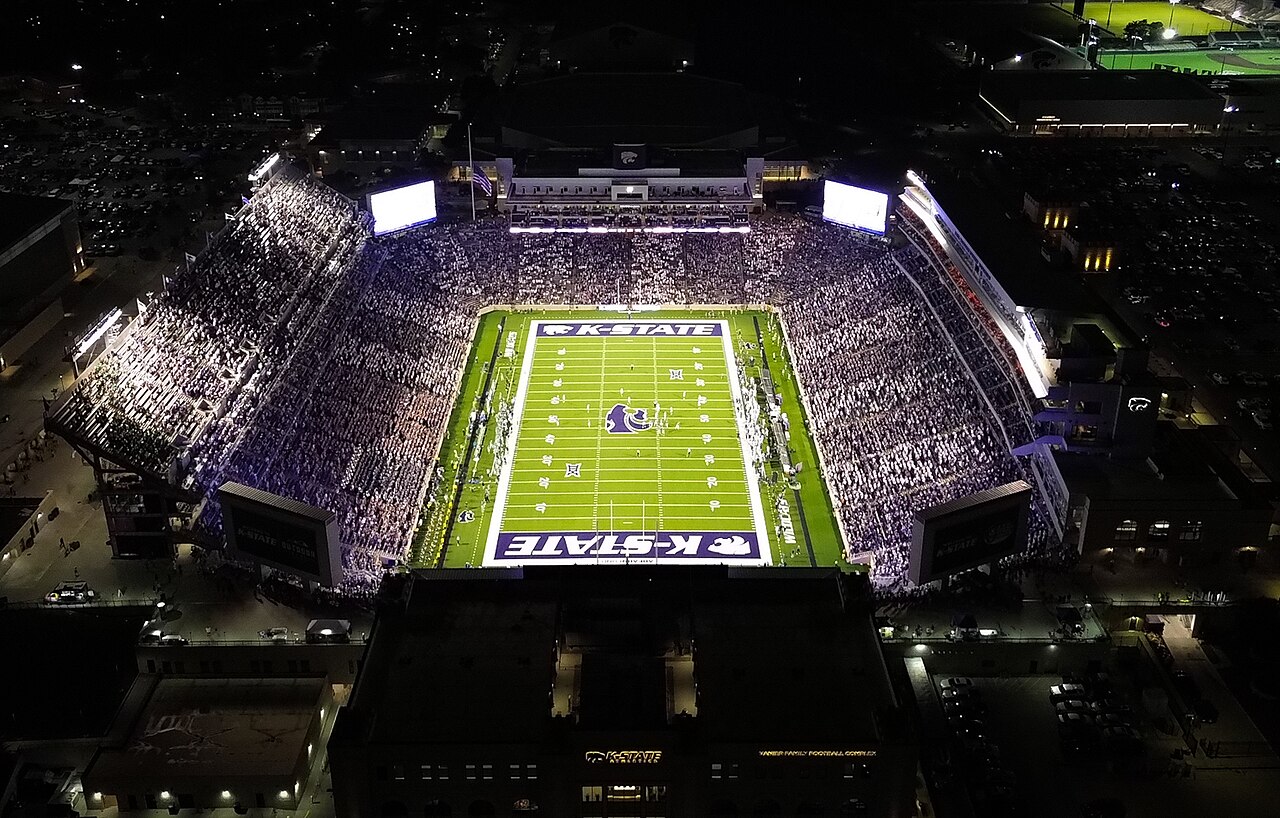
Bill Snyder Family Stadium is located in Manhattan, Kansas, and serves as the home field of the Kansas State Wildcats of the Big 12 Conference [1,3]. The stadium was built to replace the outdated Memorial Stadium, opening in 1968 after initial construction cost $1.6 million funded by student fees, athletic ticket sales and donations [3]. This relocation marked the university's commitment to modernizing its athletic facilities.
Funding and Student Involvement
The $1.6 million initial construction cost was uniquely covered by student fees, athletic ticket sales and donations [3], reflecting early 1960s Kansas State University student engagement in campus infrastructure. This funding model distinguished it from many contemporaneous stadium projects that relied primarily on state appropriations or private wealth.
Design Replacement for Memorial Stadium
The stadium opened in 1968 to replace Memorial Stadium, which had become outdated for growing college football attendance demands [3]. The new facility provided improved sightlines, modern amenities and a dedicated home venue for Kansas State football, ending the shared-use limitations of the older downtown Manhattan location.
Renaming in Honor of Bill Snyder
The stadium was renamed on Nov. 16, 2005, to honor legendary head football coach Bill Snyder [3], recognizing his transformative impact on Kansas State football program culture and his 16 seasons of leadership that elevated the program's national profile.
Coach Snyder's Legacy
Bill Snyder's 16-year tenure as head coach fundamentally reshaped Kansas State football, establishing a culture of discipline, academic excellence and competitive success that included two Big 12 Conference championships and numerous bowl appearances [3]. The renaming reflected the university's appreciation for his enduring contributions both on and off the field.
Timing of the Renaming
The November 2005 renaming occurred during Snyder's second tenure as head coach, having returned to the program in 2005 after a brief retirement [3]. This timing underscored the immediate recognition of his impact following his return and the stadium's continued role as the backdrop for his program's resurgence.
Wagner Field and Turf Improvements
In 1991, the field was renamed Wagner Field in honor of J. David Wagner from Dodge City, who donated funds for new turf [3], representing one of the first major facility improvements beyond the original stadium structure and highlighting donor involvement in maintaining competitive playing conditions.
J. David Wagner's Contribution
J. David Wagner of Dodge City donated funds specifically for new turf in 1991, leading to the field being named Wagner Field in his honor [3]. This donation exemplifies how private contributions directly enhanced the game-day experience and practice conditions for Kansas State student-athletes.
Impact on Game Quality
The new turf installation addressed growing concerns about player safety and performance on natural grass surfaces subject to Kansas weather extremes [3]. Artificial turf provided more consistent playing conditions year-round, reducing postponements and enabling a more reliable practice schedule for the Wildcats.
Home Field Performance and Atmosphere
Over the past 31 seasons (1990–2022), K-State is 169–51–1 (.767) at home [1], establishing Bill Snyder Family Stadium as one of the most formidable home-field advantages in college football during that period and reflecting the connection between facility quality and on-field success.
Winning Percentage Context
A .767 home winning percentage over 31 seasons ranks among the top tiers of college football home records [1], demonstrating how the stadium environment, combined with Snyder's coaching philosophy, created a consistent competitive advantage that visiting teams must overcome.
Fan Experience and Tradition
The stadium's design and location in Manhattan, Kansas creates an intimate atmosphere where approximately 50,000 fans can directly engage with the action [1,3], fostering a community connection that larger, more impersonal venues often lack and reinforcing the 'Wildcat' identity across the state.
Big 12 Conference Context
As the home field of the Kansas State Wildcats of the Big 12 Conference [1,3], Bill Snyder Family Stadium serves as one of the conference's distinctive venues, representing the smaller private-state university footprint within a conference traditionally dominated by larger state institutions.
Conference Rivalries
The stadium hosts annual conference matchups against Big 12 rivals such as Oklahoma, Texas, Baylor and Iowa State [1,3], with each rivalry game adding to the venue's historical significance within the conference's evolving landscape and realignment narratives.
Conference Stability
Bill Snyder Family Stadium has remained a constant home venue through multiple Big 12 Conference realignment periods [1,3], providing stability for Kansas State football amidst conference membership changes that saw schools like Missouri and Texas A&M depart and new members arrive.
Facility Evolution and Modernizations
Beyond the original 1968 construction and the 1991 Wagner Field turf donation [3], Bill Snyder Family Stadium has undergone subsequent expansions and renovations to accommodate growing attendance and modern amenities, though the core identity as a Kansas State University facility has remained intact.
Capacity Adjustments
The stadium's seating capacity has been adjusted over decades to balance fan demand with the program's traditional attendance figures, with expansions typically occurring following successful seasons that generated increased student and alumni interest [1,3].
Amenity Upgrades
Modern concessions, video boards and training facilities have been added while preserving the stadium's essential character [3], representing the ongoing balance between historical preservation and contemporary expectations for college football venues.
Cultural Significance to Manhattan and Kansas
Bill Snyder Family Stadium serves as more than a football venue; it is a cultural touchstone for Manhattan, Kansas and the broader state, bringing together students, alumni, residents and visitors around shared team identity [1,3].
Economic Impact
Game days generate significant economic activity for Manhattan and surrounding communities, with visitors filling hotels, restaurants and local businesses [1,3], making the stadium an important driver of regional tourism and hospitality revenue beyond its primary athletic function.
Community Identity
The stadium's naming after Bill Snyder [3] and its role as Kansas State's home venue [1,3] reinforces local pride and provides a shared point of reference for discussions about state identity, higher education and athletic achievement across Kansas demographics.
Comparative Venue History
Bill Snyder Family Stadium's trajectory from 1968 opening through subsequent renamings and improvements [3] reflects broader patterns in college football facility development, where venues evolve alongside their programs' competitive trajectories and institutional priorities.
Memorial Stadium Replacement
The 1968 replacement of Memorial Stadium [3] illustrates a common college athletics narrative where growing program success and attendance demands necessitate newer, larger facilities, with the old venue often repurposed or demolished [1,3].
Wagner Field Precedent
The 1991 Wagner Field naming [3] established a precedent for donor-recognized field naming that has been replicated across college football, demonstrating how individual contributions can permanently shape venue identity beyond the original construction phase.
Coaching Legacy and Program Trajectory
Bill Snyder's association with the stadium [3] extends beyond the 2005 renaming, as his coaching philosophy of 'The Standard' became intertwined with the venue's identity, creating a feedback loop between coach, facility and program culture [1,3].
Snyder's First and Second Tenures
Snyder's initial 1989–2005 tenure and his return in 2005 [3] both coincided with stadium developments, as facility improvements often accompanied program turning points and his two distinct coaching eras bookend significant venue changes.
Winning Records Correlation
The .767 home winning record [1] during Snyder's tenure periods correlates with the stadium's role as a fortress, as consistent winning naturally enhances the home-field advantage and creates a self-reinforcing cycle of fan engagement and competitive success.
Future Outlook and Developments
Bill Snyder Family Stadium continues to serve as the Kansas State Wildcats' home venue [1,3] with ongoing discussions about future improvements to maintain competitiveness in facility quality relative to conference rivals and evolving college football expectations.
Planned Renovations
University administrators and athletic department officials regularly evaluate stadium infrastructure needs [3], with potential future projects addressing seating, technology upgrades and fan experience enhancements while respecting the venue's historical character.
Sustained Relevance
As Kansas State football continues its Big 12 Conference participation [1,3], Bill Snyder Family Stadium will remain central to the program's identity and competitive strategy, adapting to conference realignment dynamics and the evolving landscape of college athletics governance.