
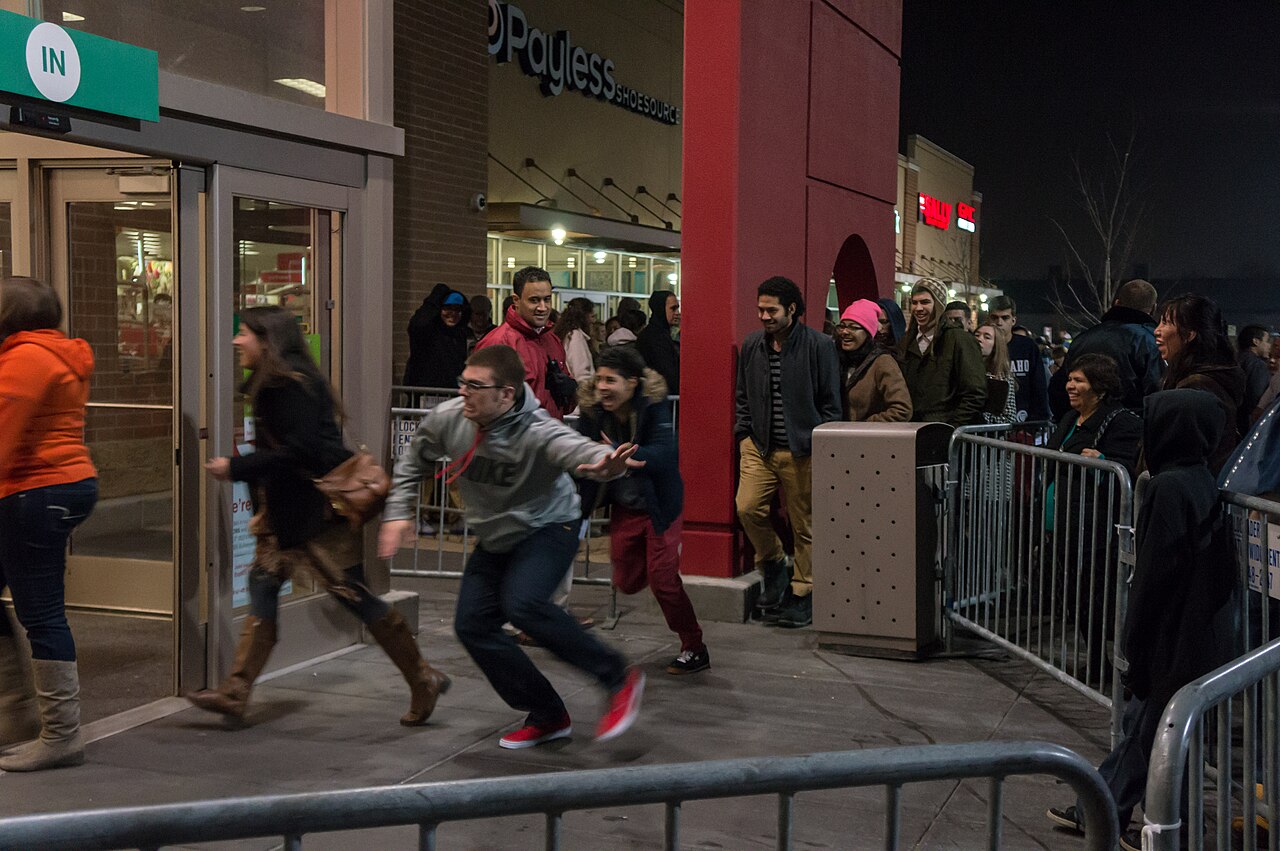
Origins and Early History of Black Friday
Black Friday is the Friday following Thanksgiving in the US, a date that shifts each year but always lands four weeks before Christmas [1]. The term originated in the United States, where retailers used it to mark the point at which their ledgers moved from red (loss) to black (profit) [1]. While the earliest references date to the 1950s in Philadelphia, describing the heavy pedestrian and vehicle traffic that followed Thanksgiving, the modern shopping phenomenon spread globally [1].
Thanksgiving and the Date Connection
Thanksgiving itself was fixed as the fourth Thursday of November by Franklin D. Roosevelt in 1939 to extend the holiday shopping season [1]. The Friday that follows thus becomes the natural launchpad for retailers, a timing that the National Retail Federation still leverages for annual forecasts [5]. This connection ensures Black Friday always arrives the day after Thanksgiving, creating a predictable peak period for both brick-and-mortar and online sales [5].
Early Retail Practices
Early Black Friday events were characterized by doorbuster deals, early store openings, and the psychological rush of limited-time offers. These practices set the template for what would become a global retail holiday, with retailers worldwide now aligning promotions to the US date despite having their own Thanksgiving traditions [1].
Global Expansion and International Adoption
Black Friday is observed in many countries worldwide including Canada, Mexico, United Kingdom, Germany, France, India, Brazil, and others [1]. Each nation adapts the US-originated concept to local customs, often extending the sales period into a 'Black November' or merging it with local shopping holidays. The global spread has turned Black Friday into a coordinated international retail event rather than a solely American phenomenon [1].
Regional Adaptations
In Canada, Black Friday follows Thanksgiving in October, creating a shorter gap between the two holidays. The UK and Germany have embraced online-exclusive deals, while India and Brazil have integrated Black Friday into their own festival seasons, offering deep discounts on electronics and apparel [1]. These adaptations show how the core concept of post-Thanksgiving discounting has been culturally translated.
Economic Impact Across Borders
The economic ripple effect of global Black Friday participation is significant. Retailers in adopting nations report increased foot traffic and online sales, while logistics providers face heightened demand. The convergence of cultures around a single shopping date illustrates the power of US retail influence on a planetary scale [1].
The Rise of Online Black Friday and Cyber Challenges
Black Friday online refers to high traffic challenges for retailers due to increased online shopping [1]. As internet penetration grew, the majority of consumers shifted from physical queues to digital storefronts, forcing retailers to upgrade infrastructure to handle simultaneous traffic spikes [1]. This shift has made cybersecurity and site stability critical components of Black Friday planning.
Traffic Spikes and Site Crashes
Early online Black Friday events saw frequent site crashes and slow load times as retailers' servers buckled under the weight of concurrent shoppers. These failures led to lost sales and frustrated consumers, prompting investments in cloud computing, load balancing, and real-time traffic management systems [1].
Mobile Commerce Integration
The rise of smartphones accelerated the mobile commerce component of Black Friday. Retailers now optimize websites and apps for seamless shopping on smaller screens, with mobile devices accounting for a growing share of total transaction volume each year [1]. This trend has reshaped marketing strategies, with push notifications and in-app deals becoming standard.
The Emergence of Cyber Monday and Cyber Week
Cyber Monday follows Black Friday as the Monday after Thanksgiving [1]. Conceived in 2005 by the National Retail Federation, Cyber Monday was designed to encourage online shopping when workers returned to high-speed office internet connections after the long weekend [1]. This created a two-day window of intense digital retail activity bookending the Thanksgiving holiday.
Cyber Week Definition and Scope
Cyber Week encompasses the period between Black Friday and Cyber Monday [1]. Retailers often extend promotions across this full week, blurring the lines between the original two-day framework and a longer shopping event. This extension gives consumers more time to browse and purchase, while allowing retailers to spread traffic more evenly across multiple days [1].
Strategic Implications for Retailers
The introduction of Cyber Week has forced retailers to rethink inventory management and marketing pacing. Instead of concentrating all discounts into a single day, many now stagger deals across the week, testing price points and tracking conversion rates day by day. This data-driven approach has become a cornerstone of modern Black Friday strategy [1].
2026 Forecasts and Adobe Analytics Projections
Adobe projects $12.9 billion of US online sales on Black Friday 2026, up 9.2% from last year [5]. This forecast represents a continued upward trajectory in e-commerce growth, even as inflation and consumer budget constraints persist. The 9.2% year-over-year increase signals sustained demand despite economic headwinds [5].
National Retail Federation Outlook
The National Retail Federation forecasts record spending for Black Friday 2026 [5]. NRF data typically includes both online and in-store sales, providing a comprehensive view of consumer spending habits. Their projections often influence retailer staffing, inventory ordering, and marketing budget allocations for the holiday season [5].
Date Confirmation for 2026
Black Friday 2026 falls on November 27, the day after Thanksgiving (November 26, 2026) [5]. Cyber Monday 2026 falls on November 30 [5]. These fixed dates allow consumers and retailers to plan well in advance, contributing to the growing length of the holiday shopping season that now often begins in October.
Gaming Industry Participation in Black Friday
While not explicitly detailed in the source texts, the gaming industry has embraced Black Friday as a major sales period. Digital storefronts on consoles and PC platforms routinely offer deep discounts on new releases, older titles, and in-game content. The interactive nature of gaming makes it particularly well-suited to the flash-sale model that Black Friday popularized [1].
Discount Patterns on Games and Hardware
Black Friday deals in gaming typically feature percentage-based discounts on base consoles, bundled game packages, and seasonal content. Retailers often bundle hardware with popular titles at reduced prices, moving inventory while offering value to consumers. Digital download codes and subscription services also see promotional pricing during this period [1].
Online Traffic and Server Load in Gaming
The shift to digital game distribution means Black Friday online traffic challenges extend directly to gaming platforms. Sony, Microsoft, Nintendo, and Steam all experience simultaneous user logins, wallet top-ups, and game downloads. This places unique demands on server infrastructure, requiring pre-event scaling and load testing to ensure smooth access to deals [1].
Cybersecurity Considerations During Black Friday
The high traffic volume of Black Friday creates fertile ground for cybercriminals. Phishing campaigns, fake deal websites, and credential stuffing attacks spike during the shopping period. Retailers and consumers alike must maintain vigilance against these threats [1].
Consumer Protection Tips
Security experts recommend using unique passwords for retail accounts, enabling two-factor authentication, and verifying the legitimacy of deal emails before clicking links. Monitoring bank statements for unauthorized charges in the weeks following Black Friday is also advised [1].
Retailer Defensive Measures
Retailers invest in web application firewalls, bot detection systems, and encrypted payment processing to protect customer data during peak traffic. Pre-event security audits and real-time monitoring teams are standard practice for major e-commerce platforms during Black Friday week [1].
Economic Significance and Consumer Behavior
Black Friday serves as a key economic indicator, reflecting consumer confidence and spending power. The NRF's record spending forecasts for 2026 suggest sustained consumer optimism despite economic uncertainty. The day's sales performance often sets the tone for the entire holiday quarter [5].
Psychology of the Deal
The limited-time nature of Black Friday deals triggers loss aversion and urgency in shoppers. Retailers leverage countdown timers, limited-stock notifications, and doorbuster exclusives to prompt immediate purchases. This psychological framework has been studied and refined over decades of retail practice [1].
Shift Toward Early Shopping
Consumer behavior data shows a growing trend of early Black Friday shopping, with many deals released weeks in advance. This 'early Black Friday' phenomenon spreads traffic across a longer period, reducing the single-day peak but extending the overall shopping season. Retailers benefit from prolonged engagement, while consumers enjoy more time to compare prices [1].
Technological Infrastructure and Future Trends
The technological backbone of Black Friday continues to evolve, with artificial intelligence, machine learning, and big data analytics playing increasingly central roles. Retailers use predictive models to optimize inventory, personalize deals, and forecast demand with greater accuracy [1].
AI-Powered Personalization
Machine learning algorithms analyze browsing history, purchase patterns, and real-time behavior to serve highly targeted promotions. This personalization increases conversion rates and average order value, making AI a critical competitive advantage during the Black Friday rush [1].
Future Outlook Beyond 2026
Looking ahead, Black Friday is likely to continue its expansion in length and global reach. The integration of augmented reality try-ons, virtual storefronts, and cross-border e-commerce will further blur the lines between physical and digital shopping. The 2026 projections of $12.9 billion in US online sales provide a benchmark for measuring these future developments [5].
Comparison with Other Global Shopping Events
Black Friday occupies a unique position among global shopping events, but it shares the stage with occasions such as China's Singles' Day, Brazil's Black November, and Europe's post-summer sales. Each event employs similar discount mechanics but differs in cultural timing and scale [1].
Singles' Day vs. Black Friday
Alibaba's Singles' Day in November often surpasses Black Friday in total sales volume, driven by China's massive online population and extended promotion period. However, Black Friday maintains an earlier position in the holiday calendar, capturing early holiday spending before the year-end rush [1].
Regional Variations and Overlaps
Many countries run their own discount events that overlap with or follow Black Friday, creating a prolonged period of promotional activity from November through December. This fragmentation of shopping events spreads consumer spending across multiple windows, reducing the concentration of traffic on any single day [1].
Historical Evolution of Black Friday Narratives
The narrative surrounding Black Friday has shifted over the years from a purely financial term to a cultural phenomenon. Early media coverage focused on retailer profitability, while modern reporting emphasizes consumer behavior, economic impact, and the digital transformation of shopping [1].
From Red to Black Accounting
The original 'red to black' accounting story, while historically debated by economists, persists as a powerful branding element. It encapsulates the idea that Black Friday can single-handedly determine a retailer's annual success, a notion that marketing teams continue to amplify each year [1].
Protests and Counter-Cultural Responses
In response to the consumerism associated with Black Friday, movements such as 'Small Business Saturday' and 'Buy Nothing Day' have emerged. These counter-narratives highlight alternative ways to engage with the holiday season, whether by supporting local merchants or opting out of spending altogether [1].
Role of Social Media and Influencer Marketing
Social media platforms have become central to Black Friday marketing, with brands using Instagram, TikTok, and X (formerly Twitter) to announce deals, share unboxing videos, and engage with audiences in real time. Influencer partnerships amplify reach and drive traffic to both online and physical stores [1].
Real-Time Deal Announcements
The immediacy of social media allows retailers to announce flash deals and limited-time offers instantly, creating a sense of urgency that traditional advertising cannot match. Live streams and Stories features keep consumers engaged throughout the shopping day [1].
User-Generated Content and Reviews
Consumers increasingly turn to social media for peer reviews and unboxing content before making purchase decisions. User-generated posts showcasing Black Friday hauls and deal findings serve as modern word-of-mouth marketing, heavily influencing buying behavior [1].
Logistics and Supply Chain Challenges
The surge in orders placed during Black Friday places immense pressure on logistics networks. Warehouse staffing, last-mile delivery capacity, and carrier partnerships must all scale rapidly to meet demand. Failure in any link of the chain can result in delayed deliveries and customer dissatisfaction [1].
Warehouse Automation and Robotics
Many retailers have turned to automation and robotics to handle the volume increase. Automated sorting systems, conveyor belts guided by AI, and robotic picking arms increase throughput and reduce reliance on temporary seasonal labor [1].
Last-Mile Delivery Innovations
To combat delivery delays, companies experiment with drones, lockers, and crowdsourced delivery models. These innovations aim to speed up the final leg of the journey, ensuring that Black Friday purchases reach doorsteps within promised timeframes [1].
Environmental and Sustainability Considerations
The environmental footprint of Black Friday has come under scrutiny, with increased packaging waste, carbon emissions from shipping, and the carbon cost of producing discounted goods. Some retailers now offer 'green' shipping options or donate a portion of Black Friday proceeds to environmental causes [1].
Packaging and Waste Reduction
Efforts to reduce packaging include right-sizing boxes, using recycled materials, and consolidating shipments. Some e-commerce platforms have piloted reusable packaging systems that return with the next return shipment [1].
Consumer Demand for Sustainable Options
A growing segment of consumers express preference for retailers with strong sustainability practices. This demand is influencing Black Friday deal curation, with some brands highlighting eco-friendly products or offering carbon-neutral shipping at checkout [1].