
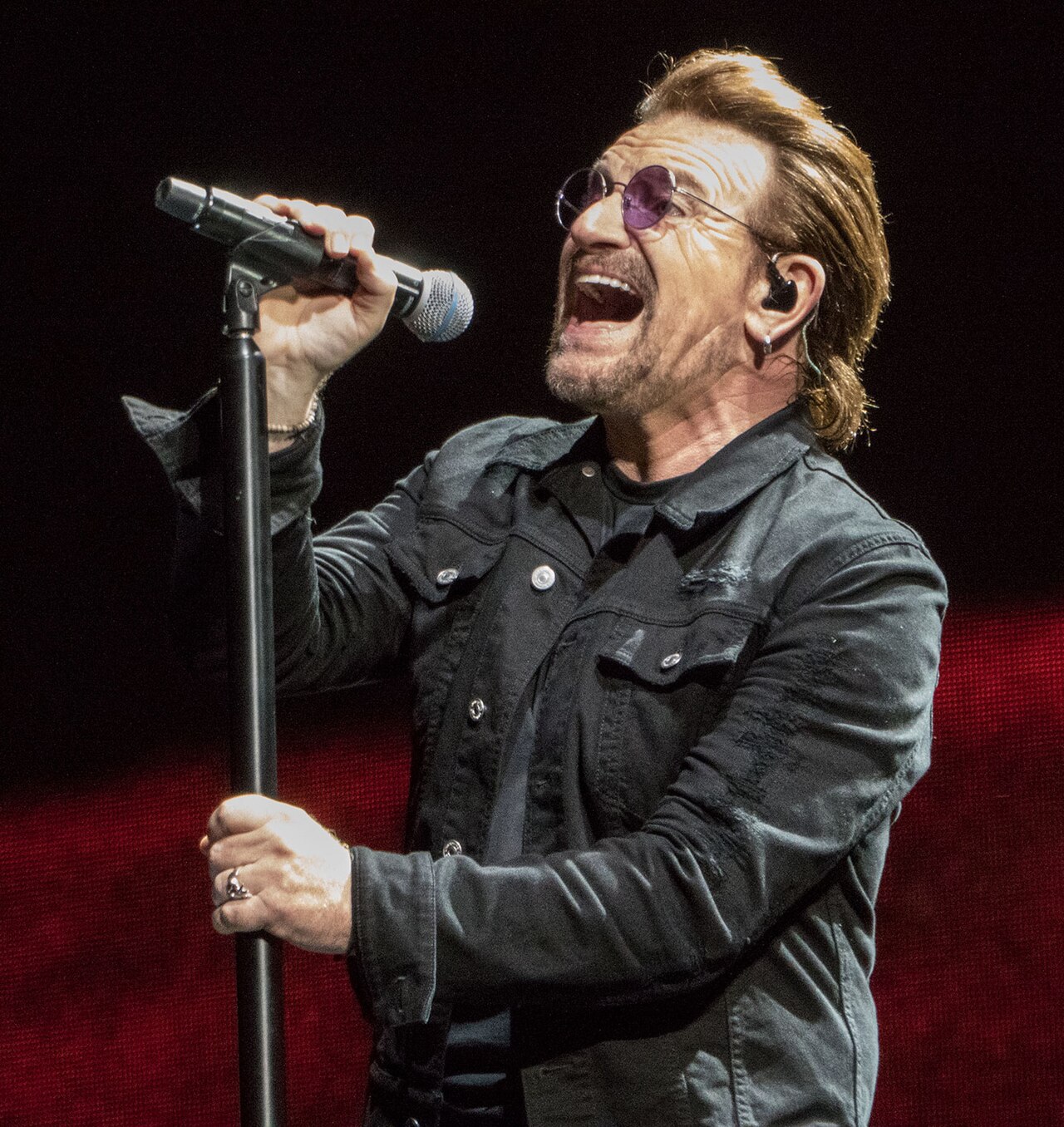
Origins and Early Life in Dublin
Paul David Hewson was born on 10 May 1960 in Dublin, Ireland, into a working-class family that shaped his early worldview [1]. His formative years coincided with social upheaval in Northern Ireland, an environment that would later inform both the lyrical content of U2 and his lifelong commitment to humanitarian causes [1].
Family Background and Education
Hewson grew up in the Ballymun area of Dublin, where his father worked as a postal worker and his mother as a store clerk [1]. He attended Mount Temple Comprehensive School, where he met future U2 bandmates, forming the nucleus of what would become one of the world's most enduring rock groups [1].
The Nickname That Became a Brand
The moniker Bono emerged from a nickname given by his friend Guggi, derived from Bonavox, a hearing aid shop off Dublin's O'Connell Street [2]. Initially resistant to the name, Hewson eventually accepted it after learning that Bonavox translates from Latin as good voice, a meaning that resonated with his aspirations as a singer [2].
This etymological twist encapsulates a recurring theme in Bono's career: identities adopted and repurposed for greater impact, whether artistic or activist [2][1].
Rise to Fame with U2
Formation and Early Sound
In 1976, Hewson joined three classmates to form U2, initially performing under the name Feedback before settling on their definitive identity [1]. The band's early sound blended post-punk energy with Hewson's distinctive falsetto, setting them apart in the Irish music scene [1].
Breakthrough and International Stardom
U2's breakthrough arrived with the 1983 release of War, which featured the anthem Sunday Bloody Sunday and established the band's political consciousness [1]. Subsequent albums like The Joshua Tree cemented their status as global superstars, with Bono's stage presence and vocal range becoming central to their appeal [1].
Songwriting Themes and Evolution
Bono's songwriting evolved from personal introspection to sweeping social commentary, reflecting his growing activism [1]. Tracks like Pride (In The Name of Love) and One demonstrate his ability to marry melodic accessibility with urgent moral questions [1][3].
This evolution mirrors his transition from rock frontman to global advocate, a shift that would define the latter half of his career [1][3].
Marriage and Family Life
Marriage to Ali Hewson
Bono has been married to Ali Hewson, born Ali Stewart, since 1982, forming one of the music industry's longest-lasting partnerships [1]. Their relationship began in their teenage years in Dublin, providing a stable foundation amid the turbulence of fame [1].
Children and Family Dynamics
The couple has four children: daughters Jordan and Eve, and sons Elijah and John [1]. Eve Hewson has followed in her father's footsteps into acting, while Elijah has pursued music, occasionally performing with U2 [1]. Bono has spoken about how fatherhood reshaped his perspective on intergenerational responsibility [1].
Balancing Fame and Privacy
Despite his global profile, Bono has maintained a relatively private family life, often shielding his children from excessive media scrutiny [1]. Ali Hewson has been a consistent presence in his life and activism, frequently collaborating on philanthropic initiatives [1].
The family's dynamic illustrates how personal relationships have grounded Bono's public endeavors, providing both motivation and perspective [1][3].
Activism and the One Campaign
Founding the One Campaign
Bono co-founded the One Campaign in 2004 alongside other activists and musicians, aiming to fight extreme poverty and preventable disease, particularly in Africa [1]. The organization leverages celebrity advocacy to pressure governments and institutions into policy change [1].
Policy Influence and Criticism
The One Campaign has been credited with influencing major policy initiatives, including the US President's Emergency Plan for AIDS Relief (PEPFAR) and increased aid commitments from G8 nations [1]. However, the organization has also faced criticism regarding effectiveness and approach, with some economists questioning the impact of celebrity-led advocacy [1][3].
Bono's Diplomatic Role
Bono has met with numerous world leaders, including U.S. presidents and UN officials, to advocate for debt relief, trade reform, and health initiatives [1]. His unique position as both musician and advocate has granted him access to decision-makers rare for activists [1].
This dual career path demonstrates how celebrity can be strategically deployed to amplify policy issues, though it also invites scrutiny about the appropriate role of entertainers in global politics [1][3].
The 2016 Nice Terrorist Attack
Dining During the Attack
On Bastille Day 2016, Bono was dining at a Nice restaurant when a terrorist drove a truck through a crowd celebrating the holiday, killing 86 people [3]. The incident occurred during his vacation in France, turning a leisure moment into a harrowing experience [3].
Hiding Under a Table
Bono hid under a table during the attack, an experience he later described as surreal and terrifying [3]. The incident highlighted the vulnerability of public figures in everyday settings and sparked discussions about safety at outdoor events [3].
Public Response and Reflection
Following the attack, Bono expressed solidarity with the victims and reflected on the broader implications of violence in public spaces [3]. His comments resonated with ongoing debates about terrorism and public safety in Europe [3].
This personal brush with tragedy added another layer to Bono's already complex relationship with violence, having grown up against the backdrop of The Troubles in Northern Ireland [1][3].
U2's 2026 Halftime Show Performance
Thanksgiving Eve Halftime Show
U2 performed at the 2026 Thanksgiving Eve Halftime Show on Netflix and NFL at SoFi Stadium, marking a significant live appearance in their later career [5]. The performance celebrated the band's longevity and connection with American audiences [5].
Setlist and Audience Response
The 2026 halftime show included performances of Sunday Bloody Sunday, The Streets Have No Name, Pride (In The Name of Love), and a Stop! In the Name of Love tribute to The Supremes [5]. Fans and critics noted the band's ability to maintain relevance across decades while delivering their classic catalog [5].
Carnaval de Luz and New Material
The halftime show coincided with U2's 50th anniversary and promotion of their new album Carnaval de Luz, discussed in a 2026 Guardian interview [3]. Bono stated the band's belief in democracy informs their work, though he also noted he cannot work with Donald Trump despite the band's democratic principles [3].
This performance represents a full-circle moment for a band that began in Dublin and now plays to millions via global streaming platforms, while maintaining their core message [3][5].
Musical Legacy and Influence
Discography and Chart Success
U2 has released 14 studio albums, with numerous reaching multi-platinum status across the globe [1]. Their sound has evolved from the punk-inflected early work to the more experimental later periods, yet Bono's voice remains a constant identifier [1].
Live Performance Reputation
U2 is renowned for their elaborate live shows, combining music with visual artistry and political messaging [1]. Bono's stage presence, often featuring impassioned delivery and humanitarian themes, has set a standard for rock concerts [1].
Influence on Subsequent Artists
U2's blend of anthemic rock and social consciousness has influenced generations of musicians across genres [1]. Artists ranging from Coldplay to The Killers have cited the band as an inspiration, particularly their ability to maintain artistic integrity while achieving commercial success [1].
This enduring influence speaks to the band's unique position in rock history, where they occupy both the commercial mainstream and the activist periphery [1][3].
Controversies and Criticisms
Activist Effectiveness Debate
Bono's advocacy work has drawn both praise and skepticism regarding its actual impact on global poverty [1][3]. Critics argue that celebrity advocacy can oversimplify complex policy issues, while supporters credit the One Campaign with raising awareness and influencing specific policy changes [1][3].
Business and Tax Practices
Like many high-profile entertainers, Bono and U2 have faced scrutiny regarding tax practices and business structures [1]. The band has relocated operations at various points, drawing commentary about the responsibilities of global celebrities [1].
Political Endorsements and Relationships
Bono's relationships with political figures have evolved over time [3]. His 2026 statement that he cannot work with Donald Trump despite the band's belief in democracy highlights the tension between artistic collaboration and personal political boundaries [3].
These controversies reflect the complexities of navigating fame, fortune, and advocacy in the public eye, where every action is subject to interpretation and critique [1][3].
Personal Philosophy and Worldview
Faith and Spirituality
Bono has frequently referenced his Christian faith as informing his worldview and activism [1]. This spiritual dimension appears in U2's music and his approach to humanitarian work, though he often emphasizes universal values over denominational specifics [1].
Democracy and Human Rights
Central to Bono's philosophy is a commitment to democracy and human rights, themes that pervade both his music and activism [1][3]. He has consistently argued that economic development and political freedom are intertwined [1][3].
Evolution of Perspective
Over decades, Bono's perspective has evolved from the personal to the global, from rock stardom to systemic change [1]. This journey reflects broader changes in how celebrities engage with global issues and their evolving sense of responsibility [1][3].
This philosophical trajectory demonstrates how a public figure's internal worldview can shift and expand while maintaining core principles [1][3].
Recognition and Honors
Awards and Accolades
U2 has received numerous awards, including 22 Grammy Awards, reflecting both musical excellence and critical recognition [1]. Individual members, including Bono, have been honored for their contributions to music and activism [1].
Honorary Degrees and Citations
Bono has received honorary degrees from institutions including Harvard University and the University of Pennsylvania, recognizing his advocacy work [1]. These honors signal the academic and institutional recognition of his humanitarian efforts [1].
Cultural Impact
Beyond formal awards, Bono's cultural impact is evident in his inclusion in Time magazine's 100 most influential people and his recognition as a global voice for change [1]. His ability to move between concert stages and boardrooms represents a unique position in contemporary culture [1].
These recognitions validate both his artistic contributions and his advocacy, though they also reflect the growing intersection between entertainment and global policy-making [1].