
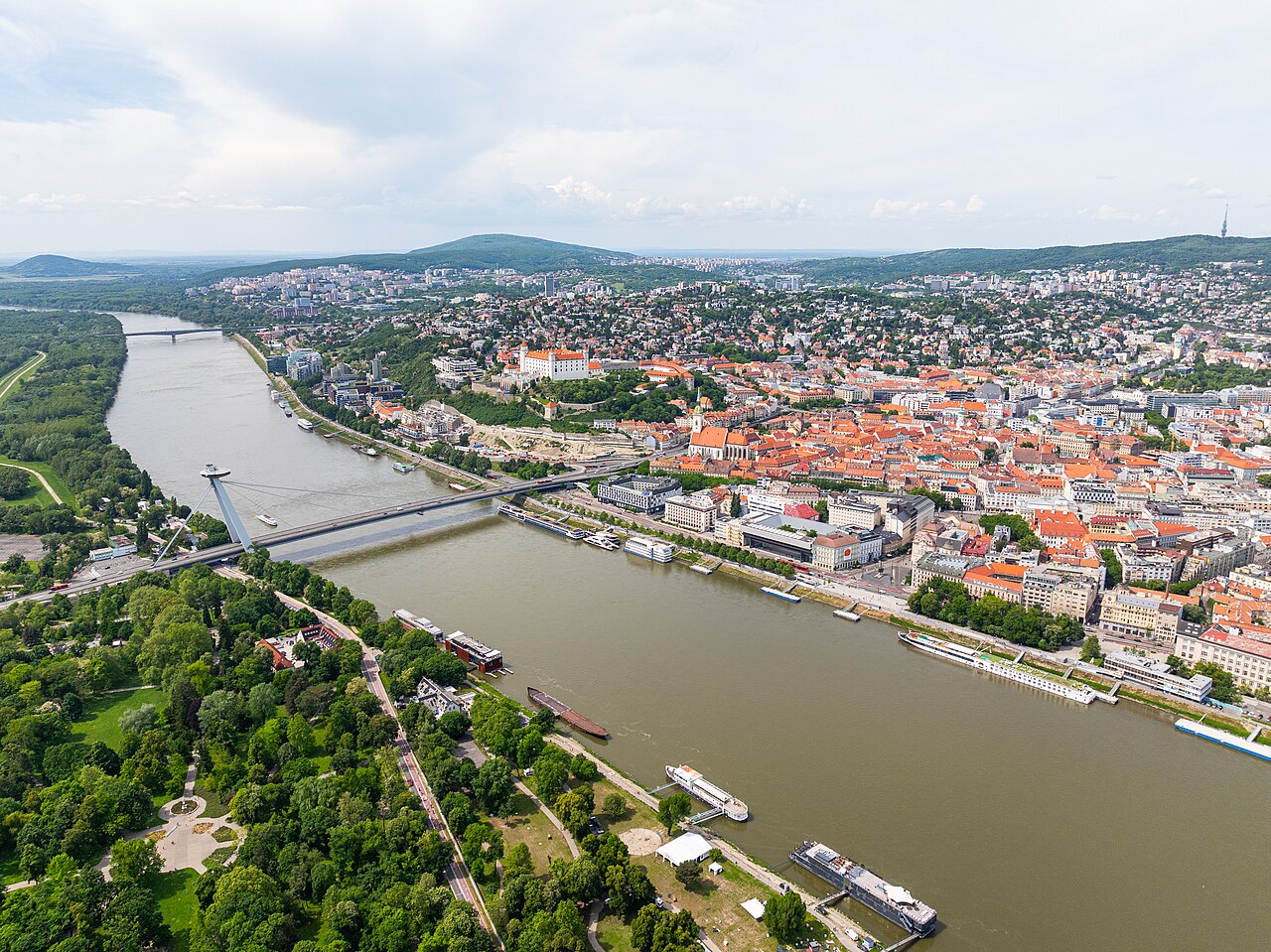
Geography and Strategic Location
Bratislava is located in the southwestern part of Slovakia, occupying both banks of the River Danube and the left bank of the River Morava [1]. This positioning places the city at a crossroads of Central Europe, where the Danube, the continent's second-longest river, meets the Morava, which forms the natural border between Slovakia and Austria. The city's elevation ranges from 126 to 297 meters above sea level, with the historic core situated on the Danube's left bank.
River Confluence and Urban Form
The convergence of the Danube and Morava rivers has shaped Bratislava's urban development for centuries. The left-bank location on the Morava influenced the city's expansion patterns and defensive strategies, while the Danube's right bank facilitated trade and transportation routes. This dual-river geography creates a unique urban layout that distinguishes Bratislava from other Central European capitals [1].
Topographical Features
Bratislava's topography is defined by the Carpathian foothills and the Little Carpathian mountain range, which extend into the city limits. The city's highest point, Devínska Kobyla, reaches 514 meters and offers panoramic views of the river confluence. This varied terrain has influenced everything from medieval fortification placement to modern residential district development.
The city's location in the Pannonian Basin contributes to its climatic patterns, while its position near the Austrian border (approximately 60 kilometers) has made it a significant point of cross-border interaction and economic exchange throughout history [1].
Historical Development and Landmarks
Bratislava Castle, situated on a hill above the city, overlooking the Danube River, is the most prominent landmark in the capital [1]. This massive rectangular structure with four towers has served as a royal palace, military fortress, and administrative center throughout Bratislava's history. The castle's origins date back to the 9th century, with significant Renaissance and Baroque modifications undertaken over the centuries.
Devín Castle and Archaeological Significance
Devín Castle is located at the confluence of the Danube and Morava rivers, near Bratislava [1]. Perched on a cliff at the meeting point of two rivers, this strategic fortress has been inhabited since the Bronze Age. The castle's ruins stand as testimony to the region's strategic importance, having been controlled by Romans, Slavs, Hungarians, and Austrians at various points in history. Archaeological excavations have uncovered artifacts spanning multiple archaeological cultures.
Old Town Heritage
Bratislava's Old Town features many historic buildings, museums, galleries, and restaurants [1]. The area around Michalská Street, the Old Town Hall, and the Bratislava City Museum preserves the medieval street layout while housing cultural institutions that document the city's past. The Old Town's architectural ensemble reflects Gothic, Renaissance, Baroque, and Classicist styles accumulated over eight centuries of continuous habitation.
Beyond the immediate city center, Bratislava's historical expansion saw the development of distinct boroughs such as Petržalka, the largest panelák housing estate in Central Europe, which was constructed during the socialist period to accommodate the city's growing population and workforce [1].
Climate and Environmental Context
Bratislava has a temperate climate with warm summers and cold, dry winters [1]. The city experiences four distinct seasons, with average July temperatures around 21°C and January averages near -1°C. This temperate climate supports a relatively long growing season and influences the city's outdoor cultural events, from summer music festivals to winter Christmas markets along the Danube embankments.
Seasonal Patterns and River Effects
The Danube's presence moderates extreme temperature variations, creating microclimates along the riverbanks that differ from inland areas. Summer months often bring occasional thunderstorms, while winter can bring fog particularly prevalent in the river valleys. The river's freeze-thaw cycles historically influenced river transportation and trade schedules.
Urban Green Spaces
Bratislava maintains numerous parks and green areas, including the Bratislava City Forest (Borský les) and the Zlaté Piesky recreational zone. These green spaces provide residents with respite from the urban environment and support local biodiversity. The Little Carpathians vineyards on the city's outskirts contribute to both the landscape character and local wine production traditions.
Climate change impacts, including more frequent heatwaves and altered precipitation patterns, present ongoing challenges for urban planning and water management in the Bratislava region, requiring adaptive measures to protect both infrastructure and the quality of life for its approximately 450,000 residents [1].
Cultural Scene and Performing Arts
Bratislava is known for its vibrant cultural scene, including performing arts venues, museums, and galleries [1]. The city hosts numerous theaters, such as the Slovak National Theatre, which presents opera, ballet, and dramatic performances. Music venues range from the historic Reduta Jazz Club to modern arenas hosting international touring artists, reflecting the city's diverse artistic offerings.
Museums and Galleries
The city's museum landscape includes the Bratislava City Museum, which documents the capital's history from medieval times to the present, and the Slovak National Gallery, which houses significant collections of Slovak and international art. Specialized museums cover topics ranging from transportation history to Jewish heritage, reflecting the city's multicultural past. Galleries frequently host contemporary art exhibitions alongside historical retrospectives.
Festivals and Events
Bratislava's cultural calendar features numerous festivals throughout the year, including the Bratislava Music Festival, the Jazz Days festival, and the Christmas Market on the Main Square. These events attract both local audiences and international visitors, contributing to the city's reputation as a cultural destination in Central Europe. The city's position on the Danube facilitates river cruises and cultural tours that combine sightseeing with artistic experiences.
The city's youthful demographic, influenced by its university population and status as a growing tech hub, contributes to a dynamic nightlife and alternative arts scene that coexists with more traditional cultural institutions, creating a unique artistic ecosystem [1].
Political Significance and Recent Events
As the capital of Slovakia, Bratislava serves as the nation's political center, housing the Slovak Parliament, the Presidency, and various government ministries. This political significance has shaped the city's development and its role in national decision-making processes. The city's strategic location near international borders has also made it a venue for diplomatic meetings and regional cooperation initiatives.
Social Movements and Public Gatherings
People attended a rally titled 'November 17th for Change' organized by the opposition Progressive Slovakia (PS) party during the 37th anniversary of the pro-democratic Velvet Revolution, in Bratislava, Slovakia, Tuesday, Nov. 17, 2026 [3]. This demonstration reflects the city's active civic life and the population's engagement with political developments. The rally coincided with significant historical commemorations, connecting contemporary political discourse with Slovakia's democratic heritage.
Regional Cooperation
Bratislava's position in the tri-border region with Austria and the Czech Republic has fostered various forms of cross-border cooperation. The Bratislava City Region initiative and various Euroregion projects exemplify how the city serves as a connector between different national contexts. These cooperation frameworks address shared challenges such as transportation, environmental protection, and economic development.
The city has also hosted numerous international conferences and summits, leveraging its central European location and modern conference facilities to position Slovakia within regional and European political frameworks. This diplomatic activity reinforces Bratislava's role as more than just a national capital, but as a participant in broader European integration processes [3].
Economy and Urban Development
Bratislava serves as Slovakia's economic engine, contributing disproportionately to the nation's GDP compared to other regions. The city's economy is diversified across services, industry, and technology sectors. As the capital and largest city, it hosts the headquarters of numerous Slovak and international companies, financial institutions, and government agencies that drive economic activity.
Transportation Infrastructure
The city's transportation network includes an international airport, extensive bus and trolleybus systems, and railway connections that link Bratislava to other Slovak cities and international destinations. The D1 highway connects Bratislava to other major Slovak cities, while river transport on the Danube supports both freight and passenger traffic. Recent infrastructure projects have focused on improving public transportation capacity and reducing traffic congestion in the city center.
Housing and Urban Planning
Bratislava's housing market has experienced significant pressure in recent years, with rising property prices and rents reflecting the city's growing appeal to both domestic and international residents. Urban planning initiatives address the balance between preserving historical character and accommodating modern development needs. The Petržalka panelák district, while providing substantial housing, also represents challenges in terms of urban quality and social integration that city officials continue to address.
The city's smart city initiatives and focus on sustainable urban mobility reflect broader European trends, with investments in cycling infrastructure, electric bus fleets, and pedestrian-friendly zones in the historic core aiming to reduce the environmental footprint of urban transportation [1].
Education and Innovation
Bratislava is home to several higher education institutions, including Comenius University, the largest and oldest university in Slovakia, as well as the Slovak University of Technology and various specialized academies. These institutions contribute to the city's knowledge economy and provide a steady stream of graduates entering the workforce. The student population represents a significant demographic factor influencing the city's cultural and economic life.
Research and Development
The presence of universities and research institutions has fostered a growing technology sector in Bratislava, with startups and established companies in fields such as information technology, biotechnology, and engineering. Innovation hubs and business incubators support entrepreneurship, while collaborations between academic institutions and industry drive research outcomes. The city's participation in European Union research programs further enhances its innovation capacity.
Cultural Education
Educational programs in the arts and humanities are supported by the city's cultural institutions, with schools and universities offering programs that connect students with Bratislava's museums, theaters, and galleries. This educational infrastructure ensures that cultural knowledge and artistic skills are transmitted to new generations, sustaining the city's cultural vitality over the long term.
The multilingual environment, with Slovak as the official language and widespread knowledge of English, German, and other languages, reflects Bratislava's position as an international contact point and supports its role in attracting foreign investment and talent [1].
Architectural Heritage and Urban Landscape
Bratislava's architectural landscape presents a layered narrative of different historical periods, from medieval city walls and Gothic churches to Baroque palaces and Socialist-era apartment blocks. The city center has undergone significant revitalization efforts in recent decades, with pedestrian zones, restored facades, and new public spaces aiming to balance historical preservation with modern urban needs. This architectural diversity is visible throughout the city's various boroughs and districts.
Contemporary Development
New architectural projects in Bratislava reflect contemporary design trends while often referencing historical precedents. The SNP Bridge, with its UFO-like observation deck, has become an iconic modern landmark, while the revitalization of riverbanks creates new public spaces for recreation and cultural events. Architectural competitions and urban design initiatives shape the city's evolving skyline and public realm.
Preservation Challenges
Balancing development with preservation presents ongoing challenges for Bratislava's heritage conservation efforts. The historic core's UNESCO World Heritage consideration status (though not yet inscribed) influences decision-making around alterations to historic buildings and streetscapes. Community involvement in preservation initiatives has grown, with local organizations advocating for sensitive approaches to urban change that respect the city's architectural legacy.
The riverfront areas, historically industrial zones, have been transformed into recreational spaces with parks, cycling paths, and cultural venues, exemplifying the city's approach to integrating natural and built environments [1].
Sports and Recreation
Bratislava supports a variety of sports disciplines, with football (soccer) being the most popular. The city's football clubs, including ŠK Slovan Bratislava, compete in national and European competitions, drawing significant fan attendance. Other sports facilities accommodate ice hockey, basketball, tennis, and water sports on the Danube and riverside reservoirs.
Olympic and International Events
Slovak athletes training in Bratislava have represented the nation at Olympic Games and world championships across various sports. The city's sports infrastructure, including stadiums and training facilities, has hosted international competitions and qualifiers. The nearby Little Carpathians region offers opportunities for hiking, cycling, and wine-related sports that combine athletic activity with cultural tourism.
Recreational Activities
Residents and visitors enjoy recreational activities along the Danube's riverbanks, including cycling, jogging, and boat tours. The city's numerous parks provide spaces for picnics, outdoor concerts, and seasonal events. Winter activities include ice skating on frozen water bodies and cross-country skiing in the surrounding Carpathian foothills, making Bratislava a year-round destination for outdoor enthusiasts.
The city's location provides unique opportunities for water-based recreation, with sailing, rowing, and motorized water sports available on the Danube, while the Morava river offers more tranquil settings for canoeing and fishing, reflecting the diverse aquatic environments accessible from the urban area [1].
Cuisine and Gastronomy
Bratislava's culinary tradition reflects its Central European location, blending Slovak, Austrian, Hungarian, and German influences. Traditional dishes include bryndzové halušky (potato dumplings with sheep cheese), kapustnica (sauerkraut soup), and various grilled meats. The city's restaurants range from traditional 'hospoda' pubs serving regional specialties to upscale establishments offering contemporary interpretations of Slovak cuisine.
Wine Culture
The Little Carpathians region surrounding Bratislava has a winemaking tradition dating back to the Middle Ages, with vineyards producing white wines such as Riesling, Tramín, and Veltlínske zelené. Wine cellars and tasting rooms throughout the city and surrounding villages offer opportunities to sample local products. The annual wine harvest festivals celebrate this aspect of regional culture, connecting urban consumers with rural production traditions.
International Gastronomy
Bratislava's restaurant scene has become increasingly international, reflecting the city's growing expatriate population and tourist traffic. Chefs with international training incorporate local ingredients into global culinary frameworks, creating fusion dishes that represent the city's cosmopolitan character. Food markets, such as the farmers' market near the Old Town, offer fresh local produce, artisanal products, and street food options representing various culinary traditions.
The Danube's influence extends to gastronomy as well, with fish from the river featuring in traditional preparations, while the city's position as a crossroads has historically made it a point where culinary traditions from different directions converged and influenced one another [1].
Tourism and Visitor Experience
Bratislava has become an increasingly popular tourist destination, attracting visitors with its compact historic center, affordable prices compared to other European capitals, and proximity to Vienna. The city's walkable Old Town, castle visits, and river cruises form the core of many tourist itineraries. Guidebooks and travel media frequently highlight Bratislava as a 'hidden gem' or 'underrated destination' in Central Europe.
Day Trip Appeal
The city's location makes it an ideal day trip destination from Vienna, Austria, with frequent train and bus connections taking approximately one hour. This accessibility has created a cross-border commuter and tourist flow, with many Viennese residents visiting Bratislava for cultural events, dining, or shopping. The reverse flow of Slovak residents working or studying in Vienna also shapes the city's demographic and economic dynamics.
Accommodation and Infrastructure
Bratislava's accommodation sector ranges from hotels and hostels to private rentals, reflecting the diverse needs of budget travelers, business visitors, and tourists seeking luxury experiences. The city's conference facilities and event spaces support business tourism, while the growing number of boutique hotels and restored historic buildings cater to visitors seeking authentic experiences. Tourist information services and multilingual signage support the increasing international visitor numbers.
Sustainable tourism initiatives aim to manage the impacts of growing visitor numbers on the historic core's infrastructure and resident quality of life, with measures including regulated tour group sizes, promotion of lesser-known neighborhoods, and seasonal event scheduling to distribute tourist flow throughout the year [1].
Future Development and Challenges
Bratislava faces several future challenges, including housing affordability, traffic congestion, and the need to balance economic growth with quality of life for residents. The city's strategic plan addresses these issues through infrastructure investments, housing policies, and initiatives to promote sustainable urban development. The city's position within the European Union framework provides both opportunities and constraints for policy implementation.
Demographic Changes
Bratislava's population dynamics include an aging trend common to many European capitals, alongside immigration from other Slovak regions and abroad. These demographic shifts affect housing demand, labor market dynamics, and the provision of social services. The city's approach to integration and inclusion of newcomers shapes its social fabric and cultural evolution.
Climate Adaptation
Climate resilience planning addresses flood risk management along the Danube, heat island mitigation through increased green coverage, and energy efficiency improvements in building stock. The city's participation in European Union climate initiatives and funding programs supports these adaptation efforts. Preparing for more frequent extreme weather events requires coordinated action across municipal departments and with regional partners.
The ongoing reconciliation of Bratislava's historical identity with its role as a modern European capital will continue to shape its development trajectory, requiring thoughtful approaches that respect the city's past while embracing future opportunities [1].