
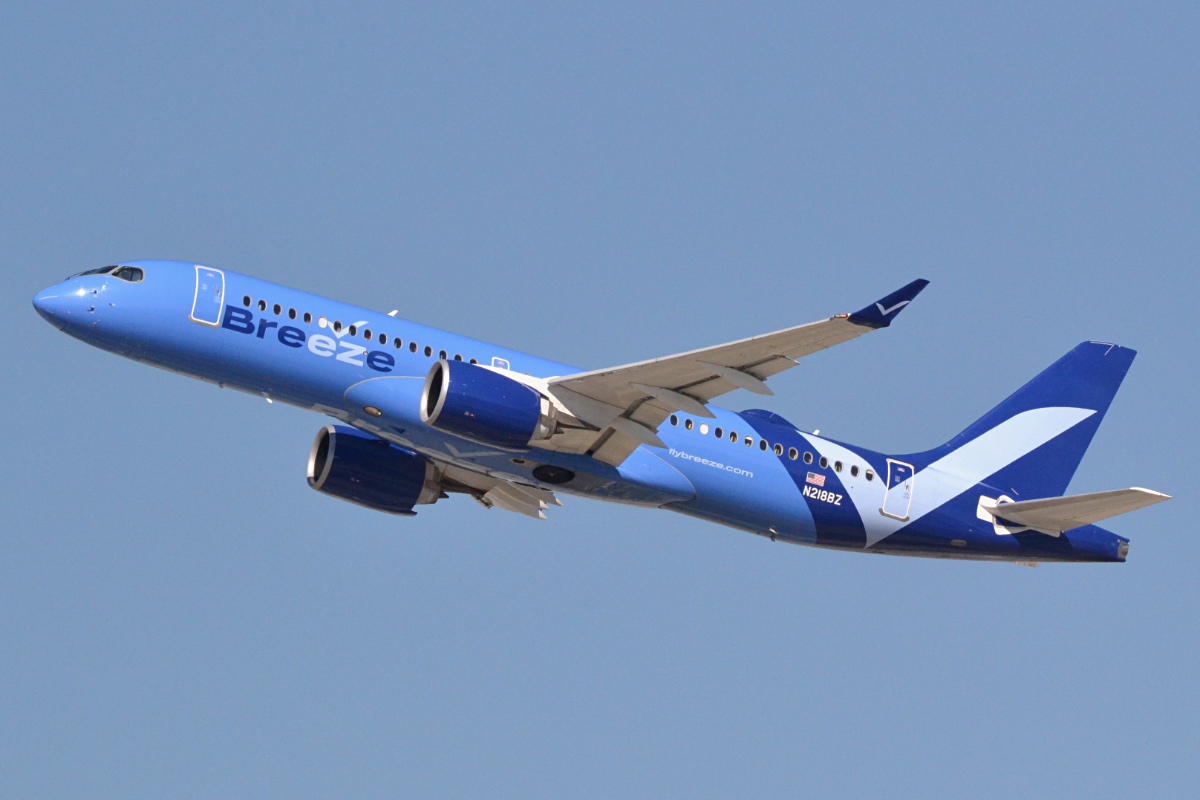
Origins and Launch as a New U.S. Flag Carrier
Breeze Airways commenced operations on May 27, 2021, originally under the name Moxy Airways, positioning itself as the first newly certified U.S. flag carrier in a decade [1]. This timing was significant, as it filled a regulatory gap left by the last new mainline carrier certification ten years prior, allowing David Neeleman to apply lessons from his previous ventures such as JetBlue and Morris Air. The startup entered a market dominated by established legacy carriers and ultra-low-cost competitors, leveraging a fresh operating certificate to avoid legacy labor contracts and fleet types. By September 2025, Breeze had become the first newly certified U.S. flag carrier in a decade to unlock A220-300 international operations [5], a milestone that validated its long-term fleet strategy and regulatory standing.
Founder Background and Vision
David Neeleman, the founder, has publicly floated a long-term fleet ambition of up to 400 aircraft, anchored by a single-type A220 strategy [5]. This vision reflects a continuity of his career philosophy that a homogeneous fleet reduces maintenance complexity, pilot training costs, and operational inefficiencies. Neeleman's track record of building low-cost carriers on single-jet types suggests the A220 type type is central to Breeze's cost structure and growth projections.
Initial Fleet Composition and Route Strategy
The airline entered service with a two-type fleet type, initially comprising Embraer E190s and E195s for mainline operations [5]. These Brazilian narrowbodies served as the backbone of the network during the startup phase, allowing Breeze to serve thin routes that larger carriers would find uneconomical. The early fleet allowed the airline to establish a presence in markets such as the Sun Belt and select secondary cities, building brand awareness before the A220 transition began.
Fleet Transition to Airbus A220-300
A220 Acquisition and Milestone Achievement
Breeze Airways crossed the 50-aircraft Airbus A220-300 milestone in early May 2026 [5], marking a pivotal moment in its fleet modernization program. The A220-300 offers approximately 10% better fuel efficiency per seat compared to the previous generation Embraer narrowbodies, a critical advantage for a low-cost carrier operating thin routes where fuel burn directly impacts unit costs. By September 2026, Breeze completed transition to all-A220 fleet by retiring final Embraer 190 [4], achieving a single-type fleet type that aligns with founder Neeleman's long-stated ambition.
Retirement of Embraer E190 and E195 Families
The airline has fully retired its Embraer E195 fleet [5], and is winding down its remaining Embraer E190s, with Brazilian narrowbodies scheduled to exit scheduled service by mid-2026 [5]. This retirement schedule was driven by the A220's superior operating economics, as well as the increasing maintenance costs associated with aging regional jets. The transition has not been without disruption; the E190s had been used for both mainline and charter roles, and their phased removal required careful schedule adjustments to maintain frequency on existing routes.
Fleet Size and Average Age
Breeze Airways operates a two-type fleet in transition, currently 69 aircraft total with an average age of roughly 4.5 years [5]. The fleet composition shifted from roughly half Embraer narrowbodies to 50 Airbus A220-300s and the balance of aging Embraer E190s used for mainline and charter roles [5]. As the retirement of the final Embraer 190 concluded in September 2026, the fleet is expected to stabilize at an all-A220 type, reducing the average age further as newer A220 deliveries continue through the latter half of the decade.
Operational Model and Low-Cost Carrier Structure
Route Network Expansion
Breeze Airways is a US-based low-cost carrier [4] that has been expanding its fleet and operations, including the recent purchase of A220-300 aircraft [4]. The airline has expanded its Florida network, launching 16 new routes from the Sunshine State in August 2026 [4], a strategic move to capture leisure traffic during peak winter months. This expansion reflects a broader pattern of route growth that has seen Breeze add points in the Northeast, Southeast, and Mountain West, often targeting underserved city pairs that legacy carriers serve with mainline jets or frequency-limited regional jets.
Cost Structure and Single-Type Advantage
The single-type A220 fleet strategy is designed to simplify the cost structure of a low-cost carrier. Maintenance training, spare parts inventory, and crew scheduling are all streamlined when one aircraft type dominates the fleet. Breeze's transition away from a two-type fleet to an all-A220 configuration reduces the operational complexity that typically burdens new entrants in the U.S. airline market. The airline's 69-aircraft fleet, with an average age of 4.5 years, represents a relatively young fleet compared to legacy carriers, further contributing to lower maintenance reserves and reliability.
International Operations Unlock
Breeze became the first newly certified U.S. flag carrier in a decade in September 2025, unlocking A220-300 international operations [5]. This regulatory milestone opened transborder and potential Caribbean or Latin American routes that were previously unavailable to the carrier under its initial operating restrictions. The ability to operate the A220-300 internationally expands Breeze's market reach beyond the domestic U.S. system and supports the founder's ambition of a 400-aircraft fleet type, which would require international growth to fill long-haul capacity.
Financial Milestones and IPO Planning
Holding Company Reorganization
Breeze Airways plans a holding company reorganization as part of its preparation for future growth [4]. This corporate restructuring is typically a precursor to an initial public offering, as it separates operating entities from holding assets and prepares the capital structure for public markets. The reorganization signals that the airline is positioning itself for a liquidity event that would allow early investors and founders to realize returns while providing capital for the next phase of fleet expansion.
2027 IPO Target
Breeze Airways is targeting 2027 IPO [4]. The timeline aligns with the completion of its A220 fleet transition and the stabilization of route networks after the Embraer retirement phase. Going public in 2027 would value the airline against the backdrop of a fully single-type A220 fleet, which investors typically reward with premium multiples due to the predictability of maintenance and operating costs. The IPO prospectus will likely highlight the fleet modernization story as a core value driver.
Fleet Growth Ambition to 400 Aircraft
Founder David Neeleman has publicly floated a long-term fleet ambition of up to 400 aircraft, anchored by a single-type A220 strategy [5]. If realized, this would make Breeze one of the largest A220 operators in the world, surpassing many established carriers that have type in smaller numbers. The 400-aircraft target is contingent on sustained profitability, fleet delivery rates from Airbus, and the continued success of the low-cost model in secondary city markets. The transition from the current 69-aircraft fleet to 400 would represent one of the fastest single-type fleet expansions in recent aviation history.
Market Position and Competitive Landscape
Competing Against Legacy and Ultra-Low-Cost Carriers
Breeze Airways entered the U.S. airline market as a new low-cost carrier competing against both legacy network carriers and established ultra-low-cost competitors such as Spirit and Frontier [4]. The airline's strategy of flying secondary city pairs and leisure destinations from focus cities such as Orlando and Tampa allows it to avoid direct head-to-head competition on major hub routes where legacy carriers dominate. The A220-300's range and efficiency enable Breeze to serve longer routes than typical regional jets, expanding its competitive set beyond short-haul markets.
Route Profitability and Leisure Traffic Focus
The expansion of 16 new Florida routes in August 2026 [4] illustrates Breeze's focus on capturing leisure traffic, a segment that has proven resilient even during economic downturns. Florida serves as a primary destination for domestic and international visitors, and Breeze's low-cost model appeals to price-sensitive travelers on these routes. The airline's network design, which emphasizes point-to-point connections rather than hub-and-spoke, reduces connection times and appeals to travelers seeking direct service between secondary origins.
Network Growth Despite Fleet Transition
Despite the ongoing fleet transition from Embraer to A220, Breeze has continued to expand its route network, adding points and increasing frequency [4]. This growth suggests that the airline's business model is not solely dependent on fleet composition but also on route selection and market timing. The ability to grow routes while retiring older aircraft indicates a disciplined approach to capacity management, where new A220 capacity replaces and exceeds the retired Embraer capacity on a seat-per-aircraft basis.
Significance of the A220 Fleet Type
Technical Specifications and Performance
The Airbus A220-300 is a narrowbody jet designed for 100-150 passengers, offering a 2-3 seating configuration that improves passenger comfort compared to the single-aisle 3-abreast layouts of many regional jets [5]. The aircraft's composite materials and advanced aerodynamics contribute to its fuel efficiency, which is a critical factor for low-cost carriers operating thin routes where every percentage point of fuel burn affects unit costs. Breeze's order and delivery schedule for the A220 has been a central element of its fleet planning since inception.
Comparison with Retired Embraer Types
The retirement of the Embraer E190 and E195 fleets [5] marks a significant fleet renewal for Breeze, as these aircraft were the backbone of the airline's operations during its formative years. The Embraer jets, while reliable, older designs with higher seat-mile costs compared to the A220. Breeze's transition away from these types reflects a broader industry trend of legacy regional jets being retired in favor of more modern, fuel-efficient narrowbodies. The A220's larger cabin and longer range also allow Breeze to serve routes that were previously uneconomical with the smaller Embraer fleet.
Industry Impact and Single-Type Strategy
Breeze's all-A220 fleet transition is notable in the U.S. aviation industry, where fleet type diversity is common even among low-cost carriers. The single-type strategy reduces crew training costs, simplifies maintenance logistics, and allows for more flexible aircraft utilization across the route network. If Breeze achieves its ambition of 400 A220 aircraft, it would become one of the world's largest operators of the type, validating the single-type model for a carrier of its scale. The industry will be watching to see whether the single-type strategy delivers the cost savings and operational reliability that founder David Neeleman has promised.
Timeline of Key Events
2021: Launch and Initial Operations
Breeze Airways commenced operations on May 27, 2021, originally as Moxy Airways [1]. The airline began with an Embraer-based fleet, serving a network of secondary city pairs and leisure destinations. The startup phase was characterized by rapid route addition and the establishment of a brand identity focused on low fares and point-to-point service.
2025: International Certification and A220 Integration
In September 2025, Breeze became the first newly certified U.S. flag carrier in a decade, unlocking A220-300 international operations [5]. This regulatory milestone coincided with the airline's ongoing A220 delivery schedule, which began replacing the older Embraer narrowbodies on mainline routes. The first A220-300 deliveries marked a shift in fleet composition toward a more modern, efficient type.
2026: Fleet Transition Completion and Milestones
Breeze Airways crossed the 50-aircraft Airbus A220-300 milestone in early May 2026 [5]. The airline completed transition to all-A220 fleet by retiring final Embraer 190 in September 2026 [4]. By this point, the fleet had been reduced from a two-type composition to a single-type A220 configuration, with the remaining Embraer E190s withdrawn from scheduled service by mid-2026 [5]. The 69-aircraft fleet, with an average age of roughly 4.5 years, represented a fully modernized operation ready for the next phase of growth.
Ongoing: Fleet Ambition and IPO Preparation
Founder David Neeleman has publicly floated a long-term fleet ambition of up to 400 aircraft, anchored by a single-type A220 strategy [5]. Breeze Airways plans a holding company reorganization as part of its preparation for future growth [4], and is targeting a 2027 IPO [4]. These corporate and fleet milestones are interconnected, as the IPO valuation will be influenced by the scale and homogeneity of the A220 fleet, as well as the route network expansion that has accompanied the fleet transition.
Reception and Industry Analysis
Analyst Views on the Low-Cost Model
Industry analysts have closely watched Breeze Airways' fleet transition as a case study in the low-cost carrier business model [4]. The airline's ability to grow routes and add 16 new Florida routes in August 2026 [4] while retiring older aircraft suggests that the model can support expansion even during fleet modernization. Analysts note that the single-type A220 strategy is a key differentiator, as many low-cost carriers operate mixed fleets due to route-specific aircraft requirements or leasing arrangements.
Customer Experience and Aircraft Configuration
The A220-300's 2-3 seating configuration [5] has been noted for providing a more spacious feel compared to the 3-abreast layouts of many regional jets. For a low-cost carrier, passenger experience is a competitive lever, and Breeze has emphasized legroom and seat comfort as differentiators. The aircraft's larger windows, higher cabin humidity, and lower cabin altitude—features of the A220 family—contribute to a perception of quality that appeals to leisure travelers who might otherwise choose legacy carriers.
Long-Term Viability of the 400-Aircraft Ambition
Whether Breeze Airways can achieve founder David Neeleman's ambition of 400 aircraft [5] remains to be seen, but the trajectory thus far suggests a disciplined approach to fleet modernization and route expansion. The airline's progress from a two-type Embraer fleet to a single-type A220 configuration in under five years demonstrates execution capability. The 400-aircraft target would require sustained profitability, continued Airbus deliveries, and successful penetration of international markets. Industry observers will be monitoring whether the single-type strategy can scale to this magnitude without the operational drawbacks that have befallen other carriers attempting large fleet commonality.
Summary of Fleet and Operational Evolution
Breeze Airways has undergone a remarkable fleet and operational evolution since commencing operations in May 2021 [1]. From its origins as Moxy Airways with an Embraer narrowbody fleet, the airline has transitioned to a fully single-type A220-300 operation, retiring its Embraer E190 and E195 fleets by mid-2026 [5][4]. This transition has been accompanied by route network expansion, including 16 new Florida routes launched in August 2026 [4], and corporate preparation for a 2027 IPO [4]. Founder David Neeleman's ambition of a 400-aircraft A220 fleet [5] represents the long-term vision that has guided fleet decisions from the outset. The airline's success in executing this transition while growing its route network and maintaining low-cost unit economics will be a key indicator of the single-type strategy's viability in the competitive U.S. airline market.