
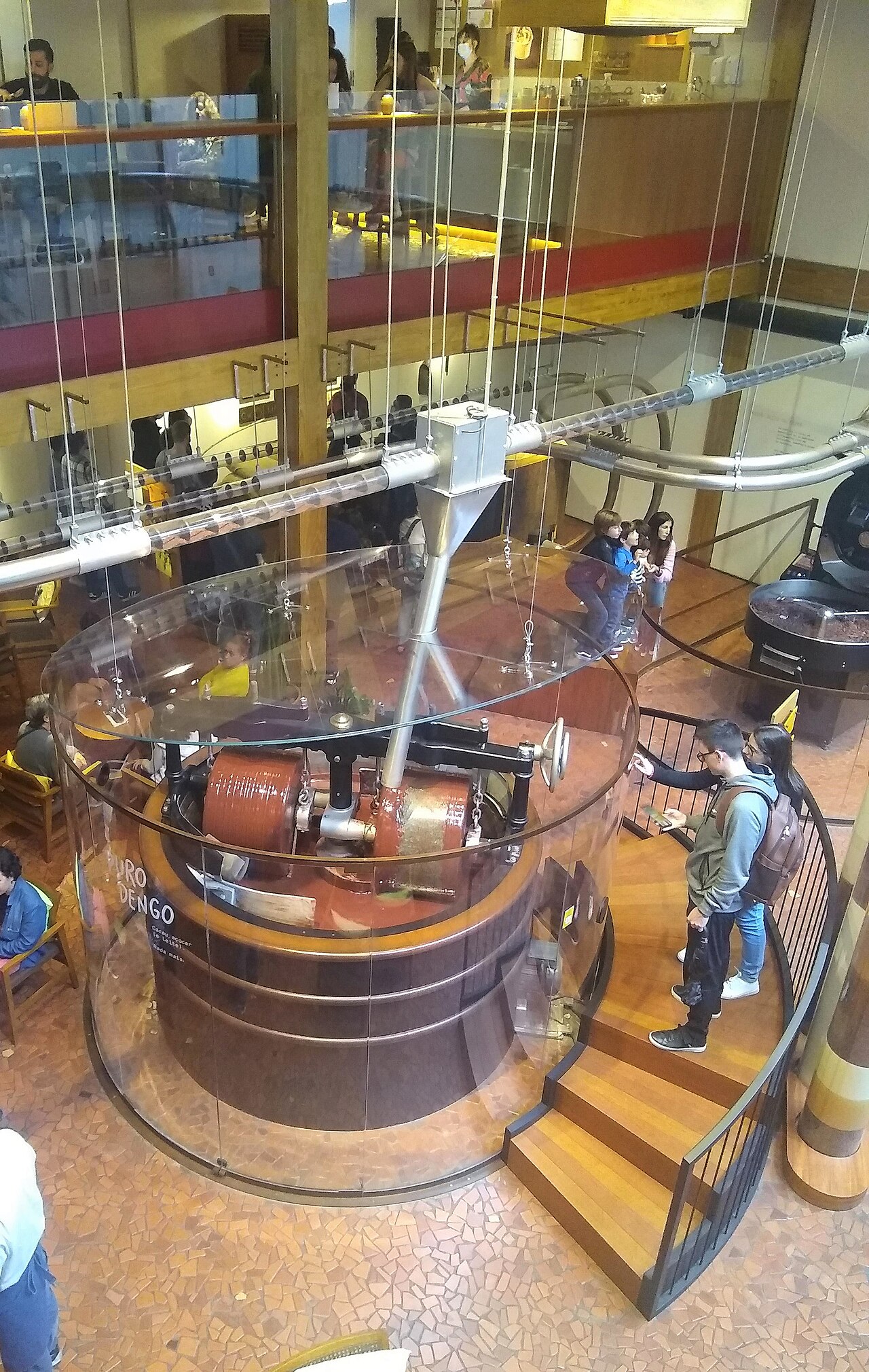
Overview of the Conching Process
Conching is a manufacturing step that evenly distributes cocoa butter and polishes cocoa particles, creating the smooth texture associated with premium chocolate [1]. The process occurs after refining and before the final product is molded, making it a fundamental stage in chocolate production [2]. Without conching, chocolate would retain a gritty, acidic mouthfeel rather than the signature smoothness consumers expect [4].
Historical Origins and Naming
The term conching derives from the shell-like shape of the earliest vessels used in the process, which resembled conch shells [1]. Rodolphe Lindt invented the conche in Bern in 1879, a machine that would fundamentally alter chocolate's texture and flavor profile [1]. Lindt's breakthrough made mass-produced chocolate bars practical, eventually replacing chocolate beverages as the primary vehicle for chocolate consumption [1].
The Standard Production Sequence
Before conching begins, cocoa beans undergo fermentation, drying, roasting, and winnowing to produce cocoa mass [2]. This mass is then mixed with ingredients such as sugar and additional cocoa butter, refined to reduce particle size, and finally conched [2]. The sequence ensures that conching acts on a uniformly prepared base, maximizing its textural and flavor benefits.
Flavor Development During Conching
Frictional Heat and Chemical Change
Conching promotes flavor development through a combination of frictional heat, volatile release, and oxidation [1]. The mechanical action of the conche generates heat that facilitates chemical reactions within the chocolate mass, softening harsh notes and enhancing desirable flavor compounds.
Acid and Volatile Removal
The extended mixing action of conching drives off unwanted acids and volatile compounds that can make chocolate taste sharp or astringent [1]. This removal process is essential for achieving the balanced, mellow flavor profile characteristic of well-conched chocolate.
Cocoa Butter Distribution
A primary function of conching is the even distribution of cocoa butter throughout the cocoa mass [1]. This distribution is what gives chocolate its glossy sheen and allows it to melt smoothly at body temperature, rather than feeling waxy or separated.
Equipment Design and Conching Mechanics
Traditional vs. Modern Conche Designs
Early conches were simple vessels with agitators, but modern industrial conches incorporate precise temperature control, variable speed agitation, and sometimes vacuum systems to remove volatiles more effectively [1]. These design improvements allow for more consistent results across large production runs.
Batch Size and Processing Time
The duration of conching varies significantly based on batch size and equipment type [1]. Modern industrial conching of multi-tonne batches can be completed in under 12 hours, whereas traditional methods for large batches may take several days. This time difference reflects the evolution of equipment efficiency and the scale of production demands.
Proprietary Process Details
Because conching is so critical to the final texture and flavor of chocolate, manufacturers treat their specific conching parameters as trade secrets [1]. The exact duration, temperature profile, and agitation speed vary by brand and are closely guarded to maintain product distinction in a competitive market.
The Role of Cocoa Butter and Particle Polishing
Cocoa Butter Integration
Conching evenly distributes cocoa butter within the chocolate mass, a function that became generalized only after the adoption of conching [1]. Before this process became standard, molded chocolate typically consisted only of cocoa mass and sugar, without the additional cocoa butter that conching enables.
Particle Size Reduction and Polishing
The mechanical action of conching acts as a polisher of cocoa particles, reducing perceived grit and contributing to a smooth mouthfeel [1]. This polishing effect is distinct from the initial refining step, which primarily reduces particle size through compression and shearing.
Impact on Texture Without Conching
Skipping the conching step typically results in chocolate that tastes gritty, acidic, and lacks the smooth texture associated with premium bars [4]. The absence of conching leaves particle boundaries more distinct and allows unwanted flavor compounds to remain in the final product.
Historical Impact on Chocolate Consumption
From Beverages to Solid Bars
Lindt's invention of the conche in 1879 made the mass-production of chocolate bars more practical [1]. This technological shift was significant enough to eventually replace chocolate beverages as the primary means of mass chocolate consumption, marking a major change in how chocolate was produced and enjoyed.
Industrial Scale and Market Expansion
The generalization of conching allowed chocolate manufacturers to scale production while maintaining consistent texture and flavor [1]. This scalability supported the growth of the chocolate industry into a global market, making chocolate more accessible to consumers across different economic groups.
Legacy of the Conching Innovation
The conching process remains one of the most important steps in chocolate manufacturing, with its influence evident in every smooth chocolate bar found in stores today [1]. Lindt's 1879 innovation set the standard for texture and flavor development that continues to guide chocolate production nearly 150 years later.
Conching Versus Other Chocolate Processes
Conching Versus Refining
While refining reduces particle size through mechanical compression, conching goes beyond size reduction to develop flavor and distribute cocoa butter [1][2]. The two processes are sequential: refining typically precedes conching in the production line, and each contributes distinct qualities to the final product.
Conching Versus Tempering
Conching occurs early in chocolate production, while tempering is a final step that stabilizes crystal forms for proper snap and sheen [1][2]. Conching shapes the flavor and texture profile, whereas tempering ensures the chocolate sets with the desired physical properties for molding and eating.
Conching Versus Roasting
Roasting is applied to raw cocoa beans before they are ground into mass, developing initial flavor precursors [2]. Conching occurs after roasting and refining, further refining those flavors through heat, oxidation, and volatile removal [1]. The two steps are complementary but distinct in timing and mechanism.
Sensory Outcomes of Conching Duration
Short Conching Cycles
Chocolate conched for shorter periods may retain more of the raw cocoa's inherent acidity and astringency [1]. These batches often exhibit a brighter flavor profile but may lack the mellow, rounded notes associated with longer conching times.
Extended Conching Cycles
Longer conching times generally produce smoother texture and more developed, mellow flavor compounds [1]. However, excessive conching can over-process the chocolate, potentially dulling origin-specific characteristics that chocolate enthusiasts seek in single-origin products.
Balancing Time and Flavor Profile
Manufacturers must balance conching duration against the desired flavor outcome, considering bean origin, cocoa butter content, and target market [1]. This balancing act is part of why conching parameters remain proprietary, as small changes in time can significantly alter the final product's sensory profile.
Global Production and Quality Control
Industrial Quality Assurance
Large chocolate producers employ rigorous quality control measures throughout the conching process, monitoring parameters such as temperature, time, and particle size distribution [1]. These measurements ensure batch-to-batch consistency, which is essential for brand reputation in a global market where consumers expect uniform product quality.
Small-Batch and Artisan Considerations
Artisan chocolate makers often conch for shorter durations than industrial producers, prioritizing origin-specific flavor notes over maximum smoothness [1]. This approach reflects a different philosophy toward chocolate production, where the unique characteristics of the cocoa bean take precedence over uniform texture.
Sustainability and Energy Considerations
The energy consumption of conching varies with batch size and equipment efficiency [1]. Modern continuous conching systems are designed to minimize energy use while maintaining product quality, reflecting broader industry efforts to reduce the environmental footprint of chocolate production.
Frequently Asked Questions About Conching
What exactly does conching do to chocolate?
Conching evenly distributes cocoa butter, polishes cocoa particles, and promotes flavor development through frictional heat, volatile release, and oxidation [1]. The process transforms coarse, acidic cocoa mass into the smooth, flavorful chocolate characteristic of premium bars.
Who invented conching and when?
Rodolphe Lindt invented the conche in Bern in 1879 [1]. His invention was a pivotal moment in chocolate history, enabling the mass production of solid chocolate bars and effectively replacing chocolate beverages as the dominant form of chocolate consumption.
Can you make chocolate without conching?
Yes, but the result would be gritty, acidic chocolate that lacks the smoothness of premium bars [4]. Conching is a fundamental step that significantly improves both texture and flavor, which is why it is standard in commercial chocolate production.
How long does conching take?
The duration of conching depends on batch size and equipment type [1]. Modern industrial conching of multi-tonne batches can be completed in under 12 hours, while traditional methods for large batches may take several days to achieve the desired texture and flavor development.
Key Takeaways on Chocolate Conching
Conching is a multi-functional process that addresses texture, flavor, and cocoa butter distribution in chocolate production [1][2][4]. From its invention by Rodolphe Lindt in 1879 to modern industrial applications, conching has been essential to the development of the chocolate products consumers enjoy today.
The process works through a combination of mechanical action, heat generation, and extended mixing time [1]. These elements work together to reduce particle grit, distribute cocoa butter evenly, and drive off unwanted acids and volatiles that would otherwise detract from the eating experience.
Because conching parameters are proprietary, the exact details of how each manufacturer achieves their signature style remain closely guarded [1]. However, the fundamental principles of the process are well-established and continue to guide chocolate production worldwide.