
Foundations of Climatology
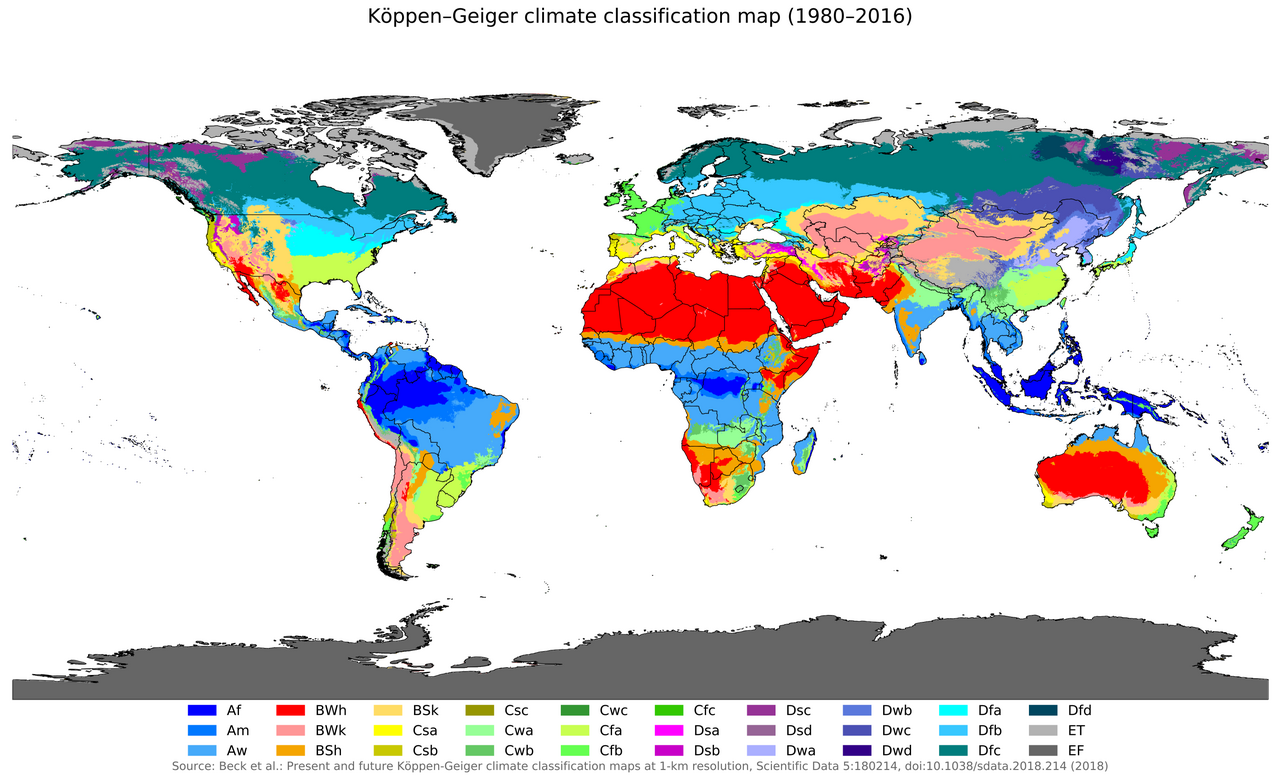
Climatology functions as the scientific study of Earth's climate, defined by the distribution of weather conditions maintained over a period of at least 30 years [1]. This temporal threshold distinguishes climatological analysis from meteorology, which addresses short-term atmospheric outcomes. The field operates on the assumption of stationarity, treating the expected distribution of atmospheric conditions as stable enough for meaningful pattern detection across multi-decadal timescales [1].
Historical Development
The discipline emerged from early attempts to map persistent weather patterns, evolving into a rigorous atmospheric science that incorporates oceanic interactions, radiative transfer, and dynamic system modeling. Its development paralleled advances in observational technology and computational capacity.
Core Distinction from Weather
A fundamental separation exists between climatology and weather: while weather represents the experienced atmospheric outcome over short periods, climatology analyzes the expected distribution of conditions over extended durations [1]. This distinction matters for policy, planning, and risk assessment, as climatological baselines inform what can be reasonably expected versus what might occur as an anomalous event.
Atmospheric Sciences and Branch Relationships
Climatology constitutes a branch of the atmospheric sciences, positioning it within a broader interdisciplinary field that includes atmospheric science, oceanography, and ecology [2]. This classification reflects the field's integrative nature, drawing methods and data from multiple scientific domains to construct comprehensive climate pictures.
Description and Causal Analysis
The field serves dual purposes: describing observed climate conditions and analyzing the causes behind climatic differences and changes [2]. Researchers investigate why certain regions exhibit distinct climate patterns while also probing the mechanisms driving observed shifts over time.
Interdisciplinary Connections
Climatology's methodologies intersect with geology, biology, and physics, particularly when examining paleoclimate records, ecosystem responses, and radiative forcing mechanisms. This cross-disciplinary approach enriches understanding of climate as a planetary system.
Oceanic Heat Absorption and Climate Regulation
The world's oceans serve as Earth's primary shock absorber, absorbing excess heat from the growing imbalance between solar energy entering and leaving the planet [3]. This heat uptake capacity has buffered surface temperatures but carries significant consequences for oceanic systems and global climate regulation.
Heat Distribution Mechanisms
Ocean currents distribute absorbed heat across global basins, creating complex patterns of warming and cooling that influence regional climate states. This distribution affects everything from sea surface temperatures to atmospheric circulation patterns.
Limitations of Ocean Buffering
While the ocean's heat absorption capacity has delayed surface warming, this buffering effect locks in further warming for years to come [3]. The accumulated heat within oceanic systems represents a committed climate change component that will continue influencing climate trajectories regardless of immediate emission reductions.
Sea-Level Rise and Cryospheric Changes
Accelerating sea-level rise results primarily from melting glaciers and ice sheets, with some change already irreversible [3]. This process represents one of the most visible and impactful consequences of continued climate warming, affecting coastal communities worldwide.
Glacial and Ice Sheet Dynamics
The melting of land-based ice contributes directly to ocean volume increase, while also altering albedo properties that further accelerate warming. Ice sheet dynamics involve complex flow mechanisms that respond to both atmospheric and oceanic temperature changes.
Irreversible Commitments
Scientific assessments indicate that some sea-level rise is now irreversible due to past emissions and system inertia [3]. This reality underscores the importance of distinguishing between mitigable future changes and already-locked-in adaptations that societies must prepare for.
Water Security and Continental Drying
Continental drying occurs as a dual consequence of climate change and growing water use, threatening water security, ecosystems, and food production [3]. This phenomenon represents a significant risk multiplier for regions already facing water stress, with cascading effects on agricultural systems and human populations.
Regional Drying Patterns
Specific regions experience varying degrees of drying, with some areas facing increased drought frequency while others see altered precipitation patterns. These changes disrupt established agricultural calendars and strain water infrastructure designed for historical climate baselines.
Ecosystem and Food System Impacts
Reduced continental moisture availability stresses natural ecosystems and agricultural systems alike. Crop yields depend on reliable precipitation patterns, and extended drying periods necessitate adaptation strategies including irrigation adjustments, crop selection changes, and water conservation measures.
Emission Reduction and Climate Risk Management
Deep, rapid emissions cuts represent the only viable pathway to limit risks from ocean warming and sea-level rise [3]. This reality forms the foundation of contemporary climate policy frameworks that prioritize mitigation over purely adaptive approaches.
Near-Term vs. Long-Term Outcomes
The climate system's inertia means that even aggressive near-term emission reductions will not produce immediate temperature stabilization [3]. However, the scale of future damage remains contingent on the pace and depth of current and planned action, with scientific grounds supporting net-zero policies that assume near-zero committed warming over decades after CO2 emissions cease [4].
Zero-Emissions Commitment
Scientific understanding establishes that higher warming levels correlate with larger zero-emissions commitments, meaning that each increment of warming locks in greater future climate impacts [4]. This relationship provides the quantitative basis for policy targets aiming to limit warming to specific thresholds.
Extreme Events and Hazardous Systems
Anthropogenic climate change drives increasing frequency of extreme precipitation events in many regions [4]. This trend represents a significant adaptation challenge, as infrastructure and emergency response systems design for historical climate norms rather than changing extreme event probabilities.
Glacial Lake Hazards
The contribution of glacial lakes to glacier mass loss stands at 11±7%, with climate forcing and glacier geometry serving as dominant factors [4]. This relatively small but scientifically significant contribution helps quantify glacier system responses to warming conditions.
Governance of Hazardous Systems
Hazardous glacial lakes require governance structures analogous to engineered dams and reservoirs, given their potential for catastrophic outburst floods [4]. This governance approach recognizes the growing risk as climate change expands and destabilizes glacial lake systems worldwide.
Biological Impacts and Reproduction
Declining environmental predictability erodes reproduction in tropical seabird species [4]. This biological impact exemplifies how climate change extends beyond physical systems to affect living organisms and their life history strategies.
Predictability and Life History
Tropical seabirds rely on predictable seasonal patterns for breeding success. As climate change reduces this predictability, reproductive outcomes decline, potentially leading to population decreases over time. This mechanism illustrates the cascading effects of climate variability on species survival.
Broader Biological Consequences
The observed effects on seabird reproduction likely extend to other taxa with similar dependence on environmental cues for breeding timing and success. These biological responses serve as early warning systems for broader ecosystem disruption.
Digital Infrastructure and Emissions
Data centres rank among the world's fastest-growing electricity consumers, with their expansion linked to delayed coal plant retirements and approximately 2 gigatons of additional carbon dioxide emissions [4]. This connection between digital infrastructure and fossil fuel dependence represents an unexpected climate impact pathway.
Energy Demand Trajectories
The rapid proliferation of data processing, storage, and artificial intelligence capabilities drives electricity demand that often meets through continued fossil fuel generation rather than immediate renewable transition [4]. This dynamic creates a feedback loop where digital expansion indirectly sustains carbon-intensive energy systems.
Mitigation Opportunities
Addressing data centre emissions requires both efficiency improvements in computing hardware and software, and accelerated grid decarbonization to ensure that digital infrastructure growth does not outpace clean energy deployment [4]. This sector presents both a challenge and an opportunity for climate mitigation innovation.
Reporting and Scientific Consensus
The 2026/2027 edition of the 10 New Insights in Climate Science report emerged from the collaboration of more than 70 scientists representing nearly 30 countries [3]. This international, multi-institutional effort reflects the global scope and consensus-building nature of contemporary climate science.
ESA Contribution
Scientists working through the European Space Agency's Climate Change Initiative contributed as authors and reviewers on the 2026 report [3]. This involvement demonstrates the role of space-based observation systems in providing the observational foundation for climate assessments.
Report Significance
The 10 New Insights framework provides policymakers and the scientific community with synthesized, policy-relevant findings that distill complex research into actionable knowledge [3]. This reporting format bridges the gap between specialized research and practical decision-making across governmental and civil society sectors.