
Overview
The upcoming UEFA Champions League league-phase fixture between Club Brugge and Liverpool serves as a continuation of a rivalry that dates back to the 1978 European Cup final [1]. This encounter takes place with both teams holding nine points in the league-phase table, with Liverpool in eighth place and Club Brugge in ninth [5]. The match is set against a backdrop of contrasting recent form: Liverpool arrive with high confidence following a 4-0 victory over Manchester United on November 23, 2026, while Club Brugge have won ten of their last eleven games after an initial loss to Aston Villa [4][5]. The historical weight of the 1978 final, combined with the current competitive balance in the league phase, creates a high-stakes environment for both clubs [1][5].
Historical Rivalry and the 1978 Final
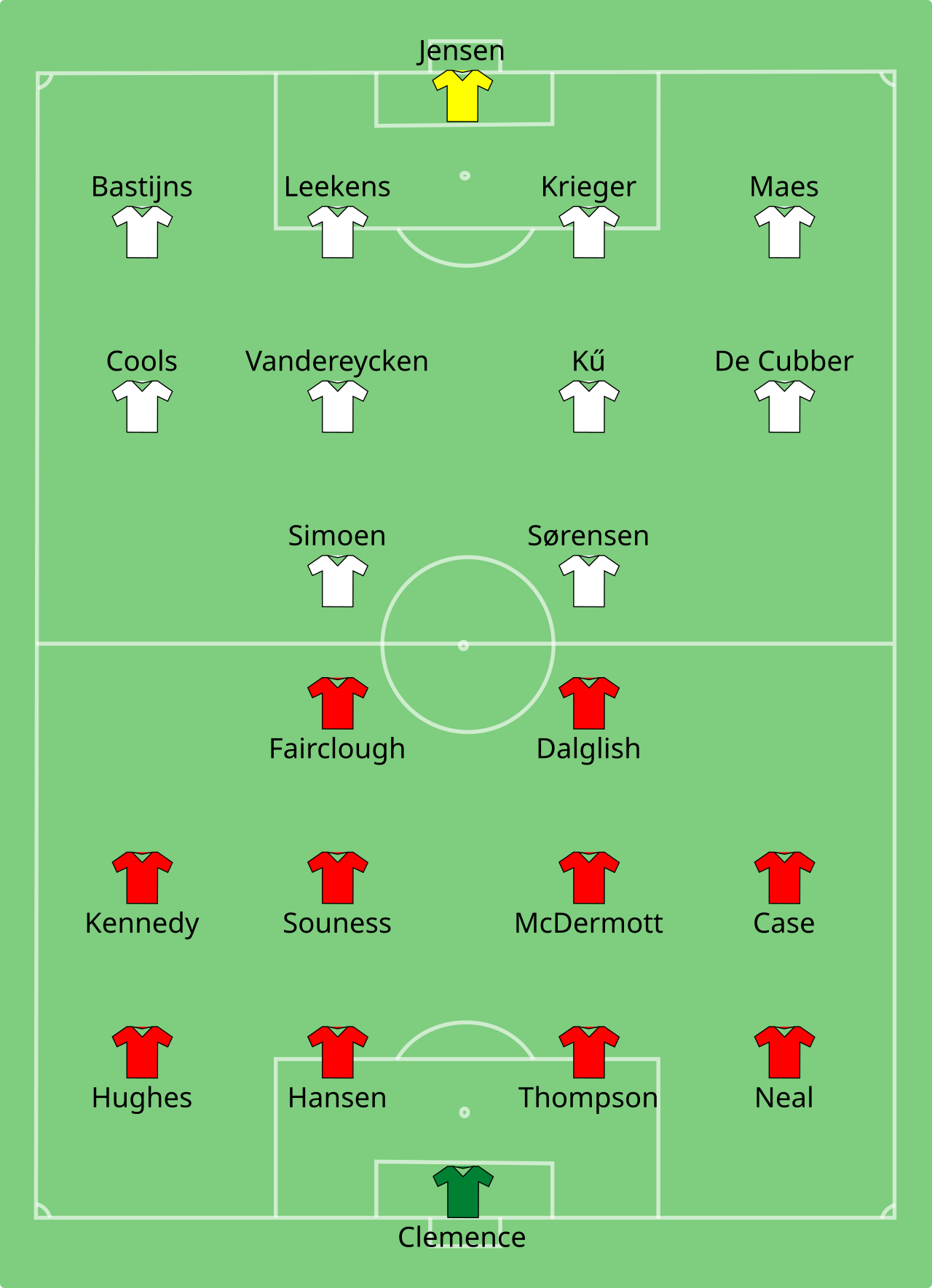
The defining moment in the history between these two clubs occurred in the 1978 European Cup final at Wembley, where Liverpool secured a 1-0 victory [1]. The decisive goal was scored by Sir Kenny Dalglish, a performance that established a psychological edge for the English side in their subsequent European encounters [1]. This historical result remains a focal point for fans and analysts when discussing the head-to-head record, as it represents the only meeting between the two teams in a major European final [1]. The legacy of that final continues to influence the narrative of their matchups, providing context to the current league-phase clash [1].
Head-to-Head Statistics
Statistical data reveals a significant imbalance in the historical record between Liverpool and Belgian clubs, as well as Club Brugge and English clubs. Liverpool have won 13 of their 17 matches against Belgian sides, drawing two and losing two [5]. In contrast, Club Brugge have won just one of their last 20 matches against English clubs, with the remainder split between three draws and 16 losses [5]. This disparity highlights the dominance Liverpool have historically held against Belgian opposition, a trend that Club Brugge will look to reverse in the upcoming fixture [5]. The statistical gap suggests that while the 1978 final is a key historical marker, the broader pattern of matches favors the English side [1][5].
| Statistical Category | Liverpool vs Belgian Sides | Club Brugge vs English Clubs |
|---|---|---|
| Wins | 13 | 1 |
| Draws | 2 | 3 |
| Losses | 2 | 16 |
| Total Matches | 17 | 20 |
Current Form and League-Phase Standings
Both teams enter the match with identical points tallies of nine, placing Liverpool in eighth and Club Brugge in ninth in the league-phase table [5]. However, their paths to this point have differed significantly. Liverpool's confidence is boosted by a recent 4-0 win over Manchester United on November 23, 2026, which demonstrated their attacking potency [4]. Club Brugge, conversely, have shown strong resilience after losing their league-phase opener 3-2 to Aston Villa in September, subsequently winning ten of their next eleven games [5]. This recent form suggests that while the standings are close, the momentum may favor Club Brugge in their domestic and European campaigns [4][5].
The contrast in form is further highlighted by Club Brugge's performance in high-scoring matches. Since their loss to Aston Villa, the Belgian side has culminated their winning streak with a 5-1 victory over Mechelen [5]. This ability to score and concede in large numbers is consistent with their historical Champions League record, where 19 of their last 20 proper UCL matches have featured over 2.5 goals, a competition record [5]. Liverpool, meanwhile, must manage their defensive structure against a team that thrives in open, high-scoring affairs [5].
Tactical Implications and Match Dynamics
The tactical approach for this match will be influenced by the historical and statistical context. Liverpool's recent 4-0 victory over Manchester United suggests they are in an attacking mindset, which may align with Club Brugge's preference for open games [4]. However, the head-to-head record shows that Liverpool have historically been successful against Belgian sides, winning 13 of 17 such matches [5]. This historical success could provide Liverpool with a psychological advantage, potentially allowing them to control the tempo of the game [5]. Club Brugge, aware of their poor record against English clubs, may adopt a more defensive posture to limit Liverpool's attacking options [5].
Scoring Expectations
Club Brugge's record of 19 over-2.5 goal matches in their last 20 UCL proper games indicates a likelihood of a high-scoring affair [5]. Liverpool's recent 4-0 win suggests they are capable of scoring multiple goals, which could contribute to exceeding the 2.5 goal threshold [4]. The combination of these factors points to a match where both teams may look to attack, potentially resulting in a volatile and entertaining encounter [4][5]. The historical rivalry from the 1978 final adds an extra layer of intensity to this tactical battle [1].
Key Players and Individual Performances
While specific player statistics for the upcoming match are not detailed in the provided sources, the historical context highlights the importance of key figures. Sir Kenny Dalglish's goal in the 1978 final remains a landmark moment for Liverpool [1]. In the current context, Liverpool's attacking players will be crucial in exploiting the defensive vulnerabilities of Club Brugge, as evidenced by their recent 4-0 win over Manchester United [4]. Club Brugge's forwards will need to capitalize on their team's tendency to be involved in high-scoring matches, as seen in their 5-1 win over Mechelen [5]. The individual performances of these players will be decisive in determining the outcome of the match [4][5].
Significance of the Match
This match is significant not only for its immediate impact on the league-phase standings but also for its place in the historical narrative between the two clubs. With both teams on nine points, a win could provide a crucial boost in their European campaign [5]. The historical rivalry, dating back to the 1978 final, adds a layer of prestige to the encounter [1]. For Club Brugge, a victory would be a notable achievement given their poor record against English clubs [5]. For Liverpool, a win would continue their historical dominance against Belgian sides [5]. The match thus serves as a continuation of a long-standing European rivalry [1][5].
Conclusion
The Club Brugge vs Liverpool match in the UEFA Champions League league phase is a contest rich with historical and statistical context. The 1978 European Cup final remains a defining moment in their rivalry [1]. Current form shows Liverpool arriving with confidence from a domestic win, while Club Brugge have a strong recent run of games [4][5]. The head-to-head statistics favor Liverpool, but Club Brugge's tendency to be involved in high-scoring matches could lead to an open game [5]. The outcome will have important implications for both teams' positions in the league-phase table [5]. This match is a significant fixture in the European calendar, combining historical legacy with current competitive stakes [1][4][5].
Sources & citations
- Champions League LIVE: Sporting Lisbon vs Manchester... - BBC Sport
- Club Brugge vs Liverpool: UEFA Champions League stats & head ...
- Club Brugge Win 5-1 Before Liverpool: Manager "Disappointed"
- Preview: Club Brugge vs Liverpool - prediction, team news, lineups
- Club Brugge v Liverpool LIVE 25/11/2026 | Football - Flashscore