
1. Harvesting and Initial Pod Processing
Cocoa trees bear pods containing wet beans surrounded by sweet pulp. Careful removal of the pods with a knife is required to avoid damage to the flower cushions, which ensures future yields [3]. The harvest period spans several months, typically featuring a major peak and a minor peak of pod ripeness [3]. This staggered maturation means farmers must make multiple passes through the grove rather than a single harvest event.
Pod Breaking and Bean Extraction
Once harvested, the pods are split open to extract the wet beans. This step must be performed swiftly to prevent contamination or premature germination. The beans are then piled with their surrounding pulp for the fermentation stage that follows.
Preliminary Sorting
Before fermentation begins, beans are sorted to remove debris, broken kernels, and any pods that show signs of disease. This initial cleaning sets the stage for consistent flavour development in later steps.
2. Fermentation: The Farm‑Level Flavour Foundation
Fermentation is where the foundation of chocolate flavour is laid. Between 36 and 72 hours, the wet beans are fermented during the initial stages of processing [3]. This biological process, driven by microbes in the pulp, reduces bitterness and develops the precursor compounds that will later be enhanced by roasting.
Types of Fermentation
Farmers employ various methods—heap, box, or basket fermentation—each influencing the final flavour profile. The duration and temperature of fermentation vary by region, but all aim to achieve the same chemical transformation of sugars and proteins within the bean.
Impact on Flavour and Safety
Good chocolate flavour cannot be produced by adhering to only one of these stages; flavour development occurs both on the farm through fermentation and in the factory at the roasting step [3]. Proper fermentation also reduces microbial load, contributing to food safety before the beans enter the global supply chain.
3. Drying and Preliminary Cleaning
After fermentation, beans are spread out in the sun or in mechanical dryers to reduce moisture content to around 7–8 %. This drying phase is critical: over‑drying makes beans brittle, while under‑drying promotes mould growth during storage. Properly dried beans become the commodity traded on futures markets [1].
Cleaning and Sorting
Once dry, the beans undergo cleaning to remove any remaining foreign matter. Good chocolate flavour cannot be produced by adhering to only one of these stages; flavour development occurs both on the farm through fermentation and in the factory at the roasting step [3]. The inside of an undamaged cocoa bean is clean and will remain so if stored properly and not mixed with contaminated materials [3].
Storage Before Export
Cleaned beans are packed in jute sacks and stored in cool, dry conditions until they are shipped. This interim storage preserves quality and prevents contamination, ensuring that the beans retain the flavour characteristics developed during fermentation.
4. Roasting: The Factory‑Level Flavour Transformation
Roasting is the final major flavour‑development step, occurring after the beans have been cleaned and graded. This thermal process caramelizes sugars, develops aromatic compounds, and reduces remaining microbial load. The temperature and duration of roasting are closely guarded secrets among chocolate manufacturers, as they directly influence the final taste profile.
Roasting Profiles and Bean Varieties
Different cocoa varieties—Forastero, Criollo, and Trinitario—respond differently to roasting. Forastero, the most widely used variety [1], typically requires higher temperatures, while Criollo and Trinitario may be roasted more gently to preserve their delicate flavour notes.
Post‑Roast Winnowing and Grading
After roasting, the shells are removed through winnowing, leaving the nibs. These nibs are then graded by size and quality before being processed further into cocoa butter, cocoa powder, or chocolate liquor. This grading step ensures consistency across batches used in commercial products.
5. Grinding, Pressing, and Product Separation
Cocoa nibs are ground into a thick paste known as chocolate liquor, despite containing no alcohol. This paste consists of cocoa solids and cocoa butter in roughly equal proportions. The grinding process generates heat, which melts the cocoa butter and facilitates further processing.
Pressing to Separate Butter and Solids
The chocolate liquor is then pressed to separate cocoa butter from the cocoa solids. This mechanical pressing yields a fat that is used in chocolate production, cosmetics, and pharmaceuticals, while the defatted solids are pulverized into cocoa powder.
Product Diversification
Manufacturers can adjust the ratio of cocoa butter to cocoa solids to create different product types. Higher cocoa butter content produces smoother, melting chocolate, while more solids yield a powder suited for baking and beverages. This flexibility underpins the wide range of cocoa‑derived products found in global markets.
6. Trading, Futures, and Market Dynamics
Cocoa beans, cocoa butter, and cocoa powder are traded on futures markets, providing price discovery and risk management for producers and processors [1]. These financial instruments allow stakeholders to lock in prices months in advance, hedging against the volatility of harvest yields and geopolitical disruptions.
Price Determination and Major Producers
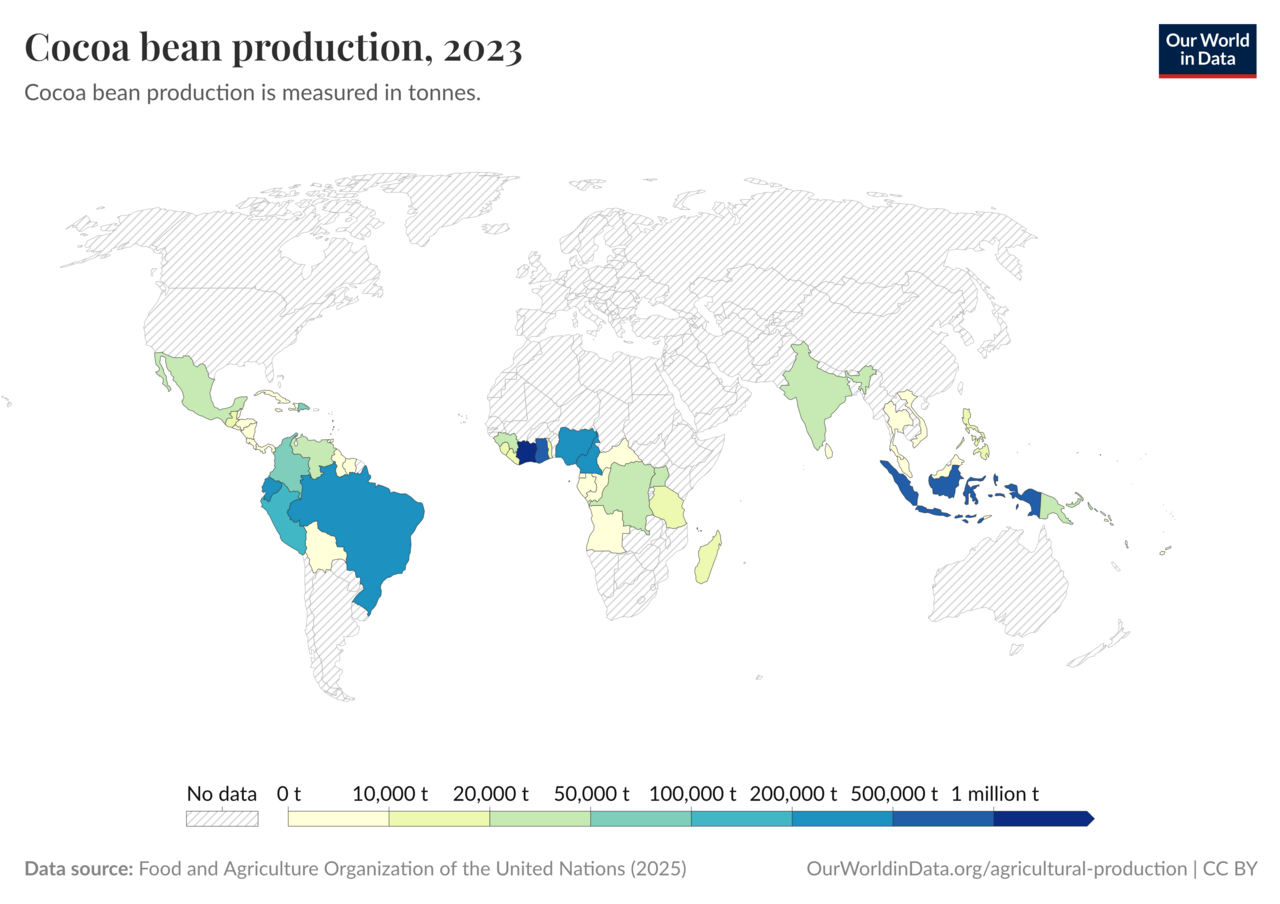
Futures prices are influenced by production volumes, weather events, and policy changes in major producing regions. In 2024, global cocoa bean production reached 5.8 million tonnes, with Ivory Coast leading at 38% of the total [1]. Any shift in Ivory Coast’s output has an outsized impact on global market prices.
Speculation and Industry Impact
Traders and speculators trade cocoa futures based on expectations of future supply‑demand balances. This activity can amplify price moves, affecting everything from small‑batch chocolate makers to large confectionery corporations. The transparency of futures markets also helps producers plan planting and fermentation investments.
7. Quality Control, Food Safety, and Certification
Throughout processing, quality control checks ensure that beans meet industry standards for moisture, defect counts, and contamination. The inside of an undamaged cocoa bean is clean and will remain so if stored properly and not mixed with contaminated materials [3]. Any deviation from these standards can result in batch rejection or downgrading.
Microbial and Mycotoxin Testing
Laboratory tests screen for total plate count, coliforms, Salmonella, and aflatoxins—mycotoxins that can develop during improper fermentation or storage. Maintaining strict hygiene from farm through factory is essential to meet both regulatory requirements and consumer safety expectations.
Sustainability and Farmer Certification
Programs such as Rainforest Alliance and UTZ certify farms that meet environmental and social criteria. These certifications often include training on proper fermentation and drying techniques, which improve both bean quality and farmer livelihoods. Certified beans may command price premiums in certain markets.
8. Historical Evolution and Global Spread
Cacao trees are native to the Amazon rainforest [1], but today they are cultivated across tropical regions within 20 degrees of the equator. The crop’s journey from indigenous Amazonian use to a global commodity reflects centuries of trade, colonisation, and agricultural improvement.
Varietal Development and Colonial History
The three main varieties of cocoa plants—Forastero, Criollo, and Trinitario—have distinct histories. Forastero, originally from the Amazon, now accounts for the majority of planted material due to its hardiness [1]. Criollo, prized for flavour, is more disease‑sensitive and represents a smaller share of production. Trinitario, a natural hybrid, combines the resilience of Forastero with the flavour quality of Criollo.
Modern Industry Consolidation
In the twentieth century, large chocolate manufacturers consolidated control over the cocoa supply chain, from bean sourcing to finished product. This consolidation has shaped modern processing standards, but it has also drawn scrutiny regarding farmer incomes and environmental impact, prompting recent industry moves toward greater transparency and direct‑trade relationships.
9. Future Trends and Emerging Technologies
The cocoa industry faces pressures from climate change, disease, and rising demand. Innovations in fermentation science, precision drying, and cultivar development are being explored to stabilise yields and flavour quality. Genetic research into disease‑resistant trees holds promise for securing future supply.
Alternative Processing Methods
Some producers experiment with controlled‑fermentation inocula, solar‑assisted drying, and low‑temperature roasting to create distinctive flavour profiles while reducing energy use. These methods aim to differentiate premium products in a competitive market.
Digital Traceability and Blockchain
Blockchain and digital ledger technologies are being piloted to track cocoa from farm to factory, providing consumers with verifiable information about origin, farmer payments, and environmental impact. This traceability could reshape market dynamics by rewarding quality and sustainability with price premiums.