
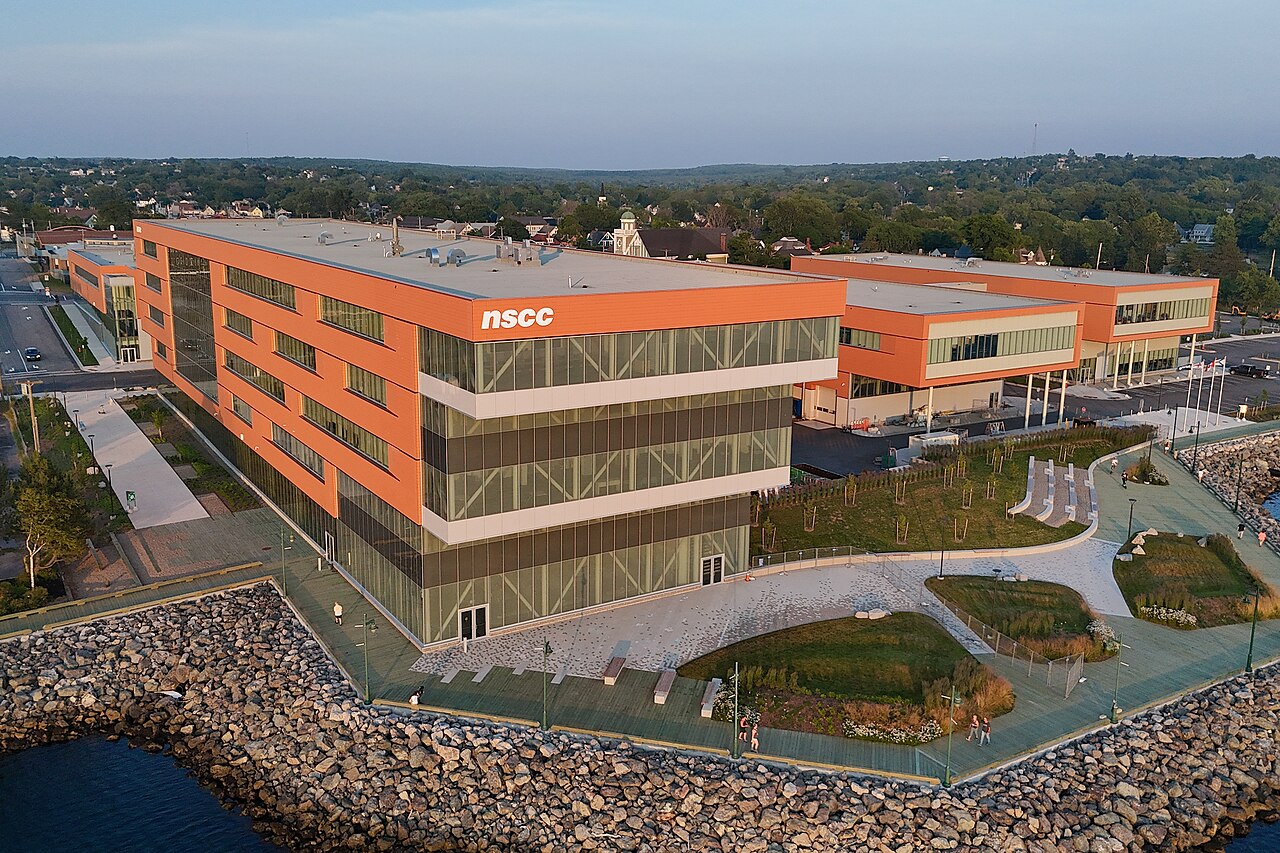
Overview and Definition
A community college is a type of undergraduate higher education institution, generally leading to an associate degree, certificate, or diploma [3]. In the United States, these institutions are publicly funded and operate as two-year colleges, serving as a lower-cost pathway to higher education [4]. They typically follow an open enrollment policy for students who have graduated from high school, making post-secondary education accessible to a broad demographic [3,4]. This open-access model distinguishes them from more selective four-year universities and reflects their mission to serve local communities rather than elite populations [4].
Historical Origins and Mission
The community college model emerged in the early 20th century as a response to the need for accessible vocational training and college transfer pathways. While the Wikipedia source [3] notes that the term has different meanings internationally, in the U.S. context these institutions were designed specifically to democratize higher education. Their mission combines workforce preparation with academic transfer, serving students who might otherwise be excluded from higher education due to cost or location [4].
Comparison with Other Institutions
Globally, the term 'community college' does not have a uniform meaning. In Australia, for instance, the term refers to small private businesses running short self-improvement or hobbyist courses, while equivalent institutions are Technical and Further Education (TAFEs) [3]. This contrast highlights that the community college model is primarily a North American phenomenon, distinct from the TAFE system which carries on the tradition of adult education established in the mid-19th century with evening classes to help adults enhance numeracy and literacy skills [3]. The U.S. public two-year sector therefore represents a unique institutional form not directly comparable to these international alternatives [4].
Academic Programs and Transfer Pathways
Community colleges provide two primary types of programs: workforce education and college transfer academic programs [3,4]. The transfer pathway allows students to complete the first two years of a bachelor's degree at a community college and then transfer to a four-year institution to complete their degree. This model provides a financial bridge for students who cannot afford four-year tuition from the outset [4]. The associate degree is the most common credential awarded, typically requiring sixty semester credits of coursework [3].
Remedial and Developmental Education
A significant function of community colleges is providing remedial education for students who need to strengthen foundational skills before entering college-level coursework. This developmental education role serves students who may have been out of the academic system for some time or who faced educational disadvantages in secondary school [4]. By offering these courses, community colleges act as a gateway, preparing students for success in higher education rather than simply excluding them based on prior academic performance [4].
Certificates and Workforce Credentials
Beyond associate degrees, community colleges offer certificates and diplomas in specific vocational fields. These programs are designed to meet local workforce needs and can often be completed in less than two years [4]. Fields include nursing, information technology, advanced manufacturing, and allied health professions. The workforce education mission aligns closely with regional economic development goals, as employers frequently partner with community colleges to design training programs that address specific skill shortages [3,4].
Admissions and Open Enrollment Policy
Community colleges generally have an open enrollment policy for students who have graduated from high school [3,4]. This means that admission is not competitive; any high school graduate or GED holder can enroll. This policy reflects the institution's commitment to accessibility and serves as a stark contrast to the selective admissions processes of four-year universities. Open enrollment does not guarantee placement in all courses, as some programs may have prerequisites or capacity limits, but it removes the barrier of competitive admission [4].
International Admissions Considerations
While the open enrollment policy is a defining characteristic, international students must often meet additional requirements such as English language proficiency tests and visa documentation. The community college pathway has become popular among international students seeking a more affordable entry point into the U.S. higher education system, sometimes followed by transfer to a university [4]. However, the open enrollment policy primarily applies to domestic students meeting basic residency requirements [3,4].
Dual Enrollment and High School Partnerships
Many community colleges maintain partnerships with local high schools, allowing high school students to enroll in college courses through dual enrollment programs. This allows students to earn college credit while still in high school, reducing the time and cost needed to complete a degree after graduation. These partnerships exemplify the community college's role in supporting educational continuity from secondary to post-secondary education [4].
Funding and Cost Structure
Community colleges in the United States are public, two-year colleges that serve as a lower-cost pathway to higher education [4]. Because they are publicly funded, tuition rates are significantly lower than those of private four-year institutions. State funding constitutes the primary revenue source, supplemented by property taxes and federal financial aid programs. This cost structure makes community colleges accessible to students across socioeconomic strata [4].
Financial Aid and Student Support
Students at community colleges have access to federal financial aid, including Pell Grants, student loans, and work-study programs. The lower cost structure often means that students can attend with minimal debt, or even tuition-free through state programs and scholarships. Many community colleges also provide additional support services such as childcare, tutoring, and career counseling to help students persist to completion [4].
State-by-State Variation
Funding levels and tuition rates vary considerably across the fifty states, reflecting different priorities in state higher education budgets. Some states have implemented free community college initiatives, making tuition free for eligible students regardless of income. These policies reflect state-level recognition of the community college's role in workforce development and social mobility [4]. The variation means that the 'lower-cost pathway' advantage is not uniform nationally [4].
Student Demographics and Outcomes
Community colleges serve a diverse student body, including recent high school graduates, working adults, and students seeking career changes. The open enrollment policy naturally attracts students who might not gain admission to more selective institutions. Approximately 40 percent of all undergraduate students in the United States enroll in community college at some point during their academic journey [4]. This demographic breadth makes them a critical barometer of access and equity in American higher education [4].
Completion and Transfer Rates
Outcomes for community college students vary significantly. Some students earn associate degrees and enter the workforce immediately, while others transfer to four-year institutions to complete bachelor's degrees. Transfer rates to four-year universities have been a focus of policy attention, with research indicating that many students successfully transfer but face challenges in credit transferability and degree completion timelines [4]. The '2+2' transfer model is the most common pathway, but success depends on proper course planning and articulation agreements between institutions [4].
Economic Impact on Communities
Community colleges have a substantial economic impact on their local communities. They serve as training grounds for local industries, provide continuing education for working professionals, and often act as anchors for economic development in their regions. Studies have shown that every dollar invested in community colleges generates significant returns in increased tax revenue and reduced social service costs [4]. The institutions' focus on workforce education directly addresses regional skill gaps and supports local economic resilience [3,4].
International Perspectives and Comparisons
The term 'community college' has different meanings in different countries, which creates challenges for international comparison [3]. In Australia, the equivalent institutions are Technical and Further Education (TAFEs), which carry on the tradition of adult education established in the mid-19th century with evening classes to help adults enhance numeracy and literacy skills [3]. Unlike the U.S. model, Australian TAFEs are not exclusively two-year institutions and encompass a broader range of vocational and hobbyist education. This distinction underscores that the community college model is not a universal phenomenon but rather a specific institutional form [3].
Global Trends in Open-Access Higher Education
Many countries are experimenting with models similar to the community college concept to expand access to higher education. The European Bologna Process, for instance, has introduced foundation degrees and shorter cycles that function somewhat like community college transfer pathways. However, the U.S. community college remains distinctive in its combination of open enrollment, two-year duration, and explicit mission of university transfer [4]. Other nations are studying the U.S. model as they seek to reduce barriers to post-secondary education [4].
The Role of Community Colleges in Developing Nations
In some developing nations, community college-style institutions are being established to address the shortage of higher education places and to provide vocational training aligned with labor market needs. These initiatives often draw on the U.S. community college model but must adapt to different cultural, economic, and infrastructural contexts. The core principles of accessibility, affordability, and relevance to workforce needs remain consistent, even as the specific institutional forms vary [3,4].
Governance and Accreditation
Community colleges operate under complex governance structures that vary by state and institution type. Most are governed by local boards of trustees or state higher education agencies. Accreditation is a critical quality control mechanism, with regional accrediting bodies evaluating academic programs, faculty qualifications, and institutional effectiveness. Proper accreditation is essential for students to transfer credits and for graduates to pursue further education [4].
Regional vs. National Accreditation
The distinction between regional and national accreditation is particularly important in the community college sector. Regionally accredited institutions generally have more stringent standards and allow for easier credit transfer to other regionally accredited colleges. Nationally accredited institutions are often vocational or for-profit colleges. Students planning to transfer should verify the accreditation status of their intended community college to ensure that credits will be accepted by target four-year institutions [4].
State Funding Formulas and Performance-Based Funding
Many states have moved toward performance-based funding formulas that tie a portion of community college appropriations to outcomes such as graduation rates, transfer rates, and workforce placement. This shift reflects policymakers' desire to ensure taxpayer return on investment. However, critics argue that such formulas may incentivize institutions to cherry-pick better-prepared students or to push at-risk students out, potentially undermining the open-access mission [4]. The balance between accountability and accessibility remains a subject of ongoing debate [4].
Technology and Innovation in Delivery
Community colleges have been at the forefront of educational innovation, particularly in the realm of technology-enhanced learning. Many institutions have embraced online course delivery, hybrid formats, and digital learning platforms to increase flexibility for working students. The COVID-19 pandemic accelerated this trend, forcing rapid adoption of remote instruction models [4]. These technological adaptations have helped community colleges maintain accessibility during disruptions [4].
Dual Enrollment and Virtual Learning
The expansion of virtual dual enrollment programs has allowed high school students to access college courses regardless of geographic location. Online platforms have made it possible for students in rural areas to participate in college-level coursework without traveling to a campus. This innovation extends the community college's reach and supports its mission of open access [4].
Workforce Training and Digital Skills
Community colleges are responding to employer demand for digital skills training by developing certificate programs in areas such as cybersecurity, data analytics, and cloud computing. These short-term, industry-aligned credentials address the rapidly changing technology landscape. The colleges' agility in program development, compared to larger universities, makes them effective partners for workforce upskilling [3,4].
Challenges and Criticisms
Despite their open-access mission, community colleges face significant challenges. Completion rates remain lower than those of four-year institutions, with only a fraction of students earning degrees or transferring within three years. Funding constraints, particularly during economic downturns, can lead to program cuts and reduced student services [4]. The open enrollment policy, while inclusive, also means that many students enter underprepared, requiring extensive remedial coursework that can delay progress toward credentials [4].
Transfer Articulation Problems
A persistent criticism involves the transfer of credits between community colleges and four-year universities. Students often discover that courses they completed do not count toward their intended degree program at the receiving institution. This can result in extended time to degree and increased costs, undermining the financial advantage of the community college pathway [4]. Articulation agreements and transfer maps are intended to mitigate this issue, but implementation varies widely [4].
Stigma and Perception
Some students and families perceive community college attendance as a 'second choice' compared to immediate four-year university enrollment. This stigma can affect student self-concept and transfer motivation. Research suggests that such perceptions are changing as the value and outcomes of community college education become more widely recognized, but legacy attitudes persist [4]. The financial and academic benefits of the community college route are increasingly documented, yet the cultural perception lag remains [4].
Future Directions and Policy Initiatives
The community college sector is at a crossroads, with policymakers, educators, and employers debating its future role. Proposes for free community college, expanded workforce training partnerships, and improved transfer pathways are gaining traction at state and federal levels. The Biden administration's American Families Plan included provisions for universal pre-K and community college tuition assistance, reflecting the institution's recognized value in the national education strategy [4]. These policy initiatives aim to strengthen the community college's function as a engine of social mobility [4].
Equity-Minded Reforms
Equity-minded reforms focus on closing completion gaps for historically underserved populations, including low-income students, students of color, and first-generation college students. Initiatives such as guided pathways, mandatory advising, and financial aid reform are designed to support these students through to completion. Research indicates that structured support services significantly improve outcomes for vulnerable student groups [4]. The community college's open-access mission makes it a natural vehicle for such equity-focused interventions [4].
Integration with Four-Year Institutions
Efforts to improve the seamless transfer of students from community colleges to four-year universities are intensifying. Statewide transfer guarantees, common course numbering systems, and guaranteed admission agreements are being implemented in various jurisdictions. These initiatives recognize that the community college-four-year university partnership is essential for maximizing higher education access and efficiency [4]. The goal is to make the '2+2' pathway as predictable and reliable as possible for students [4].
Notable Alumni and Cultural Impact
Community colleges have produced a significant number of notable alumni across various fields, including business, politics, entertainment, and science. The open-access model has enabled individuals from diverse backgrounds to achieve upward mobility through higher education. While community colleges may not have the same brand recognition as elite universities, their impact on individual lives and communities is profound [4].
Business and Entrepreneurship
Many successful entrepreneurs and business leaders began their higher education journey at a community college. The practical, career-focused curriculum and lower cost structure provide an attractive starting point for students who later transfer to four-year institutions or launch ventures directly. The associate degree in business administration or entrepreneurship serves as a foundation for many career paths [4].
Arts, Media, and Athletics
Community colleges have also been launching pads for careers in the arts, media, and athletics. Students have transferred to prestigious art schools and film programs after completing foundational coursework at community colleges. In athletics, many NCAA student-athletes begin their collegiate careers at community colleges before transferring to four-year institutions with athletic scholarships [4]. The flexible schedule and lower commitment level make community colleges an attractive option for students pursuing creative or athletic careers alongside their education [4].