
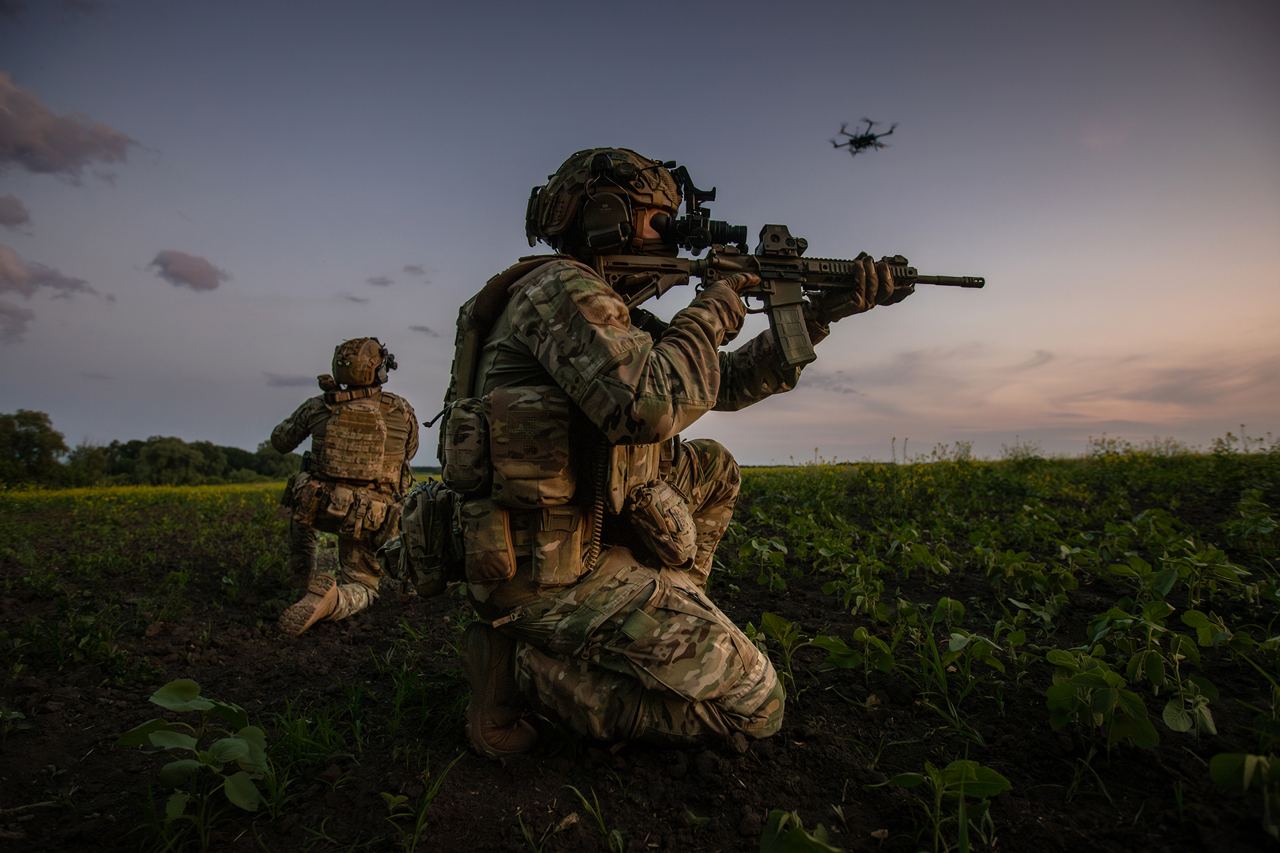
Overview: The Drone Proliferation Phenomenon
The landscape of modern warfare has been fundamentally altered by the rapid proliferation of unmanned aerial systems. By 2024, over 40 countries possessed armed drones, a dramatic increase from only three countries in 2010, signaling the democratization of this technology across the global stage [3]. This widespread availability has enabled both state actors and non-state groups to integrate drones into their military doctrine, creating new challenges for traditional defense architectures. The scale of adoption is further evidenced by ACLED's documentation of drone usage in conflict across at least 34 countries in 2023 alone [3].
Technological Diffusion and Access
The diffusion of drone technology reflects broader shifts in global military capabilities. No longer restricted to major powers, unmanned systems have become accessible to a diverse range of actors, from established militaries to insurgent organizations. This accessibility has been facilitated by technology transfers, reverse engineering, and the global market for commercial drone platforms adapted for military use. The result is a multipolar drone landscape where operational capabilities vary significantly based on the acquiring nation's technical capacity and financial resources.
Strategic Implications for Regional Security
The proliferation of cross-border capable drones has profound implications for regional security dynamics. States must now contend with the possibility of aerial incursions from neighboring territories, while non-state actors gain the ability to project power beyond their immediate operating areas. This shift forces a reevaluation of border security protocols, air defense priorities, and the rules of engagement for responding to aerial threats that may originate from beyond traditional combat zones.
Houthi Drone Program and Iranian Technology Transfer
Origins and Development Timeline
The Houthi movement's drone capabilities emerged as a significant factor in regional conflict dynamics. Following the establishment of large-scale drone production around 2018, the Houthis leveraged Iranian technology transfers to develop indigenous capabilities [3]. This partnership represents a model of asymmetric warfare where a non-state actor receives sophisticated technology from a state sponsor, enabling them to challenge more conventional military forces. The timeline of development shows rapid progression from initial capabilities to sustained operations across multiple fronts.
Range and Reach Demonstrations
One of the most striking demonstrations of Houthi drone capabilities occurred on July 19, 2024, when a Houthi drone flew for approximately 16 hours from Yemen over a distance of more than 2,600 kilometers to reach Tel Aviv [3]. This operation exemplified the growing range capabilities of locally produced drones and their ability to strike deep into adversary territory. The flight duration and distance covered represent significant technical achievements in drone endurance and navigation systems, particularly given the geographical challenges of the region.
Impact on Civilian Populations and Infrastructure
The operational reach of Houthi drones has direct consequences for civilian safety and infrastructure. The July 2024 attack on Tel Aviv resulted in one Israeli citizen killed and at least eight others injured [3]. This incident underscores the dual-use nature of drone technology, where systems designed for military reconnaissance or strikes can inflict casualties on civilian populations in urban centers. The psychological impact of such attacks, combined with physical damage, represents a new dimension of modern conflict where no territory is beyond the reach of aerial threats.
Cross-Border Drone Strikes in South Asia
Indian Army Operations and Border Security
The Indian Army conducted a significant cross-border drone strike on November 12, 2026, targeting ULFA-I bases in Nanyun and Lahe townships [4]. This operation represents an escalation in the use of drone technology for cross-border military actions in the South Asian context. The strike reportedly killed five members including three senior commanders and wounded 19 others, demonstrating the tactical effectiveness of drones for precision targeting in complex border terrains. The operation highlights how drones can be employed for cross-border raids without requiring large ground forces.
Targeting Senior Leadership
The reported killing of three senior commanders in the November 2026 strike illustrates the force multiplier effect of drone technology in eliminating high-value targets. Drones enable militaries to conduct precision strikes against specific individuals within hostile territory, reducing the risk to conducting forces compared to traditional cross-border raids. This capability has implications for how armed groups structure their leadership and command operations, potentially forcing more dispersed and decentralized organizational models.
Operational Challenges in Mountainous Terrain
The selection of Nanyun and Lahe townships as targets suggests the Indian Army's ability to conduct drone operations in challenging geographical environments. Mountainous border regions present unique technical challenges for drone navigation, target acquisition, and safe return operations. The success of this operation indicates advances in drone autonomy and terrain-following capabilities that can operate effectively in diverse geographical conditions beyond traditional desert or urban environments.
Alliance Defense Gaps and Maritime Interdiction
Maritime Drone Threats and Border Security
Maritime and cross-border drone interdiction remains an unresolved gap for alliance defenses [5]. The maritime domain presents particular challenges for drone detection and interception, as sea backgrounds, weather conditions, and the vast expanse of ocean make comprehensive coverage difficult. Traditional air defense systems, designed primarily for terrestrial threats, often lack the maritime adaptation necessary to counter drone threats approaching from sea routes. This gap has implications for naval security, coastal defense, and the protection of maritime infrastructure.
Alliance Coordination and Response Protocols
The unresolved nature of maritime drone interdiction highlights challenges in alliance coordination and response protocols. Different member nations may have varying capabilities, thresholds for engagement, and technical systems for detecting and intercepting drones. This fragmentation can create exploitable gaps that adversaries may target, particularly in multinational maritime operations where standardized procedures are still evolving. The development of unified maritime drone defense frameworks remains an ongoing priority for many security alliances.
Vulnerabilities in Counter-Drone Architecture
Ukraine's reliance on Starlink for interceptor operations indicates that the counter-drone architecture itself carries vulnerabilities that adversaries could exploit [5]. This dependency reveals a critical weakness in modern drone defense systems: their reliance on external communication and navigation infrastructure. If an adversary can disrupt or spoof these links, the entire counter-drone capability may be compromised. This vulnerability has prompted reassessment of counter-drone systems' design, with emphasis on redundant systems and independent operation capabilities.
Technical Mechanics of Cross-Border Drone Operations
Flight Endurance and Range Factors
The technical capabilities enabling cross-border drone operations involve multiple interrelated factors. Flight endurance, determined by battery technology, fuel efficiency, and aerodynamic design, dictates how far a drone can travel from its launch point. The Houthi operation's 16-hour flight covering 2,600 kilometers [3] demonstrates the kind of endurance requirements for strategic cross-border missions. Modern drones achieving such ranges typically incorporate advanced propulsion systems, lightweight materials, and efficient energy management to maximize operational distance.
Navigation and Guidance Systems
Effective cross-border operations require sophisticated navigation and guidance systems capable of traversing potentially hundreds of kilometers while maintaining course accuracy. GPS-denied environments, terrain matching, and inertial navigation systems all play roles in ensuring drones reach their intended targets. The success of operations like the Tel Aviv strike and the Indian Army cross-border mission suggests reliable performance of these navigation systems even in contested electronic environments where GPS signals may be jammed or spoofed.
Payload Capabilities and Target Engagement
The payload capacity of cross-border drones determines their operational utility, balancing range with the weight of sensors or ordnance. Larger payloads typically reduce achievable range, creating a design trade-off that operators must manage based on mission requirements. The versatility of modern drones allows for interchangeable payloads, enabling the same platform to perform reconnaissance, surveillance, or strike missions depending on mission needs, making them particularly adaptable tools for cross-border operations.
Geopolitical Dimensions and State Responses
Regional Power Dynamics and Drone Proliferation
The proliferation of armed drones has reshaped regional power dynamics, as states seek to maintain credible deterrents against drone threats while developing offensive capabilities. The acquisition of drone technology by over 40 countries by 2024 [3] has created a complex security environment where conventional military advantages may be offset by drone capabilities possessed by potential adversaries. This dynamic has prompted defense budget reallocations and the prioritization of drone warfare capabilities in national security strategies across multiple regions.
Technology Transfer and Supply Chain Dependencies
The Houthi case exemplifies how technology transfers can rapidly alter the balance of power in conflict zones [3]. Iranian technology transfers to the Houthis enabled the development of large-scale drone production capabilities around 2018, creating a chain of proliferation that extends beyond the immediate conflict zone. These technology transfer dynamics create supply chain dependencies that can influence the trajectory of regional conflicts and determine which actors gain access to increasingly sophisticated drone capabilities. The global drone supply chain has become a significant factor in international relations and security assistance decisions.
Counter-Proliferation Measures and Policy Responses
In response to widespread drone proliferation, governments and international organizations have begun developing counter-proliferation measures and policy frameworks. These include export controls on drone technologies, development of domestic counter-drone capabilities, and international cooperation efforts to establish norms for responsible drone use. The effectiveness of these measures varies, as the dual-use nature of much drone technology makes strict controls challenging to enforce, and the rapid pace of technological development often outstrips policy development.
Civilian Impact and Human Security Considerations
Casualty Figures and Civilian Harm
The human cost of cross-border drone warfare is increasingly evident in casualty figures from specific incidents. The July 2024 Houthi attack on Tel Aviv resulted in one killed and at least eight injured [3], while the November 2026 Indian Army operation reportedly killed five members including three senior commanders and wounded 19 others [4]. These figures, while specific to documented incidents, reflect the broader pattern of casualties associated with drone strikes in cross-border contexts. The precision often attributed to drone technology does not eliminate civilian risk, particularly in densely populated border areas or when strikes occur in urban centers.
Psychological and Social Dimensions
Beyond immediate physical casualties, cross-border drone operations inflict psychological and social harms on affected populations. The sounds of approaching drones, the uncertainty of interception, and the sudden nature of strikes create environments of chronic stress for communities living within range. This psychological dimension of drone warfare adds another layer to the human security costs, as populations adapt to the constant possibility of aerial attacks regardless of their distance from active combat zones.
Infrastructure Damage and Economic Consequences
Cross-border drone strikes can inflict significant infrastructure damage with consequent economic consequences. Targeted facilities, transportation networks, and civilian buildings may be destroyed or damaged, requiring reconstruction resources that may be scarce in conflict-affected regions. The economic impact extends beyond immediate repair costs to include disrupted commerce, displaced economic activity, and long-term development setbacks for regions affected by recurring drone operations.
Future Trajectories and Emerging Trends
Technological Advancement and Capability Expansion
The trajectory of cross-border drone warfare suggests continued technological advancement and capability expansion. As drone technology becomes more sophisticated, we can expect increased ranges, longer endurance, more precise targeting capabilities, and more affordable production costs. These advancements will likely further lower the barrier to entry for new actors seeking drone capabilities, potentially expanding the number of countries and non-state groups equipped with armed drones beyond the current count of over 40 [3].
Integration with Other Military Technologies
Cross-border drones are increasingly integrated with other military technologies, creating more sophisticated combined-effects systems. Integration with satellite communications, like Ukraine's Starlink reliance [5], enables real-time targeting data transmission and remote operation capabilities. Integration with artificial intelligence could enhance autonomous target selection and navigation. These technological convergences will create new operational doctrines and countermeasure requirements as the boundaries between different military technologies blur.
Normative Developments and International Regulation
The rapid expansion of cross-border drone capabilities is likely to prompt further normative developments and international regulation efforts. As the technology proliferates and its operational use becomes more widespread, the international community may develop frameworks addressing issues such as target selection criteria, proportionality in strike decisions, and attribution of responsibility for drone operations. These normative developments could shape the legal and ethical landscape of drone warfare for decades to come, attempting to balance military utility with humanitarian concerns.