
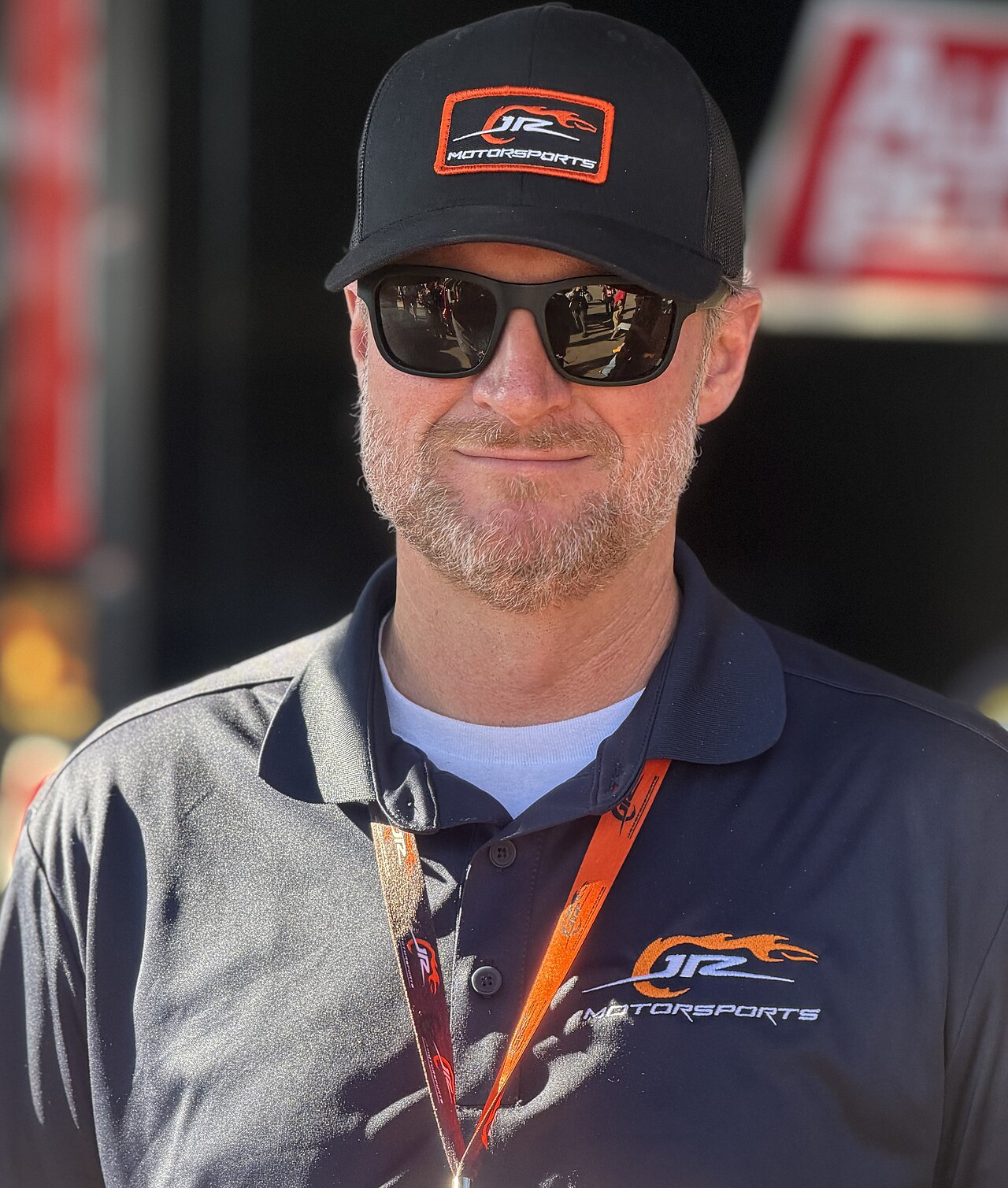
Background and Early Life
Dale Earnhardt Jr. was born on 1974-10-10 in Kannapolis, North Carolina, United States [1,5], entering a family deeply rooted in stock car racing. His father, Dale Earnhardt Sr., became a seven-time NASCAR champion, creating an environment where the sport was both heritage and profession. Growing up in North Carolina, Earnhardt Jr. was exposed to the culture of short-track racing and the expectations that come with the Earnhardt name, which shaped his early aspirations to compete at the highest levels of American motorsports.
Family Heritage and Early Exposure
The Earnhardt family legacy in NASCAR spans decades, with Dale Earnhardt Sr. winning 76 Winston Cup races and seven series championships before his death in 2001. This lineage provided Dale Earnhardt Jr. with both privilege and pressure, as he was often compared to his father from his debut in junior series competition. His North Carolina upbringing immersed him in the technical and competitive aspects of stock car racing from childhood.
Early Racing Career Path
Earnhardt Jr. began his racing career in local short tracks before moving into the NASCAR Busch Series, where he developed the skills that would later define his professional career. The transition from local short tracks to national series competition represents the typical pathway for North Carolina-born racers seeking to reach NASCAR's top tiers.
Rise Through NASCAR Developmental Series
Earnhardt Jr. captured the NASCAR Busch Series Championship in back-to-back years, winning in 1998 and 1999 [1]. This achievement established him as one of the most successful drivers in the series' history and demonstrated his ability to compete consistently over a full season. The Busch Series Championship victories served as a proving ground for the Cup Series level of competition.
1998 Championship Season
The 1998 Busch Series Championship came during Earnhardt Jr.'s sophomore full season in the series, where he demonstrated race-winning speed and consistency across the schedule. This championship marked his first major national title and signaled his arrival as a serious contender in NASCAR's secondary series.
1999 Championship Defense
Defending his title in 1999, Earnhardt Jr. again demonstrated the consistency and speed necessary to win a full-season championship. Back-to-back Busch Series championships are rare in NASCAR's developmental system, placing him in an elite group of drivers who have mastered the series' competitive demands.
Daytona 500 Victories and Cup Series Success
Earnhardt Jr. won the prestigious Daytona 500 in both 2004 and 2014 [1], joining an exclusive list of multiple winners of NASCAR's most iconic race. The 2004 victory came during his prime years with Dale Earnhardt, Inc., while the 2014 win marked his second career Daytona 500 triumph and came after his move to Hendrick Motorsports. These victories represent the pinnacle of stock car racing achievement and cemented his status as a restrictor-plate specialist.
2004 Daytona 500 Victory
The 2004 Daytona 500 victory came during Earnhardt Jr.'s tenure with Dale Earnhardt, Inc., where he drove the No. 8 Budweiser Chevrolet. This win came during a period when he was establishing himself as one of NASCAR's most popular drivers and demonstrated his ability to perform under the unique conditions of superspeedway racing.
2014 Daytona 500 Victory
The 2014 Daytona 500 victory occurred after Earnhardt Jr.'s move to Hendrick Motorsports, where he drove the No. 88 Axalta Chevrolet. This second Daytona 500 win demonstrated his ability to adapt to new teams and equipment while maintaining his competitiveness at NASCAR's most important event.
The Winston and Budweiser Shootout Championships
Earnhardt Jr. won The Winston in 2000 and the Budweiser Shootout in 2003 and 2008 [1], collecting victories in NASCAR's most prestigious exhibition events. The Winston, previously known as the Winston Select 500, is NASCAR's all-star race featuring the series' top drivers from the previous season. The Budweiser Shootout is a non-points qualifying race for pole position at the Daytona 500. These three exhibition victories add to Earnhardt Jr.'s collection of non-points accolades and demonstrate his versatility across different race formats.
2000 The Winston Victory
Winning The Winston in 2000 established Earnhardt Jr. as one of the series' top drivers, as the event features only the most successful competitors from the previous NASCAR season. The victory came during his early Cup Series career and added to his growing reputation as a restrictor-plate specialist.
2003 and 2008 Budweiser Shootout Wins
Earnhardt Jr.'s Budweiser Shootout victories in 2003 and 2008 came at Daytona International Speedway, where he demonstrated his ability to perform in the single-car qualifying format that precedes the Daytona 500. These wins added to his Daytona success and further established his reputation as a superspeedway performer.
Team Transfers and Career Milestones
Earnhardt Jr. moved from DEI to Hendrick Motorsports in 2007 [1], representing one of the most significant driver transfers of his career. This move came after seven seasons with Dale Earnhardt, Inc., where he had won 16 Cup Series races and developed into one of NASCAR's most popular drivers. The transfer to Hendrick Motorsports, NASCAR's most successful team, represented both a new challenge and an opportunity to compete for championships with a organization that had won 13 Cup Series championships.
DEI Years (1999-2006)
During his seven seasons with Dale Earnhardt, Inc., Earnhardt Jr. established himself as a race winner and fan favorite, collecting 16 Cup Series victories and the 2004 Daytona 500. His relationship with the team was deeply personal, given his father's legacy with DEI, but the move to Hendrick Motorsports represented a new chapter in his career.
Hendrick Motorsports Era (2007-2017)
During his tenure at Hendrick Motorsports, Earnhardt Jr. continued his success, including the 2014 Daytona 500 victory. The move to the No. 88 car and partnership with Hendrick Motorsports provided him with enhanced resources and competition, though he never secured a Cup Series championship with the team. His seven years with Hendrick included 23 Cup Series victories and consistent playoff contention.
Health Challenges and Season Termination
Earnhardt Jr. suffered concussions during his 2012 season that ended his season [1], highlighting the health risks that affect NASCAR drivers. These concussions forced him to miss races and ultimately sidelined him for the remainder of the 2012 season, raising awareness about head injuries in stock car racing. The incidents contributed to ongoing discussions about driver safety and concussion protocols in NASCAR.
2012 Concussion Incidents
During the 2012 NASCAR season, Earnhardt Jr. suffered multiple concussions that forced him to withdraw from competition. The incidents were significant enough to end his season prematurely and drew attention to the physical demands and risks faced by NASCAR drivers. These health challenges influenced his eventual retirement decision and his subsequent advocacy for driver safety.
Impact on Career Trajectory
The 2012 concussions represented a turning point in Earnhardt Jr.'s career, as they contributed to his decision to retire from full-time racing after the 2017 season. The physical toll of competing, combined with the concussion issues, led him to prioritize his long-term health over continued competition. This decision reflected a growing awareness in professional sports about the importance of athlete health and safety.
Retirement and Broadcasting Career
Earnhardt Jr. retired from full-time racing after the 2017 season [1], bringing an end to his 19-year NASCAR Cup Series career. His retirement came after 760 Cup Series starts, 26 victories, and 148 top-ten finishes. The decision to retire was influenced by his concussion history and a desire to focus on other aspects of his career and personal life. His retirement marked the end of an era for one of NASCAR's most popular drivers.
Transition to NBC Sports Broadcasting
Following his retirement, Earnhardt Jr. transitioned to broadcasting with NBC Sports from 2018 to 2023 [1], where he became a prominent television personality and analyst. His broadcasting career included serving as a race analyst, studio host, and commentator for NASCAR coverage on NBC and Peacock. This transition allowed him to remain connected to the sport he loves while leveraging his expertise and personality for a new audience.
Current Broadcasting Role
Starting in 2025, Earnhardt Jr. currently hosts coverage on Amazon Prime Video and TNT [1], expanding his broadcasting presence beyond NBC Sports. This move to new media platforms reflects the evolving landscape of sports media rights and provides Earnhardt Jr. with opportunities to reach different audiences. His broadcasting work continues to showcase his knowledge of NASCAR and his ability to connect with viewers.
Advocacy for Racecar Design Changes
Earnhardt Jr. urged NASCAR to make changes to the racecar design, proposing to keep the current car but use new parts from NASCAR-specified companies [3], demonstrating his engagement with the technical aspects of the sport. His proposals came during discussions about the Next Gen car introduction and reflected his desire to improve competition while maintaining the fundamental characteristics that fans appreciate. This advocacy shows that even after retirement, Earnhardt Jr. remains invested in the technical development of NASCAR vehicles.
Proposal for Gradual Parts Integration
Earnhardt Jr. proposed phasing in new parts over 5 years while keeping general concepts and theories of the current car design [3], suggesting a measured approach to vehicle evolution. This proposal reflected his understanding of the balance between innovation and consistency in NASCAR competition. His suggestion of a five-year transition period demonstrated his consideration of how changes would affect teams, manufacturers, and the competitive landscape.
Context Within NASCAR Evolution
The Next Gen car introduced in 2022 features independent rear suspension with double wishbones, sequential 5-speed transmission, rack and pinion steering, carbon fiber underbody tray, and rear diffuser [3], representing the most significant technical regulation change in NASCAR's modern era. Earnhardt Jr.'s proposals for gradual change came during this transition period, as the sport sought to improve competition while addressing concerns about passing and racing quality. His input reflects the perspective of a driver who experienced both the old and new generation of cars.
Team Ownership Ventures
Earnhardt Jr. owns Chance 2 Motorsports and JR Motorsports [1], demonstrating his transition from driver to team owner in the motorsports industry. JR Motorsports, in particular, has become one of NASCAR's most successful developmental teams, competing in the Xfinity Series and developing future Cup Series talent. This ownership venture allows Earnhardt Jr. to apply his racing knowledge and network to nurture the next generation of NASCAR drivers.
JR Motorsports Success
JR Motorsports has established itself as a powerhouse in the NASCAR Xfinity Series, winning multiple championships and developing drivers who have gone on to compete at the Cup Series level. The team's success reflects Earnhardt Jr.'s ability to identify talent and build competitive organizations, extending his influence beyond his own driving career.
Chance 2 Motorsports Operations
Chance 2 Motorsports represents Earnhardt Jr.'s expansion into additional racing operations, further diversifying his presence in the motorsports industry. The team's activities contribute to the broader Earnhardt family legacy in NASCAR and provide additional opportunities for driver development and competition.
Elementary School Visit and Community Engagement
Earnhardt Jr. visited Landis Elementary in Rowan County, North Carolina on Monday, Nov. 7, 2026 to read to kindergarteners [2], demonstrating his engagement with the local community and commitment to inspiring young readers. This visit reflects his connection to North Carolina, where he was born and raised, and his willingness to use his platform for community service. The visit to his hometown elementary school underscores the importance he places on giving back to the community that supported his racing career.
Educational Outreach
The Landis Elementary visit is part of Earnhardt Jr.'s broader commitment to educational outreach and literacy initiatives. By reading to kindergarteners, he encourages young students to develop a love of reading while serving as a positive role model from the world of professional sports. This type of community engagement helps maintain the connection between NASCAR drivers and their local communities.
North Carolina Roots
Earnhardt Jr.'s visit to Landis Elementary in Rowan County highlights his enduring connection to North Carolina, where he was born in Kannapolis and maintains strong ties. Despite his national profile and broadcasting career, he remains connected to his home state through community involvement and family. This local engagement reinforces the relationship between NASCAR's popular drivers and their regional fan bases.