
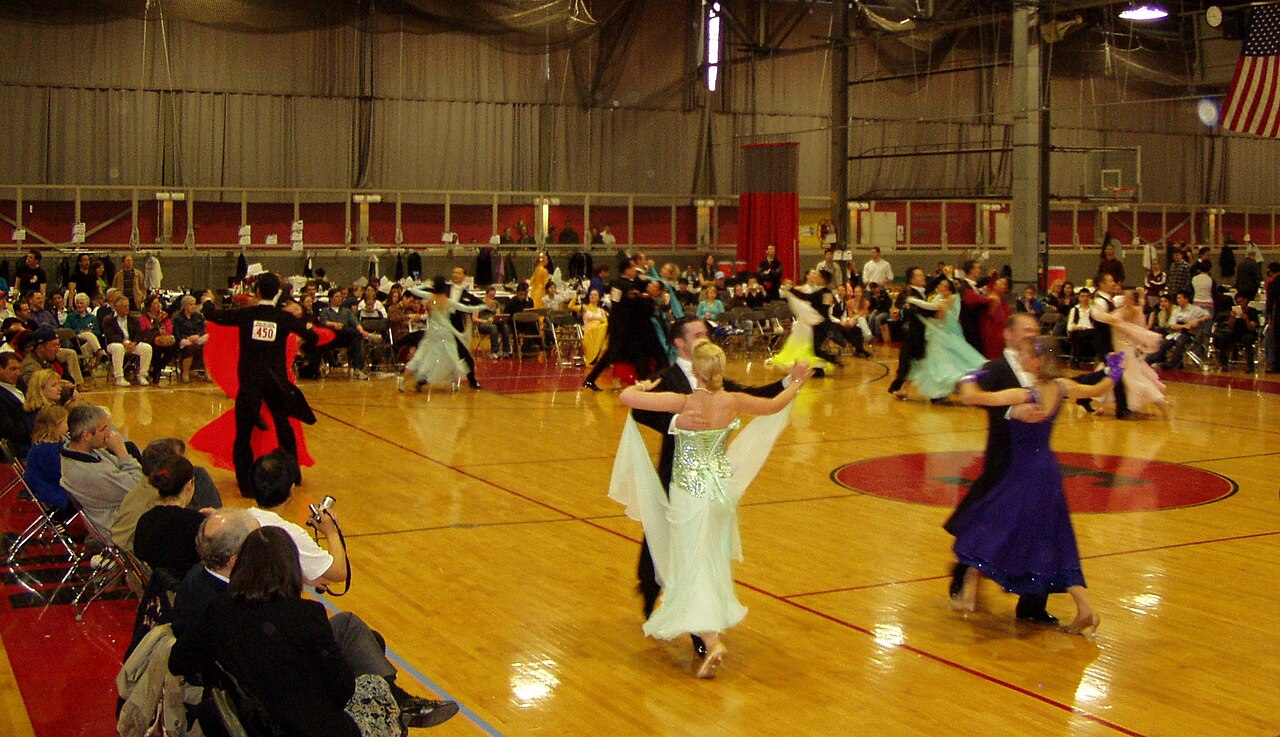
Overview and Definition
Most dancesport disciplines are competed by couples, but there are notable solo styles such as Breaking and group styles like Formation dance [1]. This structural diversity means the sport accommodates different partnership configurations while maintaining competitive standards. The couple format dominates Ballroom and Latin, while Breaking competitions often feature individual battles.
Competitive vs Social Dancing
The distinction between competitive and social dancing forms the core of dancesport identity. Competitive dancing is governed by rules, scoring systems, and judging criteria, while social dancing emphasizes improvisation and social interaction [1]. This dichotomy explains why dancesport requires formal training, technical precision, and adherence to regulated patterns.
Physical and Athletic Demands
The physical demand of dancesport has been the subject of scientific research [1]. Studies have documented cardiovascular exertion, muscular engagement, and neuromuscular coordination requirements across disciplines. Ballroom dancers exhibit athletic performance levels comparable to athletes in traditional sports, with heart rates reaching 80–90% of maximum during competition routines.
Major Dance Disciplines
The term dancesport encompasses many dance disciplines including Acrobatic Rock’n’Roll, Boogie Woogie, Breaking, Hip Hop, and Ballroom [1]. Each discipline brings distinct technical requirements, music styles, and competitive formats. Acrobatic Rock’n’Roll features athletic lifts and throws, while Boogie Woogie emphasizes rhythmic footwork and improvisation within swing music traditions.
Ballroom and Latin Styles
Ballroom dancesport includes Standard (Waltz, Tango, Viennese Waltz, Foxtrot, Quickstep) and Latin (Samba, Cha-Cha, Rumba, Paso Doble, Jive) categories. These styles originated in social ballroom traditions but were codified for competitive performance. The technical precision required for figures like the Waltz’s natural turn or the Samba’s whisk demonstrates the sport’s technical depth.
Breaking and Hip Hop
Breaking, originating from hip hop culture, represents the solo style within dancesport and features toprock, downrock, power moves, and freezes [1]. Hip Hop dance competitions emphasize choreography, musicality, and performance quality. These disciplines highlight dancesport’s evolution beyond traditional ballroom to include urban and street dance forms recognized by the World DanceSport Federation.
Para Dancesport
Para dancesport involves at least one dancer in a wheelchair [1], representing an inclusive dimension of the sport that adapts competitive formats for dancers with disabilities. This discipline ensures dancesport accessibility and follows modified rules regarding wheelchair handling, partnership dynamics, and choreography constraints.
Classification and Competition Format
Para dancesport classification systems categorize athletes based on functional ability, similar to Paralympic sports classification. Competition formats adapt traditional ballroom patterns to wheelchair capabilities while maintaining aesthetic and technical evaluation standards. Partnerships may consist of two wheelchair users, a standing dancer and wheelchair user, or other configurations.
Governing Rules
The WDSF regulates para dancesport rules, ensuring fair competition and athlete safety. Rule modifications address wheelchair stability, ramp usage, and partnership synchronization. These adaptations demonstrate the sport’s commitment to inclusivity while maintaining competitive integrity.
Olympic Recognition Journey
The name ‘dancesport’ was invented to help competitive ballroom dancing gain Olympic recognition [1]. This renaming strategy aimed to reposition competitive ballroom as a modern sport rather than a social activity. The term change reflected efforts to meet IOC criteria for Olympic inclusion.
IOC Recognition Status
Dancesport is recognized by the IOC but not currently an Olympic sport [1]. This recognition status means dancesport has met IOC requirements for governance, anti-doping policies, and international federation structure, but has not been included in Olympic program selection. IOC recognition provides access to funding and administrative support without guaranteeing Olympic medal events.
Future Olympic Prospects
The pathway to Olympic inclusion requires votes at IOC Sessions, demonstrating global participation, television appeal, and compliance with Agenda 2020 recommendations. Dancesport’s World Games presence and international federation strength position it favorably for future consideration. The sport’s technical governance and global membership base support continued Olympic pursuit.
World Games Presence
Dancesport has been featured in the World Games from 1997 to present [1]. The World Games, sanctioned by the International Olympic Committee, feature sports not included in the Olympic program. Dancesport’s continuous presence since 1997 demonstrates sustained competitive infrastructure and international interest.
World Games Competition Format
World Games dancesport events follow WDSF regulations but adapt to the multi-sport festival format. Competition schedules integrate with other sports, and judging panels may include officials from multiple disciplines. The World Games platform has served as a showcase for dancesport to international audiences and IOC membership.
Notable World Games Performances
Specific dancesport disciplines have been highlighted at World Games editions, with breaking making its World Games debut in Birmingham 2022. This inclusion reflects the sport’s evolution and adaptation to contemporary dance forms. Previous World Games featured traditional ballroom and Latin competitions alongside emerging disciplines.
Scientific Research and Physical Performance
The physical demand of dancesport has been the subject of scientific research [1]. Academic studies have examined energy expenditure, injury patterns, training methodologies, and performance optimization. Research institutions have documented the sport’s physiological requirements across different disciplines and competitive levels.
Physiological Requirements
Studies have measured cardiovascular response, lactate production, and muscular endurance in dancesport athletes. Ballroom competitions can require sustained energy output across multiple rounds, with recovery periods between routines. Hip Hop and Breaking athletes demonstrate different physiological profiles emphasizing explosive power and anaerobic capacity.
Injury Prevention and Training
Research has identified common injury sites, prevention strategies, and conditioning programs for dancesport athletes. Technical training combines dance repetition with strength conditioning, flexibility work, and cardiovascular training. The multidisciplinary approach to athlete development reflects dancesport’s recognition as a serious athletic pursuit.
Historical Development
Competitive ballroom dancing emerged in early 20th century Europe, with formal organizations forming in the 1920s and 1930s. The codification of technique, music, and judging standards transformed social ballroom into a structured competitive activity. This historical evolution laid the foundation for modern dancesport governance and international competition.
Post-War Expansion
The post-World War II era saw dancesport expansion globally, with American influence introducing new styles and competition formats. The establishment of the International Council of Ballroom Dancing in 1950 provided international governance structure. This period established many of the technical standards still in use today.
Late 20th Century Evolution
The late 20th century brought diversification beyond traditional ballroom, incorporating hip hop, breaking, and other street dance forms. The World DanceSport Federation’s formation in 1995 centralized governance and enabled Olympic pursuit efforts. This expansion reflected changing cultural trends and youth engagement strategies.
Competition Structure and Judging
Dancesport competitions follow structured formats with heats, semi-finals, and finals across multiple rounds. Judging criteria include technical execution, musicality, partnership synchronization, and presentation quality. The WDSC (World DanceSport Council) and WDSF standardized judging systems aim to reduce subjectivity and ensure consistent evaluation across competitions.
Scoring Systems
Modern dancesport scoring combines technical merit marks with presentation scores, often using computerized tabulation systems. The WDSF’s Open Judging system allows audience and participant feedback on judging decisions. Scoring transparency remains an ongoing development area for the sport.
Discipline-Specific Formats
Different dancesport disciplines employ varied competition structures. Ballroom competitions may use cumulative scoring across dances, while Breaking events feature head-to-head battles with judge scores. Formation dance competitions evaluate synchronization, formation changes, and visual impact across group performances.
Global Participation and Membership
Dancesport maintains international membership through WDSF member federations across continents. The sport’s global participation includes competitive athletes, recreational dancers, and development program participants. National federations organize local, regional, and national competitions feeding into international circuit pathways.
Regional Development Patterns
Europe has historically been strong in ballroom and Latin dancesport, while Asia has shown growth in Breaking and Hip Hop disciplines. The Americas contribute across all categories, with significant competitive populations in the United States, Canada, and Latin American countries. This regional diversity reflects dancesport’s adaptation to cultural dance traditions.
Amateur and Professional Divisions
Dancesport competitions typically separate amateur and professional divisions, with amateur restrictions on teaching fees and professional compensation. This structure supports athlete development pathways from recreational participation to elite competition. The amateur-professional distinction mirrors approaches in other Olympic-contending sports.
Media Presence and Public Perception
Dancesport media presence includes television broadcasts, online platforms, and social media coverage. Reality competition shows have increased public awareness, though often emphasizing entertainment over technical sport aspects. The YouTube mix videos and performance content contribute to broader audience engagement with dancesport formats.
Television and Broadcast Coverage
Major dancesport events receive broadcast coverage in various countries, particularly European markets with strong ballroom traditions. The World Games feature has introduced dancesport to television audiences beyond traditional ballroom viewers. Broadcast quality and commentary vary by region and competition level.
Cultural Perception Challenges
Dancesport faces perception challenges as both a sport and artistic expression. Some traditionalists view it primarily as performance art, while sport advocates emphasize athletic demands. This dual identity influences sponsorship patterns, media coverage priorities, and participant demographics.
Costume, Music, and Presentation
Dancesport competitions incorporate costume design, music selection, and presentation elements as integral competition components. Costume regulations address modesty, safety, and discipline-specific aesthetic requirements. Music tempo, genre, and licensing affect choreography creation and competition fairness.
Costume Regulations and Safety
WDSF costume rules specify coverage requirements, heel height restrictions (particularly for women’s ballroom), and safety features to prevent accidents during lifts and complex patterns. Costume violations result in point deductions or disqualification. These regulations balance artistic expression with athlete protection.
Music and Choreography
Competition music must meet specific tempo, duration, and genre requirements for each dance style. Choreography creation involves selecting music that showcases technical elements while maintaining artistic coherence. Music licensing and royalty considerations affect competition production costs and artist compensation.
Youth Development and Education
Dancesport organizations maintain youth development programs introducing children and teenagers to competitive dancing. These programs emphasize technical fundamentals, discipline, and sportsmanship alongside athletic training. School partnerships and studio-based programs create entry points for young participants.
Progression Pathways
Young dancers typically progress through graded examination systems, local competitions, regional championships, and national selection events. The WDSF’s youth development framework supports talent identification and high-performance pathway creation. This structured approach mirrors athlete development models in other sports.
Educational Benefits
Participation in dancesport develops coordination, rhythm awareness, partner communication, and physical fitness. Educational institutions have recognized these benefits, with some incorporating dancesport into physical education curricula. The sport’s contribution to holistic youth development supports its long-term sustainability.
Technology and Innovation
Dancesport has embraced technology for judging, training, and audience engagement. Video recording, motion analysis, and scoring software improve competition accuracy and training effectiveness. Live streaming and virtual competition platforms have expanded access during global restrictions.
Judging Technology
WDSF has implemented video replay systems, electronic scoring, and judge performance monitoring. These technologies aim to reduce errors, provide transparency, and support judge development. The integration of technology reflects the sport’s modernization efforts.
Training and Performance Analysis
Dancers use wearable sensors, video analysis apps, and music tempo tools to enhance training quality. Motion capture technology provides feedback on technique refinement. These innovations support the sport’s scientific research foundation and athlete development goals.