
Overview
Derby County Football Club is an association football club based in Derby, England, founded in 1884, making it one of the oldest professional football clubs in the country [1]. The club, known by the nickname The Rams, has called Pride Park Stadium home since 2001, with a current capacity of 33,597 spectators [1]. Under owner and chairman David Clowes and head coach John Eustace, the team competes in the EFL Championship, the second tier of English football [1].
Foundation and Early History
Derby County was established in 1884, and as of the Wikipedia article, the club is 142 years old [1]. The club's early years were marked by participation in local competitions and the development of a strong identity in the Derbyshire region. The Rams nickname reflects the county's association with the animal, which has been part of the club's branding since its formation.
Rise to Prominence
Throughout the late 19th and early 20th centuries, Derby County established itself as a competitive force in English football. The club's early successes included FA Cup runs and league performances that cemented its reputation. This period of growth set the foundation for the club's future ambitions and established Derby County as a respected name in the Football League.
The Rams Identity and Pride Park Stadium
The Rams is the enduring nickname of Derby County, a name that connects the club to the local heritage of Derbyshire, where the white horse and ram imagery has historical significance. This identity is reflected in the club's crest, merchandise, and the passionate support of the fanbase that consistently fills Pride Park Stadium.
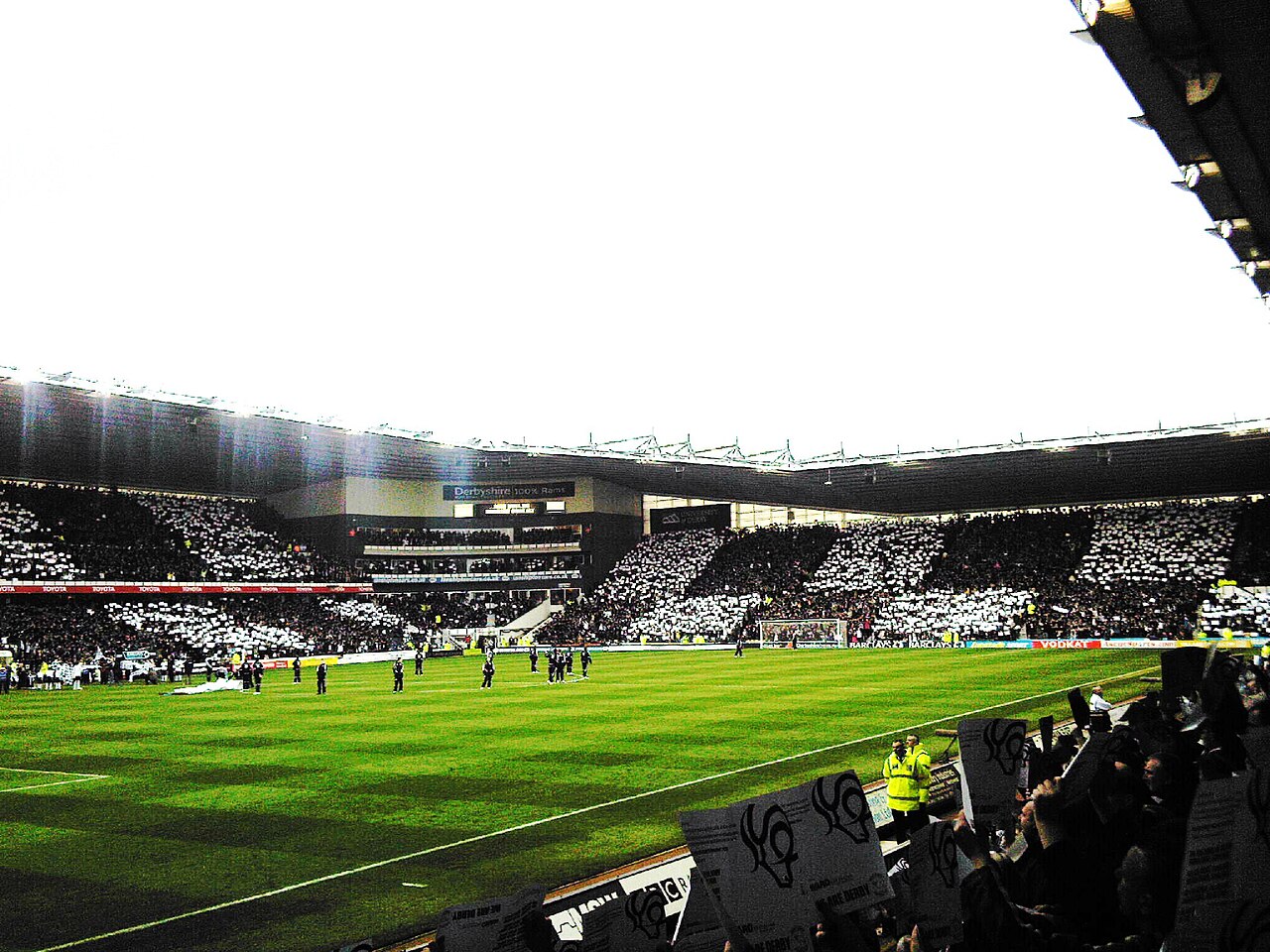
Pride Park Stadium has been the home ground of Derby County since 2001, replacing the Baseball Ground which had been the club's home for over a century. The stadium, located in the Pride Park area of Derby, has a capacity of 33,597 and represents the club's modern era. The move to Pride Park Stadium was part of the club's regeneration efforts and commitment to providing a first-class facility for players and supporters alike.
- The club's colours of black and white are traditionally worn
- The Rams nickname reflects Derbyshire's historical association with livestock farming
- Pride Park Stadium was opened in 2001 as a replacement for the Baseball Ground
Current Ownership and Management
David Clowes serves as the owner and chairman of Derby County, guiding the club's strategic direction and financial operations [1]. His leadership has been instrumental in the club's recent efforts to establish itself as a consistent performer in the EFL Championship. Clowes' ownership model focuses on sustainable development and competitive ambition.
John Eustace is the head coach of Derby County, responsible for the team's tactical approach, player development, and match-day selections [1]. Since taking charge, Eustace has implemented his footballing philosophy while navigating the challenges of the Championship's demanding schedule. His management style emphasizes tactical discipline and making the most of the squad's capabilities.
- David Clowes: owner and chairman
- John Eustace: head coach
- Club competes in EFL Championship under current leadership
2026–27 Season Campaign
The 2026–27 season represents Derby County's 128th season in the Football League and their 57th campaign in the second tier of English football [2]. This milestone season continues the club's long-standing presence in professional football, with the team aiming to build on recent experiences in the Championship.
Derby County's third consecutive season in the Championship during 2026–27 [2] reflects the club's current standing in English football's second tier. After spending periods in higher divisions, the club has established itself as a Championship regular, competing against established teams with rich histories and substantial resources.
Squad Changes and New Arrivals
The 2026–27 season has seen significant activity in the transfer market for Derby County. Bobby Clark transferred to Derby County from Red Bull Salzburg on 22 June 2026 for £6,000,000, bringing attacking talent to the squad [2]. Charlie Taylor joined from Southampton on 14 July 2026 on a free transfer, adding experience and versatility to the defensive options [2]. Filip Bilbija transferred from Paderborn 07 on 22 July 2026, strengthening the attacking ranks [2]. Alex Mowatt completed the summer business with a move from West Bromwich Albion on 14 August 2026 [2].
Key Player Statistics and Performance
Sammie Szmodics has emerged as Derby County's top goalscorer in the 2026–27 season, with 1 goal in League and 2 goals all competitions [2]. The striker's contributions have been vital in the team's attacking efforts throughout the campaign. His goal-scoring form provides a focal point for the team's offensive strategy.
Attendance and Matchday Experience
The 2026–27 season's home attendance figures for Derby County have been notable for their consistency. The highest home attendance was 11,095 versus Lincoln City on 8 August 2026 [2], while the lowest attendance was also 11,095 against the same opponent on the same date [2]. The average home league attendance for the season stands at 11,095 [2], indicating a stable supporter base attending matches at Pride Park Stadium.
Cup Competitions
During the 2026–27 season, Derby County also compete in the FA Cup and the EFL Cup [2]. Participation in these knockout tournaments provides additional opportunities for the club to silverware and offers fans the chance to see their team face opponents from different divisions and levels of English football. Cup runs can also provide financial benefits and increased visibility for the club.
Tournament Objectives
The club's approach to cup competitions balances the desire for progression with the need to manage fixture congestion and player workload. Each competition offers a different challenge, with the FA Cup providing ties against teams from higher divisions and the EFL Cup featuring all Championship and Premier League sides in its early rounds.
Historical Context and Legacy
Derby County's place in English football history extends beyond its current Championship status. The club has experienced top-flight football in the First Division and has been a member of the Football League for over a century. This historical continuity is a point of pride for the supporter base and reflects the club's resilience through various eras of English football.
The club's 142 years of existence [1] encompasses periods of significant success, including league titles and FA Cup victories, as well as challenges including relegation battles and financial difficulties. Through it all, Derby County has maintained its identity as The Rams and its connection to the city of Derby and the wider Derbyshire region.
- Founded in 1884, making it one of England's oldest professional clubs
- Member of the Football League for over 125 years
- Two league titles and one FA Cup victory in historical honours
- Rivalry with Nottingham Forest, another historic East Midlands club