
Origins in the Silver Age
Doctor Doom first appeared in The Fantastic Four #5, published on April 10, 1962, marking his debut as Marvel's premier supervillain [1]. His creation by Stan Lee and Jack Kirby established a template for complex antagonists who combine scientific brilliance with mystical power. The timing of his arrival in July 1962 placed him at the dawn of the Marvel Age of Comics, allowing him to evolve alongside the medium's growing sophistication.
Jack Kirby's Visual Design
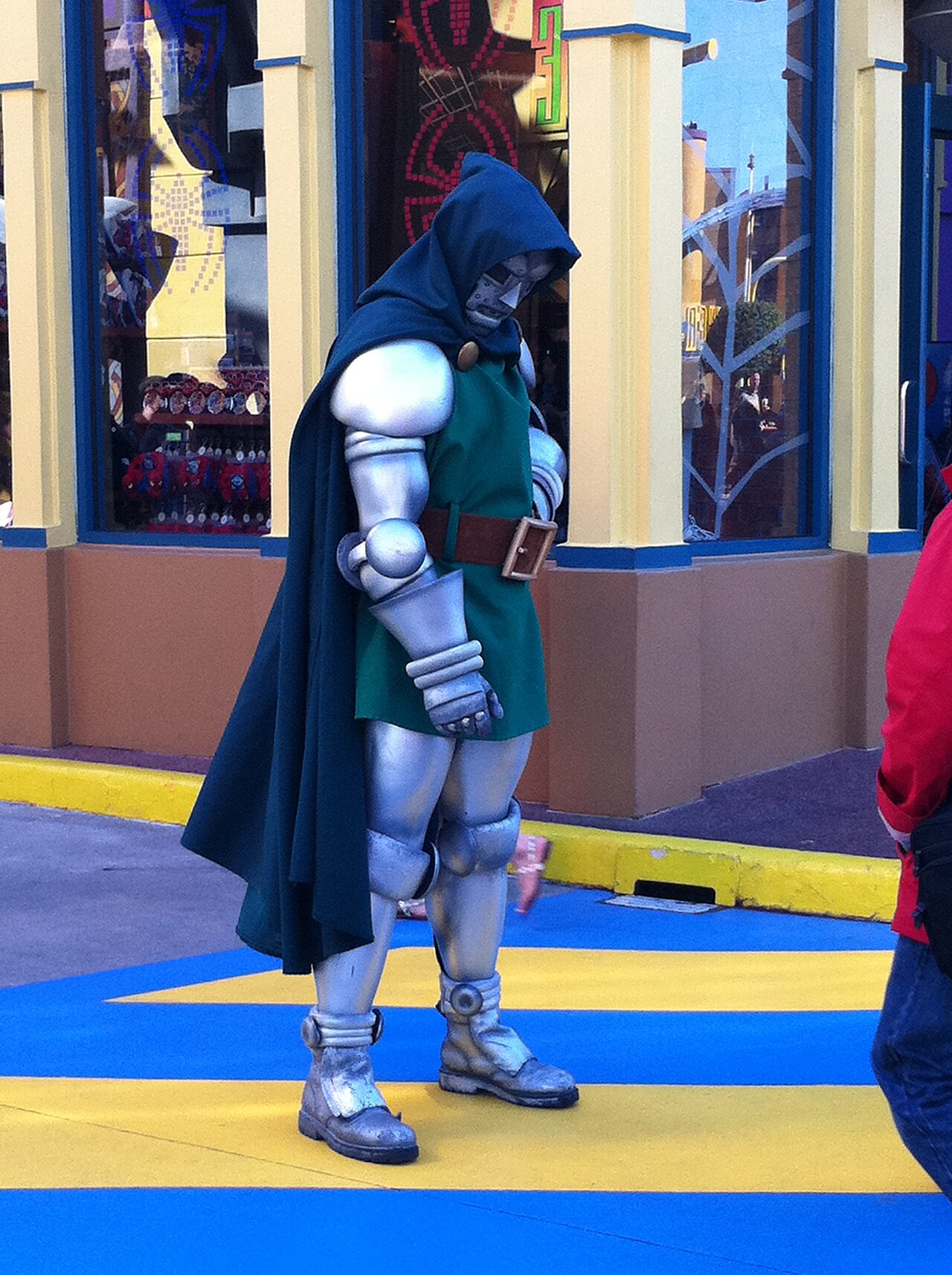
Jack Kirby's art in that first issue established Doom's iconic silhouette: the green cloak, silver mask, and flowing cape became instantly recognizable. Kirby's layout of The Fantastic Four #5 introduced Doom's castle on a hill, setting a visual precedent for the character's medieval-meets-technological aesthetic that would persist for six decades of comics publication.
Victor Von Doom's Backstory
As Victor Von Doom, the character possesses a genius-level intellect that rivals Mr. Fantastic, combined with latent mystical abilities he discovered during his youth. His transformation from a brilliant student into the armored tyrant of Latveria involves a college experiment gone wrong that scarred his face and bound him to his signature armor, creating a origin story that blends science fiction with mythic tragedy.
First Confrontation with the Fantastic Four
The Fantastic Four #5 established the recurring dynamic of Doom versus Mr. Fantastic, Invisible Woman, Human Torch, and The Thing. This first battle set the pattern for decades of comics: Doom's strategic brilliance versus the team's combined powers, with Doom typically retreating to Latveria to rebuild his forces for another assault.
Latveria and Royal Lineage
Sovereign of a Small Nation
Doctor Doom rules the fictional Eastern European nation of Latveria, a position that gives him resources and territory beyond typical supervillains. His royal status and control over Latveria's economy and military make him a unique antagonist who can operate as both conqueror and head of state, granting him legitimacy that characters like Magneto or Green Goblin never possess.
Geopolitical Story Potential
Latveria's status as Doom's homeland creates narrative opportunities exploring nationalism, exile, and the responsibilities of power. The nation's location and Doom's absolute control over it allow storylines that examine how a genius dictator governs, how outsiders interact with his regime, and what happens when Latveria's interests conflict with global superhero politics.
Doom's Connection to Romania and Eastern Europe
While Latveria is fictional, its portrayal draws on real-world Eastern European politics, particularly Cold War-era Romania under Nicolae Ceauřescu. This connection gives Doom's stories a geopolitical dimension that resonates with readers familiar with real-world dictatorships, adding layers to his conquests and resistance movements within his own territory.
Royal Bloodline and Destiny
Comics have established Doom's connection to royal bloodlines and ancient prophecies, suggesting his destiny to rule extends beyond mere ambition. These mystical elements tie into his interest in magic and sorcery, positioning him as someone who believes he is fulfilling a ancient role rather than simply seeking power for its own sake.
Costume Evolution and Armor
The Green and Gold Armor
Doctor Doom's signature green and gold armor has undergone countless modifications since 1962, but the core color scheme remains constant. The armor serves both as protective gear and as a conduit for his magical abilities, with the mask hiding his scarred face while projecting an aura of intimidation. Each era of comics has brought subtle refinements to the design while respecting Kirby's original vision.
Armor as Extension of Will
The armor is depicted as fused to Doom's body in many storylines, suggesting it's not merely clothing but an extension of his will and power. This fusion creates a unique relationship between villain and equipment, where damage to the armor directly affects Doom's capabilities, making every battle a high-stakes confrontation where destruction of the armor means vulnerability for the ruler of Latveria.
Magical Enhancements
Beyond pure technology, Doom's armor incorporates mystical elements he discovered during his travels. This blend of science and sorcery allows him to battle beings with pure magical power, giving him versatility that pure technological villains lack. His ability to go toe-to-toe with entities like Mephisto or Doctor Strange stems from this unique combination.
Variations Across Media
From the comic books to animated series to live-action adaptations, Doom's costume has been adapted while maintaining recognizability. Each medium has approached the armor differently - some emphasizing the technological aspects, others the mystical properties, but the green cloak and silver mask remain the constant elements that audiences immediately associate with the character.
Marvel Comics History
Rivalry with the Fantastic Four
Doctor Doom's relationship with the Fantastic Four represents one of the longest-running rivalries in comic book history. Unlike many villains who attack randomly, Doom often has specific plans involving Reed Richards, frequently escaping from prison or seemingly fatal situations to continue his feud. This recurring pattern has made their conflict a cornerstone of Marvel's early adventure comics.
Expansion Beyond the FF
While primarily associated with the Fantastic Four, Doom has confronted nearly every major Marvel hero team including the Avengers, X-Men, and Spider-Man. His appearances in Avengers comics particularly showcase his ability to threaten Earth's mightiest heroes, establishing him as a threat level appropriate for teams rather than just individual street-level heroes.
Major Storylines and Events
Comics have featured Doom in major crossover events like 'Secret Wars,' where he battled on a planet created by cosmic beings, and 'Doomsday' storylines that explore his increasing threat level. These stories often position Doom as a universe-threatening figure rather than merely a hero-specific villain, raising the stakes of every appearance.
Redeemments and Complexity
Recent comics have explored Doom's moments of genuine heroism or concern for Latveria's people, adding complexity to his character. These moments don't erase his villainy but suggest a character driven by a personal code rather than pure evil, making him one of Marvel's most morally ambiguous antagonists.
MCU Introduction and Robert Downey Jr.
Casting Announcement
The Marvel Cinematic Universe announced Robert Downey Jr. would portray Victor Von Doom in Avengers: Doomsday, marking a significant recasting of the character who was previously portrayed by Julian McMahon in the 2005 Fantastic Four films. This casting choice surprised fans given Downey Jr.'s history with the MCU as Iron Man, creating immediate speculation about how the character would be integrated.
Face Reveal and Merchandise
New merchandise ahead of Robert Downey Jr.'s MCU return as Victor Von Doom revealed Doom's face, showing the character without his iconic mask for the first time in live-action. This face reveal represents a significant departure from comic accuracy while potentially offering new narrative reasons for the unmasking, such as vulnerability, identity exploration, or character development moments.
Avengers: Doomsday Promotion
Doctor Doom has been featured in promotional material for Avengers: Doomsday including character posters and trailers, positioning him as the central antagonist of the upcoming film. The promotional campaign has emphasized his castle, his army, and his threat level, suggesting Marvel is positioning him as a Thanos-level villain for the next phase of the MCU.
Robert Downey Jr's Dual Role
The casting of Robert Downey Jr. as both Iron Man's legacy and now Doctor Doom creates unique narrative possibilities and meta-commentary within the MCU. This connection between the character who built the MCU and its next major villain adds layers of audience expectation and speculation about how the multiverse mechanics will explain his appearance.
Avengers: Doomsday Character Design
New MCU Armor Design
The Avengers: Doomsday promotional material reveals a new armor design for Doctor Doom that blends comic accuracy with live-action practicality. The design maintains the green cloak and silver mask while incorporating elements that work with Robert Downey Jr.'s physical presence, suggesting a suit that integrates advanced technology with mystical protections appropriate for the MCU's established tone.
Castle and Latveria Depiction
Promotional material for Avengers: Doomsday has depicted Doctor Doom's castle, with Thor spotted inside, suggesting Asgardian connections and intergalactic stakes for the film. The castle's appearance in marketing material establishes Latveria as a location of importance within the MCU's expanding multiverse, potentially connecting to other dimensional threats already established in Phase Four and Five.
Scrapped Costume Reveal
Doctor Doom's scrapped third costume from Avengers: Doomsday has been revealed in promotional material, giving fans insight into the design process and alternative directions the character's visual presentation could have taken. This reveal highlights the iterative process of bringing a comic character to live-action, where multiple designs are considered before settling on the final version.
Thor's Involvement
The depiction of Thor inside Doom's castle in Avengers: Doomsday promotional material suggests a confrontation between the God of Thunder and the Latverian ruler, potentially exploring Thor's magical vulnerabilities against Doom's combined science-magic approach. This interaction also positions Doom as capable of capturing or restraining Asgardian-level threats.
Powers and Abilities
Superhuman Strength and Durability
Doctor Doom's armor grants him superhuman strength sufficient to battle the Fantastic Four's Mr. Fantastic and withstand attacks from Thor and other high-tier MCU characters. The armor's durability allows him to survive explosions, energy blasts, and physical impacts that would incapacitate lesser villains, making him a persistent threat across multiple storylines.
Energy Projection
Doom can project energy blasts from his armor, ranging from concussive force to concentrated heat beams capable of damaging metallic objects and organic targets alike. This energy projection capability makes him dangerous at range and explains how he threatens heroes who might otherwise have mobility advantages over armored combatants.
Intellect and Strategy
Victor Von Doom's genius-level intellect is consistently portrayed as his most dangerous weapon, allowing him to create devices, plan schemes, and outthink opponents far more powerful than himself. His strategic brilliance has been demonstrated repeatedly in comics where he defeats teams through preparation rather than raw power, making him a threat even when stripped of his armor.
Mystical Abilities
Beyond technology, Doom has demonstrated proficiency in magic, having studied under various mystical mentors and accessed artifacts of power. This dual capability of science and sorcery allows him to battle beings like Doctor Strange, Mephisto, and other magical entities on something approaching equal terms, expanding his threat profile beyond conventional supervillains.
Reception and Cultural Impact
Comic Book Legacy
Doctor Doom ranks among Marvel's most popular and enduring villains, frequently appearing in top villain lists and receiving multiple solo comic series over the decades. His longevity and consistent quality of appearances have cemented his status as a cornerstone of the Marvel Universe, with fans consistently ranking him alongside Magneto and Green Goblin as essential Marvel antagonists.
Cosplay and Fan Engagement
The character's distinctive armor and mask make Doctor Doom a popular choice for cosplay at comic conventions and fan events, with the green cloak and silver mask being instantly recognizable to audiences. This visual distinctiveness has helped maintain his popularity across generations of fans who grew up with different eras of comics and animations.
Adaptation History
Previous live-action attempts at Doctor Doom, particularly the 2005 Fantastic Four films with Julian McMahon, received mixed reactions from fans and critics, with particular discussion of the character's mask and face presentation. These previous adaptations have created expectations and precedents that the MCU's version must navigate while establishing its own identity within the larger cinematic universe.
Comparisons to Other Marvel Villains
Fans and critics frequently compare Doctor Doom to Thanos, Killmonger, and other major MCU antagonists, discussing where he falls in the Marvel villain hierarchy. These comparisons often focus on his unique combination of technological and magical abilities, his royal status, and his personal rivalry with specific heroes, particularly Mr. Fantastic/Reed Richards.
Significance in the Multiverse Saga
MCU's Next Major Antagonist
Doctor Doom's introduction in Avengers: Doomsday positions him as the central antagonist of the Multiverse Saga's concluding phase, potentially replacing or rivaling Thanos as the MCU's most significant villain. This positioning suggests Marvel has long-term plans for the character beyond a single film, possibly spanning multiple phases and connecting to the broader multiverse mechanics already established.
Multiverse Implications
As a character connected to Latveria and potentially multiversal variants, Doom's MCU introduction could explore alternate versions of the character from different realities, a staple of comic storylines that the films may adapt. This approach would allow the MCU to incorporate comic-accurate elements while maintaining cinematic continuity, potentially featuring multiple Doom variants across the multiverse.
Robert Downey Jr's Return Significance
The casting of Robert Downey Jr. as Victor Von Doom represents one of the most significant casting decisions in MCU history, given his foundational role as Iron Man and the narrative symmetry of him now playing the MCU's next major villain. This choice creates immediate audience investment and suggests Marvel is leveraging star power to elevate Doom's profile beyond typical superhero film antagonists.
Future Story Potential
Doctor Doom's combination of royal sovereignty, scientific genius, mystical power, and personal tragedy creates story potential that extends beyond simple good-versus-evil narratives. His ruling of Latveria, his complex relationship with technology and magic, and his history with the Fantastic Four provide multiple entry points for future MCU storytelling across film and television platforms.