
Overview
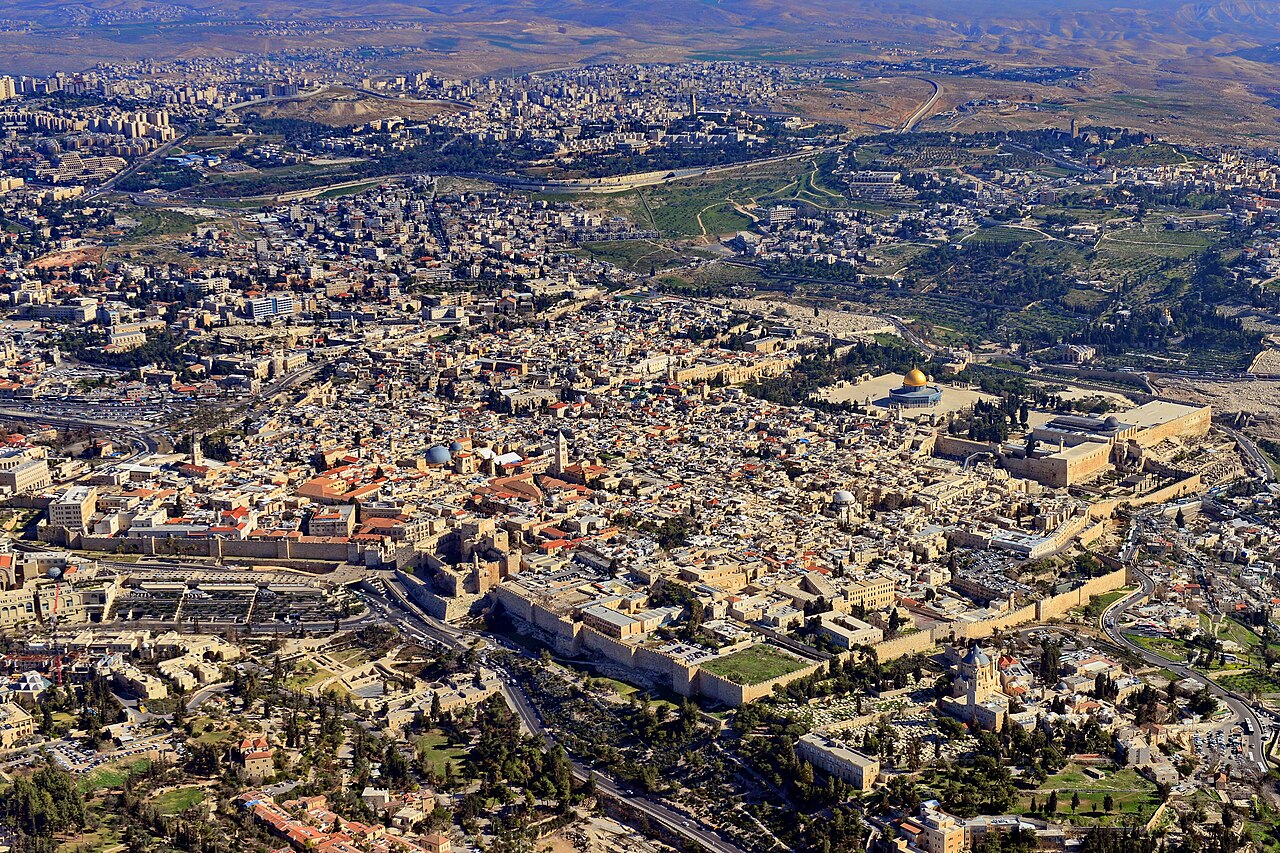
East Jerusalem refers to the section of Jerusalem that fell under Jordanian control after the 1948 Arab-Israeli War and was later occupied by Israel during the 1967 Six-Day War [2]. Following the conflict, Israel expanded the municipal boundaries of West Jerusalem on 27 June 1967 to include approximately 70 km² of West Bank territory, incorporating Jordanian East Jerusalem along with 28 villages and areas of Bethlehem and Beit Jala municipalities [2]. This expansion effectively placed the historic Old City and surrounding neighborhoods under Israeli municipal administration, though the international community largely regards the move as an occupation or annexation in violation of international law [1][3].
Municipal Annexation and Territorial Scope
The territorial scope of the 1967 municipal expansion was substantial. Israel's incorporation of approximately 70 km² encompassed not only the 6 km² (2.3 sq mi) of Jordanian East Jerusalem but also surrounding areas that had previously belonged to Bethlehem and Beit Jala municipalities [2]. This expansion more than doubled the area previously designated as Jerusalem's municipal boundaries and established a contiguous urban fabric linking previously separate communities. The inclusion of these additional territories shaped the demographic and geographic composition of what is now referred to as a unified Jerusalem from Israel's perspective.
Old City and Holy Sites
East Jerusalem contains the Old City, which includes the Al-Aqsa Mosque compound / Temple Mount and the Western Wall [2]. These sites represent some of the most sensitive and contested religious spaces in the broader Jerusalem area. The Old City's compact layout, within the larger municipal framework, means that religious sites from different faith traditions exist in close proximity, contributing to the area's complex social and political dynamics. Access to and control over these sites has been a recurring point of negotiation and conflict.
Jerusalem Law and Effective Annexation
Israel's unilateral assertion of sovereignty over East Jerusalem was formalized with the Jerusalem Law, passed by the Knesset on 30 July 1980 [1]. The law declared united West and East Jerusalem as Israel's capital. The Israeli Supreme Court interpreted this legislation as an effective annexation of East Jerusalem, incorporating it into the Israeli legal framework [1]. This judicial interpretation meant that Israeli law, jurisdiction and administration were applied to the territory, even though the international community did not recognize this status change.
International Legal Response
The international community rejected Israel's legal framework regarding East Jerusalem. United Nations Security Council Resolution 478, adopted after the 1980 Jerusalem Law, ruled the legislation "null and void" and condemned the attempted change in status to Jerusalem [1]. This resolution determined that the law constituted a violation of the Fourth Geneva Convention and undermined the prospects for a peaceful resolution to the Israeli-Palestinian conflict. The UN Security Council called for Member States to withdraw their diplomatic missions from Jerusalem as a protest against the law's implementation.
Demographic and Settlement Developments
Following the 1967 expansion and the application of Israeli law, Israeli authorities initiated settlement activities in East Jerusalem neighborhoods. These developments have been characterized by various human rights organizations and UN bodies as altering the demographic balance of the area. The construction of Israeli settlements in East Jerusalem has been consistently condemned by the international community as illegal under international law, though Israel disputes this characterization and maintains that the territories are subject to dispute rather than occupation [3]. The ongoing settlement activity has been a significant factor in peace process negotiations and has affected the daily lives of both Palestinian and Israeli residents in the area.
Resident Status and Rights
The status of Palestinian residents of East Jerusalem remains a complex issue. After 1967, Israel offered Palestinian residents the option of applying for Israeli permanent residency, with many accepting this status. Those who do not apply or who remain outside Jerusalem for extended periods risk losing their residency rights. This residency framework differs from citizenship, as permanent residents can have their status revoked under certain conditions. The application of Israeli administrative procedures to Palestinian residents of East Jerusalem has been documented by various international organizations and has been a subject of legal challenges.
Peace Process and Negotiation Positions
East Jerusalem's status has been a central issue in Israeli-Palestinian peace negotiations. The Palestinian negotiating position has consistently called for East Jerusalem to serve as the capital of a future Palestinian state, based on the pre-1967 municipal boundaries or with agreed land swaps [3]. Israel has maintained that Jerusalem, including East Jerusalem, is an inseparable part of the State of Israel and its eternal capital. These fundamentally opposed positions have proven to be among the most difficult obstacles in various peace initiatives, including the Camp David negotiations and the Annapolis Conference.
International Consensus and Position
The international consensus regarding East Jerusalem's status is reflected in multiple UN Security Council resolutions and the positions of the Quartet on the Middle East. The prevailing view is that the final status of Jerusalem should be determined through negotiations between the parties, based on the pre-1967 lines with mutually agreed land swaps [1][3]. Most countries maintain their embassies in Tel Aviv rather than Jerusalem, reflecting the lack of international recognition of Israeli sovereignty over East Jerusalem. The UN Secretary-General and various special envoys have repeatedly called for preserving the historic status quo regarding the city's holy sites.
Current Situation and Ongoing Developments
As of the current period, East Jerusalem remains under Israeli municipal administration while the international community largely maintains that the territory's final status should be resolved through negotiations [1][3]. The area continues to experience construction activity, demographic changes, and periodic outbreaks of violence related to the sensitive religious sites and the broader political context. Various peace proposals have suggested different arrangements for Jerusalem, ranging from a shared capital to divided city models, but no final agreement has been implemented. The status quo continues, with the various legal, demographic and political dimensions of East Jerusalem's status remaining active subjects of international diplomacy and domestic policy.
Human Rights and Access Considerations
Human rights organizations have documented various concerns regarding movement restrictions, planning permissions and resource allocation for Palestinian residents of East Jerusalem. The application of Israeli planning and zoning regulations has resulted in a significant shortage of Palestinian-approved construction, leading to what organizations describe as a policy of de facto forced displacement through the demolition of unpermitted structures [3]. Access to holy sites, particularly during religious holidays and periods of heightened tension, has been subject to restrictions and varying permit systems that affect both Palestinian worshippers and, at times, visiting international delegations.