
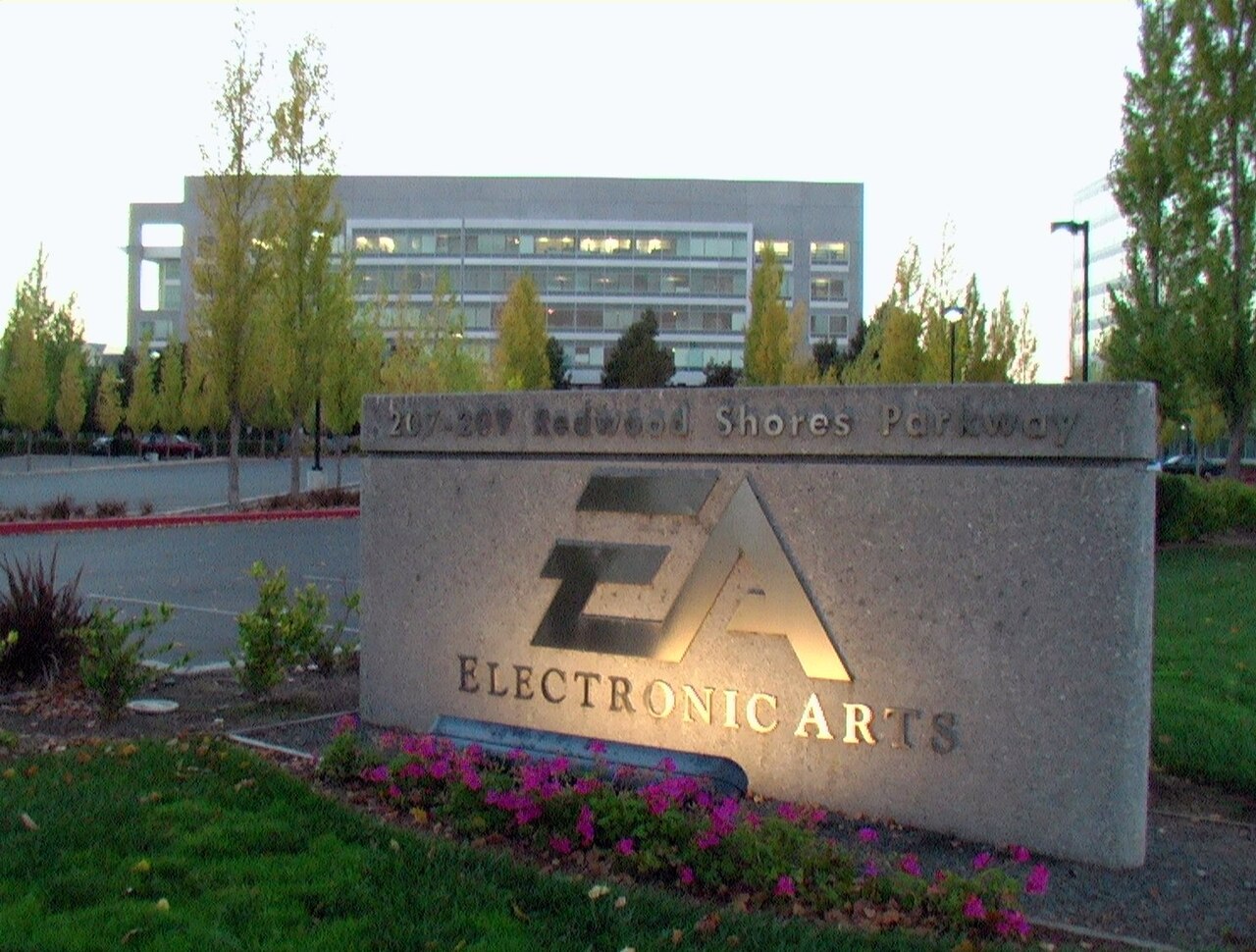
Background and Strategic Rationale
Electronic Arts has actively been acquiring companies to expand their business and add new product lines [1]. This strategy reflects a broader industry trend where publishers seek to secure development talent and intellectual property rather than rely solely on external studios. Blake Jorgensen, COO of Electronic Arts, hinted that it is rare to not get the chance to check out anything that is put on sale, and they are always ready to buy great talents and great games [1]. The company's financial performance supports this activity: in 2018, EA recorded $5.15 billion in annual revenue, a 6.3% increase from 2017 [1], and by 2020 revenue reached $5.537 billion, an 11.86% increase from the previous year [1], demonstrating the profitability that funds such expansions.
The acquisition of VG Holding Corp, Mobile Post Production, and Chillingo [1] illustrates EA's focus on diversifying its portfolio across mobile and post-production capabilities. These deals were likely motivated by the need to strengthen digital distribution and mobile gaming channels, which EA identified as growth areas. The company has benefitted from the expansion of its business and the diversity of its games over the years [1], suggesting that each acquisition contributes to a broader product ecosystem.
Acquisition Methodology
EA's approach to acquisitions appears driven by the desire to integrate studios that can immediately contribute to revenue streams. The company's sports spending spree, where it spent $5 billion-plus on studio acquisitions in seven months [3], indicates a concentrated effort to bolster its sports gaming franchises. This strategy contrasts with gradual organic growth, instead opting for rapid portfolio expansion.
The rationale behind these purchases is further evidenced by EA's expectation to more than double its annual mobile revenue to $2 billion within the next three years [3]. Acquisitions of mobile-focused studios like Playdemic, known for producing the mobile title Golf Clash [3], are central to this goal. By acquiring established mobile titles, EA can bypass the long development cycles typical of in-house projects.
Major Acquisitions in the 2010s
Chillingo, acquired by Electronic Arts, represents one of the earlier strategic purchases that helped EA strengthen its indie and mobile portfolio. While specific financial terms were not always disclosed, the acquisition contributed to EA's growing presence in the mobile space [1]. Chillingo's track record of publishing hit titles made it a valuable addition to EA's publishing division.
VG Holding Corp and Mobile Post Production
The acquisitions of VG Holding Corp and Mobile Post Production [1] further underscore EA's commitment to mobile and post-production capabilities. These studios likely provided technical expertise and existing game assets that accelerated EA's roadmap for mobile titles. The integration of such studios allows EA to maintain a pipeline of content across multiple platforms.
The Playdemic Deal
On June 23, Electronic Arts unveiled its $1.4 billion acquisition for Warner Bros.' game studio Playdemic, known for producing the mobile title Golf Clash [3]. This deal was significant not only for its size but for signaling EA's intent to dominate the mobile golf market. Golf Clash had established a large user base, and EA's ownership ensures a steady stream of revenue from in-app purchases and updates.
Following the Playdemic acquisition, EA posted a 1.7 percent revenue gain in its latest fiscal year [3], suggesting that the deal began contributing to top-line results quickly. The company also revealed plans to more than double its annual mobile revenue to $2 billion within the next three years [3], with the Playdemic purchase being a cornerstone of that strategy.
The 2024 Sports Spending Spree
Electronic Arts swung for the fences with a sports spending spree, spending $5 billion-plus on studio acquisitions in seven months [3]. This unprecedented pace of deal-making in the sports sector highlights EA's prioritization of its EA Sports franchises. By acquiring studios with expertise in sports simulation, EA aims to maintain its dominance in the competitive sports gaming market.
Strategic Targets
The targets of this spending spree were likely studios with proven expertise in sports game development. This focus allows EA to iterate on its Madden NFL, FIFA, and NBA Live franchises more rapidly, incorporating new features and graphics improvements. The $5 billion-plus investment in seven months represents a significant shift in EA's capital allocation strategy.
Financial Implications
Such a large outlay in a short period is only possible due to EA's strong financial performance. The revenue growth from $5.15 billion in 2018 [1] to $5.537 billion in 2020 [1] provides the balance sheet capacity to fund these acquisitions. Moreover, the expected revenue growth following the Playdemic deal [3] further de-risks these investments in the eyes of shareholders.
The spending spree also aligns with EA's goal of more than doubling its annual mobile revenue to $2 billion within the next three years [3]. While the spree is sports-focused, the underlying principle of acquiring revenue-generating assets is the same.
The 2026 Saudi Consortium Buyout
Electronic Arts was acquired in its entirety by an international consortium formed by the Public Investment Fund of Saudi Arabia (PIF), Silver Lake and Affinity Partners for 55 billion dollars [2]. This transaction represents the largest operation of its kind to date in the gaming industry. The acquisition amount will be financed based on 36 billion dollars of consortium equity and 20 billion dollars of debt provided by JPMorgan Chase [5], structuring the deal as a leveraged buyout.
Terms and Shareholder Value
EA shareholders will receive 210 dollars per share, a value representing a 25% premium over the market price before the announcement [2]. This premium reflects the consortium's confidence in EA's future prospects and provides immediate liquidity to investors. The deal values the company at a significant multiple of its annual revenue, underscoring the strategic importance of EA's portfolio.
Operational Continuity
After closing, EA will cease to be listed on the stock exchange [2], but the company will remain headquartered in California and will be led by Andrew Wilson, current CEO [2]. This structure ensures that EA's day-to-day operations and strategic direction remain intact, with the existing leadership team continuing to guide the company.
The consortium intends to support EA in global expansion and development of new digital experiences [2]. This mandate likely includes leveraging EA's major game franchises—Need for Speed, Mass Effect, Dragon Age, Battlefield, EA Sports FC and The Sims [5]—to enter new markets and develop new types of interactive entertainment.
Financial Structure of the Deal
The financing structure of the EA buyout is notable for its scale. The acquisition was valued at 55 billion dollars [2][5], with 36 billion dollars of consortium equity and 20 billion dollars of debt provided by JPMorgan Chase [5]. This mix of equity and debt is typical of large-scale tech acquisitions, allowing the consortium to leverage its capital while maintaining a significant equity stake.
PIF's Continued Participation
The Public Investment Fund (PIF) will maintain its 9.9% participation in the company [2], ensuring that Saudi Arabia's sovereign wealth fund retains a meaningful interest in EA's future. This participation aligns with the PIF's broader strategy of investing in global entertainment and technology assets.
Largest Cash Transaction
The operation was realized exclusively in cash and represents the largest operation of its kind to date [2]. The all-cash structure simplifies the transaction process and provides certainty for EA shareholders, who will receive the fixed price of 210 dollars per share regardless of market fluctuations.
The consortium's intention to support EA in global expansion and development of new digital experiences [2] suggests that the debt burden will be manageable given EA's diversified revenue streams from its extensive franchise portfolio. The company's history of annual revenue growth [1] provides a stable foundation for servicing the acquisition debt.
Regulatory and Market Context
The acquisition will be realized exclusively in cash and represents the largest operation of its kind to date [2]. Its expected completion in the first quarter of the 2027 fiscal year, after shareholder and regulatory approval [2], indicates that the deal will face scrutiny from competition authorities. Given EA's market position and the size of the transaction, regulators will likely examine whether the consolidation affects competition in the video game software market.
Shareholder Approval
The acquisition was approved by the EA Board of Directors [2], and the 25% premium over the market price [2] was designed to secure shareholder support. The requirement for shareholder approval ensures that the deal reflects the interests of EA's owner base, although the premium likely makes the vote favorable.
Delisting from Stock Exchange
After closing, EA will cease to be listed on the stock exchange [2]. This delisting is a direct consequence of the company becoming a private entity under the consortium. Employees and stakeholders will need to adjust to the absence of public market reporting, although the operational structure will remain largely unchanged.
The deal's scale—55 billion dollars [2][5]—makes it a landmark event in the gaming industry, potentially setting a precedent for future large-scale acquisitions. The involvement of multiple international players, including the Saudi PIF [4], Silver Lake, and Affinity Partners founded by Jared Kushner [4], reflects the global nature of the current gaming market.
Impact on EA's Game Portfolio
EA's major game franchises include Need for Speed, Mass Effect, Dragon Age, Battlefield, EA Sports FC and The Sims [5]. The acquisition by the consortium is unlikely to alter the development of these established series in the short term. Instead, the new ownership structure may provide additional resources for expanding these franchises or developing new entries.
Mobile Gaming Expansion
EA expects to more than double its annual mobile revenue to $2 billion within the next three years [3]. This goal is supported by the Playdemic acquisition [3] and other mobile-focused purchases. The diversification into mobile is a key part of EA's strategy to reduce reliance on traditional console and PC game sales, which are subject to cyclical trends.
Sports Franchise Dominance
The $5 billion-plus sports spending spree [3] and the Playdemic deal [3] both target EA's strength in sports gaming. By acquiring studios with sports expertise, EA can enhance its EA Sports FC and other sports titles, ensuring they remain competitive against rivals like Take-Two's NBA 2K series. The integration of new talent and technology from acquired studios can lead to improved gameplay mechanics and graphics.
The consortium's support for EA in global expansion [2] may also mean increased investment in regions outside North America and Europe. EA's franchises have global appeal, and the new ownership could facilitate localization efforts and market entry strategies in Asia, Latin America, and other growing gaming markets.
Industry-Wide Implications
The acquisition of Electronic Arts by a Saudi-led consortium for 55 billion dollars [2] is a watershed moment for the video game industry. It is the largest cash transaction in gaming history [2][5] and signals the growing interest of sovereign wealth funds in the sector. This deal may encourage other major publishers to explore similar ownership structures or face increased competition from well-capitalized rivals.
Consolidation Trend
EA's acquisition follows a broader trend of consolidation in the video game industry. Over the past several years, many publishers have acquired studios to secure content and talent. The EA deal, being of such monumental scale, may accelerate this trend, with other companies seeking similarly large exits or strategic sales.
Financial Market Reactions
The terms of the deal, including the 25% premium for shareholders [2] and the specific financing structure [5], will be studied by financial analysts as a case study in tech M&A. The involvement of JPMorgan Chase as the debt provider [5] and the participation of multiple consortium members [4] highlights the complex financial engineering required for deals of this size.
The consortium's intention to support EA in global expansion and development of new digital experiences [2] suggests that the company's strategic direction will remain focused on innovation, albeit under new ownership. This could lead to increased investment in emerging technologies such as cloud gaming, virtual reality, and live services.
Key Leadership and Headquarters
EA will remain headquartered in California and will be led by Andrew Wilson, current CEO [2]. This decision to retain the existing leadership team is likely intended to maintain operational stability and preserve the company culture that has driven EA's success. Andrew Wilson's continued leadership ensures that the company's vision remains consistent with its historical trajectory.
Consortium Composition
The consortium comprises Silver Lake, the Saudi Public Investment Fund (PIF), and Affinity Partners founded by Jared Kushner [4]. This diverse group of investors brings different expertise and networks to EA. Silver Lake is a technology-focused investment firm, the PIF represents Saudi Arabia's sovereign wealth interests, and Affinity Partners adds a political and strategic dimension to the ownership group.
Long-Term Strategic Goals
The consortium intends to support EA in global expansion and development of new digital experiences [2]. This mandate is broad enough to encompass new game development, expansion into new media such as film or television, and exploration of new business models such as subscription services or metaverse integration. The flexibility of this mandate allows EA to pivot its strategy as the market evolves.
The PIF will maintain its 9.9% participation in the company [2], ensuring that the Saudi government's strategic interests in the gaming sector are represented. This level of participation is significant enough to influence major decisions while allowing the consortium members to manage day-to-day operations.
Revenue Performance and Growth Trajectory
Electronic Arts' financial performance has been a key enabler of its acquisition strategy. In 2018, the company recorded $5.15 billion as annual revenue, which was a 6.3% increase from the 2017 revenue [1]. By 2019, revenue had declined to $4.95 billion, a 3.88% decrease [1], but the company rebounded strongly in 2020 with $5.537 billion, an 11.86% increase [1]. This volatility underscores the cyclical nature of the gaming industry and the importance of strategic acquisitions in stabilizing revenue streams.
Post-Acquisition Revenue Expectations
Following the Playdemic acquisition, EA posted a 1.7 percent revenue gain in its latest fiscal year [3]. This immediate positive impact suggests that the acquired studio's titles are already contributing to EA's bottom line. Looking ahead, EA expects to more than double its annual mobile revenue to $2 billion within the next three years [3], a goal that would represent a significant shift in the company's revenue mix.
Revenue Diversification
The diversity of EA's game portfolio [5]—spanning sports, role-playing, simulation, and mobile genres—provides multiple revenue streams that can weather market fluctuations. The acquisition by the consortium is likely intended to further diversify these streams, particularly in the mobile and global expansion arenas. The company's history of both growth [1] and decline [1] in annual revenue illustrates the risks and opportunities inherent in the industry.
The consortium's financial commitment, including 36 billion dollars of equity [5], provides EA with a war chest to fund ambitious projects that might have been too risky under a public company structure. This capital availability could lead to the development of new intellectual property and the expansion of existing franchises into new markets.
Reception and Market Analysis
The Electronic Arts acquisition has been met with significant attention from both the gaming community and financial markets. The 25% premium over the market price [2] indicates that investors believe in the company's future value under private ownership. The gaming community's reception is mixed, with some welcoming the potential for increased investment in franchises like The Sims and Mass Effect, while others express concern about the implications of sovereign ownership.
Shareholder Perspective
EA shareholders receiving 210 dollars per share [2] have realized an immediate gain, reflecting the market's assessment that the consortium's valuation is fair. The requirement for the deal to be completed in the first quarter of the 2027 fiscal year [2] after shareholder and regulatory approval means that the transaction is not yet finalized, and market conditions could change before closing.
Competitive Landscape
The acquisition consolidates EA under ownership that includes the Saudi Public Investment Fund [4], potentially giving the company greater resources to compete with rivals such as Take-Two Interactive, Ubisoft, and Sony's PlayStation Studios. The $5 billion-plus sports spending spree [3] can be seen as a pre-emptive move to strengthen EA's position before the ownership change is complete.
The consortium's support for EA in global expansion [2] may be particularly welcome in markets where EA has historically had less presence. By leveraging the consortium's international networks, EA can accelerate its growth in regions such as the Middle East, Asia, and Latin America, where gaming is experiencing rapid adoption.
Historical Acquisition Highlights
Throughout its history, Electronic Arts has made several notable acquisitions that have shaped its product lineup. The acquisitions of VG Holding Corp, Mobile Post Production, and Chillingo [1] were early strategic moves that bolstered EA's mobile and post-production capabilities. These deals, while smaller in scale than the 2026 consortium buyout, laid the groundwork for EA's current focus on mobile gaming and digital distribution.
Playdemic and Mobile Growth
The $1.4 billion acquisition of Playdemic [3] represents a mid-scale deal that significantly expanded EA's mobile portfolio. Golf Clash, the flagship title from Playdemic, has a large and engaged user base, and EA's ownership ensures that the game continues to receive updates and support. This acquisition is a key component of EA's strategy to more than double its annual mobile revenue to $2 billion within the next three years [3].
Sports Studio Acquisitions
The $5 billion-plus sports spending spree [3] in seven months is unprecedented in EA's history and reflects a concentrated effort to acquire talent and technology in the sports gaming sector. By acquiring studios with sports development expertise, EA can enhance its EA Sports FC, Madden NFL, and other sports titles. This spending spree occurred against the backdrop of strong financial performance, with EA recording $5.537 billion in revenue in 2020 [1].
The cumulative effect of these acquisitions—from the early 2010s purchases [1] to the 2026 consortium buyout [2]—demonstrates EA's long-term commitment to growth through acquisition. Each deal has been strategically timed to capitalize on market opportunities, whether in mobile gaming, sports, or broader digital experiences.
Sources & citations
- What the Deal with Codemasters Entails
- Electronic Arts é adquirida por 55 mil milhões de dólares
- Electronic Arts Swings for the Fences With Sports Spending Spree
- Un rachat historique d’Electronic Arts : détails et acteurs majeurs
- Electronic Arts przejęte za 55 miliardów dolarów. Największa transakcja gotówkowa w historii gamingu - TECHSETTER