
Origins and Early Development
Farmers' markets trace their lineage to ancient marketplaces where farmers sold surplus produce directly to city dwellers, bypassing intermediaries. This direct-sales model emerged independently across civilizations, from the agoras of Ancient Greece to the bazaars of the Middle East, establishing a tradition of producer-to-consumer exchange that predates modern supermarkets by millennia. [1]
Pre-Industrial Market Practices
The 20th century witnessed a revival of farmers' markets in response to post-war suburbanization and the rise of chain grocery stores, which prioritized volume and low cost over producer diversity and seasonal availability. Consumer awareness movements of the 1960s and 70s rekindled interest in knowing food origins, catalyzing the modern farmers' market movement that would expand globally. [1]
Structural Characteristics and Variety
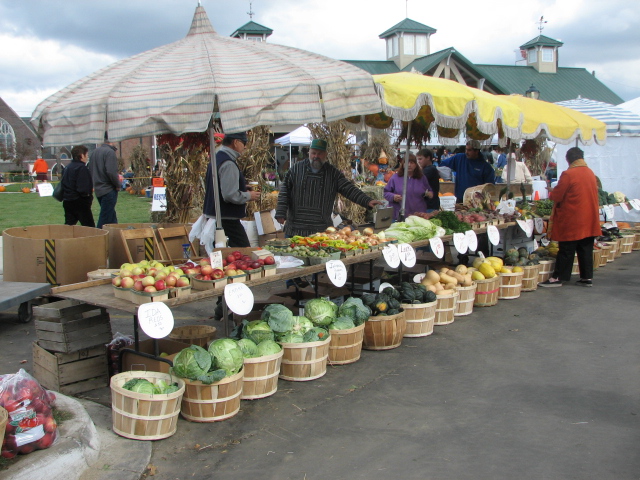
Farmers' markets vary dramatically in scale, ranging from small community gatherings with just a few stalls to large networks occupying several city blocks. This variability reflects local economic conditions, geographic space availability, and the number of participating producers, with some markets operating seasonally while others function year-round. [1]
Indoor vs. Outdoor Formats
A critical distinction exists between farmers' markets and public markets. Public markets are generally housed in permanent structures, open year-round, and feature a broader mix of vendors including non-farmer retailers, packaged food vendors, and non-food vendors. Farmers' markets specifically emphasize farmer/producer participation and often operate on a more limited seasonal schedule, though the lines between these formats blur in practice. [1]
The COVID-19 Pandemic Impact
The COVID-19 pandemic presented unprecedented challenges for farmers' markets worldwide, as stay-at-home orders and social distancing measures disrupted established shopping patterns. The open-air nature of most farmers' markets initially raised concerns about crowding, but their inherent characteristics proved uniquely adaptable to public health requirements. [4]
Social Distancing Adaptation
The pandemic drove significant innovation among market vendors through new service models. Delivery options, curbside pickup, digital payment methods, product bundling, and prepared foods became widespread as markets adapted to contactless shopping preferences. These adaptations expanded market accessibility and attracted new customer demographics. [4]
Innovation in Sales Methods
Post-Pandemic Assessment and Recovery
Following the height of the COVID-19 pandemic, the Project for Public Spaces conducted a comprehensive study of New York City's Greenmarket system, the largest farmers market network in the United States, assessing how its 50+ markets were faring in the post-pandemic landscape. This research provided valuable data on market sustainability as the immediate crisis abated. [4]
GrowNYC Collaboration
Post-pandemic analysis identified several enduring trends including continued adoption of digital payment systems, expanded delivery options, and heightened consumer interest in local food systems. Markets that successfully adapted during the crisis appear positioned for continued relevance, while those slower to innovate face challenges in re-engaging changed consumer habits. [4]
Emerging Trends and Future Outlook
Economic and Community Significance
Farmers' markets serve as important economic engines for local agricultural producers, providing direct access to consumers that captures greater value from sales compared to wholesale channels. This economic benefit extends to surrounding businesses as market shoppers often patronize nearby cafes, shops, and services, creating broader community economic activity. [1]
Food Security and Access
Farmers' markets serve an educational function, particularly for children and urban residents disconnected from agricultural production. Direct interaction with farmers provides opportunities to learn about food origins, growing seasons, and sustainable practices, bridging the rural-urban divide through shared food experiences. [1]
Educational Role
Operational Models and Management
Successful farmers' markets typically employ organized management structures that handle vendor selection, space allocation, rule enforcement, and customer experience coordination. These organizations may be non-profit entities, government agencies, or farmer cooperatives, each bringing different priorities to market operations and community engagement. [1]
Vendor Qualification Standards
Modern farmers' markets increasingly integrate technology such as online pre-ordering platforms, social media promotion, and digital payment processing. These tools extend market reach beyond physical attendance and accommodate consumer preferences for contactless transactions, a trend accelerated during but persisting beyond the pandemic period. [4]
Technology Integration
Comparative Global Perspectives
Farmers' markets exist in many countries worldwide, reflecting local agricultural traditions, economic structures, and cultural attitudes toward food. From Europe's long-standing open-air markets to emerging markets in Asia and Africa, the farmers' market model adapts to diverse contexts while maintaining its core direct-sales principle. [1]
Regional Variations and Adaptations
Comparative studies reveal that markets with stronger producer-consumer relationships and clearer vendor qualification standards tend to maintain higher quality and community trust levels. Markets that prioritize farmer participation over vendor diversity often better preserve the direct-sales model that distinguishes them from conventional public markets. [1]
Health and Environmental Dimensions
Farmers' markets typically offer seasonal produce that requires less transportation and refrigeration than conventional supply chains, potentially reducing the carbon footprint associated with food distribution. This local-food advantage, however, depends on farming practices, with organic and regenerative methods amplifying environmental benefits. [1]
Nutritional Quality and Freshness
While farmers' markets offer numerous benefits, food safety requirements still apply, with vendors subject to local health department regulations regarding handling, storage, and sales of agricultural products. Consumer education about proper handling and storage of fresh market purchases remains an important aspect of overall food safety. [1]
Food Safety Considerations
Challenges and Future Directions
Farmers' markets face ongoing challenges including land access costs, vendor competition from established grocery chains, seasonal limitations, and weather vulnerability for outdoor operations. These constraints require innovative management solutions and community support to ensure market sustainability. [1]
Scaling and Accessibility
Ongoing research initiatives, such as the Project for Public Spaces' study of New York City's Greenmarket system, provide valuable data for market operators seeking to improve and evolve. This evidence-based approach to market management, incorporating customer feedback, vendor performance metrics, and trend analysis, represents a maturation of the farmers' market field toward professionalized operations. [4]
Research and Continuous Improvement
Conclusion: Enduring Relevance
Farmers' markets have demonstrated remarkable resilience throughout history, adapting from ancient trade practices to modern economic challenges and most recently to pandemic-related disruptions. Their enduring relevance stems from the unique combination of direct producer-connections, community gathering space functions, and adaptability to changing circumstances. [1][4]