
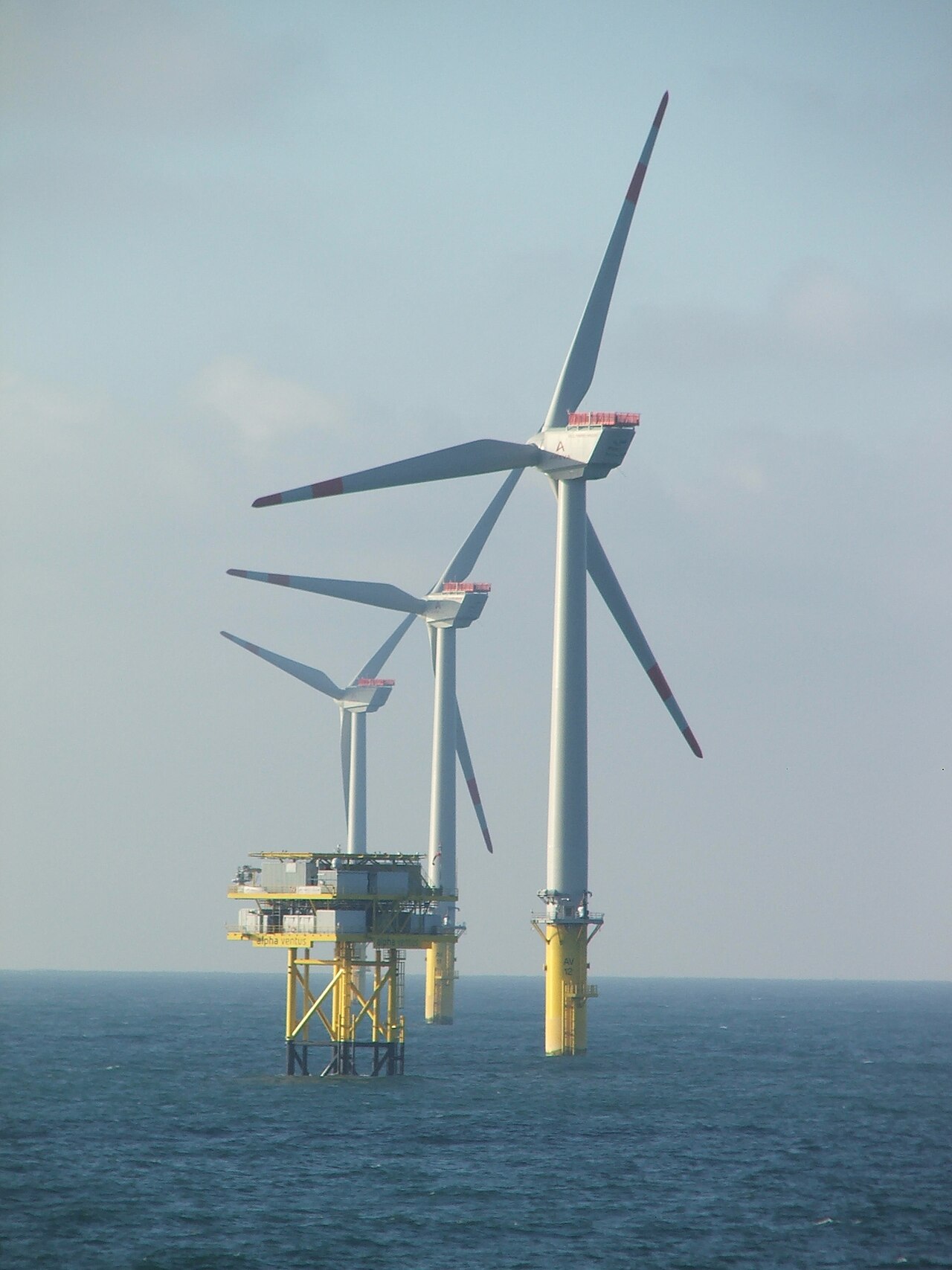
Overview of Floating Wind Technology
Floating wind turbines are characterized by their installation on buoyant platforms situated offshore, contrasting with the traditional method of anchoring fixed structures directly into the seafloor [5] [5] This technology permits the placement of wind energy generation facilities in water depths that are inaccessible to conventional offshore wind turbines, typically exceeding 50 to 60 meters [5] [5] The potential for these systems to be more cost-effective than fixed turbines stems from the elimination of the expenses associated with constructing fixed seabed foundations [4] [4]
Significance in Renewable Energy
The ability to operate in deeper waters expands the viable geographical area for offshore wind power generation significantly [5] [5] Furthermore, these turbines benefit from accessing stronger wind resources found further out at sea, which can help mitigate several operational issues experienced by existing wind farms [4] [4] This capability positions floating wind as a key component in future energy infrastructure [4] [4]
Platform Types Utilized
Several distinct types of floating platforms are either currently in use or undergoing development for this application [5] [5] These structural designs are engineered to maintain stability in dynamic offshore environments while supporting the turbine structure [5] [5] The selection of a specific platform type depends on various site-specific and operational requirements [5] [5]
Specific Platform Designs
Operational Advantages
Beyond technical feasibility, floating wind farms offer several environmental and logistical advantages compared to fixed installations [4] [4] These benefits include a reduced impact on maritime shipping lanes and less interference with military radar systems [4] [4] Additionally, the placement offshore can minimize disturbances to coastal seabird populations [4] [4]
Addressing Planning Hurdles
A notable advantage cited is the potential to circumvent various planning challenges associated with fixed offshore wind projects [4] [4] This circumvention capability is crucial for accelerating the deployment timeline of large-scale offshore renewable energy projects [4] [4] The combination of better wind resources and fewer logistical constraints enhances the overall viability of the technology [4] [4]
Technical Hurdles in Development
Despite the advantages, the large-scale implementation of floating offshore wind turbines faces significant technical complexities [1] [1] Key engineering challenges involve managing coupled aero–hydro–servo–elastic dynamics, which describes the interaction between aerodynamic, hydrodynamic, and control systems [1] [1] Furthermore, understanding and managing unsteady wake behavior in these systems remains a critical area of research [1] [1]
Environmental Operation Demands
The technology must be designed for reliable and sustained operation within harsh offshore environments [1] [1] Ensuring structural integrity and functional reliability under severe sea states is paramount for commercial success [1] [1] These environmental demands drive much of the advanced engineering required for these systems [1] [1]
Installation Technology Status
Regarding the method of installation, there are currently no documented successful instances of in-situ installation technology for floating offshore wind turbines [2] [2] [2] This lack of proven in-situ methods presents a major barrier to immediate large-scale deployment [2] [2] The complexity of the systems contributes significantly to this installation challenge [2] [2]
Barriers to Commercialization
The path to widespread adoption is complicated by several factors, including the high financial requirements for research and development [2] [2] Additionally, the industry lacks a unified, standardized technical pathway for these systems [2] [2] These combined factors—high cost, technical complexity, and lack of standardization—hinder the maturation of the technology [2] [2]
Economic Potential Assessment
A primary driver for floating wind is its potential economic superiority over fixed wind turbines [4] [4] This potential cost reduction is directly linked to the avoidance of expensive fixed foundation construction in the seabed [4] [4] Achieving this economic benefit requires overcoming the current technical and installation hurdles [2] [2]
Market Trajectory Considerations
Discussions surrounding the global commercialization of floating offshore wind energy are ongoing [3] [3] While the technical potential is high, the transition to a fully commercialized, cost-competitive market depends on resolving the current R&D and standardization gaps [2] [2] The realization of economic benefits is contingent upon technological maturity [4] [4]
Engineering Challenges Deep Dive
The coupled dynamics—aero–hydro–servo–elastic—represent a complex multi-physics problem in design [1] [1] Engineers must model how wind forces interact with water movement and the turbine's structural response simultaneously [1] [1] This integration is more complex than in fixed-bottom designs [1] [1]
Wake Behavior Modeling
Unsteady wake behavior is another critical area requiring advanced modeling and control strategies [1] [1] Accurate prediction of wake interaction is vital for optimizing farm layout and energy capture efficiency [1] [1] Inaccurate modeling can lead to suboptimal energy yields and increased operational stress [1] [1]
Context of Offshore Wind Evolution
Traditional offshore wind relied on fixed foundations embedded in shallower seafloors [5] [5] The limitation of these fixed systems is the depth constraint, typically around 50–60 meters [5] [5] Floating technology directly addresses this depth limitation, unlocking vast new offshore resource areas globally [5] [5]
Shifting Deployment Horizons
The shift from fixed to floating systems represents a necessary evolution for accessing deeper, higher-wind resource areas [5] [5] This evolution is critical for the global expansion of offshore renewable energy capacity [4] [4] The technology moves the boundary of feasible offshore deployment [5] [5]
Future Research Directions
Future research must focus heavily on simplifying and standardizing technical routes to reduce R&D investment barriers [2] [2] Developing robust, scalable in-situ installation methods is a key research priority to move beyond current limitations [2] [2] Overcoming the high technical complexity requires interdisciplinary engineering solutions [2] [2]
Improving Operational Reliability
Enhancing the reliability of these systems in harsh marine environments is non-negotiable for commercial viability [1] [1] This involves material science advancements and sophisticated monitoring systems [1] [1] Ensuring long-term, predictable performance under extreme conditions is essential for energy market acceptance [1] [1]
Environmental Impact Mitigation
The placement of floating farms offers environmental benefits by reducing negative interactions with maritime activities [4] [4] Specifically, the impact on shipping and military radar is lessened compared to certain fixed installations [4] [4] Furthermore, the technology helps protect coastal seabird populations from localized disturbances [4] [4]
Circumventing Regulatory Issues
By offering alternative deployment zones, floating wind can help bypass complex and time-consuming coastal planning problems [4] [4] This regulatory flexibility is a significant, though often understated, advantage of the floating concept [4] [4] It allows for deployment in areas less contested by coastal interests [4] [4]
System Integration Complexity
The integration of the floating platform, the turbine, and the power export system is inherently complex [5] [5] The hydrodynamics of the platform must be perfectly coupled with the aerodynamic loads of the turbine [1] [1] This holistic system design requires advanced simulation tools beyond those used for fixed structures [1] [1]
Control System Demands
The servo control systems must manage the dynamic responses arising from the coupled aero–hydro–servo–elastic interactions [1] [1] Maintaining stable and efficient operation across varying sea states demands highly responsive and adaptive control algorithms [1] [1] This level of control sophistication is a core technical requirement [1] [1]
Pathways to Commercialization
Achieving global commercialization requires more than just technical proof; it demands standardization and reduced R&D risk [3] [3] The industry must converge on unified technical routes to lower the high investment costs currently associated with development [2] [2] This standardization is key to attracting broader private sector investment [3] [3]
Economic Viability Milestones
The economic case hinges on realizing the cost avoidance from not building fixed foundations [4] [4] As technology matures and deployment scales, the potential for floating wind to become more economical relative to fixed alternatives increases [4] [4] Market acceptance depends on demonstrating consistent, lower Levelized Cost of Energy (LCOE) [4] [4]
Sources & citations
- Design of large-scale floating offshore wind turbines: A review of advances and challenges - ScienceDirect
- Research status and prospects of in-situ installation technology for floating offshore wind turbine - ScienceDirect
- Considerations for the global commercialization of floating offshore wind energy | Nature Reviews Clean Technology
- Floating Wind Turbines
- Floating Wind Turbines: Future of Offshore Renewable Energy