
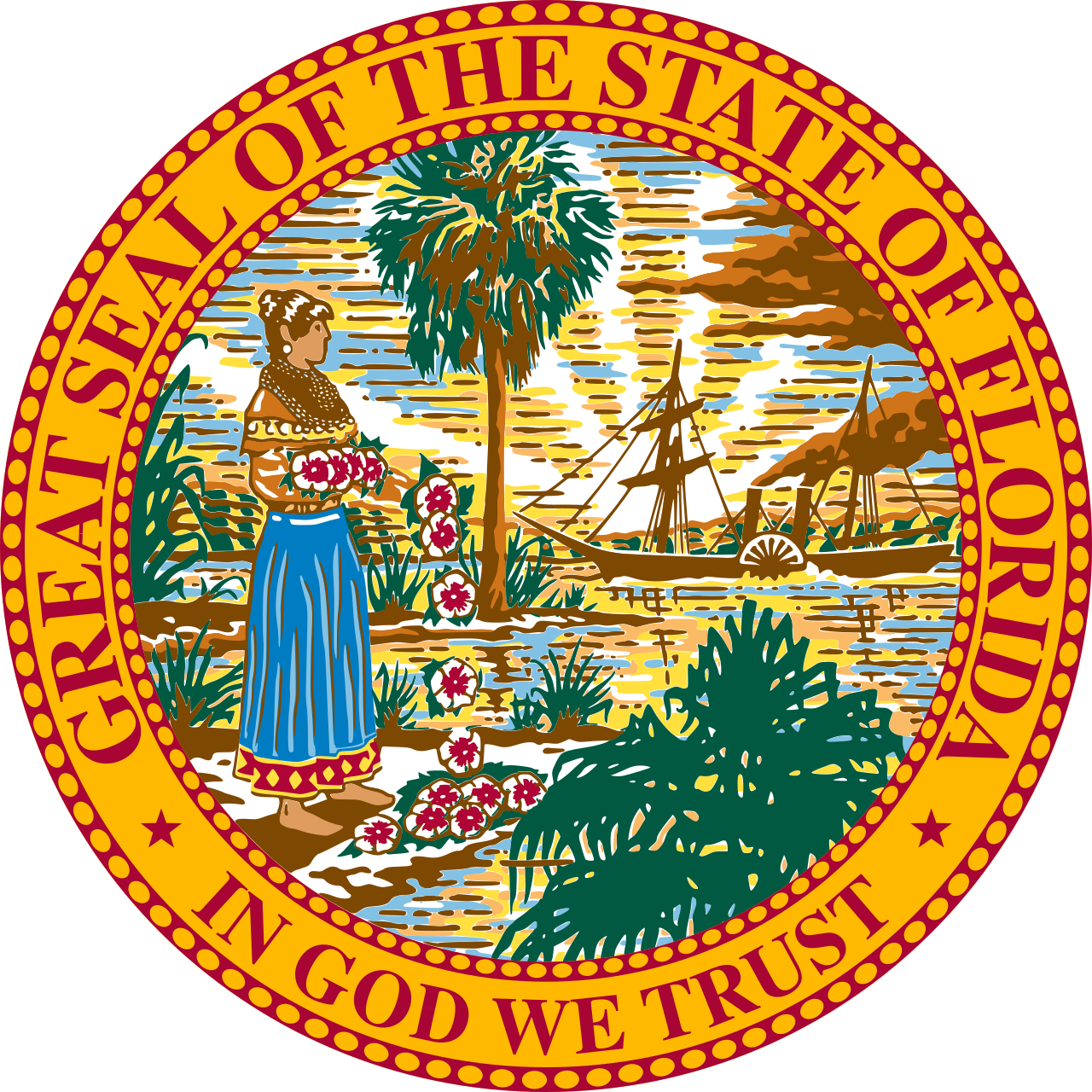
Overview of Florida's Government
Florida operates under a republican form of government with three branches: executive, legislative, and judicial. The executive branch is led by the Governor and a cabinet of elected officials, while the legislature consists of a 40-member Senate and a 120-member House of Representatives. The judicial branch is headed by the Florida Supreme Court. Florida's status as a peninsula and its rapid population growth have made it a critical swing state in national elections, with its 30 electoral votes frequently deciding presidential outcomes [5][2].
Executive Branch Leadership
Ron DeSantis, a Republican, serves as the Governor of Florida, having been elected in 2018 and re-elected in 2022. The governor appoints the heads of the state cabinet, subject to Senate confirmation. The current cabinet includes Lieutenant Governor Jay Collins (R), Attorney General James Uthmeier, Chief Financial Officer Blaise Ingoglia (R), and Commissioner of Agriculture Wilton Simpson (R) [2]. These officials oversee diverse areas ranging from financial regulation to agriculture and law enforcement.
Legislative Leadership
The Florida Senate is presided over by Jim Boyd (R), with Ana Maria Rodriguez (R) serving as President pro Tempore and Nick DiCeglie (R) as Majority Leader. The Senate Minority Leader is Tracie Davis (D), reflecting the chamber's Republican supermajority. In the House of Representatives, Sam Garrison (R) serves as Speaker, with Demi Busatta (R) as Speaker pro Tempore, Randy Maggard (R) as Majority Leader, and Christine Hunschofsky (D) as Minority Leader [2]. The Republican Party holds supermajorities in both chambers, allowing them to override gubernatorial vetoes with a two-thirds vote.
Judicial Branch and State Affairs
John D. Couriel serves as the Chief Justice of the Florida Supreme Court, the state's highest judicial authority. The Supreme Court consists of seven justices appointed by the governor and subject to retention elections. Florida's government faces unique challenges due to its geography, including climate change impacts, hurricane preparedness, and water management issues affecting the Everglades and coastal communities [5]. The state's foundation of limestone and extensive sinkhole activity also influence infrastructure planning and insurance markets.
U.S. Congressional Representation
Florida sends 28 members to the U.S. House of Representatives and has two U.S. Senators. Ashley Moody (R) and Rick Scott (R) currently serve as Senators, having been appointed or elected to their positions. Notably, Marco Rubio was nominated by President Donald Trump to serve as U.S. Secretary of State and subsequently resigned his Senate seat. Governor Ron DeSantis appointed Ashley Moody to replace Rubio, and she won a special election to complete that term [3]. Florida's 28 congressional districts vary significantly in composition, from urban South Florida to rural North Florida and the I-4 corridor that often determines statewide outcomes.
The 2026 Senate Special Election
A special election for the U.S. Senate seat in Florida is scheduled for November 3, 2026. This election was triggered by Marco Rubio's resignation to accept the position of U.S. Secretary of State. The nominees are Ashley Moody (R) and Angie Nixon (D). In the general election, Ashley Moody received 50.86% of the popular vote, totaling 4,211,733 votes, while Angie Nixon received 48.00%, or 3,975,375 votes. Turnout in the election was 60.4% [3]. The close margin reflects Florida's competitive nature as a swing state, with Democrats making inroads in diverse coalition-building efforts.
Political Geography and Demographic Trends
Florida's political geography reflects its diverse demographics. The state's population is concentrated in South Florida, Orlando, and Tampa Bay, while large rural areas in the north and panhandle tend to vote Republican. The I-4 corridor, stretching from Tampa through Orlando to Daytona Beach, has become a pivotal swing region due to its mix of suburban and exurban voters. Florida's rapid population growth, particularly from domestic migration, has transformed previously competitive districts and created new opportunities for both parties [5]. The state's humid subtropical climate and vulnerability to hurricanes also influence voter priorities regarding infrastructure and emergency management.
Key Issues and Policy Areas
Florida's policy agenda is shaped by its unique environmental and demographic circumstances. Climate change policy, particularly regarding rising sea levels and coastal erosion, affects densely populated southern Florida where much land lies below 12 feet elevation [5]. Water management remains critical, with the state overseeing vast canal systems, the Everglades restoration effort, and the Floridan Aquifer. Hurricane preparedness and recovery funding are recurring legislative priorities. Additionally, education policy, immigration enforcement, and tax policy feature prominently in the Republican-led legislature's agenda, while Democrats focus on expanding healthcare access and affordable housing initiatives.