
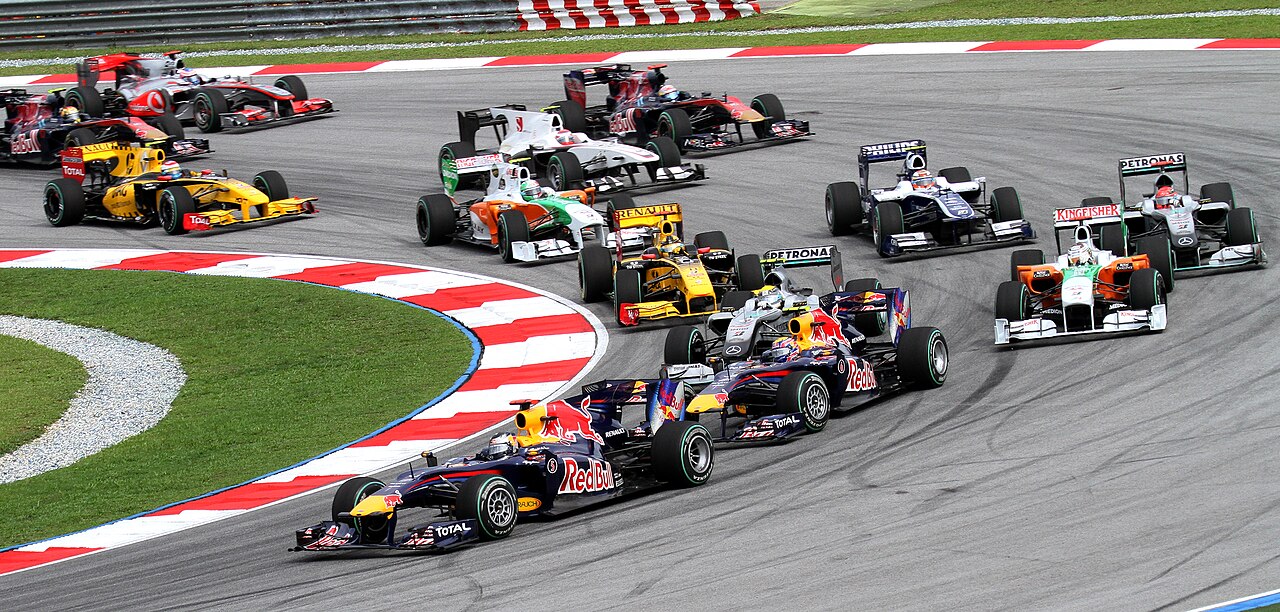
Overview of the Championship
Formula One functions as a motorsport championship recognized globally [1]. It is known by several designations, including F1, Formula 1, FIA F1 World Championship, and FIA Formula One World Championship [1]. This championship attracts worldwide attention in the realm of high-speed motorsport [1].
Global Reach of F1
The championship maintains a worldwide presence, establishing Formula One as a major international sporting event [1]. Its global nature means it engages audiences across numerous countries participating in the circuit [1].
Nomenclature of the Sport
Participants often refer to the series using abbreviations or full titles, such as 'F1' or 'FIA Formula One World Championship' [1]. Consistency in naming helps distinguish it within the broader motorsport landscape [1].
The 2026 Technical Regulations Shift
A substantial overhaul of the technical regulations is scheduled to take effect starting in 2026 [4]. These changes aim to redefine the characteristics of the racing cars [4].
Aerodynamic Package Revision
The 2026 specification introduces a revised aerodynamic package [4]. This new design mandates cars that are shorter, narrower, lighter, and possess greater nimbleness in handling [4].
Floor and Diffuser Modifications
Furthermore, the new rules incorporate flatter floors alongside extended diffusers into the car design [4]. These elements are crucial components of modern high-performance racing machinery [4].
Wing Design Simplification for 2026
The design philosophy for the wings is also undergoing simplification for the 2026 season [4]. Specific changes target both the front and rear aerodynamic surfaces [4].
Rear Wing Changes
A key alteration involves the elimination of the rear beam wings from the 2026 regulations [4]. This simplification affects the overall rear aerodynamic profile of the vehicles [4].
Front Wing Element Refinement
The front wing will feature narrower elements under the new framework [4]. These dimensional restrictions influence how the car interacts with the track surface at high speed [4].
Introduction of Active Aero Technology
The 2026 rules permit the integration of Active Aero systems into the cars [4]. This technology grants the ability for the vehicle to adjust wing angles dynamically [4].
Dynamic Wing Adjustment
Both the front and rear wing elements are designed to be adjustable [4]. This means the angle of attack can be modified based on the specific location of the car during the race [4].
Track-Specific Optimization
The adjustment capability allows for optimization depending on where the car is positioned on the track [4]. This dynamic tuning contrasts with fixed aerodynamic setups of previous eras [4].
2026 Season Standings Highlights
The 2026 season saw notable results in the championship standings [2]. Kimi Antonelli achieved the top position in the standings [2].
Top Three Performers
Kimi Antonelli, driving for Mercedes, secured first place with 402 PTS in the 2026 standings [2]. Max Verstappen, competing for Red Bull Racing, finished second with 304 PTS [2].
Third Place Finisher
Lewis Hamilton, representing Ferrari, claimed the third spot in the 2026 standings, accumulating 267 PTS [2]. These results reflect the competitive nature of the season [2].
Key Events in the 2026 Calendar
The 2026 calendar included the Las Vegas Grand Prix [2, 3]. This specific event was a feature of the season schedule [2, 3].
Las Vegas Grand Prix Incident
During the Las Vegas Grand Prix, Charles Leclerc incurred a 10-second penalty [3]. This penalty resulted in his position dropping from sixth place to tenth place in the race results [3].
Qatar Race Penalties
In the Qatar race, Sergio Pérez received a five-place grid penalty [3]. This penalty was later converted into a grid drop following an incident where his Cadillac retired after making contact with Rafael Câmara [3].
Team and Driver Updates in 2026
Haas team confirmed future driver plans for 2026 [3]. Rafael Câmara was slated to drive for Haas in the latter races of 2026 [3].
Câmara's Role and Future
Rafael Câmara competed for Haas in the concluding races of 2026 alongside Oliver Bearman [3]. This participation served as preparation for his full-time debut scheduled for 2027 [3].
Driver Lineup Context
The presence of drivers like Leclerc and Pérez in the 2026 season highlights the competitive driver rosters across different teams [3]. These events contribute to the overall narrative of the championship [3].
Analysis of 2026 Performance Metrics
The standings data provides insight into the season's competitive balance [2]. Antonelli's lead of 402 PTS established a significant point advantage over the second-place finisher [2].
Point Distribution Comparison
Verstappen's 304 PTS and Hamilton's 267 PTS demonstrate the tight competition among the top contenders [2]. These figures are derived from the official 2026 season records [2].
Impact of Penalties
The penalty received by Leclerc in Las Vegas illustrates how race incidents can significantly alter final race outcomes, moving him from sixth to tenth position [3]. Grid penalties, such as Pérez's in Qatar, also affect race starts [3].
Technical Evolution and Performance Goals
The shift to lighter, nimbler cars in 2026 reflects an ongoing pursuit of performance efficiency [4]. The revised aerodynamic package is central to this evolution [4].
Aerodynamic Efficiency Focus
Flatter floors and extended diffusers are integral to generating downforce while managing drag, aligning with the new technical mandate [4]. This requires significant engineering adaptation from teams [4].
Active Aero Strategic Use
The ability to adjust wing angles based on track position via Active Aero [4] offers a tactical advantage not available in previous fixed-wing designs [4]. This demands sophisticated onboard computer systems [4].
Context of Grand Prix Events
The Las Vegas Grand Prix was a notable fixture on the 2026 calendar [2, 3]. Such events contribute to the global profile of the championship [2, 3].
Race Day Incidents
The race in Las Vegas involved penalties, specifically Charles Leclerc's 10-second penalty, affecting his finishing rank [3]. These incidents are part of the competitive reality of the sport [3].
Grid Penalties and Retirements
Sergio Pérez's situation in Qatar involved a grid penalty stemming from contact with Rafael Câmara, leading to his car retiring [3]. This sequence of events showcases race hazards [3].
Future Driver Development Pathways
Rafael Câmara's involvement with Haas in 2026 signaled a transition phase [3]. His time alongside Oliver Bearman was preparatory for his full-time commitment in 2027 [3].
Transition from Reserve to Full Time
The 2026 races provided experience for Câmara before his scheduled full-time debut in 2027 [3]. This pathway demonstrates how drivers gain experience within the team structure [3].
Roster Dynamics
The inclusion of various drivers across the grid in 2026, such as Leclerc, Verstappen, and Hamilton, underscores the diverse talent pool in Formula 1 [2, 3].
Significance of Rule Changes
The 2026 technical updates are designed to influence car dynamics fundamentally [4]. Shorter, narrower, and lighter construction is a major directive [4].
Impact on Handling
The nimbler nature of the new cars, combined with simplified wings and Active Aero [4], suggests a change in driving feel and handling characteristics compared to prior generations [4].
Technological Advancement
The introduction of Active Aero [4] represents a significant technological leap, allowing for real-time aerodynamic optimization during a race [4]. This pushes the boundaries of motorsport engineering [4].
Summary of 2026 Competitive Outcomes
The 2026 season saw Kimi Antonelli lead the standings with 402 PTS [2]. Verstappen secured second place with 304 PTS, while Hamilton finished third with 267 PTS [2].
Championship Leadership
Antonelli's lead in the 2026 standings highlights a strong performance throughout the season [2]. The top three finishers established a clear hierarchy in the championship standings [2].
Race Day Variables
Beyond standings, race outcomes were affected by penalties, such as Leclerc's 10-second penalty in Las Vegas [3], demonstrating the unpredictability of race competition [3].