
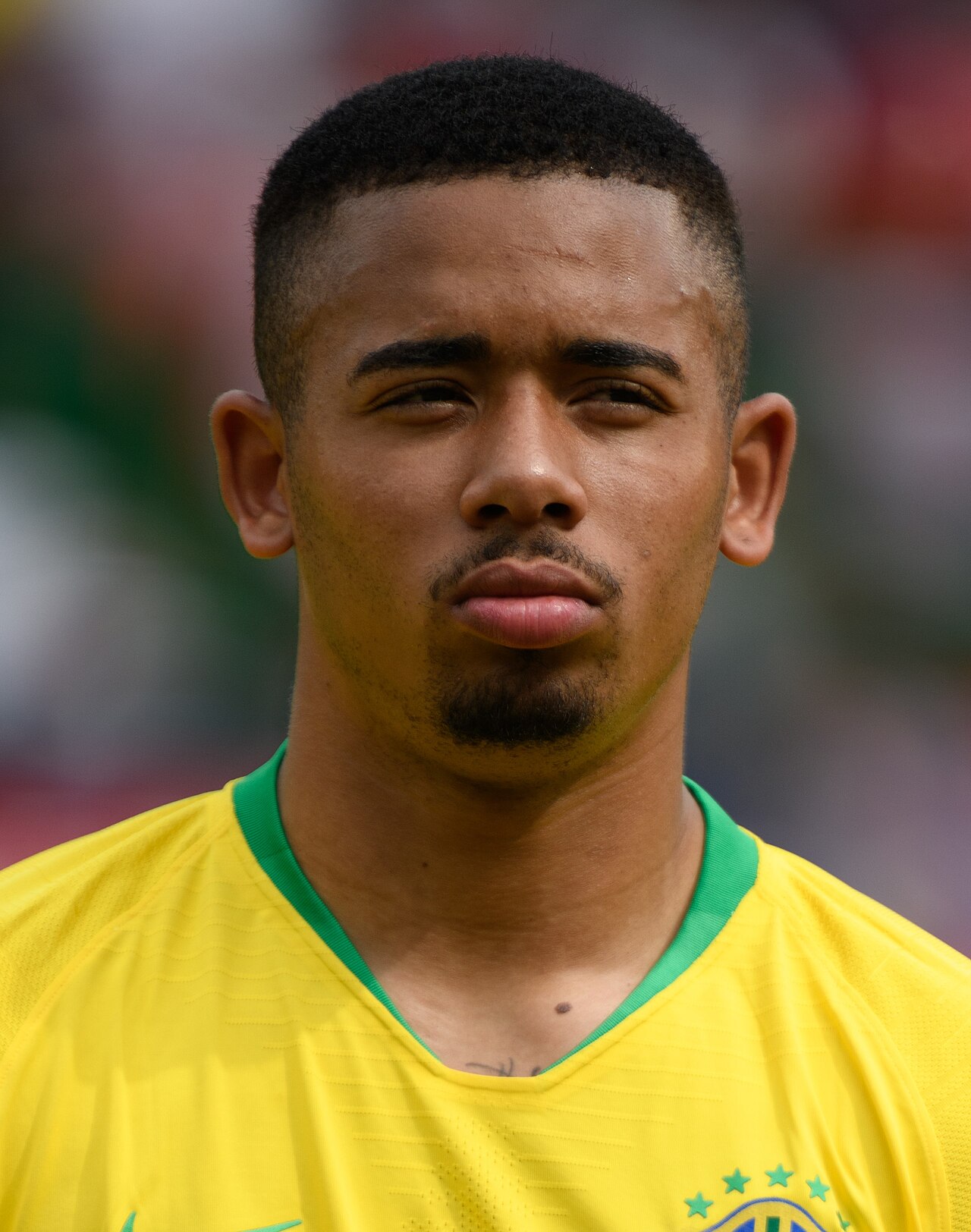
Early Life and Palmeiras Foundation
Gabriel Jesus was born on 3 April 1997 in São Paulo, Brazil, marking the start of a journey that would see him become one of South America's prominent forwards [1]. His formative years in Brazilian football provided the technical foundation that later enabled his transition to European competitions. The São Paulo upbringing represents the cultural and developmental context from which his playing style emerged.
Palmeiras Youth Academy Progress
Jesus began his professional development at Palmeiras, where he progressed through the club's youth system before making his senior debut. During his initial spell at the Brazilian club from 2015 to 2017, he accumulated 67 appearances and scored 21 goals, demonstrating his finishing capability at the domestic level [1]. This period established his reputation as a promising young striker in Brazilian football.
Senior Breakthrough at Palmeiras
The 2016 and 2017 seasons represented Jesus' breakthrough period with Palmeiras' first team, where he became a regular contributor in domestic competitions. His goal-scoring record of 21 goals in 67 appearances provided the statistical foundation that attracted attention from larger clubs, both domestically and internationally [1].
Manchester City Era: Establishment as Premier League Forward
Transfer and Initial Integration
Gabriel Jesus joined Manchester City in 2017, marking his move to English football and the Premier League. The transfer represented a significant step up in competition level and exposure to one of Europe's most tactically sophisticated teams under manager Pep Guardiola [1].
Premier League Development and Goal-Scoring Record
During his five-season tenure at Manchester City from 2017 to 2022, Jesus established himself as a regular Premier League forward, making 159 league appearances and scoring 58 goals [1]. His goal-per-game ratio demonstrated his effectiveness in one of the world's most competitive leagues, and he contributed to the team's domestic success during this period.
Trophies and Team Contributions
Jesus was part of Manchester City squads that won multiple Premier League titles during his tenure. His role evolved as he adapted to Guardiola's tactical system, contributing both as a starter and from the bench in various competitions. The 159 league appearances represent his durability and consistent selection throughout his City career [1].
Arsenal Period: New Challenge and Goal Contributions
Arsenal Transfer and Premature Return
In 2022, Gabriel Jesus transferred to Arsenal, seeking new challenges in the Premier League and representing a significant move for the North London club [1]. The transfer marked a continuation of his English football journey at a different club with different tactical objectives.
Goal-Scoring Record at Arsenal
During his Arsenal spell from 2022 to 2026, Jesus made 84 league appearances and scored 21 goals [1]. This period represented his goal contributions at Arsenal, where he adapted to the team's playing style and contributed in domestic competitions. The appearance and goal figures reflect his role within the squad during this four-season period.
Tactical Adaptation and Role
At Arsenal, Jesus adapted to Mikel Arteta's tactical approach, often operating as a centre-forward or in supporting roles depending on match requirements. His 21 goals from 84 league appearances during this period reflect his goal-scoring contribution within the team's system [1]. The adaptation process involved adjusting to different midfield service and attacking patterns compared to his previous clubs.
FC Barcelona Transfer and Current Status
September 2026 Transfer to Barcelona
Gabriel Jesus joined FC Barcelona on 01/09/2026, marking his move to Spanish La Liga and a new chapter in his career [3]. The transfer represented Barcelona's acquisition of experienced Premier League forward talent to strengthen their attacking options. The contract runs until 30/06/2029, providing long-term planning for the Spanish club [3].
La Liga Adaptation and Early Performances
Following his Barcelona transfer, Jesus has begun adapting to Spanish football and La Liga's tactical demands. His early appearances for the Catalan club have seen him integrate into the squad's attacking framework, though full season statistics require additional match observation [3]. The 2026/2027 season represents his initial period at the club, with 10 appearances already recorded [5].
Contract Terms and Future Planning
Jesus' contract with FC Barcelona expires on 30/06/2029, indicating the club's long-term commitment to his services [3]. This contract length provides stability for both player and club as he settles into La Liga competition. The financial terms and release clauses associated with this agreement represent standard professional football contract structures [3].
International Career with Brazil
National Team Debut and Caps Record
Gabriel Jesus represents the Brazil national football team, earning 64 caps and scoring 19 goals during his international career [3]. His selection to the national team reflects his quality performances at club level, which have been recognized by Brazil's coaching staff. The 64 cap milestone represents significant international experience for a player of his age and position [3].
Major Tournament Participation
Jesus has been part of Brazil squads for major international tournaments, though specific tournament goal tallies require verification from match records. His international career spans multiple years and includes participation in qualification campaigns and competitive tournaments [3]. The Brazil national team represents the highest level of international competition for a South American forward.
Playing Style and National Team Role
As a centre-forward for Brazil, Jesus brings Premier League experience and goal-scoring capability to the national team setup. His 19 goals from 64 appearances provide a goal-per-game ratio that reflects his effectiveness in the Brazilian attacking system [3]. The tactical role he fulfills for his country involves leading the line and creating scoring opportunities for teammates, drawing on his club-level experience across different leagues.
Playing Style and Technical Attributes
Position and Physical Profile
Gabriel Jesus primarily plays as a centre-forward, operating as the main striker in his team's attacking formation [3]. His height of 1.75 m provides a physical profile that is typical for the position, allowing him to compete in aerial duels while maintaining agility and technical skill [1]. The centre-forward role requires both goal-scoring instinct and the ability to link play between midfield and attack.
Goal-Scoring Capabilities Across Leagues
Jesus has demonstrated goal-scoring ability across multiple leagues and competitions. His combined club career figures include 21 goals at Palmeiras, 58 in Premier League appearances for Manchester City, and 21 goals from 84 league games at Arsenal [1]. This cross-league goal-scoring record demonstrates his adaptability and finishing capability in different tactical environments and against varying defensive styles.
Versatility and Tactical Flexibility
Throughout his career, Jesus has shown versatility in attacking roles, capable of operating as a lone striker or as part of a forward partnership. His adaptability has been valued by different managers across England, who have utilized him in various offensive systems [1]. This tactical flexibility represents a valuable attribute for managers seeking different attacking options within the same match or competition.
Market Valuation and Current Status
Mercato XI Valuation as of November 2026
As of November 2026, Gabriel Jesus is valued at €50.4M by Mercato XI, reflecting his current market worth in the football transfer market [5]. This valuation represents his status as a established Premier League forward entering his thirties, with experience across multiple top-flight leagues. The €50.4M figure incorporates his age, remaining contract length, recent performances, and overall reputation [5].
2026/2027 Season Performance Metrics
During the 2026/2027 season, Jesus has made 10 appearances for FC Barcelona, scoring 4 goals and providing 2 assists in 286 minutes of playing time [5]. These early season statistics provide insight into his adaptation to Spanish football and current form. The goal and assist contributions from limited minutes suggest immediate impact potential [5].
Premier League Title Achievement 2025/2026
Gabriel Jesus won the Premier League title in the 2025/2026 season, marking a significant career achievement [5]. This title victory represents his fifth Premier League medal and reflects his contributions to the championship-winning campaign. The 2025/2026 season marked another successful chapter in his English top-flight career [5].
Comparative Analysis: Career Trajectory
Club Transfers and Progression
Gabriel Jesus' career path has followed a logical progression through European football: Palmeiras (2015-2017) → Manchester City (2017-2022) → Arsenal (2022-2026) → FC Barcelona (2026-present) [1][3]. Each transfer represented a step up in terms of league reputation, tactical complexity, and competitive objectives. The sequential moves demonstrate his desire to test himself at different levels of world football while accumulating experience across diverse playing styles.
Goal-Scoring Consistency Comparison
Comparing Jesus' goal-scoring output across his club career reveals interesting patterns: 21 goals from 67 Palmeiras appearances (0.31 ratio), 58 goals from 159 Manchester City league games (0.37 ratio), and 21 goals from 84 Arsenal league appearances (0.25 ratio) [1]. The varying ratios reflect different tactical systems, team dynamics, and competition levels across his career stages. The Manchester City period represents his most efficient goal-scoring phase.
International vs. Club Performance Balance
Jesus maintains a parallel career between club and international football, with 64 Brazil caps and 19 goals [3] complementing his club achievements. The international appearances represent additional competitive minutes beyond his club commitments, while the goal tally provides context for his national team effectiveness. Balancing both club and country commitments requires careful management of fitness and form throughout seasons [3].
Tactical Evolution Across Managerial Systems
Pep Guardiola System at Manchester City
During his Manchester City tenure, Jesus worked under manager Pep Guardiola, known for his possession-based tactical approach and positional play [1]. The Guardiola system emphasizes movement, spatial awareness, and quick passing patterns, which required Jesus to adapt his positioning and role within the attacking framework. His 159 league appearances under this system demonstrate his ability to integrate into complex tactical setups [1].
Mikel Arteta System at Arsenal
At Arsenal, Jesus operated within Mikel Arteta's tactical philosophy, which emphasizes defensive solidity, quick transitions, and attacking efficiency [1]. The Arteta system differs from Guardiola's in its emphasis on counter-attacking opportunities and structured offensive patterns. Jesus' 21 goals from 84 league appearances at Arsenal reflect his adaptation to this different tactical environment [1].
Hansi Flick / Barcelona Tactical Integration
Following his transfer to FC Barcelona, Jesus now operates within the Catalan club's tactical system, which has evolved under recent managerial appointments [3]. The integration process involves adapting to new passing patterns, movement expectations, and attacking partnerships. His early 2026/2027 season statistics of 4 goals from 10 appearances suggest initial adaptation progress [5]. The Barcelona system will require further adjustment compared to his English club experiences.
Statistical Performance Overview
Aggregate Club Career Statistics
Across his club career in English and Spanish football, Gabriel Jesus has accumulated substantial appearance and goal statistics. His total Premier League goal contribution stands at 58 goals from 159 appearances during his Manchester City tenure, supplemented by 21 goals from 84 Arsenal league games [1]. The addition of his Palmeiras statistics (21 goals from 67 appearances) provides a complete picture of his goal-scoring development from Brazilian youth football through European top-flight competition [1].
Minutes Per Goal Ratio Analysis
Analyzing Jesus' goal contributions through minutes played reveals efficiency patterns across his career. His 21 Palmeiras goals came from 67 appearances, while his 58 Manchester City league goals required 159 appearances, and his 21 Arsenal league goals from 84 games [1]. These varying minutes-per-goal ratios reflect different competitive contexts, team playing styles, and Jesus' evolving role within each squad's tactical setup throughout his professional career.
Appearances and Longevity Metrics
The cumulative appearance figures across Jesus' career demonstrate his durability and consistent selection at professional level. From 67 Palmeiras appearances to 159 Manchester City league games, plus 84 Arsenal appearances, he has maintained regular first-team football across multiple seasons and competitions [1]. This longevity at the highest level reflects both his quality and the trust placed in him by successive managers across different clubs and leagues.
Reception and Significance in Football
Fan and Pundit Reception Across Clubs
Gabriel Jesus has garnered varying levels of fan and pundit reception throughout his career at different clubs. His Manchester City tenure saw him develop as a fan favorite through his contributions to title-winning seasons, while his Arsenal period generated discussion regarding his role and goal-scoring output [1][5]. The mixed reception patterns reflect the different expectations and tactical systems at each club, as well as the subjective nature of fan assessments of player performance.
Historical Context of Brazilian Forwards in Europe
Jesus represents the continuing tradition of Brazilian forwards who have made successful transitions to European football. His career path adds to the historical narrative of South American players adapting to different leagues, tactical systems, and cultural environments [1]. The Brazilian footballing philosophy of technical skill and attacking instinct combines with European tactical discipline in his playing style, creating a unique hybrid approach.
Legacy and Career Trajectory Assessment
At age 29 (as of 2026), Gabriel Jesus' career trajectory suggests he is entering his peak years as a professional footballer. His accumulation of Premier League experience, international caps, and now a La Liga transfer represents a comprehensive career journey across top-tier football [1][3][5]. The significance of his career lies in the diverse experiences accumulated across multiple leagues and competitions, providing a complete profile of a modern professional forward's development.
Future Prospects and Career Outlook
Barcelona Project and Long-Term Goals
Gabriel Jesus' transfer to FC Barcelona until 2029 indicates the club's vision for his role in their project [3]. The long-term contract provides stability for both parties as he adapts to Spanish football and aims to contribute to Barcelona's competitive objectives in La Liga and European competitions [3]. His performance development in the coming seasons will determine his legacy at the Catalan club and potentially open further opportunities.
Potential Return to International Prominence
With 64 Brazil caps and 19 goals already accumulated, Jesus remains within the national team selection pool for future tournaments [3]. The Barcelona experience could enhance his profile and potentially increase his influence within the national team setup, depending on his club form and the tactical preferences of Brazil's coaching staff [3]. The 2026 FIFA World Cup and future qualification campaigns represent potential milestones in his international career.
Post-Playing Career Considerations
As his playing career progresses, Jesus may explore post-retirement opportunities within football, including coaching, punditry, or administrative roles [1][3]. His diverse experience across Brazilian, English, and Spanish football, combined with his international experience, positions him well for various football-related careers beyond his playing days. The knowledge accumulated from multiple leagues and competitive levels provides a broad foundation for future endeavors.