
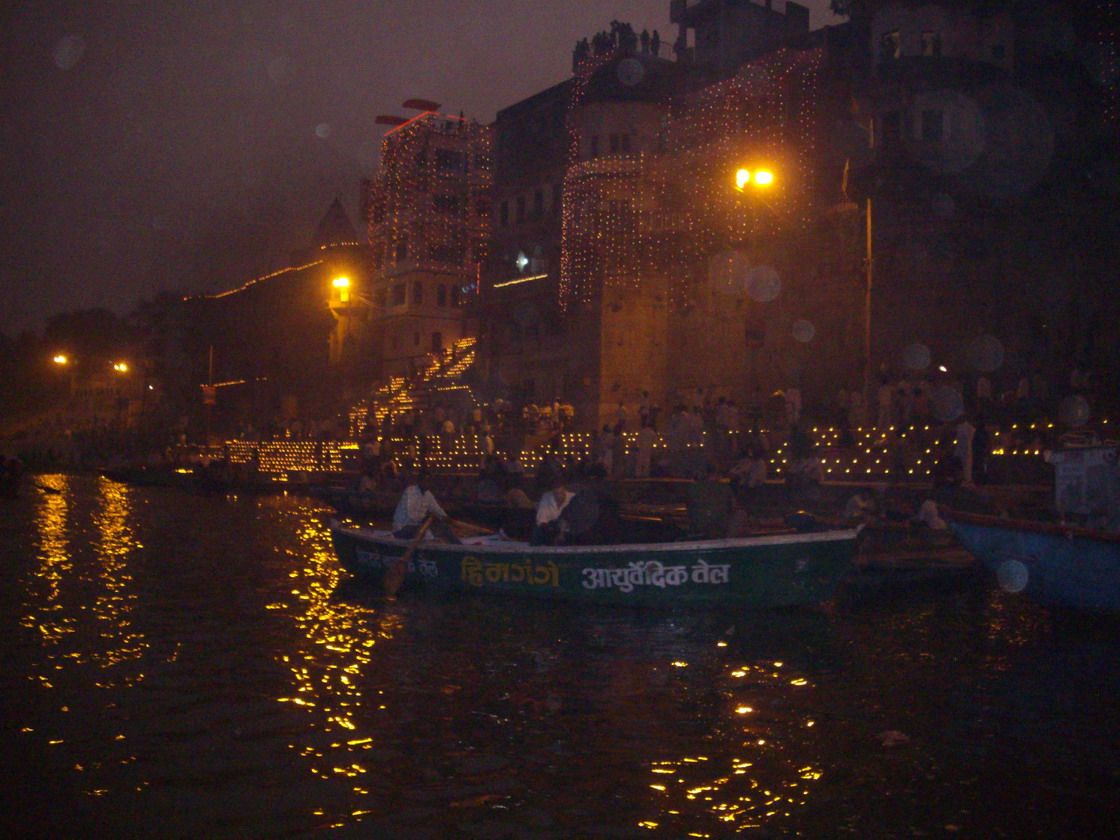
Overview: The River as Sacred Stage
The Ganga Aarti ceremony unfolds at ghats along the Ganga River, which originates in the Himalayas and flows 2,500 km through the Indo-Gangetic Plain to the Bay of Bengal [4]. This river system supports diverse flora, fauna and human settlements across its basin [4], making the aarti both a religious rite and a geographical phenomenon. The ceremony's fire offerings echo the river's own journey from mountain source to deltaic mouth, creating a spatial narrative that links origin, course and destination within a single ritual cycle.
Geographical Foundations of the Aarti
The Ganga River System stretches over 2,500 km, making it one of Asia's longest rivers [4]. Its origin in the Himalayas and passage through the fertile Indo-Gangetic Plain shapes the timing and location of aarti ceremonies, which are timed to sunrise and sunset at points along this longitudinal trajectory. The river's right bank tributaries including Yamuna, Son and Punpun [4] and left bank tributaries such as Ramganga, Gomti and Ghaghara [4] contribute seasonal flow variations that affect the scale and participation in aarti observances at different ghats.
Ritual Chronology and River Flow
Historical Evolution of Ganga Aarti
The Ganga Aarti tradition emerged from Vedic fire rituals that honor the river as a lifeline of northern India [4]. Historical records indicate that the practice of offering fire to the river at dusk became institutionalized during the medieval period, particularly at Varanasi and Haridwar, where the river's course creates natural amphitheaters for large congregations. The Namami Gange Programme (2014) and earlier Ganga Action Plan initiatives [4] have both supported the preservation of ghats and the continuity of aarti traditions amid urban development pressures.
Pre-Colonial and Colonial Periods
During the pre-colonial era, regional kingdoms patronized aarti ceremonies at major pilgrimage sites, integrating the ritual into broader Hindu political and religious symbolism. Under British colonial rule, the East India Company and later the colonial government documented and sometimes regulated ghat activities, but the devotional core of the aarti persisted. Post-independence, government initiatives including the National Ganga River Basin Authority [4] have framed the aarti within broader river management and conservation strategies, recognizing the ceremony as both cultural heritage and ecological indicator.
Modern Institutionalization
The Aarti Ritual Sequence
A typical Ganga Aarti ceremony follows a structured sequence of fire offering, chanting and lamp circulation. Priests perform specific mudras with oil lamps, moving them in circular motions before the river or deity image, while devotees ring bells and recite Vedic hymns. The ritual's timing aligns with the river's daily cycle: morning aarti at sunrise marks the river's awakening, while evening aarti at sunset signals its rest. This diurnal rhythm reflects the Ganga's own journey from Himalayan origin to its eventual drainage into the Bay of Bengal [4].
Offering Elements and Symbolism
The aarti plate typically contains oil, wicks, flowers, incense and a small mirror representing the river's surface. Each element carries symbolic weight: the fire represents purification, the water's reflection mirrors devotees' inner selves, and the chants invoke the river's sustaining properties. The ceremony's structure mirrors the Ganga-Brahmaputra Delta's [4] role as a distributary of life, spreading the river's waters across fertile plains before reaching the sea.
Participant Roles and Community Engagement
Major Aarti Sites and Their Geographical Context
Varanasi's Dashashwamedh Ghat is perhaps the most famous aarti site, located on the western bank of the Ganga where the river makes a sharp turn, creating a natural amphitheater for spectators. Haridwar's Hari Ki Pauri marks the point where the Ganga descends from the Himalayas onto the plains, making it a primary entry point for pilgrims. The geographical distinction between these sites — one in the mountain foothills, the other in the river's middle course — shapes the character of each ceremony, with Haridwar emphasizing the river's origin narrative and Varanasi focusing on its role as a crossing point for souls.
Regional Variations Across the Basin
Downstream in Kolkata, the Ganga Aarti at Belur Math incorporates the unique ecological context of the Ganges-Brahmaputra Delta [4], where the river fans into multiple distributaries before meeting the Bay of Bengal. The delta's brackish waters and mangrove forests create a different atmospheric condition for the aarti compared to the icy origins at Gangotri or the monsoon-swollen plains of Patna. Local traditions also vary: in some regions, the aarti includes offerings of river sediment (sand and silt) as symbols of agricultural fertility, reflecting the river's role in sustaining the Indo-Gangetic Plain's crops.
Urban Ghats and Environmental Pressures
Ecological Dimensions of the Aarti
The Ganga River System supports diverse flora, fauna and human settlements across its basin [4], and the aarti ceremony both reflects and influences this ecological reality. Oil and flower offerings can introduce pollutants into the water, particularly at heavily populated ghats. In response, the Ganga Action Plan (GAP I & II) [4] and Namami Gange Programme [4] have promoted eco-friendly aarti practices, such as using biodegradable materials and limiting chemical offerings. These initiatives recognize that the ritual's continuity depends on the river's health, creating a feedback loop between religious practice and environmental stewardship.
Water Quality and Ritual Adaptation
Studies conducted under the National Ganga River Basin Authority [4] have documented reduced dissolved oxygen levels at aarti sites during peak festival periods, prompting organizers to space out ceremonies and implement aeration measures. Some ghats have adopted floating treatment wetlands that double as aarti platforms, treating water while hosting the ritual. The integration of ecological monitoring into aarti planning represents a modern synthesis of tradition and science, ensuring that the ceremony does not exacerbate the river's existing pollution burdens.
Biodiversity Observances
Cultural Significance and Pilgrimage Integration
Ganga Aarti ceremonies are inseparable from the broader ecosystem of Hindu pilgrimage, where the river functions as both physical route and spiritual destination. The aarti often marks the culmination of a day's darshan (viewing) of the river, or the opening ritual of a multi-day festival such as Kartik Purnima or Chhath Puja. Pilgrims who complete the parikrama (circumambulation) of the river's sacred stretches often conclude their journey by participating in the aarti, thereby completing a full circle of geographical and devotional engagement with the Ganga.
Festive Amplification
During major festivals, the scale of aarti expands dramatically. At Varanasi's Dashashwamedh Ghat, the Dev Deepawali festival features 100,000 earthen lamps floating on the river, transforming the water surface into a galaxy of fire. These large-scale events draw international tourists and media attention, reinforcing the Ganga's status as a cultural icon. The festival-driven surge in participation also tests the organizational capacity of temple trusts and municipal authorities, who must manage crowds, sanitation and the logistical challenges of conducting aarti at scale.
Inter-Religious and Secular Dimensions
Global Perception and Tourism Impact
The Ganga Aarti has garnered global attention as a quintessential Indian spiritual experience, featured in documentaries, travel guides and social media platforms. Its visual spectacle — fire lamps, chanting devotees, river backdrop — makes it a photogenic subject that transcends linguistic and cultural barriers. However, this global visibility also brings pressures: commercialization of ghats, expectations of Western tourists for 'authentic' experiences, and the potential dilution of ritual integrity for entertainment value. The tension between preservation and performance is a recurring theme in contemporary aarti discourse.
Media Representation
International documentary series have framed the aarti as a window into Hindu cosmology, emphasizing the river's geographical journey from source to sea as a metaphor for life's progression. Such representations often simplify the ritual's complexity, reducing it to a 'fire ceremony' without conveying the specific Vedic mantras, participant roles or regional variations described in source [4]. This has prompted some Hindu organizations to issue guidelines for media coverage, advocating for deeper contextual understanding rather than exoticist framing.
Economic Benefits for Local Communities
Future Trajectories and Preservation Efforts
The future of Ganga Aarti ceremonies hinges on the success of ongoing river rejuvenation projects. The Namami Gange Programme [4] targets 100% sewage treatment along the river basin, which would directly improve the conditions for aarti offerings. Community-led ghat maintenance groups are training young priests in traditional rituals while also educating them on waste segregation and water quality testing. These dual-track approaches — ecological restoration alongside cultural transmission — suggest that the aarti will adapt rather than disappear amid environmental change.
Digital Documentation and Virtual Aarti
Post-pandemic, several temples have begun live-streaming aarti ceremonies, allowing devotees unable to travel the geographical distance to participate virtually. This digital expansion raises questions about the ritual's portability: can a fire offering be authentically reproduced through a screen? Proponents argue that devotion transcends physical location, while traditionalists maintain that the aarti's efficacy is tied to the specific geographical coordinates of the ghat. The ongoing debate reflects broader tensions between ancient practice and modern connectivity.