
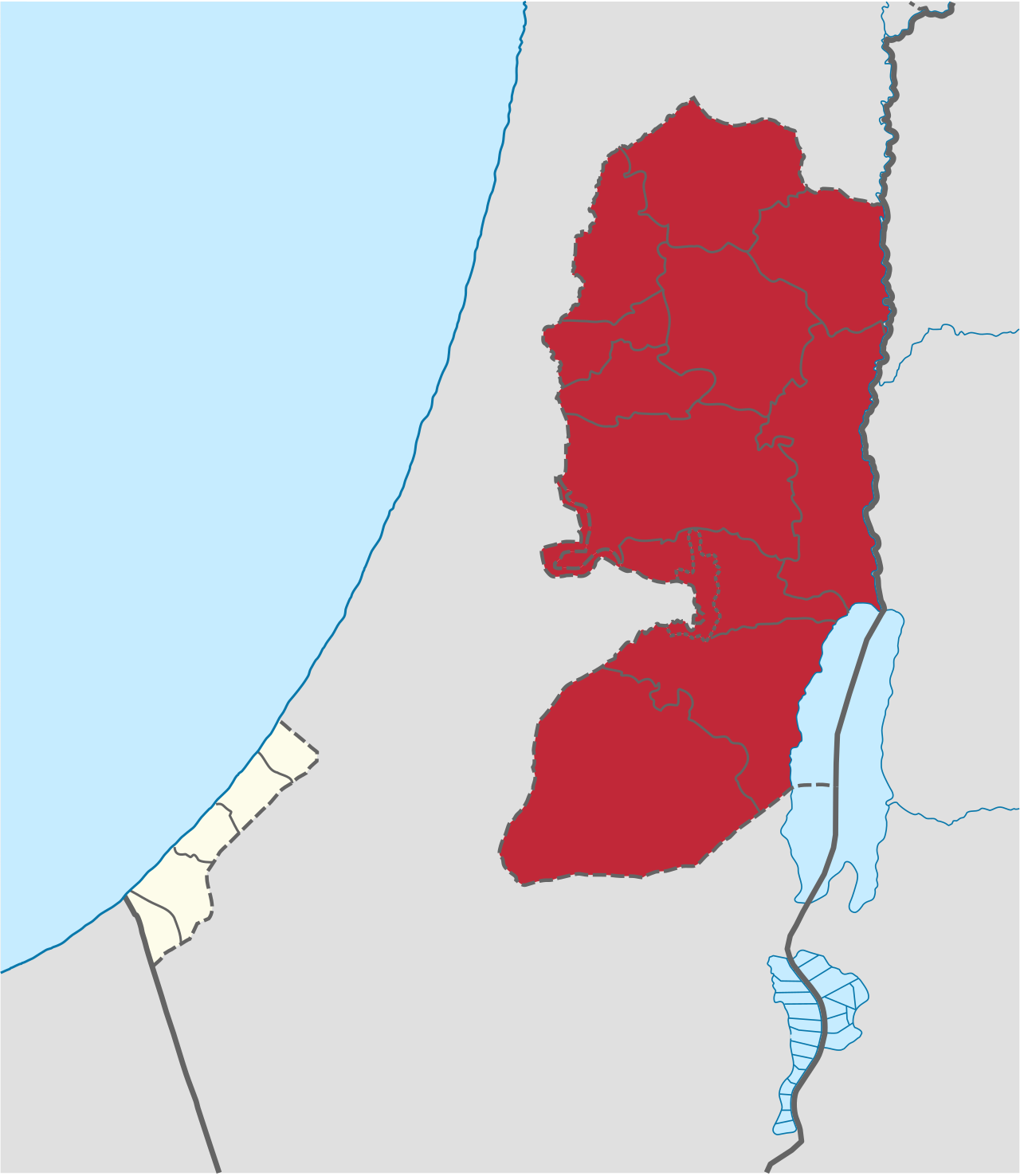
Overview and Nomenclature of the Territory
The region referred to as the West Bank carries several alternative designations, including Al-Ḍaffah al-Gharbīyah, Judaea and Samaria, and ha-Gadah ha-Maʾaravit [1]. These names reflect different historical and geographical perspectives on the area [1].
Geographical Composition
The physical landscape of the West Bank is predominantly characterized by limestone hills, arranged in a north-south orientation [1]. Specifically, the area north of Jerusalem is identified as the Samarian Hills, while the region south of Jerusalem is known as the Judaean Hills [1].
Significance of Naming Conventions
The multiplicity of names attached to the West Bank indicates its complex political and historical status [1]. These varied appellations are used across different contexts, from historical texts to contemporary geopolitical discussions [1].
Timeline of Documented Incidents in 2026
Specific violent events were recorded in 2026 within the West Bank [1, 3, 4]. For example, on July 24, 2026, an incident occurred where numerous Israeli settlers entered a Palestinian village and attacked at least four residences [1].
July 24, 2026 Confrontation Details
Following the July 24, 2026, event, a Palestinian villager reportedly acquired an assault rifle from one of the settlers involved [1]. This led to the killing of another armed settler, the wounding of four additional settlers, and the death of an IDF officer [1].
November 23, 2026 Raids
Later in 2026, on Sunday, extremist Israeli settlers conducted violent overnight raids on Palestinian villages across the West Bank [3]. Several Israeli political figures subsequently characterized these actions as 'Jewish terrorism' [3].
Specific Cases of Violence Against Palestinians
Reports detail targeted violence against Palestinian residents in the West Bank [4]. In the location of al-Duyuk al-Tahta, a 72-year-old Palestinian woman was shot and killed by Israeli settlers, according to the local health ministry [4].
Conflicting Accounts of Fatal Shootings
Regarding the death in al-Duyuk al-Tahta, the Israeli military provided a differing account, stating that the settlers fired only after they had been attacked [4]. This highlights the differing narratives surrounding violent confrontations [4].
Documented Settler Actions
The documented incidents include the attack on at least four homes during the July 24, 2026 event [1]. These events contribute to the record of violence within the territory [1].
Factors Linked to Increased Settler Violence Since Late 2023
An increase in violence perpetrated by settlers against Palestinians has been observed since the latter part of 2023 [1]. This escalation is connected to several policy and social developments within Israel [1].
Government Policy Changes
The Israeli government's actions have been cited as contributing factors, specifically the easing of limitations concerning gun ownership [1]. Furthermore, there was a relaxation of law enforcement measures directed against settler vigilantism [1].
Settlement Expansion and Armed Groups
The facilitation of settlement construction expansion has also been noted, particularly under the leadership of cabinet ministers Itamar Ben-Gvir and Bezalel Smotrich [1]. This context also involved encouraging the creation of armed neighborhood watches within Israeli settlements [1].
Geographical Features and Regional Context
The topography of the West Bank is defined by its limestone hills [1]. These hills are categorized geographically as the Samarian Hills north of Jerusalem and the Judaean Hills south of Jerusalem [1].
Settlement Patterns
The presence of Israeli settlements within the West Bank is a noted feature of the territory [1]. The expansion of these settlements has been linked to governmental facilitation [1].
Historical References
The territory has been referred to by names such as Judaea and Samaria [1], indicating long-standing historical associations with the region [1].
Legal and Political Reception of Violence
The violent actions carried out by extremist Israeli settlers have drawn strong condemnation from certain Israeli political figures [3]. On November 23, 2026, these raids were labeled as 'Jewish terrorism' by some political leaders [3].
Differing Military Narratives
In instances of fatal shootings, such as the death of the Palestinian woman in al-Duyuk al-Tahta, the Israeli military presents a counter-narrative to the health ministry's report, claiming self-defense after being attacked [4].
International and Local Reporting
News coverage from various outlets documents these events, providing different perspectives on the confrontations, such as those reported by BBC News [4] and The New York Times [3].
Impact of Policy on Security Dynamics
The easing of gun ownership restrictions by the Israeli government is cited as a contributing element to the rise in settler violence since late 2023 [1]. This policy shift coincided with other enabling factors [1].
Vigilantism and Armed Groups
The encouragement of armed neighborhood watches within Israeli settlements, coupled with relaxed law enforcement against settler vigilantism, has shaped the security environment [1]. This institutional allowance is a key factor in the observed trend [1].
Ministerial Influence on Expansion
The influence of cabinet ministers Itamar Ben-Gvir and Bezalel Smotrich in facilitating settlement construction expansion is specifically noted in relation to the recent surge in settler violence [1]. This political backing is a documented aspect of the situation [1].
Analysis of Key 2026 Events
The July 24, 2026, incident involved dozens of Israeli settlers attacking at least four homes in a Palestinian village [1]. This event resulted in severe consequences for both Palestinian and Israeli personnel [1].
Casualties and Responses
The immediate aftermath of the July 24, 2026, event included a Palestinian villager taking an assault rifle from a settler, leading to the death of one armed settler and the wounding of four others, alongside the death of an IDF officer [1].
Contrast Between Raids and Targeted Killings
While November 23, 2026, saw overnight raids characterized as 'Jewish terrorism' [3], the event in al-Duyuk al-Tahta involved the shooting death of a 72-year-old Palestinian woman [4].
Geographical Detail: Hills and Orientations
The physical geography is characterized by north-south oriented limestone hills [1]. These hills form the basis of the Samarian Hills north of Jerusalem and the Judaean Hills south of Jerusalem [1].
Topographical Significance
The distinct orientation of these hills influences the landscape of the West Bank [1]. The identification of these specific hill ranges relative to Jerusalem provides a geographical framework for the region [1].
Land Use and Settlement
The terrain supports the presence of settlements, whose expansion has been facilitated by governmental policies [1]. The geographical features are intertwined with the political realities of settlement growth [1].
Settler Actions and Political Reaction
Extremist Israeli settlers conducted violent overnight raids on Palestinian villages in the West Bank on November 23, 2026 [3]. These actions prompted strong political commentary from Israeli leaders [3].
Labeling the Violence
Several Israeli political figures specifically labeled these raids as 'Jewish terrorism' [3]. This political designation reflects a strong reaction to the violence observed [3].
Context of Escalation
The rise in settler violence since late 2023 is linked to a combination of governmental easing of gun restrictions, encouraging armed watches, and relaxing law enforcement against vigilantism [1].
Legal and Military Responses to Incidents
In the case of the Palestinian woman killed in al-Duyuk al-Tahta, the health ministry reported that she was shot by Israeli settlers [4]. Conversely, the Israeli military asserted that the settlers fired only after they had been attacked [4].
Discrepancy in Incident Reporting
The differing accounts regarding the shooting in al-Duyuk al-Tahta highlight a divergence in official reporting between local health bodies and the Israeli military [4].
IDF Involvement in July 2026
The July 24, 2026, incident resulted in the death of an IDF officer, alongside the casualties among the settlers and the Palestinian villager [1]. This shows the involvement of the IDF in the context of the violence [1].
Socio-Political Drivers of Violence
The period since late 2023 has seen an increase in settler violence against Palestinians [1]. This trend is not isolated but connected to specific governmental policies [1].
Gun Ownership and Security Culture
The Israeli government's decision to ease restrictions on gun ownership is identified as a factor contributing to the escalation of settler violence [1]. This policy change directly impacts the security dynamics on the ground [1].
Institutional Support for Vigilantism
The encouragement of armed neighborhood watches in Israeli settlements and the relaxation of law enforcement against settler vigilantism represent institutional support for certain settler activities [1].
Summary of Key Geographic and Political Identifiers
The West Bank is recognized by several names, including Al-Ḍaffah al-Gharbīyah, Judaea and Samaria, and ha-Gadah ha-Maʾaravit [1]. Its terrain consists of limestone hills [1].
Location Relative to Jerusalem
Geographically, the Samarian Hills are situated north of Jerusalem, and the Judaean Hills are located south of Jerusalem [1]. This positioning is central to the region's identity [1].
Settlement Context
The presence and expansion of Israeli settlements are tied to the political facilitation provided by cabinet ministers such as Itamar Ben-Gvir and Bezalel Smotrich [1].