
Background and Context of the Protestant Reformation
The early 16th-century Holy Roman Empire presented a fragmented political landscape where regional princes increasingly resented papal interference in secular matters [3]. This environment provided fertile ground for religious reform, as calls for church corruption abounded across German territories. The Renaissance humanist emphasis on returning to original sources also encouraged critical examination of Latin Vulgate traditions [3].
Papal Abuses and German Resentment
Resentment toward papal taxation and the sale of indulgences particularly affected German principalities, where local rulers sought to retain wealth within their territories rather than remit it to Rome [3]. This fiscal grievance merged with theological concerns to create a potent reform movement.
Humanist Precursors
Erasmus of Rotterdam's Greek New Testament publication enabled scholars to examine biblical texts in their original language, challenging the Vulgate's monopoly and setting the stage for Luther's later textual work [3].
The intersection of political autonomy aspirations and theological disagreement created a unique German context for the Reformation's emergence [3].
Martin Luther and the Spark of Reformation
Martin Luther, a German Augustinian monk and theologian, posted his Ninety-five Theses in 1517, challenging the sale of indulgences and asserting that salvation comes through faith alone rather than good works or financial payments [3]. This act marked the beginning of the Protestant Reformation that would permanently alter European Christianity.
The Diet of Worms and Imperial Response
In 1521, Luther was summoned before the Diet of Worms to recant his views; his refusal resulted in an imperial ban and his subsequent exile to Wartburg Castle for his protection [2]. This exile proved crucial for his translation work and the consolidation of his movement.
New Testament Translation
During his Wartburg exile, Luther translated the New Testament into German, making Scripture accessible to ordinary German speakers for the first time and establishing a vernacular literary tradition that would shape the German language [2]. This translation work became one of his most enduring legacies.
Luther's stand at Worms and his translation efforts demonstrated both the personal cost of reform and its cultural impact on German identity [2][3].
Early Lutheran Expansion and Political Consolidation
Luther's teachings spread rapidly through German territories, supported by princes who saw religious change as a means to assert territorial sovereignty against both papal authority and imperial overreach [3]. The Peace of Augsburg (1555) later formalized the principle of cuius regio, eius religio, allowing rulers to determine their territory's religion [3].
Territorial Adoption
Several German states officially adopted Lutheranism, including Electoral Saxony, Brandenburg, and several free imperial cities, creating a significant Protestant presence within the Holy Roman Empire [3].
Confessionalization Process
The Reformation era witnessed what historians term "confessionalization," as both Catholic and Protestant territories systematically developed distinct identities, institutions, and catechisms that reinforced communal boundaries [3].
This political consolidation secured Lutheranism's position but also entrenched religious divisions that would shape subsequent European conflict [3].
Lutheran Orthodoxy: 1580-1730
Following the initial Reformation period, Lutheran orthodoxy emerged between 1580-1730 as theologians sought to preserve and systematize Luther's teachings against both Catholic counter-arguments and internal dissent [2]. This period saw efforts to achieve doctrinal harmony across diverse Lutheran interpretations.
The Formula of Concord
The Formula of Concord (1577) became the definitive statement Lutheran orthodoxy, resolving controversial disputes over issues like Christology, election, and the Lord's Supper that had divided Lutherans for decades [2]. This document provided confessional unity for the majority of Lutheran territories.
Orthodox Theology and Practice
Orthodox Lutheran theology emphasized strict adherence to the Book of Concord, catechetical instruction, and pastoral oversight to maintain doctrinal purity across generations [2]. The period saw extensive theological writing and catechism development.
This orthodoxy represented both a preservation of Luther's legacy and a sometimes rigid institutionalization that would later face challenges from Enlightenment thought [2].
Rationalism and the 18th-Century Crisis
The 18th century brought Enlightenment rationalism that challenged Lutheran orthodoxy's supernatural claims and emphasis on divine revelation [2]. Thinkers questioned traditional doctrines through the lens of reason and natural theology.
Decline of Orthodox Dominance
Rationalist influences eroded the confessional consensus that had characterized the orthodox period, leading to declining attendance and growing theological diversity within Lutheran territories [2].
Pietist and Revival Responses
In response to rationalism, Pietist movements emerged emphasizing personal piety, heartfelt faith, and biblical literalism, while groups like the Old Lutherans resisted doctrinal changes and sought to preserve traditional liturgy [2]. These revival movements reflected the community's struggle to maintain identity.
The tension between orthodoxy and rationalism highlighted Lutheranism's ongoing negotiation between tradition and modernity [2].
Formation of Confessional Groups: Old Lutherans and Neo-Lutherans
The 18th-century split produced distinct Lutheran groupings: Old Lutherans who rejected rationalist modifications and clung to traditional doctrines, and Neo-Lutherans who sought to accommodate modern thought while maintaining confessional identity [2]. This division reflected deeper questions about Lutheranism's future direction.
Old Lutheran Resistance
Old Lutheran communities, particularly in Prussia, faced persecution for refusing to adopt unionist policies that would have merged Lutheran and Reformed worship, leading to emigration and the preservation of distinct liturgical practices [2]. Their resistance maintained confessional continuity.
Neo-Lutheran Accommodation
Neo-Lutheran theologians engaged with Enlightenment thought, attempting to reinterpret traditional doctrines in light of reason while retaining core Lutheran distinctives, thus broadening Lutheran appeal in changing cultural contexts [2].
These groupings demonstrate Lutheranism's adaptability and the ongoing negotiation between preservation and progress within the tradition [2].
Cultural and Linguistic Legacy
Luther's German Bible translation profoundly influenced the development of the modern German language, standardizing vocabulary and grammar across German-speaking regions [4]. His translation became the cultural touchstone for German literature and religious life.
Hymnody and Music
Luther himself composed numerous hymns, including the famous "A Mighty Fortress Is Our God," which became central to Lutheran worship and German cultural identity [4]. His emphasis on congregational singing influenced Protestant worship practices worldwide.
Language Standardization
The translation project's linguistic impact extended beyond religion, contributing to the emergence of a standardized written German that would facilitate national consciousness [4]. This cultural achievement ranks among the Reformation's most lasting effects.
Luther's linguistic work demonstrates how religious reform can simultaneously serve theological and cultural transformation [4][3].
Political Consequences and the Thirty Years' War
The religious divisions within the Holy Roman Empire contributed significantly to the outbreak of the Thirty Years' War (1618-1648), initially a Bohemian conflict that became entangled with Lutheran-Catholic tensions [3]. The war devastated German lands and populations, with some areas losing one-third of their inhabitants.
International Dimensions
The conflict drew in external powers including Catholic France supporting Protestant rebels against the Habsburgs, demonstrating how religious affiliation became entangled with political rivalry [3]. Lutheran territories found themselves caught between competing imperial ambitions.
War's Religious Settlement
The Peace of Westphalia (1648) confirmed the religious status quo of 1624, effectively legitimizing Lutheranism alongside Catholicism within the Empire, while Calvinism received tacit acceptance [3]. This settlement marked the end of large-scale religious wars in Central Europe.
The Thirty Years' War's outcome permanently reshaped the political-religious map of Germany and Central Europe [3].
Lutheranism's Global Expansion
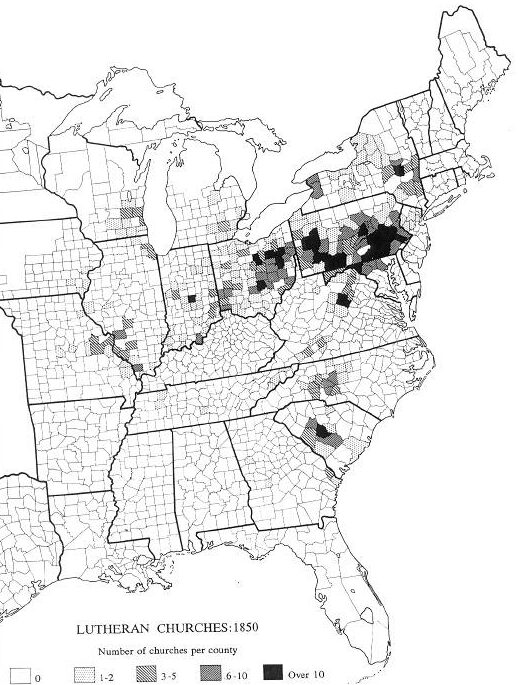
German emigration during the 18th and 19th centuries carried Lutheranism to North America, where immigrant communities established congregations that preserved their confessional heritage while engaging with new cultural contexts [5]. This transatlantic spread expanded Lutheranism's global footprint.
American Lutheran Development
In America, Lutheran denominations organized along ethnic and theological lines, with groups like the Missouri Synod maintaining strict confessional subscription while others accommodated American religious pluralism [5]. The American context presented both challenges and opportunities for Lutheran identity.
Missionary Endeavors
19th-century Lutheran missions extended the tradition beyond European boundaries to Africa, Asia, and the Pacific, often accompanied by German cultural influence [5]. These missions represented Lutheranism's adaptation to non-European contexts.
Global expansion transformed Lutheranism from a primarily European phenomenon into a worldwide communion [5].
Contemporary Lutheran Identity
Today, Lutheranism remains one of the largest Protestant denominations globally, with significant presence in Europe, North America, and parts of Africa and Asia [1]. The tradition continues to navigate questions of doctrine, ethics, and church structure in changing cultural landscapes.
Doctrinal Diversity
Contemporary Lutheran bodies range from confessional bodies adhering strictly to the Book of Concord to more progressive denominations that engage with contemporary social issues, reflecting the tradition's internal diversity [1]. This spectrum demonstrates ongoing negotiation between fidelity to heritage and relevance to modern contexts.
Global Statistics
Lutheran churches claim approximately 80 million members worldwide, making Lutheranism the third-largest Protestant tradition after Baptists and Pentecostals [1]. The global distribution reflects both historical expansion and contemporary missionary activity.
The tradition's endurance illustrates its capacity for adaptation while maintaining core theological distinctives [1].