
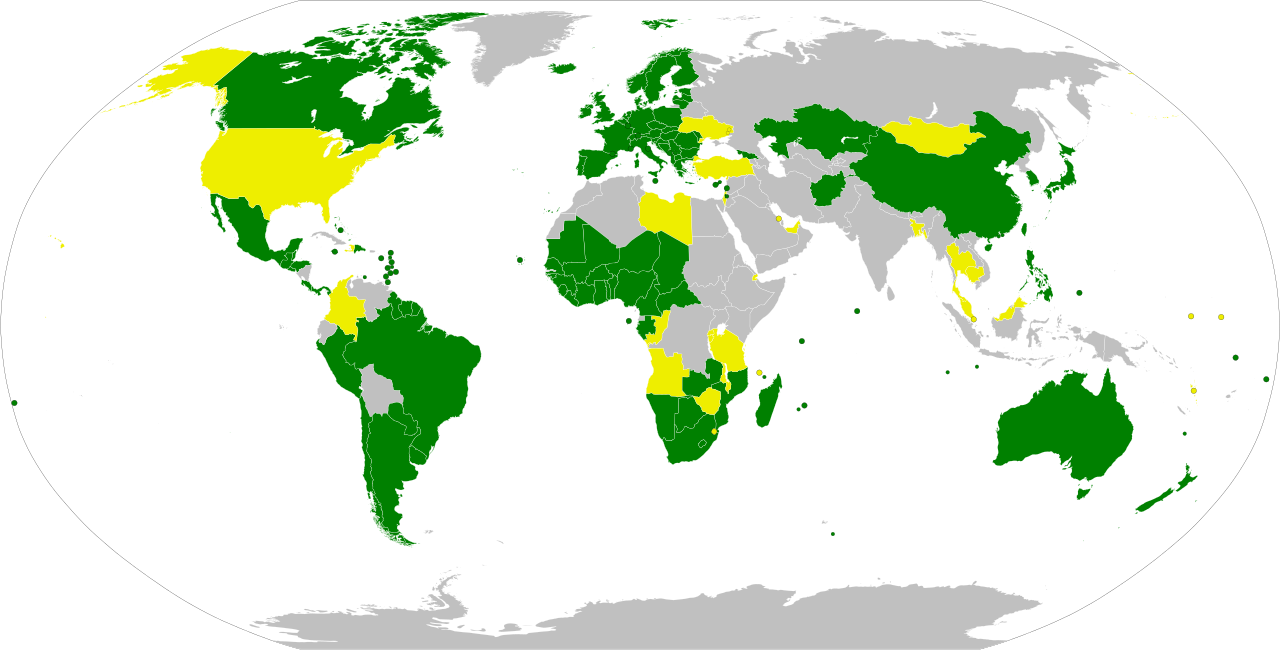
Overview: definition and scale of the global arms trade
Arms trade refers to the global trade in conventional arms and ammunition, which is poorly regulated and fuels conflict, poverty and human rights abuses.[4] The volume of production is staggering: nearly one million of the 7–8 million firearms produced every year are lost or stolen.[4] This unchecked flow has real human consequences, particularly in Africa, where armed violence costs $18 billion per year – approximately equivalent to the annual sums of development aid to the entire continent.[4] Such figures illustrate that the arms trade is not a distant economic activity but a driver of underdevelopment.
Weapon production and loss rates
The global firearms industry produces between 7 and 8 million units annually, yet nearly one million of these weapons disappear into illicit markets each year.[4] This loss rate means that a significant proportion of legally produced arms never reach their intended buyers, instead fuelling crime and conflict abroad.
Economic impact on African nations
Armed conflict shrinks an African nation's economy by 15 per cent.[4] When combined with the $18 billion annual cost of armed violence – nearly matching total development aid – the trade's economic burden on the continent becomes clear. The loss of development resources to violence entrenches poverty and undermines growth.
Human rights and poverty linkages
The same poor regulation that allows weapons to be lost or stolen also enables abuses. Corruption in the defence industry is estimated to cost $20 billion per year,[4] and the US Department of Commerce notes that corruption in the arms trade accounts for approximately 50 per cent of all corrupt transactions globally.[4] These figures show how illicit flows enrich intermediaries at the expense of public welfare.
Major exporters and the concentration of power
Top weapons exporters by volume
The United States holds the position of the #1 major weapons exporter, followed by China (#2), Russia (#3), Germany (#4), India (#5), United Kingdom (#6), Ukraine (#7), Saudi Arabia (#8), France (#9), and Japan (#10).[3] This concentration means that a small group of nations dictate the flow of most conventional weapons worldwide.
Secondary exporters and emerging suppliers
Israel is ranked #11 among major weapons exporters, Italy #12, South Korea #13, Poland #14, Spain #15, Canada #16, Australia #17, Turkey #18, Netherlands #19, and Algeria #20.[3] While these countries export fewer units than the top ten, their combined volume still shapes regional arsenals and influences local conflict dynamics.
Military spending parallels
The United States is the #1 country in military spending, followed by China (#2), Russia (#3), Germany (#4), India (#5), United Kingdom (#6), Ukraine (#7), Saudi Arabia (#8), France (#9), and Japan (#10).[3] High expenditure correlates strongly with export capacity, as the nations investing most in their own militaries are also the ones most able to supply others.
Geopolitical implications of export rankings
The list of exporters reads as a geopolitical snapshot: the US and China compete for influence, Russia projects power through sales, and European nations balance trade with security commitments. Ukraine's position as #7 exporter reflects its domestic production capacity amid ongoing conflict, while Saudi Arabia's #8 spot highlights the role of petrostates in shaping demand.
Corruption and financial crime in the arms trade
Estimated annual cost of defence corruption
Corruption in the defence industry is estimated to cost $20 billion per year.[4] This sum represents a massive diversion of resources that could otherwise fund health, education or infrastructure. The figure is likely conservative, as many cases go undetected or unprosecuted.
Global proportion of arms-related corruption
The US Department of Commerce estimates that corruption in the arms trade accounts for approximately 50 per cent of all corrupt transactions globally.[4] This disproportionate share means that the sector is a primary vehicle for money‑laundering and bribery, distorting both procurement decisions and international relations.
Real-world cases and consequences
Key House Democrat refused to clear Trump's $2.8bn arms sale to Israel,[1] illustrating how domestic political scrutiny can temporarily halt large deals. Australia is investigating how F‑35 fighter jet parts bound for the US went missing in Hong Kong,[1] a case that shows the logistical vulnerabilities and potential for theft within sophisticated supply chains. UK defence contractors pledged 40,000 apprenticeships, placements and jobs,[1] an attempt to address skills gaps while improving transparency in a sector long criticised for opaque hiring.
Impact on policy and public trust
The scale of corruption erodes public trust in both governments and the defence industry. When $20 billion is lost annually to defence fraud and half of all global corrupt transactions involve arms, the incentive for reform becomes urgent. Transparency advocates argue that without stricter reporting and enforcement, the cycle of bribery and misappropriation will continue.
The Arms Trade Treaty and international regulation
A decade of campaigning
The first international Arms Trade Treaty (ATT) became a reality after more than 10 years of campaigning by Oxfam.[4] Civil society groups pushed for standards that would prevent the transfer of weapons where there was a risk of human rights violations or fueling conflict. The treaty's eventual adoption marked the first binding global framework for the sector.
Key provisions and scope
The ATT covers conventional arms including small arms, light weapons, battle tanks, armoured combat vehicles, large-calibre artillery systems, combat aircraft, attack helicopters, warships, missiles and launchers.[4] By requiring exporting states to assess the risk of the weapons being used for serious human rights abuses or aggression, the treaty aims to close the loopholes that have allowed illicit flows to persist.
Ratification and remaining gaps
As of the latest counts, roughly 110 states have ratified the ATT, but major exporters such as the United States, Russia, China and India have signed with reservations or have yet to ratify.[4] This limited participation means that the treaty's impact is diluted, as the world's largest arms suppliers are not fully bound by its terms.
Challenges to enforcement
Enforcement relies on national implementation, which varies widely. Some countries lack the administrative capacity to vet transfers, while others face political pressure to prioritize arms sales over human rights considerations. The treaty's strength is therefore contingent on the political will of individual states.
Regional flashpoints and current deals
Middle East transactions
Trump asked Xi Jinping if China would like to buy US weapons, according to the American ambassador.[1] The offer underscores the United States' use of arms sales as a diplomatic tool, particularly in the Middle East where Saudi Arabia and Israel are key recipients. Key House Democrat refused to clear Trump's $2.8bn arms sale to Israel,[1] showing that congressional oversight can intervene even when executive branches push aggressively.
Europe and the Russia‑Ukraine war
Russia agreed to supply Iran with 90 helicopter missile launchers.[1] This deal exemplifies how arms transfers can escalate regional tensions, particularly when combined with Russia's broader military posture. Poland is racing ahead with military spending, with defence secretary saying Britain must manufacture at scale as Germany's Rheinmetall opens Midlands factory.[1] The shift reflects Europe's attempt to rebuild domestic production capacity after decades of relying on US supplies.
Asia‑Pacific developments
Hegseth calls US-built nuclear submarines the 'apex predator' of the seas, questioning if they are right for Australia.[1] The debate highlights how even advanced weapons systems become politicised when allied nations assess their strategic needs. Australia is investigating how F‑35 fighter jet parts bound for the US went missing in Hong Kong,[1] a reminder that supply chain security is a global concern, not limited to any one region.
Autonomous weapons and emerging technology
International UN talks on controlling use of autonomous weapons collapsed.[1] Activists and some governments have sought limits on lethal autonomous systems, but major powers have resisted binding agreements. Automated warfare is already here. Now governments must restrain it.[1] The failure of talks underscores the difficulty of regulating technology that outpaces existing legal frameworks.
Military AI and ethical concerns
Serious error of judgment': outrage over military AI event at Berlin arts complex.[1] A recent event at a Berlin arts complex sparked controversy when military AI demonstrations were perceived to glorify autonomous killing. The backlash reflects growing public unease with the militarisation of artificial intelligence and the need for ethical guardrails.
Economic and human costs of armed violence
Macro‑economic impact on nations
Armed conflict shrinks an African nation's economy by 15 per cent.[4] Beyond the immediate loss of life, the destruction of infrastructure, displacement of populations and diversion of spending to military ends have long‑term developmental consequences. The $18 billion annual cost of armed violence in Africa,[4] equivalent to total development aid, illustrates how the trade's ripple effects can undo years of progress.
Poverty and development setbacks
When a nation spends a disproportionate share of its budget on arms and conflict resolution, social services suffer. The linkage between armed violence and poverty is direct: communities lose access to schools and hospitals, markets close, and savings are wiped out. In regions where the arms trade fuels conflict, the UN Development Programme has documented lower human development indices compared to peaceful counterparts.
Cost comparison with development aid
The $18 billion lost to armed violence in Africa each year[4] is approximately equivalent to the annual sums of development aid to the entire continent.[4] This parity is striking: the money lost to conflict could fund the very development projects that aim to reduce poverty and build resilience. It is a stark illustration of the opportunity cost of unregulated arms flows.
Long‑term societal damage
Generations growing up in conflict zones face interrupted education, trauma and limited economic prospects. The physical remnants of war – unexploded ordnance, small arms circulating in civilian hands – continue to claim lives long after peace agreements are signed. These hidden costs are rarely accounted for in arms deal valuations but represent a massive burden on affected societies.
Political and domestic responses
Congressional and parliamentary scrutiny
Key House Democrat refused to clear Trump's $2.8bn arms sale to Israel,[1] a case that demonstrates how legislative bodies can check executive enthusiasm for arms exports. In the UK, defence contractors pledged 40,000 apprenticeships, placements and jobs,[1] a response to both skills shortages and pressure to show public benefit from the defence sector.
Public protest and civil society
Activists plan legal action against police ban on entering security zone near Perth weapons expo.[1] The incident in Australia highlights how local communities organise against perceived normalisation of the arms trade. Similar protests have occurred at arms fairs in Europe, where campaigners demand transparency and an end to sales that may fuel conflict.
Media coverage and public opinion
The Guardian's ongoing coverage of the arms trade[1] has kept the issue in the public eye, exposing individual deals and broader trends. Media scrutiny has contributed to a gradual shift in public opinion, with more voters questioning the morality and wisdom of large-scale weapons exports, particularly to conflict zones.
Policy reforms under consideration
Some governments are exploring stricter vetting procedures, mandatory end‑user certificates and greater transparency in contract awards. The experience of the ATT's ratification process shows that reform is possible but slow, requiring sustained pressure from both civil society and concerned legislators.
Future trajectories and unresolved questions
Potential expansion of the Arms Trade Treaty
With 110 ratifications and growing civil society momentum, there is pressure on remaining major exporters to join the ATT without reservations. If the United States, Russia, China and India were to fully commit, the treaty's impact on global flows would be transformative. However, geopolitical rivalries and the perception that arms sales are essential to national security remain significant barriers.
Technological advances and regulatory lag
The collapse of UN talks on autonomous weapons[1] leaves a regulatory vacuum. As drones, AI‑driven targeting systems and cyber‑enabled warfare capabilities proliferate, existing frameworks based on conventional munitions struggle to cope. The question of who is responsible when an autonomous system commits a violation is currently unanswered.
Corruption reform and enforcement
With $20 billion annually lost to defence corruption[4] and arms accounting for half of global corrupt transactions,[4] there is broad consensus that enforcement must improve. Whistle‑blower protections, independent audit bodies and stricter penalties for bribery are among the measures being discussed. Whether these will be implemented widely remains to be seen.
The balance between export revenue and human cost
For exporting nations, arms sales generate significant revenue and support defence industries jobs.[1] For importing nations, the weapons can be vital for deterrence or, conversely, tools of oppression. The challenge for policymakers is to reconcile these competing interests while minimising the risk that transferred weapons contribute to human rights abuses or armed violence. The ATT, corruption figures and regional case studies all point to the need for a more nuanced, risk‑based approach.