
Overview
During the Heroic Age, 17 major Antarctic expeditions were launched from ten countries, generating large quantities of scientific data across a wide range of disciplines [4]. A total of 22 expedition members died during this period, and both the geographic and magnetic South Poles were reached for the first time [4]. Roald Amundsen was the first to reach the geographical South Pole in 1911, while Robert Falcon Scott's ill-fated expedition followed shortly after [4]. Much of the continent's coastline was discovered and mapped, and significant areas of its interior were explored during these efforts [4]. The Shackleton–Rowett Expedition of 1921–1922 is often cited as the dividing line between the "Heroic" and "Mechanical" ages [4].
Early Myths and Polynesian Voyages
Long before European ships crossed the Southern Ocean, Polynesian navigators told of southern voyages. Rarotongan oral tradition preserves the story of Ui-te-Rangiora sailing south of Aotearoa to a frozen region before 650 ce [3]. Similarly, tradition attributes the sighting of icy southern lands to Tamarereti [3]. These voyages, though not leaving written records, indicate that Pacific peoples encountered and remembered the extreme southern latitudes centuries before the Age of Exploration.
The Greek geographer Marinus of Tyre coined the term "Antarctic" in the 2nd century AD, using it to describe the opposite of the Arctic — a concept of a landmass opposite the North Pole [1]. This early nomenclature reflects a long-standing intellectual tradition of imagining a balanced world, even though no one had yet set foot on the southern continent.
European Maritime Breakthroughs
The Age of Discovery brought sailors to the fringes of the Antarctic Circle. The rounding of the Cape of Good Hope and later Cape Horn proved that Terra Australis Incognita was a continent in its own right, distinct from other landmasses [1]. These geographic achievements opened the sea route that would later enable Antarctic landings and crossings.
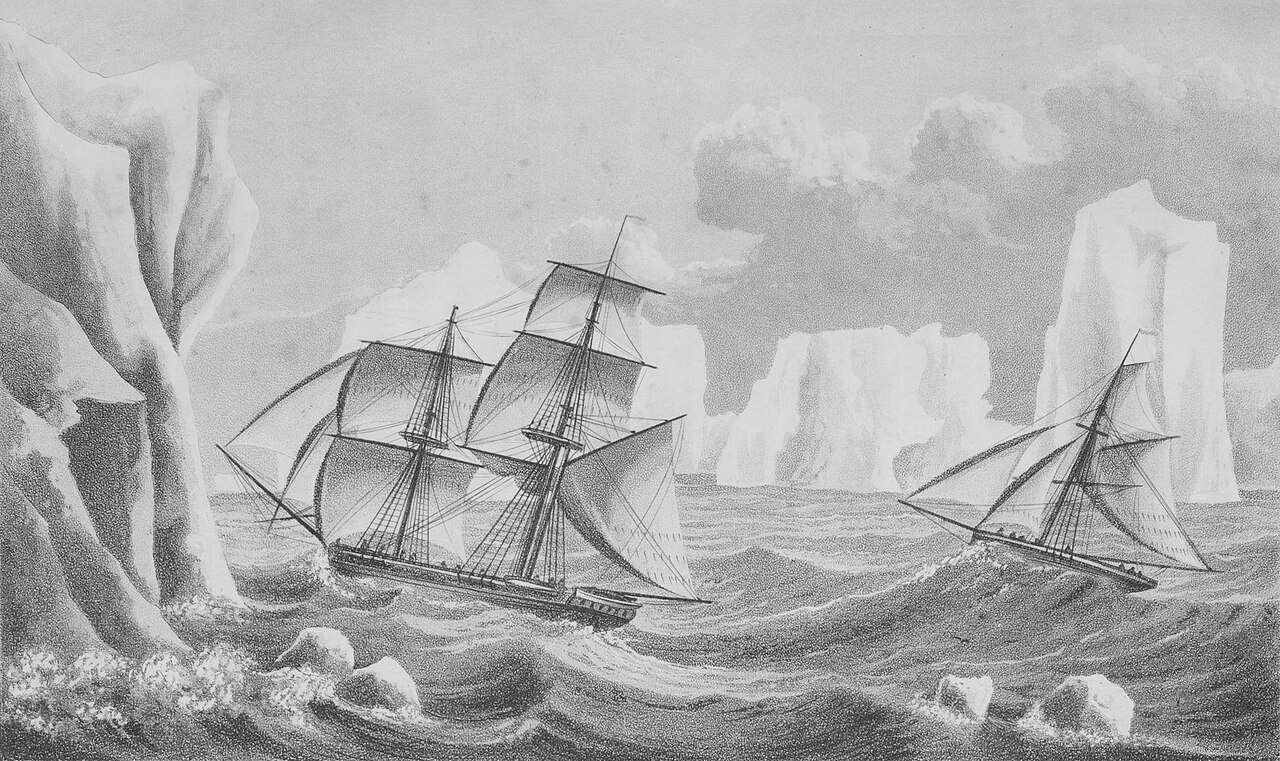
In 1773, James Cook and his crew achieved the first recorded crossing of the Antarctic Circle, sailing as close as 240 km to the Antarctic mainland [1]. Though Cook did not sight land, his crossing demonstrated that the southern oceans were navigable and that a southern continent, if it existed, lay within reach of human exploration.
The Heroic Age of Exploration
The Heroic Age of Antarctic Exploration began at the end of the 19th century and lasted until after the First World War [4]. This era was characterized by expeditions launched from ten countries, each pushing the limits of human endurance and navigation in extreme conditions. During this period, 17 major Antarctic expeditions were organized, generating extensive scientific data across disciplines such as geology, meteorology, and biology [4].
The race to the South Pole defined much of the Heroic Age. Roald Amundsen reached the geographical South Pole on 14 December 1911, becoming the first person to do so [4]. His success came just over a month before Robert Falcon Scott's party, who arrived on 17 January 1912 and perished on the return journey [4]. This stark contrast in outcomes highlighted the fine line between triumph and tragedy in polar exploration.
Beyond the Pole, expedition parties mapped vast stretches of coastline and explored significant areas of the continent's interior [4]. Both the geographic and magnetic South Poles were reached for the first time during this era, and the scientific collections returned by these teams formed the basis for decades of Antarctic research [4]. The era's legacy includes not only geographic knowledge but also a somber toll: 22 expedition members died during the Heroic Age [4].
Transition to the Mechanical Age
Scientific Legacy and Permanent Presence
The expeditions of the Heroic Age generated large quantities of scientific data across a wide range of disciplines, laying the groundwork for the International Geophysical Year and the modern era of Antarctic science [4]. Glaciology, oceanography, and biology all benefited from the collections and observations made during these dangerous journeys.
Although the Heroic Age ended nearly a century ago, its impact endures. The routes established, the territories claimed (and later relinquished), and the scientific traditions initiated during this period enabled the Antarctic Treaty System, which designates the continent as a scientific preserve and bans military activity [5]. The data gathered during the Heroic Age continues to be referenced in contemporary studies of climate change and environmental science.
Key Figures and Their Contributions
Several individuals stand out from the Heroic Age for their leadership and survival skills. Roald Amundsen's success at the South Pole is often attributed to his careful planning, use of dogs, and understanding of polar travel techniques learned from Inuit peoples [4]. Robert Falcon Scott's expedition, while tragic, contributed valuable scientific data and demonstrated the challenges of early 20th-century polar travel [4]. Ernest Shackleton's 1914–1916 Endurance expedition, though failing to cross the continent, became legendary for the survival of all crew members after their ship was crushed by ice [4].
Earlier figures such as James Cook proved that the Antarctic Circle could be crossed and that the southern oceans were navigable [1]. Later explorers built on this foundation, pushing farther south and attempting landings that earlier sailors had deemed impossible.