
Overview and Academic Foundations
Art history is an academic discipline devoted to the study of artistic production and visual culture throughout human history [3]. It employs historical methods and philosophies such as historical materialism or critical theory to analyze artworks [3]. The field distinguishes itself from art criticism, which assesses relative artistic value, and from aesthetics, a branch of philosophy concerned with the nature of beauty and artistic value [3]. Art history encompasses identifying, classifying, describing, evaluating, interpreting, and understanding art products across painting, sculpture, architecture, decorative arts, drawing, and printmaking [3].
Relationship to Related Disciplines
The academic study of art exists in a complex relationship with adjacent fields. While art criticism evaluates individual works for artistic merit, art history positions those works within broader historical developments and cultural contexts [3]. Aesthetics, as a philosophical branch, examines the theoretical underpinnings of artistic value rather than the historical trajectory of artworks [3]. This distinction matters for understanding how scholars approach art: not merely to judge quality but to trace evolution, meaning, and cultural significance across time.
Core Methodological Approaches
Art historians employ diverse methodological frameworks to analyze visual culture. Historical materialism examines art through the lens of production conditions and socioeconomic factors, while critical theory interrogates power structures embedded in visual representation [3]. The timeline of prominent methods traces from ancient precedents through Pliny the Elder and artists' biographies, Vasari's artist biographies, Winckelmann's foundational art criticism, Wölfflin's stylistic analysis, the Vienna School's formal approaches, Panofsky's iconographic interpretation, and Marxist frameworks from the Frankfurt School [3]. Each method offers distinct tools for understanding how art functions within historical moments.
Historical Periods and Chronological Development
Ancient and Prehistoric Foundations
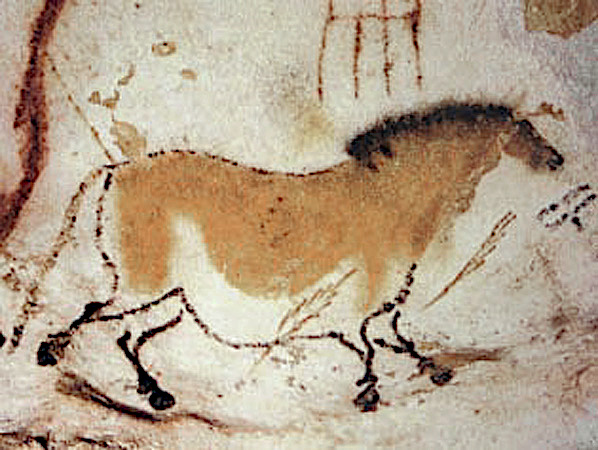
Art history covers periods beginning with Prehistoric and Ancient eras, where some of the earliest visual culture emerges [1]. These foundational periods establish the basic human impulse to create visual representations, from cave paintings to the sophisticated artistic traditions of ancient civilizations. The study of ancient art provides the chronological starting point for understanding how artistic conventions develop and transform across millennia.
Medieval and European Traditions
European art history encompasses distinct medieval periods including Byzantine, Carolingian and Ottonian, Romanesque, and Gothic [1]. These periods reflect the profound influence of religious and political contexts on artistic production. Medieval art often served devotional functions, with stylistic conventions dictated by theological doctrine and available materials. The transition from Romanesque to Gothic marked significant innovations in architectural space and sculptural expression.
Renaissance Through Baroque
The Renaissance period represented a revival of classical antiquity and humanist ideals, fundamentally altering European artistic practice [1]. This was followed by Baroque's dramatic intensity, Rococo's ornate elegance, and Neoclassicism's return to classical simplicity [1]. The 18th century brought Western art movements including Romanticism, Academism, Realism, Impressionism, Symbolism, and Post-Impressionism, each responding to the social and technological changes of industrialization [1]. These periods demonstrate art history's capacity to track shifting aesthetic priorities alongside broader cultural transformations.
Modern and Contemporary Developments
Modernism emerged as a defining movement in the fine arts from the late 19th to mid-20th century, characterized by a break with traditional forms and a search for new expressive possibilities [4]. This period fostered experimentation across literature, music, dance, visual art, and architecture [4]. The modern era encompasses avant-garde movements including Art Nouveau, Fauvism, Expressionism, Cubism, Art Deco, and Surrealism, each pushing the boundaries of representation and materiality [1]. Contemporary art continues this legacy of innovation, engaging with global contexts, new media, and diverse cultural perspectives.
Methodologies of Analysis and Interpretation
Stylistic and Formal Analysis
Wölfflin's stylistic analysis provides a systematic approach to comparing artistic styles across periods, examining relationships between formal elements such as line, color, plane, and recession [3]. This methodology allows art historians to identify characteristic features of different periods and movements, from the linear versus painterly quality that distinguishes Renaissance from Baroque work to the compositional organization that distinguishes Classicist from Baroque arrangements. Formal analysis remains one of the most accessible entry points into art historical study.
Iconographic and Symbolic Interpretation
Panofsky's iconographic method extends formal analysis by examining symbolic content and cultural meanings embedded in artworks [3]. This approach considers not only what is depicted but how viewers historically interpreted those depictions, requiring understanding of the cultural context, religious doctrine, and social norms that shape visual meaning. Iconography reveals how art functions as communication within specific historical moments, transmitting ideas, values, and beliefs across generations.
Sociopolitical and Marxist Frameworks
Marxist art history, particularly associated with the Frankfurt School, examines art through relations of production, class structure, and ideological function [3]. This perspective analyzes how artworks reflect and shape socioeconomic conditions, questioning who produces art, for what audience, and with what economic and political consequences. Such frameworks have been particularly influential in understanding Renaissance workshop practices, 19th-century academic art, and revolutionary artistic movements.
Major Art Movements and Stylistic Innovations
19th-Century Movements and Modernism's Prehistory
The 19th century witnessed an extraordinary proliferation of art movements that paved the way for Modernism's break with tradition [1]. Romanticism emphasized emotion and the sublime, while Academism upheld traditional standards of technique and subject matter [1]. Realism emerged as a counter-movement depicting contemporary life without idealization, and Impressionism captured fleeting moments of light and atmosphere through innovative brushwork and color theory [1]. Symbolism explored psychological and spiritual dimensions, while Post-Impressionism pushed toward greater formal experimentation [1]. These movements collectively dismantled academic conventions and expanded what could be considered legitimate subject matter and technique.
Early 20th-Century Avant-Garde
The early 20th century saw an unprecedented wave of avant-garde innovation, with movements including Fauvism's bold, non-naturalistic color, Expressionism's emotional distortion, Cubism's multiple perspectives and fragmented forms, and Futurism's celebration of modernity and movement [1]. These movements rejected traditional perspective and representation, instead exploring the formal properties of painting itself. Art Nouveau brought organic, flowing lines to decorative arts and architecture, while Art Deco embraced geometric precision and industrial materials [1]. Surrealism delved into the unconscious, dreams, and irrational imagery, influenced by Freudian psychology [1]. Each movement represented a distinct approach to breaking with artistic tradition.
Mid-to-Late 20th Century and Contemporary Directions
Post-Impressionism, Fauvism, Expressionism, Cubism, Art Deco, Surrealism, and later movements such as Abstract Expressionism, Pop Art, Minimalism, and Conceptual Art each contributed to the diversification of artistic practice [1]. These movements reflected broader social changes including world wars, civil rights movements, feminist activism, and globalization. The latter 20th and early 21st centuries have seen increased engagement with identity politics, technology, and global perspectives, while traditional media continue to be explored alongside digital and new media practices.
Fields of Specialization and Contemporary Practice
Feminist Art History
Feminist art history has emerged as a significant concentration within the discipline, examining how gender shapes artistic production, reception, and historiography [3]. This field interrogates the historical exclusion of women artists, re-evaluates canonical narratives, and examines how visual culture constructs and reflects gender identities. Feminist methodologies have expanded art historical understanding by uncovering overlooked practitioners and recontextualizing known works through gendered lenses.
Museum Studies and Institutional Contexts
Museum studies represents another important field within art history, focusing on the collection, preservation, exhibition, and interpretation of artworks [3]. This specialization addresses how museums shape artistic value through acquisition decisions, display strategies, and educational programming. The institutional context of museums influences which artists and works receive attention, how meaning is constructed for visitors, and the ethical considerations surrounding cultural heritage, repatriation, and access.
Architectural History as Art Historical Practice
Architecture constitutes a central domain within art history, encompassing the design and construction of buildings from prehistoric shelters to contemporary sustainable design [1]. Architectural history examines not only aesthetic qualities but structural innovations, technological developments, and the ways built environments shape human experience. The field intersects with urban history, cultural geography, and preservation studies, demonstrating art history's broad relevance to understanding constructed environments across time and culture.
Reception, Interpretation, and Cultural Significance
Public Engagement and Popular Understanding
Art history operates not only within academic institutions but also in broader public engagement with visual culture [3]. Museum exhibitions, popular books, media coverage, and digital platforms all mediate how audiences encounter and interpret art. The discipline's methods and findings influence public understanding of history, culture, and aesthetics, though this popularization sometimes simplifies complex scholarly debates. Access to art historical knowledge has expanded dramatically through online resources, making the field more accessible than ever before.
Institutional and Market Forces
The reception and valuation of artworks are shaped by institutional and market forces including galleries, auction houses, critics, and collecting practices [3]. These entities influence which artists achieve prominence, which works enter museum collections, and how prices are determined. Art historical scholarship both reflects and interrogates these dynamics, examining how power operates within the art world and how aesthetic values are constructed and transmitted through institutional channels.
Enduring Relevance and Future Directions
Art history remains a vital discipline for understanding human culture, creativity, and visual expression across millennia [3]. Its methodologies continue to evolve, incorporating digital technologies, global perspectives, and interdisciplinary approaches. The field's capacity to adapt while maintaining rigorous analytical frameworks ensures its relevance for addressing contemporary questions about identity, technology, environment, and cultural heritage. As visual culture expands through new media and global connectivity, art history's tools for interpretation and historical contextualization become increasingly valuable.