
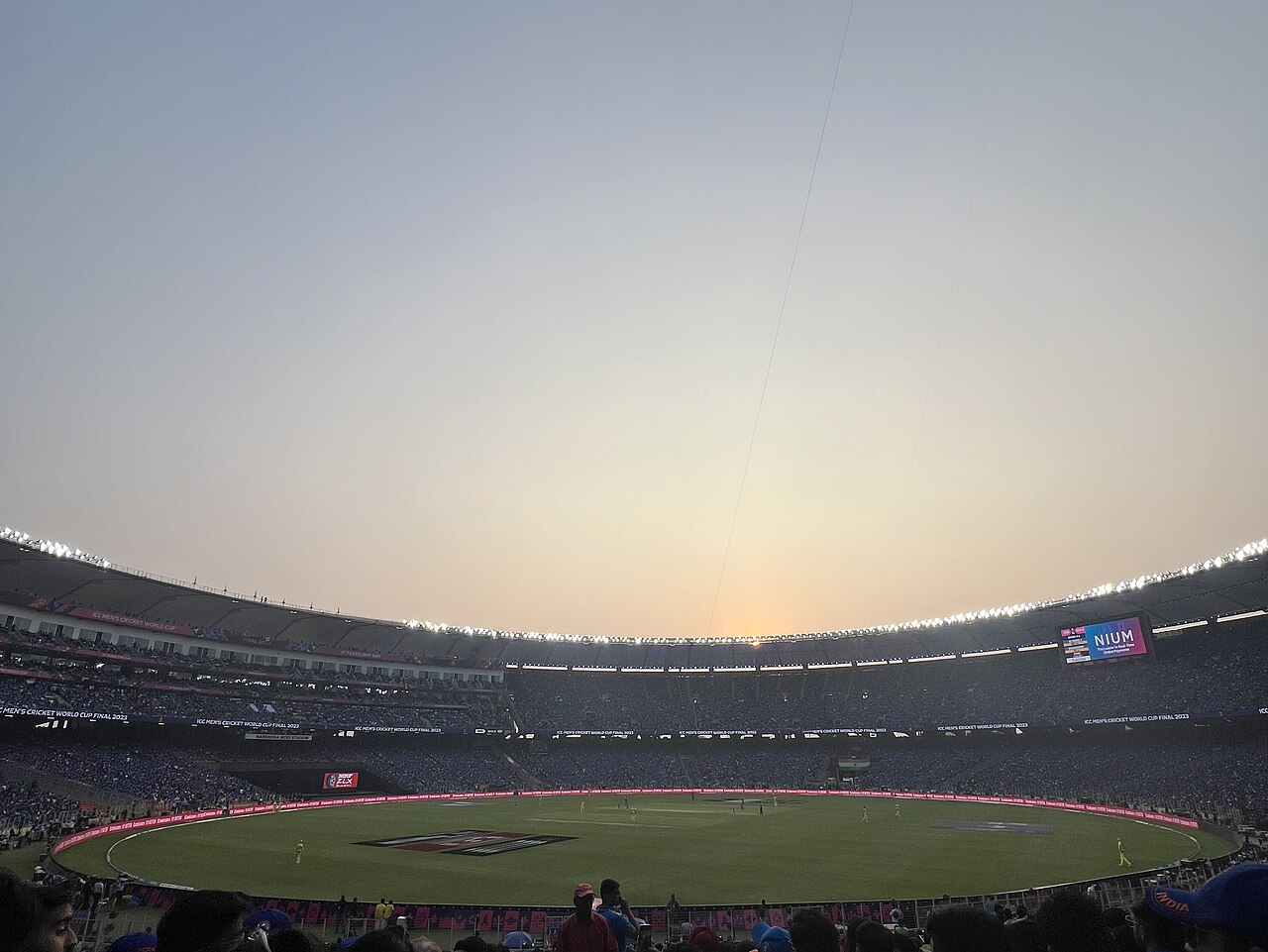
Overview
The sport's integration into Indian culture accelerated after independence, with domestic structures like the Ranji Trophy and the Indian Premier League professionalizing the game. The Board of Control for Cricket in India, established in 1928, governs the sport nationwide. From humble beginnings as a colonial pastime, cricket in India has transformed into a multi-billion dollar industry and the country's most popular sport.
Colonial Foundations and Early Clubs
Cricket's arrival in India is tied to the expansion of European trading companies along the coasts. The Calcutta Cricket and Football Club, founded by British soldiers and civil servants, became the first organized cricket venue on the subcontinent [3]. A second club emerged at Seringapatam in 1799 following the British victory over Tipu Sultan, marking cricket's spread into southern India [3]. These early clubs were exclusive to European officers and served as social hubs rather than competitive leagues.
The Calcutta Cricket Club's ground at Maidan became synonymous with early Indian cricket, hosting matches that included local Parsees and Hindus who learned the sport through British contact. By the late 19th century, the Parsees formalized their own cricket clubs, leading to the first intercaste matches that signaled cricket's gradual democratization beyond the European elite.
Test Cricket Beginnings and the Lean Years
India's entry into Test cricket came on 25 June 1932 when the team, captained by CK Nayudu, played its inaugural match at Lord's [2]. Granting Test status made India the sixth nation to join the exclusive club, alongside England, Australia, South Africa, the West Indies, and New Zealand. The match marked India's formal inclusion in international cricket's highest format.
The two decades following India's Test debut were characterized by struggle. From 1932 to 1952, India waited almost 20 years for its first Test victory [2]. During this period, the team played 26 matches without a win, though several draws provided consolation. The post-independence era brought slight improvements, but consistent victory remained elusive.
India's first Test victory arrived in 1952 against England at Madras, ending the long wait and signaling a shift in the team's competitive spirit. The victory came 20 years after the team's debut and served as a morale boost for a nation finding its footing in the post-colonial era.
The Golden Era of Spin and Batsmen
The 1970s marked a turning point as India developed its distinctive playing identity. Players such as Gavaskar, Viswanath, Kapil Dev, and the Indian spin quartet emerged, helping the team gain strength and respectability [2]. This era saw India become particularly formidable at home, where the spin-friendly pitches neutralized opposition batting lineups and showcased India's strength in its domestic conditions.
The 1980s and 1990s brought the debut of what many consider the greatest generation of Indian cricketers. Tendulkar, Ganguly, Dravid, Laxman and Kumble entered the team and would go on to set numerous records [2]. Sachin Tendulkar's longevity and run-scoring records, Sourav Ganguly's leadership, and Rahul Dravid's technical excellence became defining features of Indian cricket during this period. Anil Kumble's 600-plus Test wickets established him as one of the world's premier spinners.
India's competitive profile improved significantly, with the team winning series abroad and establishing itself as a challenging opponent in all conditions. The spin quartet's ability to dominate on turning tracks, combined with a new generation of technically sound batsmen, created a balanced side capable of competing with the best.
ICC Trophy Success and Limited-Over Dominance
India's limited-overs success began with the 1983 Cricket World Cup victory under captaincy of Kapil Dev [2]. The team, considered outsiders against the West Indies in the final, defied odds to lift the trophy at Lord's. This victory transformed cricket's popularity in India, inspiring a generation of young players and establishing India as a force in ODI cricket.
The team's second World Cup triumph came in 2011, when MS Dhoni captained India to victory on home soil [2]. The final against Sri Lanka, featuring Dhoni's iconic six, captivated a nation and marked the pinnacle of India's ODI achievements. The 2011 victory completed cricket's World Cup hat-trick for former winners, as Australia had won in 2007 and Sri Lanka in 1996.
India's ICC trophy cabinet expanded with Champions Trophy wins in 2002, 2013, and 2025 [2]. The 2002 final, shared with Sri Lanka due to rain, and the 2013 victory under Dhoni's captaincy demonstrated India's ability to perform in high-pressure ICC events. The 2025 triumph added another ICC trophy to India's growing collection.
The introduction of the Twenty20 format saw India win the inaugural T20 World Cup in 2007 under captaincy of MS Dhoni [2]. The 2024 T20 World Cup victory, achieved on home soil, marked India's second ICC T20 title and demonstrated the team's adaptability to the shortest format. Players like Rohit Sharma and Jasprit Bumrah have been instrumental in India's T20 success.
Captaincy Evolution and Modern Era
Ganguly's captaincy is considered the turning point of Indian cricket, seeing great success and making India a dominant side [2]. Appointed during a match-fixing scandal, Ganguly rebuilt team confidence, promoted young talent, and established India as a competitive away side. His leadership laid the foundation for the team's later successes in bilateral series abroad.
The captaincy transition continued with MS Dhoni, who led India to all three ICC trophy victories mentioned above [2]. Dhoni's calm authority and finishing skills in limited-overs cricket earned him widespread acclaim. The current leadership structure sees Rohit Sharma captaining Test and ODI formats, while Suryakumar Yadav leads the T20I teams [2], reflecting the format-specific specialization that has become common in modern cricket.
India's rise to the number one ranking in Test cricket in 2021, under Virat Kohli's captaincy, represented the culmination of decades of development [2]. The team's historic series wins in Australia, England, and other overseas venues demonstrated India's evolution from a side that struggled abroad to one that could dominate in any condition. This transformation reflects the comprehensive development pathway from grassroots to international level.
Domestic Structure and the IPL Revolution
India's domestic cricket structure provides the foundation for international success. The Ranji Trophy, Duleep Trophy, and Irani Trophy have been the primary domestic competitions for decades, producing the talent that filters into the national team. State associations and the selection committee system have governed player selection and development.
The Indian Premier League, launched in 2008, revolutionized cricket in India and globally [2]. The franchise-based tournament combined cricket with entertainment, attracting international stars and massive television audiences. The IPL has become a platform for Indian talent to showcase skills alongside global players, with young Indians emerging as match-winners in the league's high-pressure environment.
The IPL's success has influenced cricket administration, with franchise models being considered for other sports. The league's financial success has also enabled greater investment in women's cricket, infrastructure, and grassroots development. However, the IPL's commercialization has also sparked debates about player workload, the future of international cricket's schedule, and the balance between franchise and national duty.