
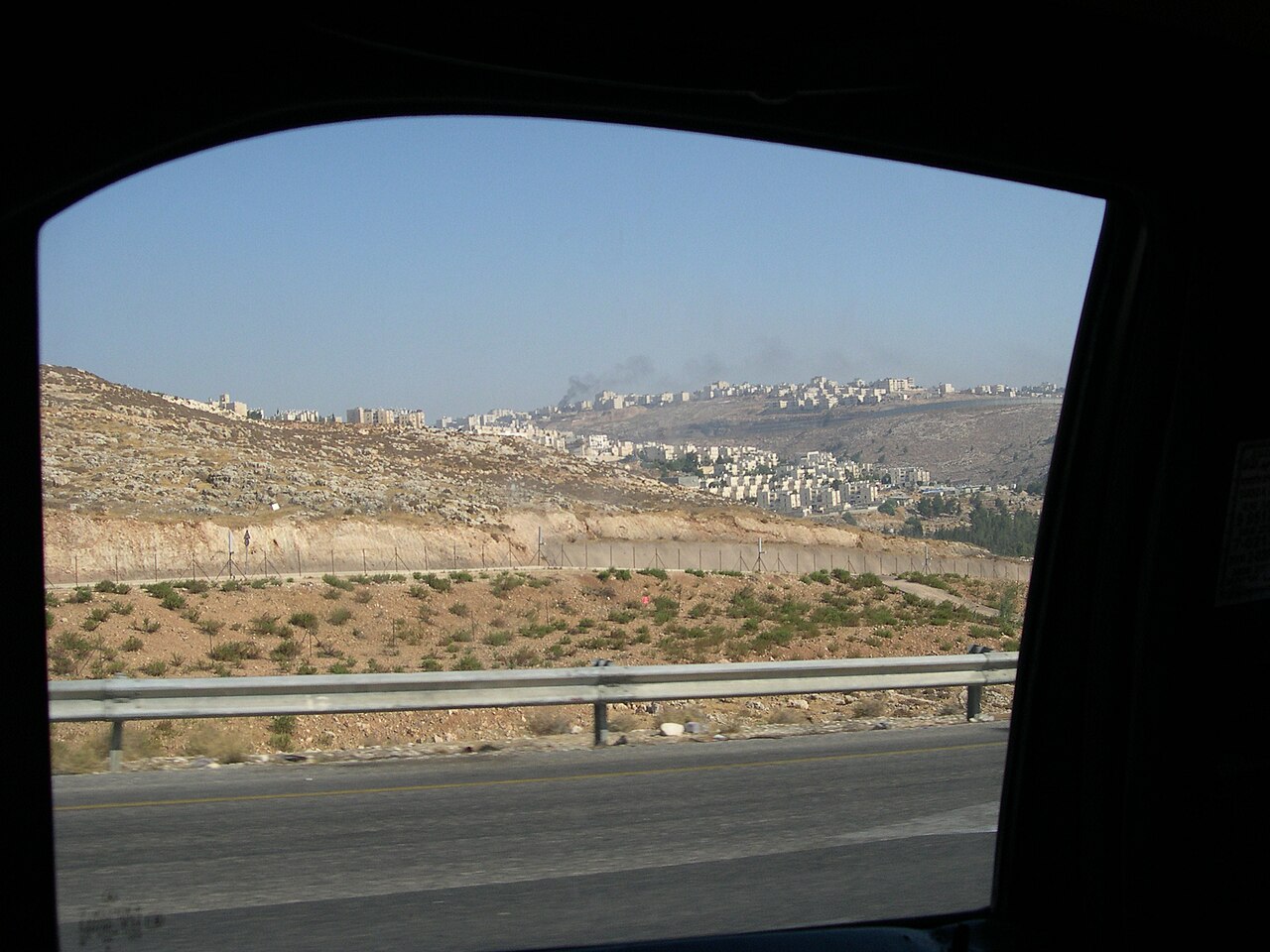
Overview
West Bank remains under Israeli occupation, with Israeli settlements constructed in Area C and East Jerusalem, areas the international community holds to be under Israeli occupation [2]. The United Nations Security Council reinforced this position through Resolution 478, declaring Israel's 1980 Jerusalem Law "null and void," and Resolution 497, stating the Golan Heights annexation is likewise invalid [3].
Legal Status and International Position
Israel, however, disputes the applicability of the Fourth Geneva Convention to the West Bank and rejects the label of "occupation" in the legal sense, arguing that the territory was not sovereign territory of a High Contracting Party prior to 1967. Israel maintains that the settlements are legal under its domestic law and historical connections to the land. This fundamental disagreement means that the same factual situation — Israeli communities in the West Bank — is interpreted through entirely different legal frameworks [3]. The United Nations Security Council has taken a clear stance, ruling that Israel's 1980 Jerusalem Law act "null and void" (Resolution 478) and that the Golan Heights annexation is null and void (Resolution 497), reinforcing the view that territorial acquisition by force is invalid [3].
Population and Classification
Population data for Israeli settlements is complex. As of 2025, the Israel Central Bureau of Statistics collects data for recognized settlements in the West Bank, excluding East Jerusalem. These figures include city settlements and other recognized communities. However, Israeli outposts — unauthorized outposts built by Israeli settlers without official planning authorization — are illegal under Israeli law and are not tracked in official population statistics, making their population hard to establish [5]. This distinction between recognized settlements and illegal outposts creates a gap between official statistics and the actual on-the-ground settlement activity [5].
Diplomatic Reactions and Sanctions
Diplomatic responses to Israeli settlement activity have intensified in recent years. Israeli diplomats suggested that the UK foreign secretary Ed Miliband had acted prematurely in sanctioning eight construction firms linked to West Bank settlements, reflecting Israel's position that such measures are counterproductive [1]. Conversely, UK diplomats believe that growing political pressure, including from US Democrats, is having an impact on shaping policy [1]. This exchange illustrates how settlement activity remains a flashpoint in international relations, with individual countries calibrating their responses based on domestic political considerations and perceived international norms [1].
Key Events in Settlement Policy
Israeli settlement policy has been characterized by periodic construction booms and freezes, often tied to broader peace processes or their collapse. The United Nations and various human rights organizations have repeatedly called for an end to settlement expansion, arguing that it undermines the viability of a two-state solution and complicates the ground reality for any future political arrangement. The international community's stance, reinforced by multiple UN Security Council resolutions, consistently frames settlement activity as an obstacle to peace and a violation of established legal principles [3][2].
Geographic Distribution and Area C
Israeli settlements are not uniformly distributed across the West Bank. The majority are located in Area C, which constitutes approximately 60 percent of the West Bank and is under full Israeli civil and security control according to the Oslo Accords [2]. East Jerusalem, captured by Israel in 1967 and later annexed in a move not recognized internationally, hosts a significant number of settlements and is considered by the international community to be occupied territory [2][3]. The geographic concentration of settlements in Area C and East Jerusalem has shaped the territorial map of the West Bank, affecting Palestinian movement, access to resources, and the contiguity of Palestinian areas [2].
Settlement Blocks and Land Use
Within the complex geographic landscape, some settlements have been designated as "settlement blocks" — large clusters of settlements that Israel has proposed retaining in any final-status agreement. These blocks often incorporate significant Israeli population centers and are surrounded by Palestinian territory. The existence of these settlement blocks, and the land they consume, is a major point of contention in negotiations, as they alter the demographic and geographic realities on the ground [2]. Land used for settlements, infrastructure, and related security zones reduces the area available for Palestinian development and has been a source of friction in both daily life and broader political negotiations [2].
Legal Distinctions: Settlements vs. Outposts
A critical distinction exists between recognized Israeli settlements and unauthorized Israeli outposts. Recognized settlements are those that have received planning approval and are included in official statistics, with population data tracked by the Israel Central Bureau of Statistics [5]. In contrast, outposts are illegal under Israeli law, established without official authorization, and are not tracked in population statistics, making their exact number and resident count difficult to determine [5]. This distinction is not merely administrative; it reflects different levels of state involvement and legitimacy. While the Israeli government has at times pledged to remove outposts, the distinction persists as a key factor in understanding the scope and nature of settlement activity [5]. The existence of this dual system — official settlements and unofficial outposts — complicates any attempt to quantify the total Israeli presence in the West Bank [5].
Significance for the Israeli-Palestinian Conflict
Israeli settlements are centrally significant in the Israeli-Palestinian conflict. The international community views them as illegal and an obstacle to peace, arguing that their expansion reduces the contiguity of Palestinian territory and makes a viable contiguous Palestinian state increasingly difficult to establish [2][3]. For Israelis, particularly those living in settlements, the communities represent historical, religious, and security connections to the land, with many arguing that the presence of civilians enhances security and that the territory is subject to disputed sovereignty rather than clear occupation [3]. This fundamental divergence in interpretation — illegal occupation versus disputed territory — means that settlement activity remains one of the most contentious issues in any negotiation process [3]. The United Nations Security Council's repeated reaffirmation of the illegality of settlements, most recently through resolutions concerning Jerusalem and the Golan Heights, underscores the international consensus on the legal dimension, while the on-the-ground reality of continued expansion continues to shape the conflict's trajectory [3].
Recent Developments and Future Outlook
As of 2025, the landscape of Israeli settlements continues to evolve. The collection of population data by the Israel Central Bureau of Statistics for recognized settlements provides a partial picture, but the presence of illegal outposts and the ongoing expansion in Area C and East Jerusalem ensure that the total footprint of Israeli presence continues to grow [5]. Diplomatic reactions, such as the UK's sanctions on construction firms linked to settlements and the Israeli government's counter-response, illustrate how settlement activity remains a live issue in international relations [1]. The United Nations Security Council's consistent legal framework, reinforced by resolutions declaring annexations null and void, provides the overarching international framework, but the gap between that framework and on-the-ground realities persists [3]. The ongoing tension between international legal assessments and Israeli policy, combined with the humanitarian and political impact on Palestinians in the West Bank and East Jerusalem, ensures that Israeli settlements will remain a central topic in Middle East studies and diplomacy [2][3].