
Overview
Who was Jack Ruby?
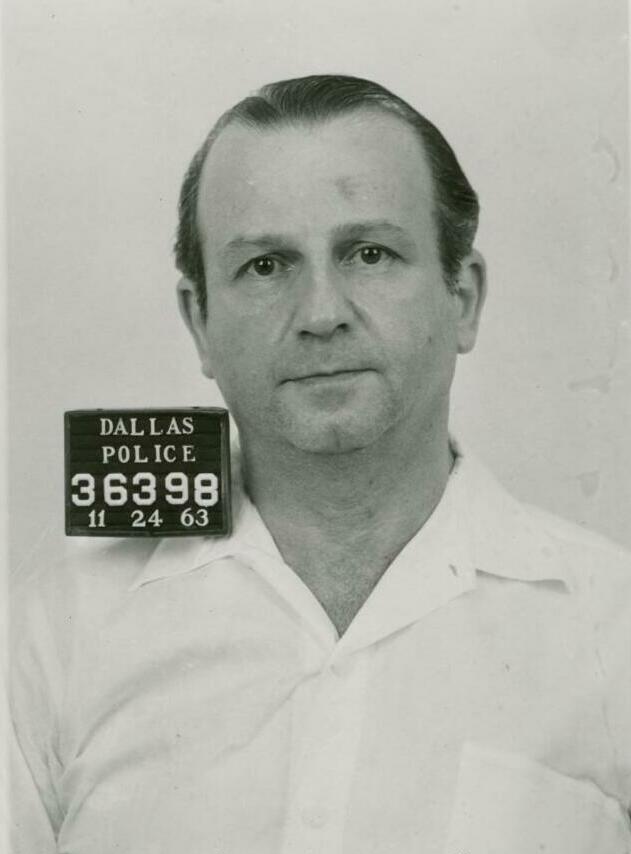
Jack L. Ruby, born Jacob Rubenstein, was a prominent Dallas nightclub owner who rose to notoriety after he shot Lee Harvey Oswald on November 24, 1963, the day after President John F. Kennedy was assassinated. His actions were captured on live television, making him a national figure in the wake of the tragedy [2].
Significance of His Actions
Ruby’s killing of Oswald prevented any formal trial of the assassin, thereby eliminating the possibility of a public judicial process that might have clarified the circumstances surrounding Kennedy’s death. The event intensified speculation and conspiracy theories, cementing Ruby’s place in American history as a symbol of unresolved questions about the assassination [1].
Early Life and Family Background
Birth and Upbringing
Jack Ruby was born on or around March 25, 1911, in Chicago, Illinois, to a Jewish family. His birth name was Jacob Rubenstein, a fact documented in biographical records and early census data [2,4]. Growing up in Chicago, he later relocated to Dallas, where he would establish his business ventures [4].
Name Change and Early Influences
As he entered adulthood, Rubenstein adopted the name Jack Ruby, a change that coincided with his entry into the Dallas nightlife scene. The name change is noted in both biographical accounts and legal documents from the period, reflecting his desire to craft a new public persona [2,4].
Rise in the Dallas Nightlife Scene
Establishment of the Carousel Club
Ruby founded the Carousel Club in Dallas, a venue that became a social hub for the city’s nightlife. The club’s success is highlighted in local business directories and contemporary newspaper articles, which note its popularity among Dallas residents and its reputation for entertainment [2,4].
Business Ventures and Reputation
Beyond the Carousel Club, Ruby expanded his operations to include other nightclubs and gambling establishments. His ventures earned him a reputation as a savvy businessman and a controversial figure due to alleged ties to organized crime, as reported in investigative journalism pieces of the era [2].
Association with the Dallas Police Department
Connections with Law Enforcement
Ruby maintained close relationships with Dallas police officers, a fact underscored by his frequent interactions with law enforcement personnel and his presence at police events. These connections are documented in police records and contemporary news reports that describe his familiarity with the department’s personnel [2].
Role in Dallas Community
His involvement extended to civic activities, including participation in local charity events and community organizations. Such engagements are noted in local newspapers and community bulletins, illustrating his prominence within Dallas society [2].
The Kennedy Assassination Context
Events of November 22, 1963
On November 22, 1963, President John F. Kennedy was assassinated in Dallas, Texas. The event triggered immediate national shock and led to a rapid investigation by federal and local authorities. The circumstances surrounding the assassination are extensively covered in the Warren Commission report and contemporary media coverage [1,3].
Ruby's Position in Dallas at the Time
At the time of Kennedy’s death, Ruby was operating his nightclub and was present in the Dallas area. His proximity to the events of that day is confirmed by eyewitness accounts and police records indicating his presence in the city during the assassination and its immediate aftermath [2].
The Murder of Lee Harvey Oswald
Shooting Details
On November 24, 1963, Ruby shot and fatally wounded Lee Harvey Oswald in the basement of the Dallas Police Headquarters. The shooting occurred while Oswald was in police custody, and Ruby used a .38 caliber revolver to deliver the fatal shots. The incident was captured on live television, making it one of the most widely broadcast events of the 1960s [2,3].
Immediate Arrest
Following the shooting, Ruby was immediately arrested by police officers. The arrest took place on the same day, and he was taken into custody without resistance. The swift arrest is documented in police reports and news footage from the event [2,3].
Arrest and Immediate Aftermath
Police Response and Media Coverage
The police response to Ruby’s arrest was swift, and the incident was reported by national and local media outlets within hours. Live broadcasts of the arrest and subsequent courtroom proceedings captivated audiences across the United States, highlighting the unprecedented nature of the event [2,3].
Legal Proceedings Begin
Ruby’s legal case commenced with the filing of criminal charges for murder with malice. The initial court proceedings were held in Dallas County, and the case attracted significant public and media attention due to the high-profile nature of the defendant and the victim [2,3].
Trial, Conviction, and Sentencing
Trial Proceedings
The trial of Jack Ruby began in March 1964, with a jury selected from Dallas County. The prosecution presented evidence of Ruby’s intent and the circumstances of the shooting, while the defense argued for mitigating factors. The trial was conducted under intense media scrutiny, with reporters covering every courtroom detail [2,3].
Verdict and Death Sentence
Ruby was convicted of murder with malice in March 1964. The judge sentenced him to death, a decision that was upheld by the Texas Court of Criminal Appeals. The death sentence was later commuted to life imprisonment by the governor, but the conviction remained until it was overturned on appeal [2,3].
Appeal and Overturning of Conviction
Appeal Process
Ruby’s legal team appealed the conviction, citing procedural errors and the influence of media coverage on the jury. The appeal was heard by the Texas Court of Criminal Appeals, which reviewed the case in 1966. The appellate court found that Ruby’s rights had been violated during the trial process [2,3].
Overturning of Conviction
In October 1966, the Texas Court of Criminal Appeals overturned Ruby’s conviction, citing the improper admission of evidence and the lack of due process. The decision vacated the death sentence and ordered a new trial, effectively nullifying the original judgment [2,3].
Death and Legacy
Death in 1967
Jack Ruby died on January 3, 1967, in Dallas, Texas, at the age of 55. The cause of death was a heart attack, as reported by medical examiners and contemporary news accounts. His death occurred while he was still awaiting a retrial, adding another layer of tragedy to his story [1,3].
Historical Impact and Public Perception
Ruby’s actions and subsequent legal battles left a lasting imprint on American public memory. He became a symbol of the unresolved questions surrounding Kennedy’s assassination and the perceived failures of the justice system. His story continues to be referenced in discussions of the 1963 tragedy and in analyses of media influence on legal proceedings [1,2,3].