
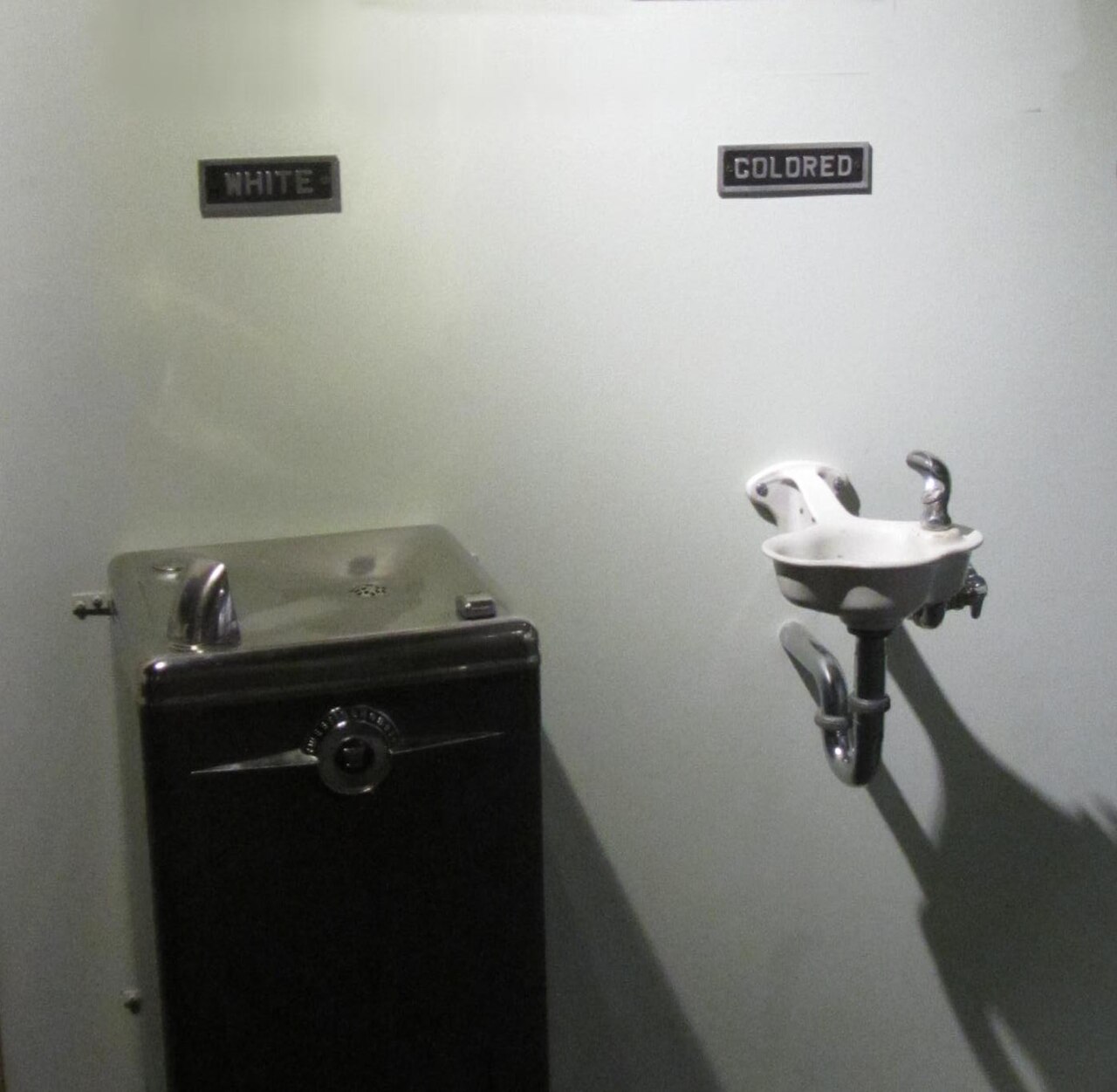
Origins and Etymology of the Jim Crow System
The name Jim Crow originates from a 19th-century minstrel show character, but the reality was a system of legal and social oppression governing the American South. [5] This nomenclature transformed a derogatory performance trope into the label for an entire system of racial segregation. The system governed the American South from the end of Reconstruction in the 1870s until the Civil Rights Movement of the 1960s. [5] The transition from entertainment branding to institutionalized oppression illustrates how cultural representations can normalize systemic discrimination. [5] The system's longevity, spanning nearly a century, suggests it was not merely a series of ad hoc customs but a coherent political project.
Post-Reconstruction Power Vacuum
Before Reconstruction, the South was integrated by necessity, producing an intimacy between blacks and whites not found elsewhere in the country, according to C. Vann Woodward's 'The Strange Career of Jim Crow'. [3] After Reconstruction ended, white Southerners faced a political vacuum and sought to reassert white supremacy through legal means. [3] The Democratic Party, which dominated Southern politics after Reconstruction, implemented Jim Crow laws to maintain political control. [1] The shift from military occupation to local control created the conditions for systematic racial codification.
Northern Model Influence
Southern states, after the horrors of Reconstruction, felt an imperative to copy the Jim Crow laws of the Northern states. [3] This reveals that racial segregation was not exclusively a Southern invention but a broader national pattern that Southern legislators deliberately adopted and intensified. [3] Northern states had already established patterns of segregation in housing, employment, and public accommodations that served as templates. [3] Southern lawmakers studied these Northern models and adapted them to the Southern context, creating a more comprehensive and legally entrenched system.
Institutionalized Segregation in Public Life
Separate But Equal Doctrine
The Supreme Court's 1896 decision in Plessy v. Ferguson established the 'separate but equal' doctrine, giving constitutional cover to the Jim Crow system. [5] This ruling provided the legal framework that justified decades of racial segregation under the guise of constitutional permissibility. [5] The doctrine claimed that segregated facilities were constitutional as long as they were equal, but this was a fiction that masked systematic inequality. [5] The Court's decision effectively overturned earlier precedents and opened the door for state-sanctioned segregation across all areas of public life.
Daily Life Under Segregation
Southern states passed laws that separated Black and white people in nearly every aspect of public life including schools, restaurants, buses, trains, theaters, restrooms, and water fountains. [5] These laws governed where people could sit, eat, drink, and rest based solely on race. [5] The 'separate but equal' fiction claimed segregated facilities were constitutional if equal, but Black facilities were almost always dramatically worse. [5] In practice, facilities and resources provided for Black Americans were almost never equal under the 'separate but equal' doctrine; they were deliberately inferior. [5] This deliberate inequality meant that Black citizens received substandard services, older equipment, and fewer resources than white counterparts.
Transportation and Public Accommodations
The segregation laws extended to all forms of transportation, with Black passengers required to sit in designated sections of buses and trains. [5] Interracial contact was carefully managed and restricted in nearly all public spaces. [5] Trolley conductors and other transportation workers enforced these segregation rules, sometimes with aggressive hostility. [1] Ray Sprigle's 1948 newspaper series exposed the daily life of ten million black Americans in the Jim Crow South, revealing how oppressive and humiliating separate but unequal everything was. [1] Sprigle's series covered issues such as police shootings of unarmed black men—even by trolley conductors in downtown Atlanta. [1] These accounts demonstrate the pervasiveness of segregation enforcement in everyday interactions.
Voting Rights Suppression Tactics
Legal Disenfranchisement Methods
Black citizens' voting rights were systematically stripped through literacy tests, poll taxes, and grandfather clauses, effectively excluding them from democratic participation for generations. [5] These methods were specifically designed to circumvent the Fifteenth Amendment while appearing race-neutral on their face. [5] Literacy tests often administered by white officials gave them discretion to determine who passed or failed, regardless of actual literacy. [5] Poll taxes created financial barriers that disproportionately affected Black citizens who were more likely to be poor due to economic discrimination. [5] Grandfather clauses allowed only those whose grandfathers had voted before Reconstruction to vote, effectively excluding most Black citizens whose ancestors had been enslaved.
Political Consequences
The disenfranchisement of Black citizens meant that African Americans had little political representation at any level of government. [5] Without voting power, Black communities could not influence policy decisions that affected their lives. [5] This political exclusion created a feedback loop where discriminatory policies continued because those affected had no electoral recourse. [5] The machinery of oppression included segregation laws enforced by police, courts, and paramilitary violence; disfranchisement via poll taxes and literacy tests; economic exploitation through sharecropping and debt peonage; and violent enforcement by lynchings, race riots, and the KKK. [5] This comprehensive system of control maintained white supremacy across multiple domains of social life.
Resistance and Workarounds
Despite these barriers, Black communities found ways to resist and circumvent voting restrictions. [5] Some communities organized voter registration drives despite the risks. [5] The political disenfranchisement helped fuel the later Civil Rights Movement, which would eventually challenge and dismantle these barriers. [5] Black voters who attempted to register faced intimidation, job loss, and violence. [5] The courage of those who tried to exercise their voting rights laid the groundwork for the Voting Rights Act of 1965.
Economic Exploitation and Sharecropping
Sharecropping and Debt Peonage
The machinery of oppression included economic exploitation through sharecropping and debt peonage, which kept Black farmers in cycles of dependency. [5] Sharecropping systems often resulted in Black farmers remaining perpetually in debt to landowners, limiting their economic mobility. [5] This economic system functioned as a form of neo-slavery, where Black laborers were tied to the land through debt rather than legal ownership. [5] The sharecropping system persisted well into the 20th century, even after formal Jim Crow laws began to crumble.
Economic Discrimination in Employment
Black workers faced systematic discrimination in employment opportunities and wages. [5] Many were confined to low-paying agricultural or domestic work with few avenues for advancement. [5] Economic discrimination reinforced the racial caste system, as economic status determined social position and access to resources. [5] The combination of limited educational opportunities and employment discrimination created a persistent economic underclass.
Community Economic Initiatives
Despite these economic constraints, Black communities built schools, churches, businesses, and political movements that eventually dismantled Jim Crow. [5] These institutions provided mutual support and preserved cultural traditions under oppressive conditions. [5] Black-owned businesses served community needs when white-owned establishments refused service. [5] The economic self-sufficiency of Black communities became a foundation for the broader Civil Rights Movement.
Violence and Intimidation Tactics
Lynching and Racial Terror
The machinery of oppression included violent enforcement by lynchings, race riots, and the KKK, which served as tools of racial control. [5] Lynchings were public spectacles intended to intimidate Black communities and enforce the racial hierarchy. [5] The KKK functioned as a paramilitary organization that enforced Jim Crow laws through terror and violence. [5] Race riots, such as those in Tulsa and Atlanta, destroyed Black communities and reinforced white dominance through violence. [5] These violent tactics sent a clear message: challenges to the racial order would be met with severe consequences.
Everyday Humiliation and Policing
A white man could escape justice after beating a black man if the black man did not address him with the prefix of Mr. [2] This rule exemplifies the arbitrary nature of Jim Crow enforcement, where basic courtesy determined whether violence would be visited upon a Black person. [2] Black people were treated better than when they were slaves but still subjected to cruelty and hatred under Jim Crow. [2] All black people of that time knew the rules set by white people; it was the parents' job to teach their kids how to stay out of trouble with white people. [2] Richard Wright's autobiographical sketch 'The Ethics of Living Jim Crow' describes the set of rules 'Negroes' had to live by, and breaking a rule set by a white man resulted in punishment. [2] These rules created a constant state of vigilance and self-censorship among Black citizens.
Sprigle's Exposé and Public Awareness
Ray Sprigle's 1948 newspaper series exposed the daily life of ten million black Americans in the Jim Crow South, revealing how oppressive and humiliating separate but unequal everything was. [1] Sprigle's series also addressed lousy black schools and voter intimidation tactics used by officials, politicians, and the KKK that scared blacks from registering to vote. [1] Sprigle's firsthand account brought national attention to the realities of Jim Crow that many white Americans preferred to ignore. [1] The series documented specific instances of police brutality, including shootings of unarmed black men, and the everyday humiliations of segregated facilities. [1] This journalism played a role in shaping public opinion and building support for civil rights reforms.
Legal Challenges and the Road to Dismantling
Plessy v. Ferguson and Its Legacy
The Supreme Court's 1896 decision in Plessy v. Ferguson established the 'separate but equal' doctrine, giving constitutional cover to the Jim Crow system. [5] This ruling stood for decades as the legal justification for segregation, despite the reality of unequal facilities. [5] The Plessy decision exemplifies how Supreme Court rulings can entrench rather than dismantle civil rights. [5] It took nearly 60 years for the Court to overturn this precedent in Brown v. Board of Education (1954). [5] The legacy of Plessy demonstrates the long-term consequences of judicial decisions on civil rights.
Legal Battles and Precedents
Black communities and civil rights organizations challenged Jim Crow laws through the legal system for decades. [5] These challenges laid the groundwork for the eventual dismantling of segregation laws. [5] The NAACP and other organizations filed lawsuits that questioned the constitutionality of segregation. [5] Legal strategies evolved from challenging specific laws to attacking the entire framework of 'separate but equal.' [5] These legal battles required immense courage from plaintiffs who faced retaliation and violence.
Civil Rights Legislation
Jim Crow was formally ended by the Civil Rights Act of 1964 and the Voting Rights Act of 1965, but its effects did not disappear; neighborhoods, schools, and economic disparities shaped by decades of segregation continue to influence American life today. [5] These landmark laws prohibited discrimination based on race in public accommodations and protected voting rights. [5] The Civil Rights Act outlawed segregation in public facilities, employment, and education. [5] The Voting Rights Act eliminated many of the barriers that had disenfranchised Black voters for generations. [5] While these laws marked the formal end of Jim Crow, the underlying disparities persisted.
Cultural Impact and the Lost Cause Narrative
The Lost Cause Mythology
After the Civil War, many Southerners promoted a romanticized version of the Confederacy (the 'Lost Cause' myth) that erased the brutality of slavery and framed Reconstruction as a 'tragic' period of Northern overreach. [5] This mythology served to justify Jim Crow laws by rewriting history to portray white supremacy as benevolent rather than oppressive. [5] The Lost Cause narrative influenced how generations of Americans understood the Civil War and its aftermath. [5] This historical revisionism created a cultural environment where Jim Crow could be implemented and maintained with relatively little national opposition. [5] The persistence of Lost Cause ideology demonstrates how historical memory can be weaponized to support ongoing oppression.
Educational Inequality
Black schools received significantly fewer resources than white schools under the Jim Crow system. [5] Teachers in Black schools often had less training and lower salaries. [5] Textbooks and materials for Black students were older and worn. [5] This educational inequality perpetuated the racial wealth gap and limited social mobility across generations. [5] The 'separate but equal' doctrine meant that even when Black and white schools existed side by side, they were funded and staffed at vastly different levels. [5] Parents and communities fought for educational equity as part of the broader struggle against Jim Crow.
Cultural Resistance and Achievement
Despite the oppressive conditions, Black communities developed rich cultural traditions in music, literature, and art that challenged and transcended Jim Crow limitations. [5] These cultural expressions provided means of resistance and preservation of identity under oppression. [5] Artists and writers used their work to expose the realities of Jim Crow and imagine alternative futures. [5] The Harlem Renaissance and other cultural movements emerged partly as responses to the constraints of Jim Crow. [5] Cultural achievement became a form of protest and a testament to Black resilience.
Enduring Legacy and Historical Memory
Persistent Disparities
Jim Crow was formally ended by the Civil Rights Act of 1964 and the Voting Rights Act of 1965, but its effects did not disappear; neighborhoods, schools, and economic disparities shaped by decades of segregation continue to influence American life today. [5] Residential segregation patterns from the Jim Crow era persist in many American cities. [5] School segregation endures through housing patterns and district boundaries. [5] Economic gaps between Black and white Americans have roots in the Jim Crow period's denial of opportunities. [5] The legacy of Jim Crow demonstrates how systems of oppression create long-lasting structural inequalities that outlast the laws themselves.
Teaching Historical Truth
Teaching about racism honestly and fully remains one of the most charged topics in American education. [5] Accurate education about Jim Crow is essential for understanding present-day racial disparities. [5] Some efforts to restrict how racism is taught aim to obscure the historical realities of Jim Crow and its lasting impacts. [5] Understanding this history helps explain contemporary debates about education, voting rights, and racial justice. [5] The historical record, including sources like Ray Sprigle's 1948 series and the legal framework documented in Plessy v. Ferguson, provides essential evidence for understanding this period.
Historical Scholarship
Scholars like C. Vann Woodward with 'The Strange Career of Jim Crow' have documented how the system was not natural or inevitable but constructed and maintained through specific political choices. [3] Historical research continues to uncover new dimensions of how Jim Crow functioned and affected different groups. [3] The study of Jim Crow intersects with broader questions about American democracy, civil rights, and the ongoing struggle for racial equality. [3] Academic work helps separate myth from reality in understanding this crucial period of American history.
Sources & citations
- The History of Jim Crow Laws Shows Modern Comparisons Are Just Cheap Political Demagoguery - LIBERTY FIRST
- Type a new keyword(s) and press Enter to search
- The Real Jim Crow, How Northern Jim Crow Laws Moved South – Guest post by Leonard M. “Mike” Scruggs
- The South: Jim Crow and Its Afterlives — MAAH Stone Book Award
- Jim Crow & Southern Racism