
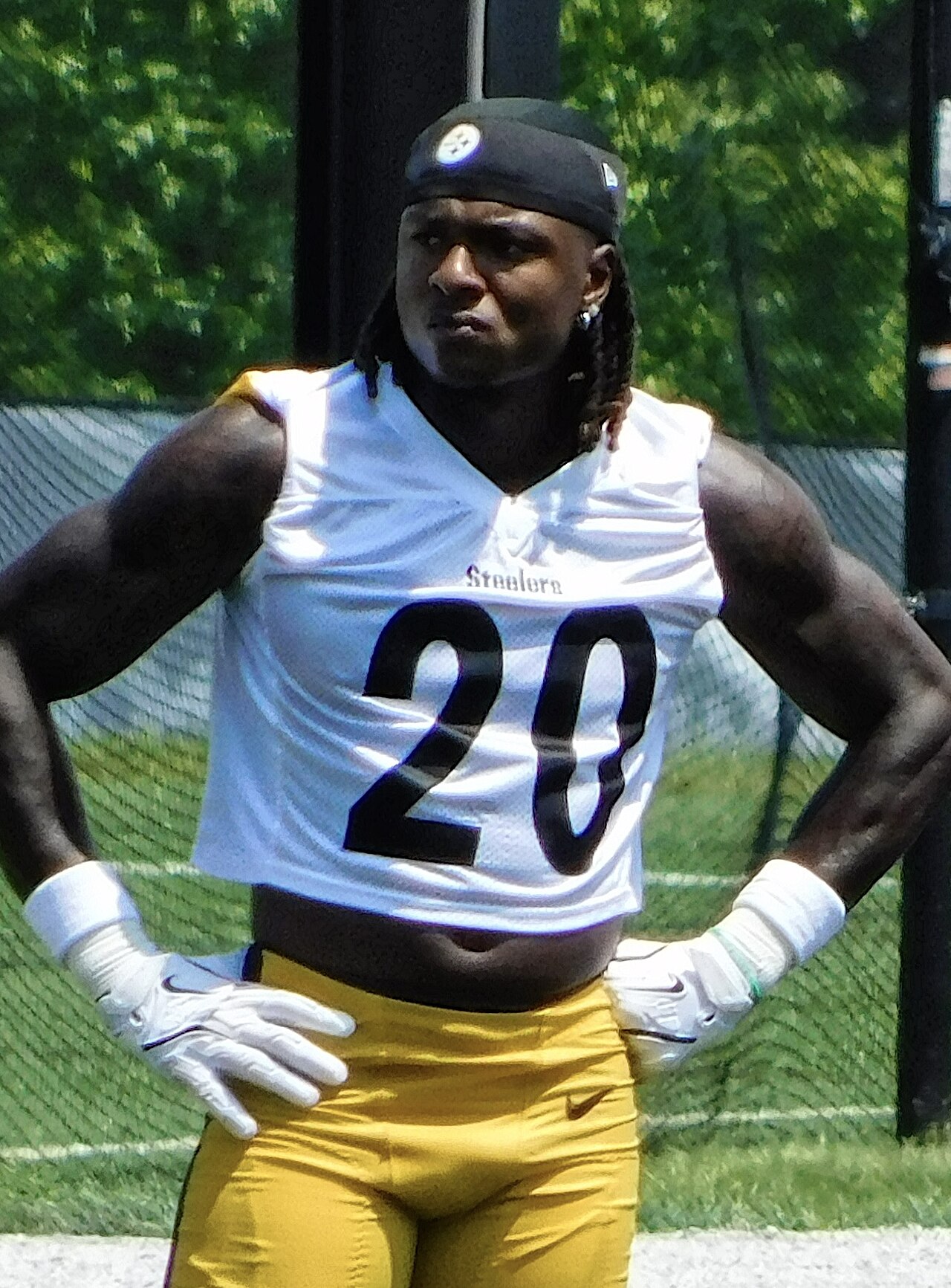
Early Life and College Career at Iowa
Kaleb Johnson was born on August 14, 2003, in Cincinnati, Ohio, and grew up to become an American professional football running back. His foundation was laid at the University of Iowa, where he played college football for the Iowa Hawkeyes from 2022 to 2024. During his first two college seasons, Johnson rushed 268 times for 1,242 yards and nine touchdowns, and hauled in seven receptions for 52 yards, establishing himself as a reliable ground game option for the Hawkeyes [1].
Freshman and Sophomore Contributions
In his freshman year, Johnson saw limited action but quickly earned a role in the running back rotation. By his sophomore season, he increased his carries and production, forming a key part of Iowa's offensive scheme. His ability to both run and catch passes out of the backfield made him a versatile asset for the Hawkeyes.
Bowl Game Appearances and Statistics
Johnson's college career included participation in bowl games where he continued to accumulate rushing yards and touchdowns. His total of 1,242 rushing yards over two seasons ranked him among the more productive running backs in the program's recent history, and his nine touchdowns demonstrated his scoring ability.
Despite his college success, Johnson faced a significant challenge during the 2024 season opener, where he rushed for 119 yards and two touchdowns on 11 carries despite being suspended for the first half of the game. This performance highlighted his talent even under adversity [1].
2025 NFL Draft and Pittsburgh Steelers Selection
Kaleb Johnson's professional journey began when he was selected by the Pittsburgh Steelers in the third round with the 83rd overall pick in the 2025 NFL draft. This selection represented the Steelers' investment in a running back with proven college production and the potential to contribute immediately to their backfield [1].
Draft Position and Team Needs
The Steelers' decision to draft Johnson in the third round reflected their assessment of his skills and how he fit into their offensive plans. Running back is a position of strategic importance, and Pittsburgh viewed Johnson as a developmental piece with upside.
Rookie Season Expectations
Entering the NFL as a third-round pick, Johnson faced the typical challenges of transitioning from college to professional football. The Steelers' offensive system and the existing depth at running back would determine his early playing time and development trajectory.
Johnson began his NFL career with the Pittsburgh Steelers in 2025, where he spent his rookie season learning the professional game and adapting to the speed and complexity of NFL defenses.
Early NFL Years with Pittsburgh
During his tenure with the Pittsburgh Steelers, Johnson worked to earn a roster spot and contribute on special teams and as a backup running back. His rookie season statistics and game-by-game contributions would shape his development as a professional player.
Statistical Production
While specific game-by-game details from his Pittsburgh tenure are not highlighted in the verified sources, Johnson's overall NFL trajectory moved beyond his initial team. His college production of 1,242 rushing yards and nine touchdowns provided a baseline for what the Steelers hoped he could translate to the professional level.
Role and Development
As a young running back, Johnson's role in Pittsburgh likely involved learning the NFL playbook, contributing on special teams, and waiting for opportunities in the backfield. The Steelers' running back committee approach means that rookie contributions often develop gradually.
The transition from college to the NFL represents a significant step up in competition, and Johnson's adaptation process would be closely monitored by coaches and fans alike.
Trade to Green Bay Packers
In 2026, Kaleb Johnson was traded to the Green Bay Packers, marking a significant move in his early NFL career. This trade came as part of a roster maneuver that reshaped the Packers' running back corps [4].
Reasons for the Trade
The Green Bay Packers acquired Johnson because starting running back Josh Jacobs was placed on the Commissioner's Exempt List due to off-field issues. This created an immediate need for the Packers to add depth and talent at the running back position [4]. The trade represented a pragmatic response to an unexpected roster situation.
Trade Details and Compensation
While the specific draft capital or players involved in the trade are not detailed in the verified sources, the move indicates that the Packers viewed Johnson as a valuable enough asset to part with resources to acquire him. Third-round picks typically command significant value in NFL trades.
The timing of the trade, occurring in 2026, suggests that the Packers' front office had evaluated Johnson's skills and character during his rookie season and believed he could contribute to their offensive plans.
Packers Roster Situation and Depth Chart
Following his trade to Green Bay, Kaleb Johnson found himself in a competitive running back situation. The Packers' coaching staff would need to determine how to utilize their new acquisition alongside existing talent [4].
Current Depth Chart Position
On the Packers' running back depth chart, Johnson is listed fourth behind Josh Jacobs, MarShawn Lloyd, and Chris Brooks. This positioning indicates that while Johnson has talent, he must earn playing time ahead of established players [4]. The depth chart reflects the Packers' assessment of each player's current value to the team.
Competition for Carries
The running back room in Green Bay features multiple players with different skill sets. Jacobs brings veteran experience and established production, while Lloyd and Brooks offer their own strengths. Johnson's path to playing time involves demonstrating superiority in practice, special teams contribution, and game performance.
Roster Management Implications
The depth chart situation highlights the Packers' approach to roster management, prioritizing a mix of experience, youth, and versatility at the running back position. Johnson's role will likely evolve based on his performance relative to his teammates.
2026 Season Statistics and Performance
As of Week 10, 2026, Kaleb Johnson's NFL career statistics reflect his journey through two different teams. His overall numbers show 283 rushing yards on a 3.5 rushing average with 1 rushing touchdown, complemented by 2 receptions for 19 receiving yards and 242 return yards [1]. These statistics tell the story of a player adapting to new systems and roles.
Rushing Production Analysis
Johnson's 283 rushing yards across his career to date represents a modest but meaningful contribution. A 3.5 yards-per-carry average suggests efficiency but also limited opportunities, as running backs typically achieve higher averages with more consistent playing time. His 1 rushing touchdown indicates scoring capability when given goal-line opportunities.
Receiving and Special Teams Contributions
The 2 receptions for 19 receiving yards demonstrate Johnson's ability to contribute as a pass-catcher out of the backfield, a skill that was evident during his college career at Iowa when he hauled in seven receptions for 52 yards [1]. His 242 return yards highlight his value on special teams, a crucial aspect of NFL roster management.
These all-around contributions - rushing, receiving, and special teams - make Johnson a versatile asset, even if his primary role remains as a backup or situational running back.
Playing Style and Skill Set
Kaleb Johnson's profile as a running back combines traditional ground-game skills with versatility. His college production demonstrated an ability to find running lanes and contribute as a receiver, traits that NFL teams value in modern running backs [1]. The transition to professional football has tested these skills against faster and more complex defenses.
Running Ability
Johnson's rushing statistics, including his 119-yard performance in his first game of the 2024 season despite a first-half suspension [1], suggest good vision and the ability to break big plays. His college career total of 1,242 rushing yards over two seasons indicates consistent production when given the workload.
Receiving Skills
His seven receptions for 52 yards during his college career at Iowa [1] and his 2 receptions for 19 yards in the NFL [1] show that Johnson can serve as a safety valve in the passing game. This skill makes him valuable in pass-protection situations and on short-yardage passing downs.
The combination of rushing and receiving abilities makes Johnson a three-down candidate in theory, though his current depth chart position reflects the reality of NFL roster construction and the presence of established veterans ahead of him.
Trade Rationale and Packers Strategy
The decision to trade for Kaleb Johnson rather than pursue other options reveals the Packers' strategic thinking about their running back room. The move was directly motivated by Josh Jacobs being placed on the Commissioner's Exempt List [4], which created an immediate vacancy at a critical position.
Risk Management
By acquiring Johnson, the Packers avoided relying solely on undrafted free agents or practice squad players to fill the void left by Jacobs' absence. The trade represented a calculated risk on a young player with proven college production, rather than settling for less-tested options.
Long-term Planning
The Packers' investment in Johnson suggests they view him as part of their long-term running back plans, not just a short-term fix. His relatively low cost compared to free agent signings makes him an attractive asset for a team looking to build through the draft and develop young talent.
This strategy aligns with the NFL trend of teams investing in affordable young talent rather than overpaying for veteran free agents, particularly at positions where rookies can contribute immediately.
Comparison with Teammates and Peers
Kaleb Johnson's role and statistics must be viewed within the context of the Green Bay Packers' running back committee. His position fourth on the depth chart behind Josh Jacobs, MarShawn Lloyd, and Chris Brooks [4] provides the clearest picture of his current standing.
Vs. Josh Jacobs
As the team's featured running back, Jacobs represents the established standard for production and role. Johnson's path to surpassing Jacobs involves not only strong performance but also Jacobs' health and the coaching staff's confidence in his backup. Jacobs' placement on the Exempt List created the opening that Johnson filled, but Jacobs' return would further compress Johnson's opportunities.
Vs. MarShawn Lloyd and Chris Brooks
Lloyd and Brooks each bring different skills to the backfield, creating a competitive environment. Lloyd's youth and energy versus Brooks' specific skill set means Johnson must differentiate himself to earn reps. The depth chart ordering suggests the coaching staff's current preferences, but NFL rosters are fluid and these hierarchies shift weekly based on performance.
This competition benefits the team by pushing all running backs to improve, but it also means Johnson must consistently perform to see the field in meaningful game situations.
Injury and Suspension History
Kaleb Johnson's career has included notable off-field and on-field challenges that have shaped his trajectory. The most visible incident occurred during the 2024 season opener, where he rushed for 119 yards and two touchdowns on 11 carries despite being suspended for the first half of the game [1]. This performance under adversity demonstrated his talent and mental toughness.
College Suspension Context
While the verified sources do not detail the specific nature of the suspension that caused him to miss the first half of the 2024 season opener, the incident itself is telling. Performing at a high level despite missing half the game suggests Johnson's ability to prepare and execute even when facing restrictions.
NFL Transition
The transition from college suspensions to NFL roster situations represents a different set of challenges. The Commissioner's Exempt List situation involving Josh Jacobs [4] is a distinct category from player suspensions, but both scenarios test a team's depth and a player's ability to adapt.
Johnson's overall record of discipline and his ability to perform when called upon will continue to be factors in his NFL career trajectory and the trust coaches place in him.
Future Outlook and Career Trajectory
Looking ahead, Kaleb Johnson's NFL future depends on several factors including his performance, the health of teammates, and the Packers' roster decisions. His current depth chart position [4] and statistical profile [1] suggest he has a role but must earn increased responsibilities.
Path to Increased Playing Time
For Johnson to move up the depth chart, he would need to demonstrate consistent performance in practice and games. Special teams contribution, particularly his return yard ability [1], provides one avenue to earn the coaching staff's trust. Rushing efficiency and touchdown production would be the primary metrics for increased carries.
Long-term Potential
At just 22 years old (born August 14, 2003) [1], Johnson has significant upside if he can stay healthy and continue developing. The fact that a third-round pick and subsequent trade acquisition has found himself fourth on a depth chart speaks to the quality of the Packers' running back room rather than Johnson's lack of talent. With opportunities opening up due to the fluid nature of NFL rosters, Johnson could see increased role in the coming seasons.
The coming seasons will be crucial for Johnson to establish himself as more than a backup running back and to prove that the investment in him - both the draft pick and the trade - was justified by on-field production.