
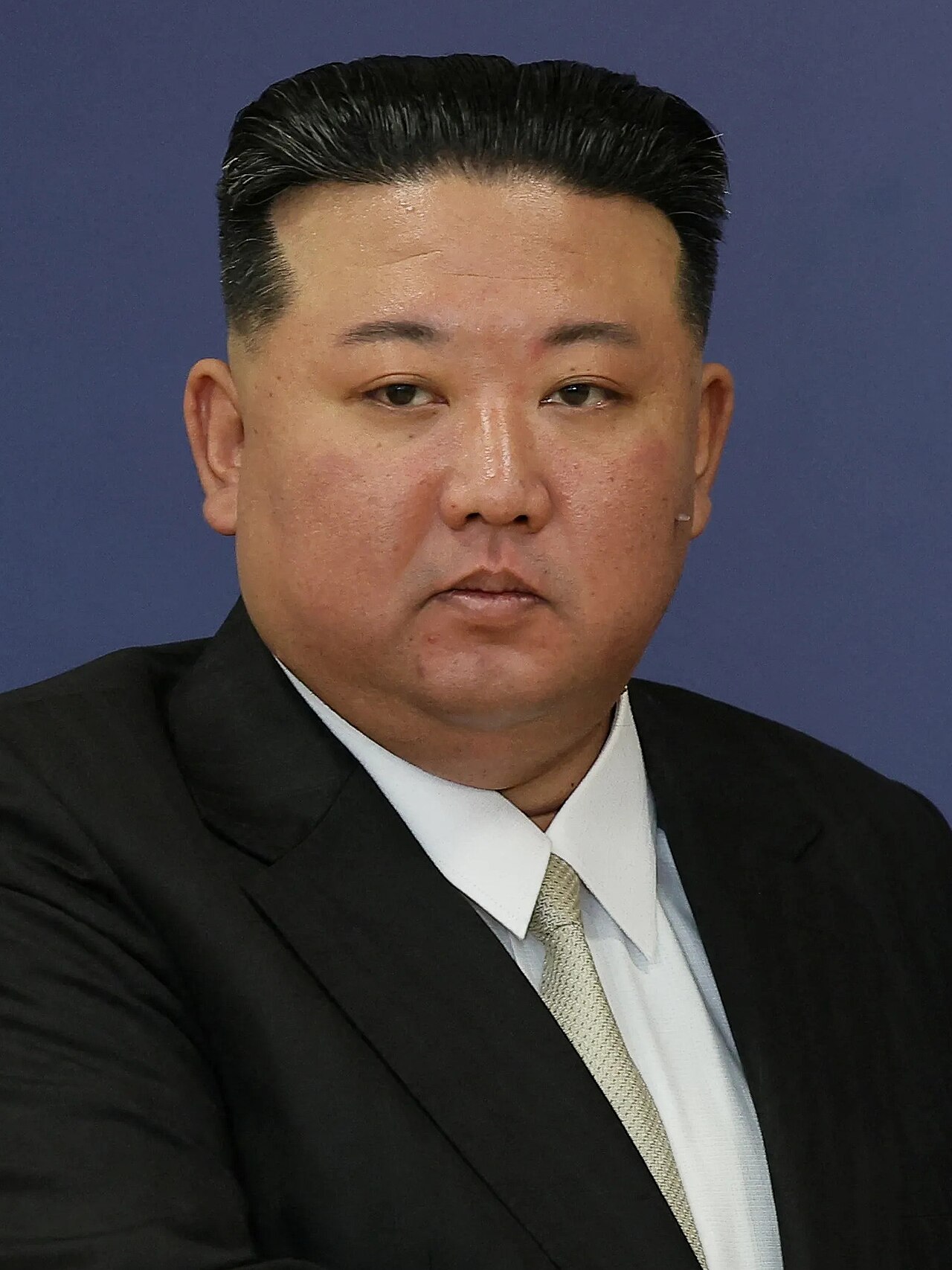
Overview of the Diplomatic Event
The recent event involved Kim Jong Un personally accepting the credentials of several newly appointed ambassadors, marking a significant diplomatic action as it had not occurred for almost thirty years [1, 4, 5] [1,4,5]. This ceremony took place at the headquarters of the Workers’ Party of Korea Central Committee located in Pyongyang [4, 5] [4,5]. The proceedings included Kim Jong Un posing for photographs with every ambassador present and delivering a formal speech during the event [4] [4].
Significance of the Re-engagement
The personal acceptance of credentials by the North Korean leader underscores a notable shift or re-emphasis in diplomatic engagement, given the long hiatus [1, 4, 5] [1,4,5]. This action drew international attention to North Korea's current diplomatic posture [5] [5].
List of Receiving Nations
Kim Jong Un received official envoys representing ten different countries during this diplomatic reception [2, 4, 5] [2,4,5]. These nations included Russia, Sweden, Indonesia, Vietnam, Brazil, the Czech Republic, India, the Philippines, Thailand, and Bangladesh [2, 4, 5] [2,4,5]. The breadth of representation highlights the diverse diplomatic outreach at this time [2, 4, 5] [2,4,5].
Geographic Diversity of Envoys
The ten countries represented a wide geographical spread, encompassing nations from Asia, South America, Europe, and Africa [2, 4, 5] [2,4,5]. For instance, India and Bangladesh were among the nations whose envoys were received [2, 4, 5] [2,4,5]. This international mix suggests a multi-faceted approach to foreign relations rather than focusing on a single region [2, 4, 5] [2,4,5].
Official Participation and Attendance
The ceremony was not solely attended by Kim Jong Un; North Korean Foreign Minister Choe Son Hui was present alongside other senior government officials [4, 5] [4,5]. The presence of high-ranking officials from the North Korean government alongside the leader emphasizes the formal and institutional nature of the diplomatic reception [4, 5] [4,5]. This institutional backing validates the importance of the meeting [4, 5] [4,5].
Protocol Adherence and Deviation
While Kim Jong Un personally accepted the credentials, the act itself represented a break from established protocol due to the nearly three-decade gap in such personal receptions [3] [3]. This deviation from past diplomatic norms made the event highly noteworthy to observers [3] [3].
Stated Foreign Policy Principles
During the ceremony, Kim Jong Un articulated a specific stance regarding North Korea's external relations [2, 4] [2,4]. He explicitly stated that North Korea's foreign policy does not aim for regional supremacy nor does it pursue expansionist goals [2, 4] [2,4]. This declaration serves as the official narrative accompanying the diplomatic outreach [2, 4] [2,4].
Context of Defense Claims
Related to the context of foreign policy, the North Korean leader has claimed that any arms build-up undertaken by the nation is strictly for purposes of self-defense, rather than for regional dominance [2] [2]. This self-defense claim is part of the broader diplomatic messaging presented to international parties [2] [2].
Ceremonial Elements of the Meeting
The interaction between Kim Jong Un and the ambassadors involved specific ceremonial components [4] [4]. Beyond the formal credential acceptance, the leader engaged in photographic sessions with each ambassador who attended the event [4] [4]. Furthermore, a speech was delivered by Kim Jong Un during the proceedings [4] [4].
The Setting of the Reception
The location chosen for this high-level diplomatic engagement was the headquarters of the Workers’ Party of Korea Central Committee in Pyongyang [4, 5] [4,5]. This setting reinforces the link between the state's diplomatic actions and the ruling political structure of North Korea [4, 5] [4,5].
Implications for International Relations
The reception of envoys from diverse nations like India and Brazil, alongside others, suggests an attempt to maintain or strengthen various bilateral ties [2, 4, 5] [2,4,5]. The declaration that the policy avoids supremacy or expansion [2, 4] [2,4] is presented as a framework for these engagements [2, 4] [2,4].
Observer Reaction
The decision by Kim Jong Un to personally welcome the ambassadors garnered attention, with some reports noting the decision as surprising to the world [5] [5]. This level of personal involvement in diplomatic protocol is a significant point of discussion among international observers [5] [5].
Timeline Context of the Event
The key temporal marker of this event is that Kim Jong Un accepted credentials for the first time in nearly three decades [1, 4, 5] [1,4,5]. This long period without such a personal reception frames the current diplomatic activity as a notable return to a specific level of engagement [1, 4, 5] [1,4,5].
Recent Diplomatic Activity
The reception included envoys from ten countries, a specific list of which was documented [2, 4, 5] [2,4,5]. The event took place at the Workers’ Party of Korea Central Committee headquarters in Pyongyang [4, 5] [4,5], anchoring the timeline within the capital's political center [4, 5] [4,5].
Diplomatic Process Mechanics
The process involved the formal presentation of credentials by the newly appointed ambassadors to the leader [4] [4]. This formal act was accompanied by Kim Jong Un's speech and photographic documentation of each ambassador [4] [4]. The attendance of Foreign Minister Choe Son Hui further institutionalized the reception [4, 5] [4,5].
Policy Communication Method
Kim Jong Un used this platform to communicate his foreign policy tenets, specifically denying ambitions of supremacy or expansion [2, 4] [2,4]. This verbal declaration was integrated into the formal ceremony alongside the diplomatic greetings [2, 4] [2,4].
Analyzing the Reception's Scope
The ten nations represented—Russia, Sweden, Indonesia, Vietnam, Brazil, the Czech Republic, India, the Philippines, Thailand, and Bangladesh [2, 4, 5] [2,4,5]—demonstrate a deliberate effort to engage a geographically and politically varied group of states [2, 4, 5] [2,4,5]. This selection contrasts with potentially more focused diplomatic efforts in the past [2, 4, 5] [2,4,5].
Institutional vs. Personal Diplomacy
While the event was highly personal due to the leader's direct acceptance of credentials [1, 4, 5] [1,4,5], the presence of senior officials like Foreign Minister Choe Son Hui [4, 5] [4,5] ensures the event is also framed within the established institutional framework of the Workers’ Party of Korea [4, 5] [4,5].
Future Context and Diplomatic Trajectory
The statement regarding self-defense for arms build-up [2] [2] provides a key piece of context for future diplomatic discussions with these ten nations [2, 4, 5] [2,4,5]. The willingness to host such a diverse group suggests an openness to maintaining diplomatic channels despite international scrutiny [2, 4, 5] [2,4,5].
Sustaining Engagement
The successful execution of this ceremony, involving the leader, the Foreign Minister, and a broad array of ambassadors [4, 5] [4,5], sets a precedent for future diplomatic interactions, potentially moving beyond previous constraints [1, 4, 5] [1,4,5].
Sources & citations
- Kim Jong Un personally welcomes 10 foreign ambassadors first ... - WION
- North Korean leader claims arms build-up for self-defense, not regional ...
- Kim Jong Un breaks protocol to receive new ambassadors, including ...
- Kim Jong Un personally accepts foreign ambassadors' credentials for ...
- ప్రపంచాన్నే ఆశ్చర్యపరిచిన కిమ్ నిర్ణయం.. భారత్కు ఎందుకింత ప్రాధాన్యం ...