
Overview and Corporate Structure
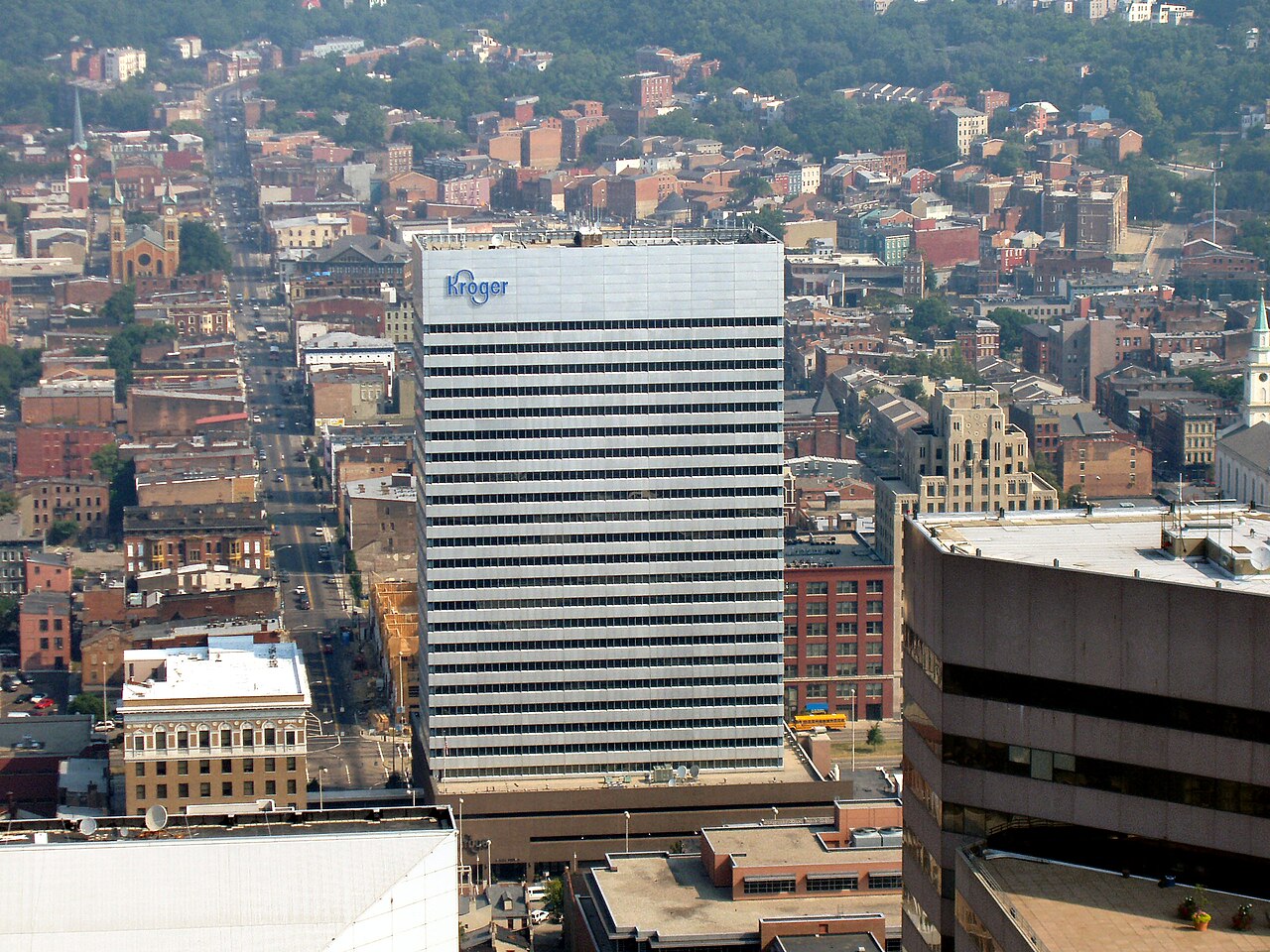
Kroger is an American retail company and a public company traded on NYSE under ticker KR, and is a component of the S&P 500 index [1]. The company was founded by Bernard Kroger, establishing a corporate lineage that spans more than a century of American retail evolution [1]. Kroger's headquarters are located in Cincinnati, anchoring its operational leadership [1]. As a public company, Kroger's governance structure reflects shareholder expectations while maintaining its commitment to community service across its extensive store network [1] [2].
Public Market Presence and Scale
Kroger's status as an S&P 500 component underscores its significance within the broader American equity market and provides a framework for its operational scale [1]. The company's public reporting requirements ensure transparency regarding financial performance, workforce metrics, and strategic initiatives [1] [2]. This public profile also subjects Kroger to regular market analysis and consumer expectation monitoring [1].
Operational Geography and Banner Family
Kroger operates approximately 2,700 stores across 35 states, representing one of the most extensive physical footprints among traditional grocery retailers [2]. The company operates under a family of banners serving various regions including Southern California, Intermountain West, Arizona, Pacific Northwest, Southeast, Colorado, Kansas, Chicago, Midwest, and Mid-Atlantic [2]. This geographic diversity allows Kroger to adapt its offerings to local market conditions while maintaining centralized corporate functions [2].
Workforce and Customer Reach
Kroger employs about 400,000 associates company-wide, making it one of the largest private sector employers in the United States [2]. This substantial workforce supports the company's operational demands across its 2,700+ store locations [2]. The associate count reflects Kroger's role as a major employer in the communities it serves [2].
Daily Customer Engagement
Kroger serves about 11 million customers daily, a figure that illustrates the company's deep integration into American daily routines [2]. This customer volume translates to significant purchasing power and community economic impact [2]. The daily serving figure also positions Kroger as a primary grocery destination for tens of millions of American households each week [2].
Employment Practices and Associate Development
The 400,000 associate workforce represents diverse skill sets and career paths within the retail and food service sectors [2]. Kroger's employment model includes various departments ranging from pharmacy and fuel centers to traditional grocery aisles [1]. This workforce diversity supports the company's ability to serve varied customer needs across its regional banner families [2].
Private Label Brand Portfolio
Kroger offers private label brands including Banner Brand, Private Selection, Simple Truth, and Smart Way, which constitute a significant portion of the company's product mix [1]. These private labels allow Kroger to differentiate its offerings from national brand competitors while often providing price advantages to consumers [1]. The brand portfolio reflects Kroger's strategy to balance quality, price, and consumer preference across different shopping occasions [1].
Brand Strategy and Consumer Appeal
The private label strategy encompasses multiple tiers from value-oriented Banner Brand to premium positioning of Private Selection [1]. Simple Truth has positioned itself as a natural and organic-focused brand line, responding to consumer demand for transparent ingredient sourcing [1]. Smart Way represents another tier in Kroger's private label spectrum, offering consumers additional choice across price points and product categories [1].
Product Category Coverage
Kroger's private label brands span across grocery categories including food, beverages, household products, and personal care [1]. This comprehensive category coverage ensures that private label options are available across most of the store's merchandise mix [1]. The breadth of product coverage also supports Kroger's margin management and inventory optimization strategies [1].
Pharmacy and Additional Operations
Kroger operates a Pharmacy Group as part of its broader service offerings, extending beyond traditional grocery retail into healthcare services [1]. The pharmacy division represents a growing segment of Kroger's business model, reflecting consumer demand for integrated health and wellness services at the point of purchase [1].
Pharmacy Service Integration
Kroger pharmacies provide prescription filling, immunizations, and health consultations, creating a one-stop shopping experience for customers [1]. This integration of pharmacy services with grocery retail leverages Kroger's extensive store footprint to increase healthcare access in communities [1]. The pharmacy group also contributes significantly to the company's overall revenue mix [1].
Other Strategic Operations
Kroger's additional operations include a Supermarket Petroleum Group managing fuel centers, Kroger Personal Finance offering financial services, and Kroger Wireless providing telecommunications services [1]. These diversified operations reflect Kroger's strategy to maximize real estate utility and customer engagement across multiple touchpoints [1]. The petroleum group in particular has become a standard feature at many Kroger locations, often serving as a destination driver [1].
Sustainability and Social Initiatives
Kroger has a Zero Hunger | Zero Waste initiative aimed at ending hunger in communities and eliminating waste across the company [2]. This dual-pronged approach addresses both food insecurity and environmental sustainability, representing one of the most ambitious corporate responsibility programs in the grocery sector [2].
Zero Hunger Component
The Zero Hunger component targets ending hunger in communities through food donations, partnerships with food banks, and community investment [2]. Kroger's scale enables it to mobilize significant food resources toward this goal, leveraging its supply chain and store network [2]. The initiative reflects growing corporate recognition of the retailer's role in addressing community needs [2].
Zero Waste Component
The Zero Waste component aims to eliminate waste across Kroger's operations, including food waste, packaging, and general operational waste [2]. Implementation strategies include improved inventory management, donation programs, and sustainable packaging initiatives [2]. The waste reduction goals align with broader environmental concerns and consumer expectations for corporate environmental stewardship [2].
Historical Development and Evolution
Kroger's history traces back to its founding by Bernard Kroger, who established the company with a focus on quality and value that would define the brand for generations [1]. The company's evolution from a single store to a national retailer reflects broader trends in American retail, including consolidation, format changes, and shifting consumer preferences [1]. Kroger's longevity in the market speaks to its adaptability and enduring business model [1].
Founding Principles and Early Growth
Bernard Kroger founded the company with principles that emphasized customer value, product quality, and community service [1]. These founding principles established a corporate culture that would persist through decades of market changes [1]. The early growth phase saw Kroger expanding beyond its original location to serve broader regional markets [1] [2].
Milestones and Market Expansion
Throughout its history, Kroger has achieved numerous milestones including format innovations, geographic expansion, and strategic acquisitions [1] [2]. The company's expansion across 35 states represents decades of strategic market entry and adaptation [2]. Each new market entry has required understanding local consumer preferences, regulatory environments, and competitive landscapes [2].
Competitive Landscape and Market Position
Kroger operates in a highly competitive grocery retail landscape facing competition from traditional supermarkets, discount retailers, and e-commerce platforms [1] [2]. The company's S&P 500 status and extensive store network provide significant scale advantages [1]. Kroger's private label strategy and loyalty programs represent key differentiation efforts in a crowded market [1] [2].
Competitive Responses and Strategy
Kroger's competitive strategy includes investment in digital capabilities, expansion of private label offerings, and enhancement of the in-store experience [1] [2]. The company's loyalty program data provides insights into consumer purchasing patterns that inform product development and marketing [1] [2]. Kroger also faces competitive pressure from warehouse clubs and specialty retailers [1] [2].
Market Share and Industry Influence
As one of the largest traditional grocery retailers in the United States, Kroger's decisions and performance often set industry trends [1] [2]. The company's scale allows it to influence supplier relationships, pricing structures, and market dynamics [1]. Kroger's market position also carries responsibility and scrutiny regarding labor practices, pricing, and community impact [1] [2].
Digital Transformation and E-Commerce
Kroger has invested significantly in digital transformation, including e-commerce capabilities, digital ordering, and delivery services [1] [2]. The company's digital infrastructure supports both website and mobile platform shopping experiences [1] [2]. This digital investment responds to shifting consumer behavior toward online grocery shopping [1] [2].
Omnichannel Retail Experience
Kroger's omnichannel approach integrates online ordering with in-store pickup and delivery options [1] [2]. The buy-online-pickup-in-store model has become a significant component of Kroger's service offering [1] [2]. This integration leverages the company's extensive store network as fulfillment centers [1] [2].
Technology and Data Analytics
Kroger leverages technology and data analytics to personalize customer experiences, optimize inventory management, and improve operational efficiency [1] [2]. The company's digital platform collects shopping data that informs product recommendations and targeted promotions [1] [2]. This data-driven approach represents a competitive advantage in personalized retail [1] [2].
Community Impact and Economic Role
Kroger's extensive operations generate significant economic impact across the 35 states it serves, including job creation, tax revenue, and local supplier relationships [2]. The company's 400,000 associates represent substantial household income within communities [2]. Kroger's purchasing power influences local and regional food supply chains [2].
Local Supplier Partnerships
Kroger's scale enables partnerships with local and regional food producers, supporting local agriculture and food businesses [2]. The company's regional banner structure facilitates these local connections across diverse geographic areas [2]. Local supplier relationships also contribute to product freshness and community identity within stores [2].
Community Engagement Beyond Operations
Through initiatives like Zero Hunger | Zero Waste, Kroger engages with communities on issues of food security and environmental sustainability [2]. The company's charitable donations and volunteer programs extend its community impact beyond core retail operations [2]. Kroger's community positioning reflects the evolving expectation that major corporations address social issues [2].
Challenges and Future Direction
Kroger faces ongoing challenges including labor negotiations, margin pressures, changing consumer preferences, and competitive dynamics from both traditional and non-traditional retailers [1] [2]. The company's substantial workforce makes labor relations a significant aspect of operations [2]. Economic conditions and inflation affect both consumer shopping patterns and operational costs [1] [2].
Labor and Wage Considerations
Kroger's relationship with its 400,000 associates includes ongoing negotiations regarding wages, benefits, and working conditions [2]. The company's size means labor agreements have industry-wide implications [2]. Kroger has historically engaged in collective bargaining while maintaining operational continuity [2].
Strategic Priorities and Growth Areas
Kroger's strategic priorities include continued digital investment, private label expansion, and sustainability initiative advancement [1] [2]. The company's future direction will likely involve further integration of healthcare, pharmacy, and retail services [1] [2]. Kroger's response to market changes will shape its position within the evolving grocery landscape [1] [2].