
Overview and Evolutionary Background
Lions belong to the species Panthera leo and are members of the Felidae family, sharing a common ancestry with other big cats such as tigers, leopards, and jaguars. Genetic studies indicate that lions living in India are more closely related to lions in Central and West Africa than to those in Southern or Eastern Africa, suggesting complex historical population movements across the continent [4]. It is thought that the two lion subspecies overlap in Ethiopia, Sudan, and South Sudan, where their ranges meet in ecological transition zones [4]. Lions are hypercarnivores, meaning that almost their entire diet consists of meat, and after feeding, a single lion can survive for over a week without needing to eat again, an adaptation to the irregular availability of prey in the wild [4].}
Physical Adaptations and Size Dimorphism
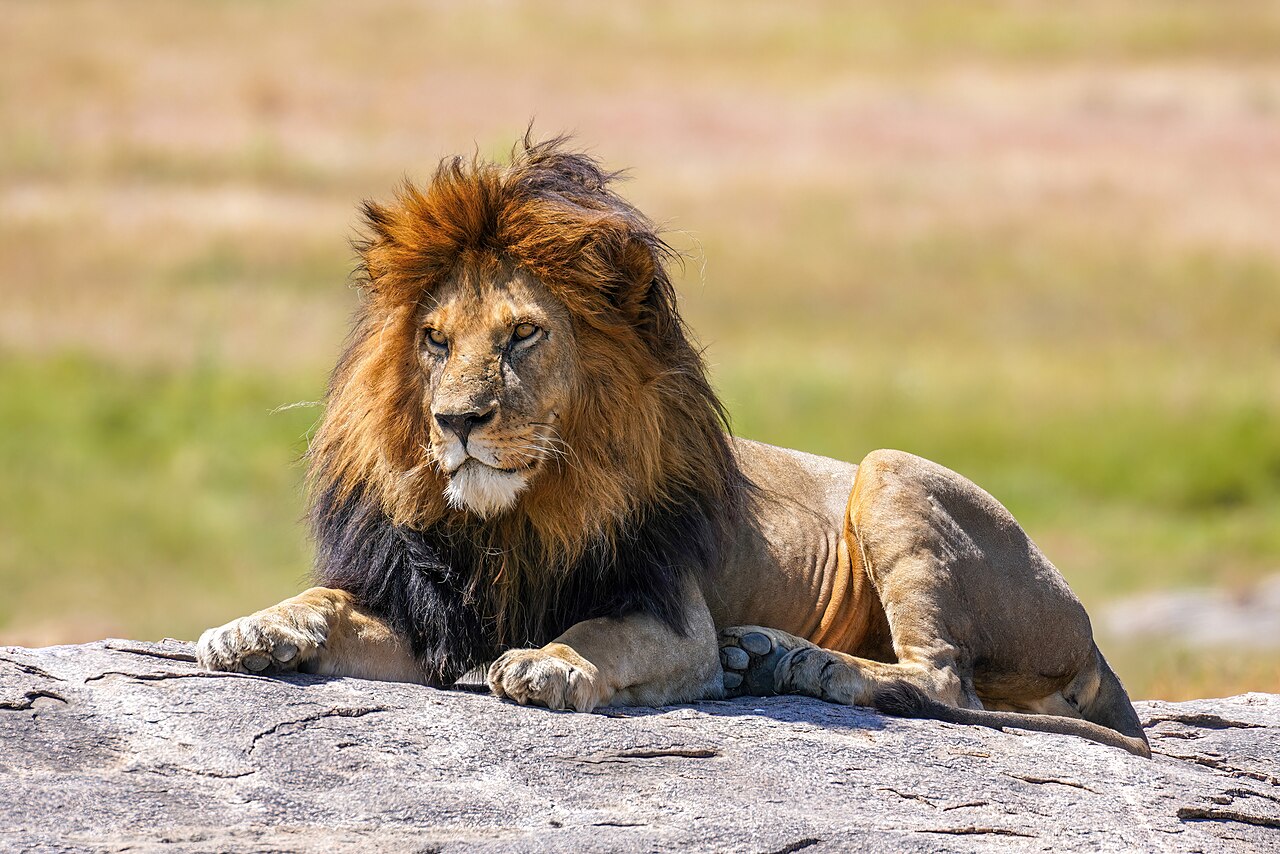
Lions are the second biggest big cat after the tiger, with adult males typically outweighing females due to the energy-intensive development of the mane [4]. The mane is a secondary sex characteristic unique to male lions; its darkness and size signal individual fitness, with darker-maned lions having better quality diets and higher testosterone levels, making them more attractive to females [4]. However, a larger and darker mane also makes the lion hotter, creating a physiological trade-off between sexual selection and thermoregulation in hot savanna climates [4]. Some male lions remain maneless, a phenomenon more common in the Kalahari Desert populations, which may represent an evolutionary adaptation to warmer climates [4].}
Social Structure and Pride Dynamics
Lions are the most social of the big cat species, living in family groups called prides that typically number 5 to 20 individuals [4]. Within a pride, lionesses usually remain for life and are often related, while males often leave the pride when they are a few years old and may establish coalitions with related males [5]. A pride generally contains no more than two adult males, and when a new male takes over, it is not unusual for him to kill existing cubs to ensure that future offspring carry his genes [5]. This infanticide behavior, while harsh, is an evolutionary strategy that rapidly brings females back into estrus [5].}
Activity Patterns and Daily Rest Cycles
Lions are most active at night and spend a remarkable amount of time resting, with individuals sleeping or dozing for up to 21 hours a day, and males typically resting longer than females [4]. This energy-conserving behavior allows lions to conserve strength for nocturnal hunting bouts and reduces water loss in hot daytime temperatures [4]. Lions can survive for a number of days without drinking water, obtaining necessary fluids from the prey they consume, which is a critical adaptation in arid environments where water sources are scarce [4].}
Hunting Strategies and Cooperative Behavior
Nocturnal Hunting and Teamwork
Lionesses do the majority of hunting within the pride, typically forming small groups of two or three to stalk and ambush prey under the cover of darkness [5]. Hunting is generally done in the dark, and lionesses often coordinate their movements to surround and exhaust prey such as wildebeest, zebra, and buffalo [5]. Despite their teamwork, lionesses usually score only one kill out of several hunting attempts, reflecting the difficulty of taking down large, dangerous prey [5].}
Feeding Hierarchy and Consumption Patterns
After a successful hunt, a feeding hierarchy typically forms within the pride, with adult males eating first, followed by lionesses, and then cubs receiving the remaining meat [5]. This hierarchy ensures that the strongest individuals, particularly males who defend the pride, receive priority nutrition [5]. Lions are capable of consuming large quantities of meat in a single sitting, and after feeding, a lion can survive for over a week without needing to eat again, an adaptation that compensates for the irregular success of hunts [4].}
Prey Selection and Ecosystem Impact
Lions primarily target medium to large herbivores, and their hunting pressure influences the population dynamics of herbivore species across the savanna ecosystem [5]. By culling weak or sick individuals, lions contribute to the overall health of prey populations, though high lion densities can also suppress herbivore numbers, affecting vegetation growth and fire regimes [5]. The cooperative nature of lion hunting allows them to tackle prey much larger than any single lion could subdue alone, making them apex predators with ecosystem-wide effects [5].}
Mane Function and Sexual Selection
Mane as a Signal of Fitness
The darkness of a lion's mane serves as a multifaceted signal to both potential mates and rival males [4]. Darker manes indicate a better quality diet and higher testosterone levels, and females are thought to use this visual cue when selecting mates, preferring males with darker, fuller manes [4]. Research has shown that darker-maned lions have greater reproductive success, suggesting that mane darkness correlates with genetic quality or competitive ability [4]. However, the mane comes with a physiological cost: it makes the lion hotter, which can be a disadvantage in extremely hot climates [4].}
Male-Male Competition and Mane Assessment
Other males can assess a rival's fighting ability by the size and color of his mane, using this information to decide whether to challenge or avoid confrontation [4]. Longer and darker manes may signal greater fighting experience or physiological condition, reducing the frequency of costly physical fights [4]. In populations where manes are less common, such as the maneless males of the Kalahari, this trait may evolve as an adaptation to reduce heat stress while still maintaining competitive ability through other means [4]. The mane also offers physical protection to the neck during fights with rivals, as the thick fur can buffer bites and swipes [4].}
Variation Across Subpopulations
Mane length and color vary significantly between individuals and across geographic regions, with genetic and environmental factors both playing a role [4]. Lions in different African regions and the endangered Asiatic lion population in India exhibit varying mane phenotypes, reflecting local adaptation and genetic drift [4]. The study of mane variation provides insights into how sexual selection, climate, and predation pressure interact to shape secondary sexual characteristics in mammals [4].}
Habitat, Distribution, and Subspecies Geography
Historical and Current Range
Lions once ranged across much of Africa, Europe, and Asia, but today they are primarily found in sub-Saharan Africa, with a small, endangered population remaining in India's Gir Forest [4]. Lion prides can be as small as 3 or as large as 40 animals, and the size and stability of a pride often depend on prey availability, habitat quality, and the presence of competing predators such as hyenas and leopards [5]. The distribution of lions has been fragmented by human expansion, habitat conversion, and hunting, leading to isolated populations that face increased genetic bottlenecks [5]. Conservation efforts focus on connecting these populations through wildlife corridors to maintain genetic diversity [5].}
Habitat Preferences and Adaptations
Lions prefer grassland, savanna, dense scrub, and open woodland, where prey is abundant and cover is available for stalking [2]. They are highly adaptable and can live in a variety of habitats, from arid deserts to tropical forests, though they require sufficient prey biomass to sustain pride life [2]. Water availability is a key factor, as lions can survive for a number of days without drinking, obtaining fluids from their prey, but they will seek out water sources regularly when available [4]. Human-wildlife conflict increases as lion ranges overlap with agricultural areas, leading to livestock predation and retaliatory killings [5].}
Subspecies Distinctions and Genetic Research
Scientists recognize several lion subspecies, though taxonomic classification remains a subject of ongoing research [4]. Genetic studies have revealed that Indian lions are more closely related to West and Central African lions than to those in Southern or Eastern Africa, challenging earlier assumptions about distinct Asian and African lineages [4]. The overlap of subspecies in regions like Ethiopia and Sudan suggests that historical range contractions and expansions have shaped the current genetic landscape of lion populations [4]. Understanding these genetic distinctions is vital for managing captive breeding programs and prioritizing conservation resources in the wild [4].}
Reproduction, Cub Rearing, and Pride Development
Breeding Cycle and Estrus
Lions do not have a strict breeding season, though births often peak during rainy periods when prey is more abundant [5]. A lioness in estrus will mate multiple times over several days, and the gestation period lasts approximately 110 days [5]. Litters typically consist of one to four cubs, and birth weight is relatively small compared to the mother's size, requiring careful maternal care in the first weeks of life [5].}
Alloparental Care and Cub Survival
Within a pride, lionesses often synchronize their breeding and may nurse each other's cubs, a behavior known as alloparental care that increases cub survival rates even when the mother is away hunting [5]. However, cub mortality is high, with many not surviving their first year due to predation, starvation, or infanticide by incoming males [5]. The collective defense of the pride, including group hunting and vigilance, provides the best chance for cubs to reach adulthood, though only a fraction of born cubs do so [5].}
Pride Ontogeny and Male Dispersal
Young lions remain with their natal pride for the first few years of life, learning hunting skills, social hierarchies, and territorial defense from older members [5]. As they mature, male cubs typically leave the pride to join all-male coalitions, which roam adjacent territories and challenge resident males for pride ownership [5]. Female cubs, by contrast, usually stay with the pride for life, maintaining the matrilineal core across generations and ensuring the continuity of hunting territories [5]. This sex-biased dispersal pattern shapes the genetic structure of lion populations over time [5].}
Communication, Vocalizations, and Territorial Behavior
The Lion's Roar and Long-Distance Communication
A male lion's roar is one of the most iconic sounds in the animal kingdom, typically heard after sunset and capable of carrying up to five miles (eight kilometers) across the savanna [5]. Roars serve multiple functions: they advertise the male's presence and location to both rivals and potential mates, and they help maintain contact between pride members spread across a large territory [5]. Lions also use scent marking, visual displays, and grunting or growling in close-range interactions to reinforce territorial boundaries [5].}
Body Language and Social Signals
Lions communicate extensively through body language, including ear position, tail movement, and facial expressions [5]. Affiliative behaviors such as head rubbing, licking, and vocalizations like purring or meowing strengthen social bonds within the pride [5]. Submissive postures, such as crouching or lowering the head, are used by lower-ranking individuals to avoid conflict with dominant males or lionesses [5]. These communication mechanisms help maintain pride stability and reduce the frequency of violent confrontations [5].}
Territorial Defense and Boundary Marking
Lion prides defend territories that can range from 20 to 400 square kilometers, depending on prey availability and pride size [5]. Males patrol the boundaries of the territory, marking with urine and roaring to warn off intruding males and other predators [5]. Intrusions by rival males often lead to fierce fights, sometimes resulting in serious injury or death, as control of a pride directly impacts reproductive success [5]. The spatial extent of territories is dynamic, shifting as prey move and as new males take over prides [5].}
Conservation Status and Human Interactions
Population Decline and Threats
Lion populations have declined dramatically over the past century, with estimates suggesting a 43% reduction across Africa between 1993 and 2014 [5]. Key threats include habitat loss and fragmentation, prey depletion, human-wildlife conflict, and illegal wildlife trade [5]. Trophy hunting and legal hunting concessions remain controversial, with some arguing they provide economic incentives for conservation, while others contend they undermine population recovery [5]. The IUCN Red List classifies the African lion as Vulnerable, and the Asiatic lion as Endangered, reflecting the precarious status of both subspecies [5].}
Conservation Strategies and Success Stories
Conservation efforts focus on protecting critical habitats, reducing human-lion conflict through livestock guarding animals and community outreach, and managing prey populations to ensure sufficient food for lions [5]. Translocation and reintroduction projects have been attempted in some areas, though success varies depending on prey availability and social acceptance by local lions [5]. The Gir Forest National Park in India has seen the Asiatic lion population recover from fewer than 50 individuals in the early 20th century to over 600 today, demonstrating the potential for recovery with protected area management [5]. Landscape-level approaches that involve ranchers, governments, and NGOs are essential for long-term lion persistence [5].}
Role in Culture and Ecotourism
Lions hold profound cultural significance across Africa and beyond, appearing in mythology, art, and national symbolism [5]. In many countries, lion-based ecotourism generates significant revenue that funds conservation and provides employment for local communities [5]. However, the popularity of lion viewing also brings challenges, including vehicle congestion, noise pollution, and the habituation of lions to human presence [5]. Responsible tourism guidelines aim to minimize disturbance while maximizing the conservation benefits that lion-focused travel can provide [5]. The continued existence of wild lions is not only an ecological imperative but also a cultural and economic asset for many nations [5].}