
Overview
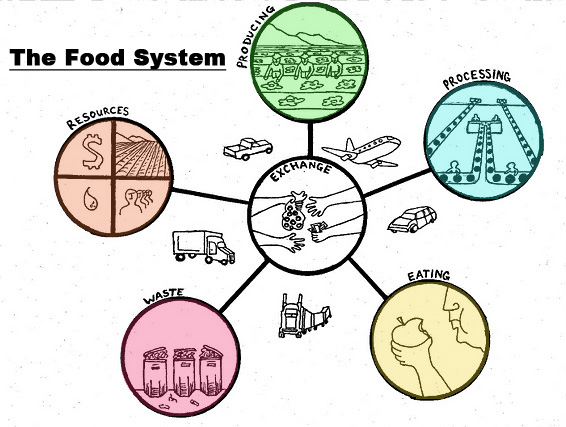
Local food systems represent a growing segment of agriculture that shortens the distance between food production and consumption. While there is no single universal definition, research from the USDA Economic Research Service shows that definitions vary significantly depending on the program or purpose. The 2008 Farm Bill established one of the most widely cited thresholds, defining locally or regionally produced agricultural food products as those distributed within 400 miles of their origin [2]. Meanwhile, the Food Safety Modernization Act uses a 275-mile radius for qualified end-users [2]. These differing definitions reflect the complexity of characterizing what "local" means across different contexts. USDA Farm to School Census data reveals that even within educational institutions, definitions diverge: 21% of school districts define local as within 50 miles, while 2% define it as within one day's drive [2]. This variability underscores that local food systems are not monolithic but rather a spectrum of practices shaped by geography, policy, and institutional goals.
Defining "Local" in Policy and Research
The terminology surrounding local food is shaped significantly by federal policy and research institutions. The 2008 Farm Bill's 400-mile definition has become a reference point for many USDA programs, though it is not universally applied. The Food Safety Modernization Act's narrower 275-mile threshold for qualified end-users illustrates how food safety considerations can produce different spatial definitions than those used for market development [2]. Research from the Economic Research Service (ERS) has documented these definitional differences extensively. ERS published a comprehensive 2010 report titled "Local Food Systems: Concepts, Impacts, and Issues" which explored alternative definitions, market size, consumer and producer characteristics, and early indications of economic and health impacts [3]. This was followed by a January 2015 report to Congress providing estimates on sales, farm participation, price comparisons between direct-to-consumer outlets and conventional grocery outlets, and farm growth and survival between 2007 and 2012 [3]. An August 2021 report further evaluated characteristics, production, marketing practices, and financial performance of local food producers with varying experience levels [3]. Together, these reports form a body of research that moves beyond simple distance thresholds to examine the multifaceted nature of local food systems.
Market Size and Producer Participation
ERS research has provided some of the most cited estimates of the local food market's scale. The 2015 report to Congress offered the first comprehensive estimates of local food sales, revealing significant growth in farm participation and direct-to-consumer channels between 2007 and 2012. More recent analysis from the August 2021 report examined the financial performance of local food producers, comparing beginning and experienced farmers to understand how marketing practices relate to economic outcomes [3]. These studies consistently show that local food is not a niche market but a substantial economic activity with measurable growth trends. The 2015 report also compared prices at direct-to-consumer outlets with those at conventional grocery stores, providing data on the cost implications for consumers [3]. This price comparison is crucial for understanding the economic barriers and incentives that shape local food consumption patterns.
Consumer Characteristics and Behavior
Understanding who buys local food is central to analyzing the system's sustainability and growth. ERS research has focused on the characteristics of local food consumers, identifying demographic and psychographic factors that influence purchasing decisions [3]. The 2010 report specifically explored consumer characteristics as part of its broader examination of local food systems [3]. This research helps explain why certain communities adopt local food practices more rapidly than others. The variability in definitions, such as the 50-mile threshold used by 21% of school districts, suggests that consumer and institutional perceptions of "local" are not uniform [2]. This perception gap can create challenges for producers trying to meet diverse demand expectations across different market segments.
Economic and Health Impacts
While economic impacts are more extensively documented, early indications of health impacts from local food systems have also been explored by ERS [3]. The 2010 report specifically noted early indications of economic and health impacts, signaling that the field was in its formative stages of impact assessment [3]. The August 2021 report provided more detailed financial performance data, allowing for a more nuanced understanding of how local food production affects farm viability [3]. The comparison between beginning and experienced farmers in the 2021 report highlights that experience level is a significant factor in financial success, suggesting that knowledge transfer and mentorship are critical components of a healthy local food system [3]. This finding implies that economic sustainability is not just about market access but also about producer capability and support structures.
Institutional and Educational Roles
Schools and educational institutions play a significant role in local food systems, as evidenced by the USDA Farm to School Census data. The census, which covered over 9,000 school districts, revealed that definitions of local food vary widely among institutions [2]. This variation suggests that local food initiatives in schools are not standardized and may reflect local priorities, resources, and community values. The 50-mile definition used by 21% of districts and the one-day's drive definition used by 2% of districts illustrate the range of interpretations [2]. These institutional definitions can influence the types of products available to students and the relationships formed between schools and local producers. The data from the census provides a valuable baseline for understanding how local food systems are implemented in educational settings.
Research Trajectory and Future Directions
The evolution of ERS research from 2010 to 2021 reflects a maturing field that has moved from defining concepts to analyzing detailed economic and operational outcomes. The 2010 report laid the groundwork by establishing key concepts and initial impact indicators [3]. The 2015 report expanded this by providing concrete estimates of market size and growth [3]. The 2021 report focused on producer-level financial performance, indicating a shift toward understanding the internal dynamics of local food businesses [3]. This trajectory suggests that future research will likely continue to refine our understanding of the economic viability and sustainability of local food systems. The consistent focus on both consumer and producer characteristics across these reports highlights the interconnected nature of local food systems, where changes on one side of the market directly affect the other.
Key Definitions and Thresholds
| Source | Definition/Threshold | Context |
|---|---|---|
| 2008 Farm Bill | Less than 400 miles from origin | Locally or regionally produced agricultural food product [2] |
| Food Safety Modernization Act | Within 275 miles of facility | Qualified end-users (consumers or restaurants/retail establishments) [2] |
| USDA Farm to School Census (21% of districts) | Within 50 miles | Definition of local food in school districts [2] |
| USDA Farm to School Census (2% of districts) | One day's drive | Definition of local food in school districts [2] |