
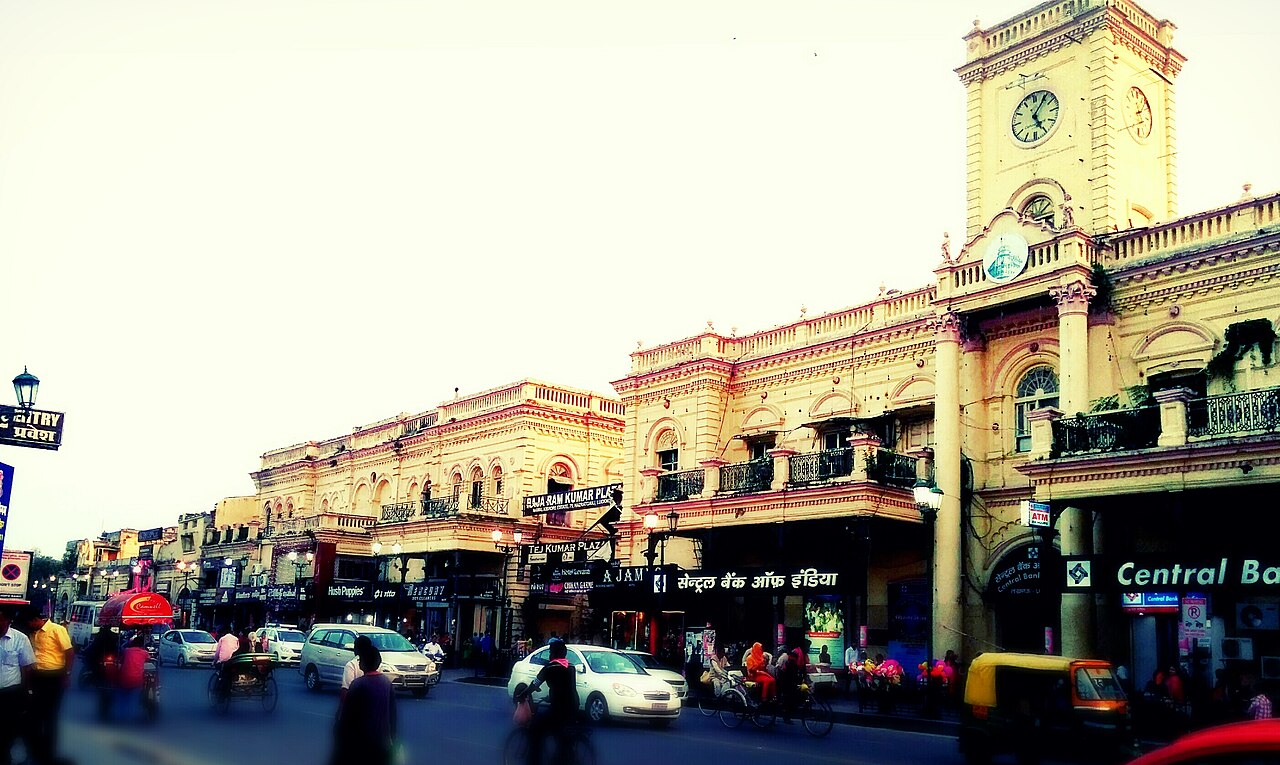
Geographical and Political Profile
Lucknow serves as the capital of Uttar Pradesh, the most populous state in India, and is situated at coordinates 26°51′N 80°57′E [1]. Its position in the heart of the Gangetic plain has historically made it a strategic administrative and cultural hub. The city's role as a political center is underscored by the upcoming visit of the Prime Minister, reflecting its continued importance in state and national governance.
Administrative Significance
As the capital city, Lucknow houses the state government headquarters and hosts major political events. The selection of Indira Gandhi Pratishthan as the venue for the skill convocation highlights the city's capacity to accommodate large-scale national programs [5].
Strategic Location
Located at 26°51′N 80°57′E, Lucknow's geography influences its climate, connectivity, and urban planning. The city's location facilitates accessibility for participants traveling from across the country, including the approximately 1500 ITI students expected for the ceremony [5].
The city's infrastructure must support both routine administrative functions and extraordinary events like the PM's visit, requiring coordination between municipal authorities and central security agencies [5].
PM Modi's Scheduled Visit
Prime Minister Narendra Modi is scheduled to visit Lucknow on November 21, 2026 [5]. This visit marks a significant engagement between the central government and the state of Uttar Pradesh, with the city preparing for heightened security and logistical arrangements.
Purpose of the Visit
The primary objective of the visit is to attend a skill convocation ceremony at Indira Gandhi Pratishthan [5]. This event represents the government's focus on vocational education and skill development as national priorities.
Security Preparations
Central security agencies conducted a security survey at Indira Gandhi Pratishthan prior to the event [5]. Such pre-event surveys are standard protocol for high-profile visits and ensure the safety of the Prime Minister, participating students, and dignitaries.
The visit schedule reflects the government's commitment to skill development, with the date chosen to coincide with a convocation that honors student achievement across multiple trades and zones [5].
Skill Convocation Ceremony Details
The skill convocation ceremony at Indira Gandhi Pratishthan will bring together approximately 1500 students from ITIs across the country [5]. This gathering represents one of the largest assemblies of vocational trainees in recent times, underscoring the scale of India's skill development ecosystem.
Participant Composition
Of the 1500 participants, around 1000 students will be from Uttar Pradesh and 200 from other states, with the remaining participants likely from various union territories and regions [5]. This distribution reflects the national scope of the event and the host state's prominent role.
Honoring Top Performers
Approximately 64 students, including 6 from Uttar Pradesh, will be honored as toppers across 40 trades and six zones [5]. The recognition of toppers across diverse trades highlights the comprehensive nature of the skill assessment process.
A distinctive aspect of the ceremony is that PM Modi will personally honor each trade topper student [5]. This personal interaction between the Prime Minister and students emphasizes the government's focus on individual achievement in skill development.
Institutional Venue: Indira Gandhi Pratishthan
Indira Gandhi Pratishthan serves as the venue for the skill convocation ceremony [5]. The choice of this location suggests it is a recognized institutional facility capable of hosting large educational and ceremonial events in Lucknow.
Facility Capabilities
The venue must accommodate approximately 1500 students, along with faculty, guests, and security personnel. Its selection indicates sufficient infrastructure for the event's requirements [5].
Historical Context
Indira Gandhi Pratishthan is named after India's former Prime Minister and represents the state's commitment to educational and political heritage. Hosting a skill convocation at this venue connects contemporary skill development efforts with the state's historical narrative [5].
The facility's location in Lucknow, the capital city, further reinforces its role as a center for state-level activities and national events [1][5].
Student Participation and Recognition
The ceremony will see participation from approximately 1500 ITI students representing different parts of India [5]. This broad participation demonstrates the reach of the Industrial Training Institute system across the country.
Geographical Distribution
Around 1000 students will attend from Uttar Pradesh, while 200 will come from other states, with the balance representing various regions [5]. This distribution shows both the host state's large ITI network and the event's pan-India character.
Achievement Recognition
Approximately 64 students will be honored as toppers across 40 trades and six zones [5]. The multi-trade, multi-zone structure of the recognition ensures that skill excellence is celebrated across diverse vocational fields.
The honor of being a topper carries significance for the students' future careers, with PM Modi's personal involvement in the award ceremony adding prestige to the recognition [5].
Political and Educational Significance
The visit and ceremony reflect the central government's prioritization of skill development as a national agenda item [5]. By choosing Lucknow as the venue, the government signals the importance of Uttar Pradesh in the skill development landscape.
Policy Implications
The event coincides with ongoing discussions about vocational education reform and the role of ITIs in India's workforce development. The personal involvement of the Prime Minister in honoring toppers may influence future policy directions [5].
State-Central Government Relations
The visit represents a moment of coordination between the central government under PM Modi and the state administration of Uttar Pradesh. Such events serve as platforms for demonstrating cooperative federalism in action [5].
The scale of the event, with 1500 participants and 64 toppers, suggests a significant investment in recognizing and promoting skill excellence [5].
Security and Logistical Considerations
Central security agencies conducted a security survey at Indira Gandhi Pratishthan in Lucknow prior to the event [5]. This pre-event assessment is a critical component of VIP visit protocols and ensures comprehensive security coverage.
Security Infrastructure
The security survey likely examined the venue's layout, entry and exit points, crowd management capabilities, and potential threat vectors. Such preparations are essential for events involving the Prime Minister [5].
Logistical Coordination
Beyond security, logistical coordination will include transportation for students, medical facilities, communication systems, and crowd control measures. The involvement of multiple agencies reflects the complexity of hosting a national-level event [5].
The combination of security surveys and logistical planning demonstrates the comprehensive approach required for PM visits to state capitals like Lucknow [5].
Historical and Cultural Context of Lucknow
Lucknow's identity extends beyond its role as a political capital; the city has a rich historical and cultural heritage that contextualizes its selection as an event venue [1]. As a city in Uttar Pradesh, it embodies the diverse cultural tapestry of the state.
Historical Significance
Lucknow has historically been a center of art, culture, and administration in northern India. Its historical legacy as a capital city provides a backdrop for contemporary events like the skill convocation [1].
Cultural Infrastructure
The city's cultural infrastructure, including historical landmarks, educational institutions, and public venues, supports its function as a venue for significant state and national events [1][5].
The blend of historical prestige and modern administrative function makes Lucknow a unique location for events that combine tradition with contemporary governance priorities [1].
Expected Outcomes and Impact
The skill convocation ceremony is expected to have several outcomes, including the recognition of student achievement, increased visibility for ITI education, and reinforcement of the government's skill development agenda [5].
Motivational Impact on Students
For the 1500 participating students, particularly the 64 toppers, the ceremony serves as a significant motivational milestone. Personal interaction with the Prime Minister can inspire continued excellence in skill pursuits [5].
Broader Educational Impact
The event may influence public perception of vocational education, potentially encouraging greater enrollment in ITI programs. The visibility of 64 toppers across 40 trades highlights the diversity and quality of skill training available [5].
Long-term, such events contribute to the government's goal of positioning India's workforce with competitive skill capabilities, with Lucknow serving as a symbolic and practical venue for this vision [5].
Comparison with Previous Skill Events
While this article focuses on the upcoming November 2026 event, it is worth noting that skill convocation ceremonies have been part of India's educational calendar, with varying scales and formats [5]. The current event's scale of 1500 participants and personal PM involvement represents a significant undertaking.
Scale and Scope
Comparing this event to previous skill convocations, the November 2026 ceremony in Lucknow distinguishes itself with approximately 1500 participants, 64 toppers across 40 trades, and the Prime Minister's personal participation in honoring recipients [5]. These metrics set it apart as a large-scale national event.
Venue Selection Patterns
The choice of Lucknow and Indira Gandhi Pratishthan as the venue may reflect strategic considerations regarding regional representation, infrastructure availability, and political symbolism [5]. Venue selection for such events often balances logistical practicality with broader political messaging.
The inclusion of students from across the country, with 1000 from Uttar Pradesh and 200 from other states, demonstrates a deliberate effort at national representation rather than regional concentration [5].
Future Implications for Skill Development
The November 2026 ceremony in Lucknow may have lasting implications for India's skill development trajectory [5]. By honoring 64 toppers and bringing together 1500 ITI students, the event contributes to the ongoing narrative of vocational education reform.
Policy Continuity
Events like this convocation likely form part of a broader strategy of recurring skill recognition events, suggesting policy continuity in the government's approach to vocational education [5]. The success and reception of this event may shape future editions.
Regional Development
Hosting the event in Lucknow, the capital of Uttar Pradesh, may have positive implications for the region's profile as a skill development hub. The visibility generated could attract further investment and attention to the state's educational infrastructure [5].
The 1500 participating students and 64 toppers represent tangible outcomes that contribute to measurable progress in skill development metrics, with such events serving as both celebration and assessment points [5].