
Overview and Location Details
Marine Corps Base Camp Pendleton is situated within the state of California [1]. Its precise geographical coordinates are recorded as 33°12′53.1″N 117°23′15″W [1]. This location places the base within a strategic area for military operations [1].
Geographic Placement
The coordinates 33°12′53.1″N 117°23′15″W [1] define the physical location of the base within California [1]. This specific placement is critical for its operational scope as a military installation [1].
Installation Status
The facility has maintained continuous use since 1942 up to the current time [1]. This longevity underscores its importance to US military readiness in the region [1].
Historical Development Timeline
The construction phase of Marine Corps Base Camp Pendleton occurred between March and September of 1942 [1]. This period marks the establishment of the base during a significant time in military history [1].
Establishment Period
The construction timeline spans from March to September 1942 [1]. This timeframe indicates rapid development necessary for military deployment needs of the era [1].
Operational History
Since its inception in 1942, the base has remained an active operational site [1]. Its continuous service demonstrates sustained military relevance over decades [1].
Core Mission and Purpose
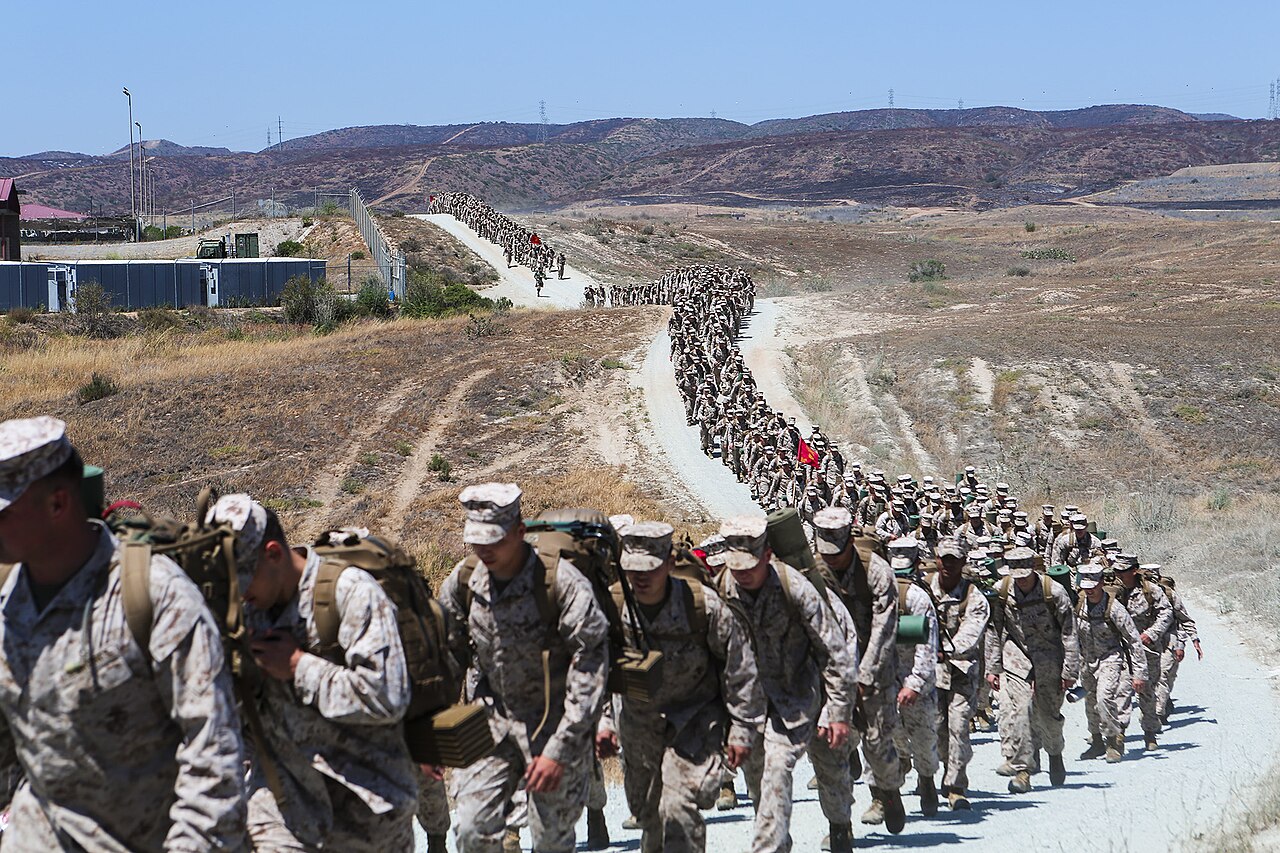
The primary objective of Marine Corps Base Camp Pendleton is to function as a dedicated training base [2]. This function directly supports the combat readiness of the various Operating Forces [2].
Readiness Promotion
The base is tasked with promoting the combat readiness of the Operating Forces [2]. This involves providing essential training opportunities tailored to military requirements [2].
Support for Tenant Commands
Beyond its core forces, the base supports the missions of other tenant commands [2]. It achieves this by supplying necessary facilities, services, and support structures [2].
Beneficiaries of Base Operations
The support provided by the base is specifically designed to meet the needs of Marines and Sailors, as well as their families [2]. This holistic support extends beyond purely military training objectives [2].
Marine and Sailor Support
The provision of facilities and services is responsive to the needs of Marines and Sailors stationed at the base [2]. This commitment ensures operational effectiveness through personnel welfare [2].
Family Integration
Support extends to the families associated with the service members [2]. Recognizing the role of family in military life is integral to the base's mission fulfillment [2].
Access and Security Protocols
As a secure military installation, access to Marine Corps Base Camp Pendleton is strictly controlled [5]. All individuals wishing to visit must possess authorized access credentials [5].
Visitor Requirements
Valid identification is a mandatory requirement for any visitor attempting entry to the base [5]. Security protocols mandate verification of identity upon approach [5].
Authorized Entry Only
Entry is not granted universally; only those with authorized access are permitted onto the installation [5]. This strict control maintains the security integrity of the military site [5].
Operational Context in California
Being located in California [1], the base operates within a specific regional military context [1]. This context influences its training modalities and logistical support structures [1].
Regional Military Significance
The base's presence in California [1] contributes to the broader military posture in the Western United States [1]. Its operations align with regional defense strategies [1].
Sustained Presence
The continuous use from 1942 to the present [1] highlights the enduring strategic value of this California location [1]. It has adapted to evolving military needs over time [1].
Training Modalities and Facilities
The base provides diverse training opportunities necessary for combat readiness [2]. These opportunities are facilitated by the extensive facilities and services available on site [2].
Facility Provision
The infrastructure at Camp Pendleton is designed to support rigorous military training [2]. These facilities are key components in achieving the mission of enhancing combat readiness [2].
Service Responsiveness
The services offered are specifically tailored to meet the requirements of the personnel [2]. This responsiveness ensures that training is practical and relevant to current operational demands [2].
Administrative and Logistical Framework
The base operates under established military administrative frameworks [2]. These frameworks govern the provision of support to Marines, Sailors, and their families [2].
Support Structure
Support is provided across multiple domains, including facilities, services, and logistical aid [2]. This comprehensive support enables focused training efforts [2].
Mission Alignment
All activities are aligned with the overarching mission of promoting combat readiness [2]. This focus dictates resource allocation and operational priorities at the installation [2].
Visitor Guidelines Summary
Access to the installation is governed by strict security measures [5]. Visitors must comply with all protocols regarding identification and authorization [5].
Mandatory Identification
Possessing valid identification is non-negotiable for anyone seeking to enter the secure military zone [5]. This is a fundamental security requirement [5].
Authorization Prerequisite
Authorized access must be obtained prior to entry [5]. Unauthorized entry is prohibited due to the nature of the installation as a secure military site [5].
Significance to US Military Operations
Camp Pendleton serves a vital role in maintaining the combat readiness of US Marine Corps forces [2]. Its long operational history since 1942 [1] attests to its enduring strategic importance [1].
Sustaining Readiness
By providing extensive training and support [2], the base ensures that Operating Forces remain combat-ready [2]. This contribution is critical to national defense objectives [2].
Enduring Legacy
The base has been continuously utilized since its construction between March and September 1942 [1]. This longevity reflects its consistent value to military preparedness [1].