
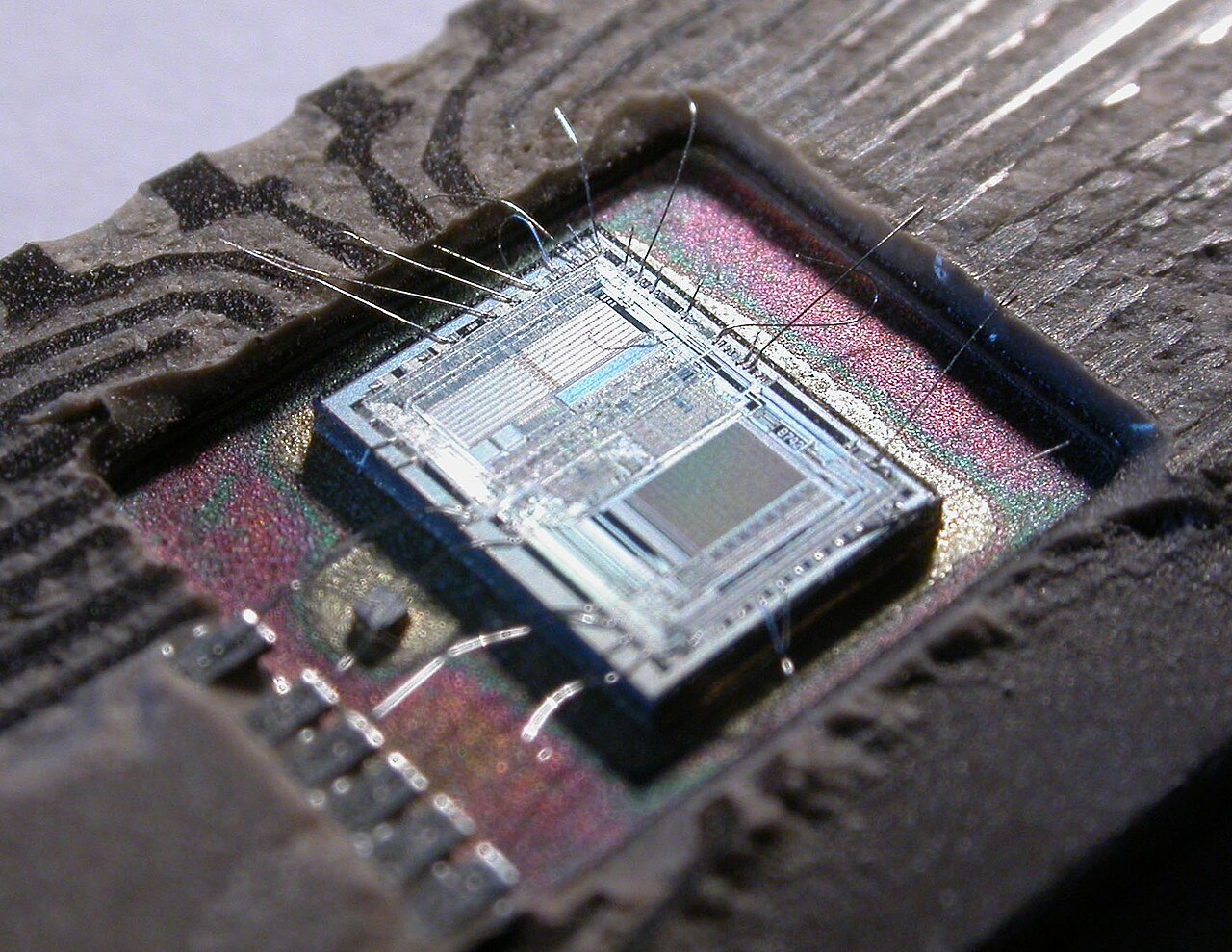
Overview of Microcontroller Architecture
A microcontroller, also referred to as an MCU, uC, or MC, functions as a complete, small computer integrated onto one single integrated circuit [1, 2, 3, 5] [1,2,3,5]. Unlike microprocessors, which power general-purpose machines like PCs, MCs are tailored for embedded applications [1, 2, 3] [1,2,3]. This integration of necessary components onto one chip makes them ideal for dedicated control tasks within various electronic products [1, 2, 3, 4, 5] [1,2,3,4,5].
Component Integration within the IC
The defining characteristic of a microcontroller is the inclusion of multiple essential components on the same chip [1, 2, 5] [1,2,5]. Specifically, this architecture incorporates one or more processor cores alongside integrated memory and programmable input/output peripherals [1, 2, 5] [1,2,5]. This self-contained nature streamlines design and reduces the complexity of external hardware requirements when implementing embedded functions [1, 2, 5] [1,2,5].
Key Features and Design Attributes
Microcontrollers possess several advantageous physical and operational traits that dictate their widespread adoption in specialized hardware [3, 4, 5] [3,4,5]. They are inherently compact devices, allowing for small form factors in end products [3, 4, 5] [3,4,5]. Furthermore, their design emphasizes low operational cost and superior power efficiency, making them suitable for battery-operated or energy-constrained systems [3, 4, 5] [3,4,5].
Memory Types on Chip
The memory structure within an MC often includes both volatile and non-volatile storage [1] [1]. Program memory frequently utilizes NOR flash, OTP ROM, or ferroelectric RAM directly on the chip [1] [1]. Additionally, a modest quantity of RAM is typically integrated alongside this program storage [1] [1]. This on-chip memory management simplifies the overall system design considerably [1] [1].
Applications Across Industries
The utility of microcontrollers spans an extremely broad range of automated products and devices across modern infrastructure [1, 2, 3, 4, 5] [1,2,3,4,5]. Examples of their deployment include household appliances such as refrigerators and microwaves, as well as consumer electronics like televisions and telephones [1, 2, 3, 4, 5] [1,2,3,4,5]. Their role extends deeply into complex machinery and connectivity solutions [1, 2, 3, 4, 5] [1,2,3,4,5].
Modern Connectivity and Control
Beyond traditional appliances, microcontrollers are vital components in advanced systems like automotive controls and the burgeoning Internet of Things (IoT) ecosystem [1, 2, 3, 4, 5] [1,2,3,4,5]. Their power efficiency and compact nature make them perfect for low-power, always-on IoT nodes [1, 2, 3, 4, 5] [1,2,3,4,5]. They enable the automated control features found in printers and home appliances alike [1, 2, 3, 4, 5] [1,2,3,4,5].
Distinction from Microprocessors
A crucial differentiation exists between microcontrollers and microprocessors [1, 2, 3] [1,2,3]. Microprocessors are typically found in general-purpose computing environments, such as personal computers [1, 2, 3] [1,2,3]. In contrast, microcontrollers are specifically engineered for embedded applications where dedicated, real-time control is necessary [1, 2, 3] [1,2,3]. This specialization in MCs allows for optimized performance within tight resource constraints [1, 2, 3] [1,2,3].
Design Philosophy Comparison
The design philosophy favors integration in an MC, bundling the CPU, memory, and peripherals together on one chip [1, 2, 5] [1,2,5]. A microprocessor, conversely, usually requires external memory and peripheral chips to function as a complete system [1, 2, 3] [1,2,3]. This integrated approach of the MC reduces board complexity and overall system size significantly compared to a microprocessor-based setup [1, 2, 5] [1,2,3].
Implementation Details: Peripherals and Memory
Microcontrollers integrate programmable input/output peripherals alongside their processor cores and memory [1, 2, 5] [1,2,5]. These peripherals allow the MC to interact directly with the physical world, reading sensors or controlling actuators in embedded systems [1, 2, 5] [1,2,5]. The inclusion of specific memory types like NOR flash or OTP ROM supports firmware storage directly on the device [1] [1].
Memory Allocation
The system includes both a small amount of RAM for runtime data and non-volatile program memory [1] [1]. The selection of memory, such as ferroelectric RAM, contributes to the device's operational characteristics within its target application [1] [1]. This dual memory approach ensures that operational code persists even when power is removed from the volatile RAM [1] [1].
Significance in Modern Technology
The compact, low-cost, and power-efficient nature of microcontrollers has cemented their significance in modern technology [3, 4, 5] [3,4,5]. They are not just components but the functional brains behind countless automated devices we use daily [1, 2, 3, 4, 5] [1,2,3,4,5]. This efficiency allows for the proliferation of sophisticated, yet unobtrusive, automated systems [3, 4, 5] [3,4,5].
Enabling IoT Growth
The rise of IoT heavily relies on the capabilities of MCs due to their low power consumption [1, 2, 3, 4, 5] [1,2,3,4,5]. Devices ranging from smart home appliances to industrial sensors utilize MCs to manage data collection and communication efficiently [1, 2, 3, 4, 5] [1,2,3,4,5]. Their small footprint is perfectly suited for deployment in distributed, low-power networks [1, 2, 3, 4, 5] [1,2,3,4,5].
System Deployment Examples
Microcontrollers are actively used in diverse, controlled environments [1, 2, 3, 4, 5] [1,2,3,4,5]. These applications include the intricate control systems within automotive platforms [1, 2, 3, 4, 5] [1,2,3,4,5]. They also manage the operations of common household goods like printers and telephones [1, 2, 3, 4, 5] [1,2,3,4,5]. The breadth of their application demonstrates their versatility in real-world automation [1, 2, 3, 4, 5] [1,2,3,4,5].
Automotive and Home Automation
In automotive systems, MCs handle critical control functions, ensuring reliable operation [1, 2, 3, 4, 5] [1,2,3,4,5]. Simultaneously, in the home, they govern the behavior of appliances such as microwaves and televisions [1, 2, 3, 4, 5] [1,2,3,4,5]. This dual application showcases their reliability in both mission-critical and consumer settings [1, 2, 3, 4, 5] [1,2,3,4,5].
Operational Context in Embedded Systems
Embedded systems rely fundamentally on the integrated nature of the microcontroller to achieve specific, dedicated functions [1, 2, 5] [1,2,5]. Unlike general computing, the MC executes a fixed set of tasks required by the product it controls, such as temperature regulation in a refrigerator or input processing in a printer [1, 2, 3, 4, 5] [1,2,3,4,5]. This focused operation is key to their efficiency [1, 2, 3, 4, 5] [1,2,3,4,5].
Programming and Control Flow
The programmable peripherals allow the MC to interface with external hardware according to its programmed logic [1, 2, 5] [1,2,5]. The combination of processor cores, memory, and I/O peripherals enables the execution of control algorithms specific to the embedded task [1, 2, 5] [1,2,5]. This control capability is what makes MCs the 'heart' of embedded systems [1, 2, 3, 4, 5] [1,2,3,4,5].
Comparative Summary of Advantages
The advantages of using an MC over a microprocessor for embedded tasks are clear, centering on integration and efficiency [1, 2, 3] [1,2,3]. They offer a complete, self-contained computing solution on a single IC [1, 2, 3, 5] [1,2,3,5]. This contrasts sharply with the modular, general-purpose nature of microprocessors [1, 2, 3] [1,2,3].
Efficiency Metrics
Key metrics supporting MC adoption include low cost, small physical size, and superior power management [3, 4, 5] [3,4,5]. These attributes directly enable their deployment in battery-dependent or size-constrained products like IoT sensors and portable devices [1, 2, 3, 4, 5] [1,2,3,4,5]. The combination of these factors makes them the preferred choice for dedicated control rather than complex data processing [1, 2, 3] [1,2,3].