
Overview and Historical Foundations
Mixed-sex sports are individual and team sports whose participants are not of a single sex [1]. The concept has ancient roots, but modern organized mixed-sex competition emerged in the late 19th and early 20th centuries as societies began questioning rigid sex segregation in athletics [1].
Early Mixed-Sex Competition
Korfball as a Purpose-Built Mixed-Gender Sport
Korfball was designed to be mixed-gender from the start; each team has equal numbers of male and female players [5]. Created in the early 1900s by Dutch schoolteacher Nico Broekhuysen, it was one of the first sports explicitly constructed around mixed-gender participation rather than adapted from single-sex formats [5].
Post-War Expansion and Institutionalization
Organizational Rules and Sex Distribution
In many organised sports settings, rules dictate an equal number of people of each sex in a team, such as teams of one man and one woman [1]. These rules are not arbitrary; they exist to ensure balanced participation and address the physiological realities of mixed competition [1].
Rationale for Equal Distribution
Physiological Differences and Performance Gaps
The main purpose of equal sex distribution rules in organised sports is to account for physiological sex differences [1]. Research consistently shows that male puberty confers a measurable physical advantage on athletes in mixed-sex competition [1], including greater muscle mass, higher hemoglobin levels, and larger bone structure.
Pre-Pubertal Participation
Young children often participate in mixed-sex sports leagues because physical differences between males and females are not as pronounced before puberty [1]. This allows boys and girls to compete together safely and meaningfully in early education years, though rules typically shift at adolescence.
Competitive Formats and Event Types
Where sex differences in physiology do not play a significant role, men and women may compete in a single open class, as in equestrian sports [1]. Equestrian sports have no gender divisions at the highest level; men and women compete directly against each other [5], making it one of the few Olympic disciplines with truly open competition.
Open Class Sports Beyond Equestrian
Mixed Doubles and Pairs Formats
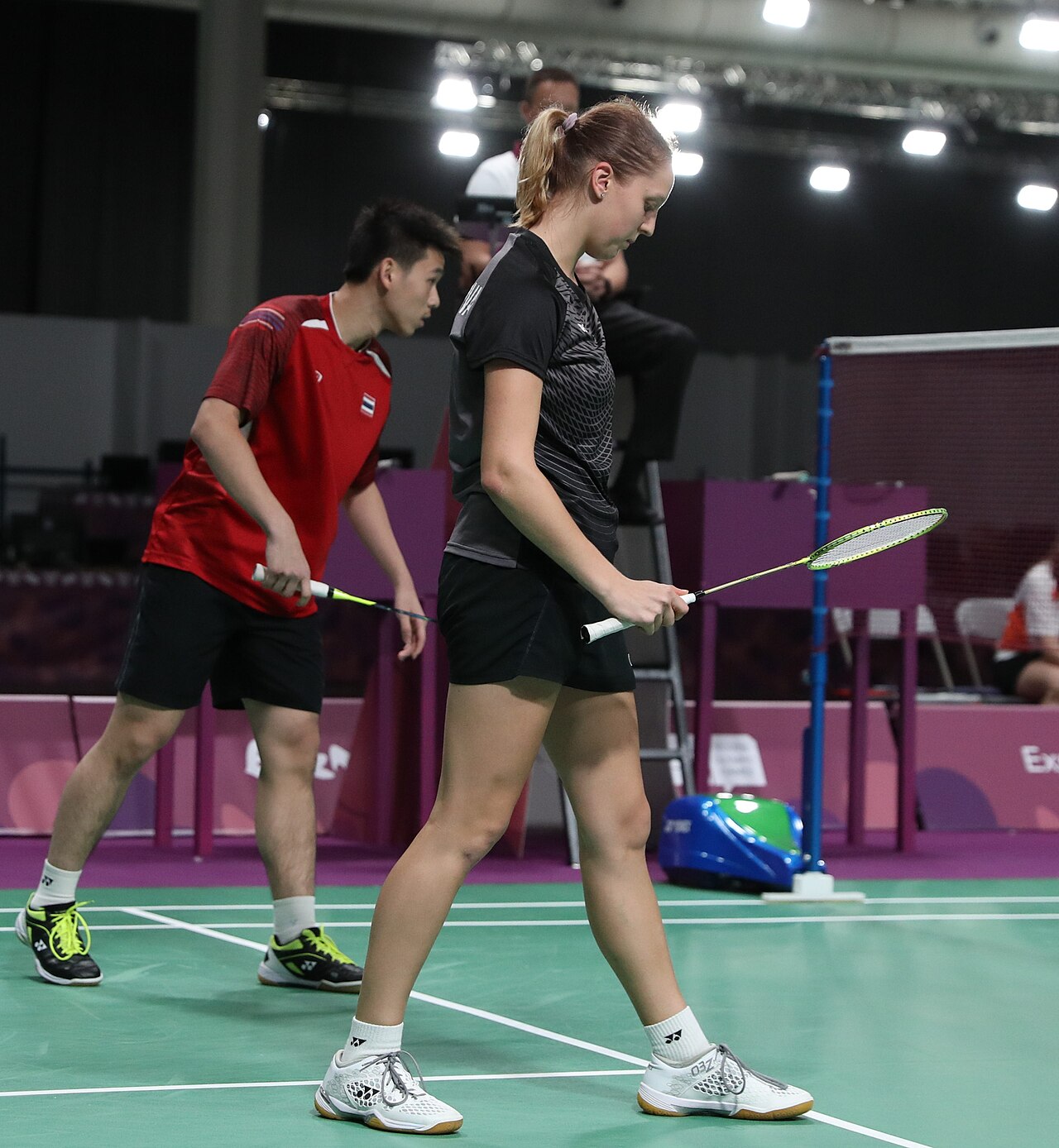
When sex is a major factor in performance, sports typically split men and women into separate divisions but may have mixed-sex team variants, such as mixed doubles [1]. Mixed doubles tennis pairs one male and one female player on each side [5], and mixed doubles badminton is a staple in the Olympics [5].
Relay and Team Events
Mixed relay swimming introduced in Tokyo 2020 Olympics features two men and two women per team [5], while mixed relay athletics 4x400m relay features male and female runners whose order can change race dynamics [5]. Mixed team archery pairs one male and one female archer [5], and mixed doubles curling consists of one man and one woman per team [5].
Sailing and Other Crew Sports
Many sailing competitions including Olympic events feature mixed crews [5], requiring balanced gender representation on boats. This format tests tactical skill and teamwork across sexes rather than raw physiological differences.
Judged Sports and Artistic Disciplines
In artistic judged sports like pair figure skating and acrobatic gymnastics, physical differences play a key role in performances [1]. These sports often leverage height, strength, and flexibility differences between partners to create visually compelling routines.
Pair Figure Skating
Acrobatic Gymnastics
Challenges of Judging Mixed-Sex Performances
The interplay of physical differences in judged sports creates unique scoring considerations [1]. Judges must evaluate technical difficulty and artistic merit within the context of mixed-gender partnerships, where roles are often differentiated by, but not strictly limited to, sex-based physical attributes.
Olympic Integration and Global Events
The inclusion of mixed-sex events in the Olympic program has grown significantly in recent decades, reflecting broader societal shifts toward gender equity in sports [5]. These events are designed to boost viewership, promote gender equality, and showcase athletic skill regardless of sex [5].
Tokyo 2020 and Beyond
Mixed Relay Innovations
Mixed relay swimming introduced in Tokyo 2020 Olympics features two men and two women per team [5], while mixed relay athletics 4x400m relay features male and female runners whose order can change race dynamics [5]. These formats have been so well-received that additional mixed events have been added for subsequent Games.
Sport-Specific Olympic Mixed Events
Mixed team archery pairs one male and one female archer [5], mixed doubles badminton features male-female pairs [5], and mixed doubles curling consists of one man and one woman per team [5]. Each sport adapts its mixed-format rules to its specific competitive needs.
Social Policy and Educational Context
Mixed-sex sport events may be organised to achieve social aims such as boosting female participation in sport, exercise, or improving social harmony between the sexes [1]. These social objectives have driven policy changes in school and amateur sports systems worldwide.
Title IX and Increased Female Participation
Contemporary Policy Debates
Washington Interscholastic Activities Association published new rules requiring female student athletes to submit biological sex documentation to compete in winter sports [4]. Girls have until December 3 to prove their sex and submit the form to their school under the new Washington rules [4], reflecting ongoing tensions around sex verification in educational athletics.
Legal and Political Pushback
Conservative activists in Oregon hope to capitalize on voter-approved measures in Washington and Colorado banning trans kids from participating freely in K-12 sports [4]. These state-level policies create a complex landscape where mixed-sex participation rules intersect with broader transgender inclusion debates [4].
Impact on School Sports Programs
The pre-participation biological sex attestation form requires a healthcare provider to check a box indicating the student's sex as male or female [4]. Such requirements affect how mixed-sex leagues operate at the youth level and may discourage participation among students who do not conform to binary sex categories.
Wikipedia Coverage and Categorization
Category:Mixed-sex sports on Wikipedia contains 14 articles including Mixed-sex sports, Eventing, Ice dance, Korfball, Lechuza Caracas, Mixed doubles, Polo, Quadball, Quidditch, Show jumping, Virtual Taekwondo, Wheelchair rugby, and Intergender wrestling [2]. This categorization reflects the breadth of sports that incorporate mixed-sex elements.
Subcategories and Related Topics
Notable Sports in the Category
Subcategories of Mixed-sex sports on Wikipedia include Mixed-sex team sports, Mixed-sex sports competitions, Mixed aquatics, Mixed-sex sport of athletics, Mixed badminton, Mixed biathlon, Mixed doubles, Ice dance, Mixed-sex sports organizations, Pair skating, Mixed table tennis, and Mixed tennis [2]. These subcategories help organize the diverse range of mixed-sex athletic formats.
Sport-Specific Coverage Gaps
The Wikipedia category includes sports ranging from established Olympic disciplines like show jumping and ice dance to newer or niche formats like Quadball and Virtual Taekwondo [2]. This diversity illustrates how mixed-sex rules have been applied across the sporting spectrum.
Specific Sport Formats and Rules
Mixed doubles tennis pairs one male and one female player on each side [5], following standard tennis rules with the additional constraint of gender balance per team. This format has been featured at Wimbledon and other Grand Slam events as exhibition and competitive matches.
Mixed Doubles Badminton
Mixed Doubles Curling
Mixed doubles badminton is a staple in the Olympics [5], featuring male-female pairs competing in the same events as single-sex badminton but with gender-mixed partnerships. The format requires strategic serving and court coverage adapted to mixed-gender dynamics.
Mixed Team Archery
Mixed Relay Athletics
Mixed team archery pairs one male and one female archer [5], with competition formats that may involve combined scores or head-to-head matches. The mixed format tests both individual skill and partner coordination.
Mixed relay athletics 4x400m relay features male and female runners whose order can change race dynamics [5]. The strategic placement of runners based on speed, stamina, and sex has become a tactical element unique to mixed relays.
Equestrian Sports and Open-Class Competition
Equestrian sports have no gender divisions at the highest level; men and women compete directly against each other [5]. This unique status stems from the fact that the horse, not the rider's physiology, is the primary source of performance differences.
Historical Precedent in Equestrianism
Current Olympic Program
The inclusion of mixed-sex equestrian events in the Olympics dates back to the 1952 Helsinki Games, when dressage became fully open-class [5]. Since then, eventing and show jumping have followed, making equestrian the only Olympic sport where men and women compete for identical medals without sex-based qualifying rounds.
Performance Dynamics
In equestrian competition, success depends on the partnership between rider and horse, skill in jumping, dressage movements, or cross-country navigation, rather than raw physiological advantages associated with male puberty [1]. This has allowed female riders to achieve parity with male competitors at the highest levels.
Future Directions and Emerging Formats
As sports organizations continue to grapple with the balance between fair competition and inclusion, new mixed-sex formats are likely to emerge [1]. The trend toward greater gender equity in athletic programming suggests mixed-sex events will expand rather than contract.
Potential New Mixed Events
Governance and Policy Development
International federations are developing guidelines for mixed-sex competition that address verification, distribution rules, and fairness [1]. The International Olympic Committee has been actively adding mixed events for Paris 2024 and Los Angeles 2028, signaling institutional commitment to this format.
Societal Impact
Beyond competition, mixed-sex sports serve as visible platforms for gender equity [1]. When boys and girls, men and women compete together, it normalizes female participation in sports traditionally dominated by one sex and can challenge stereotypes both on and off the field.