
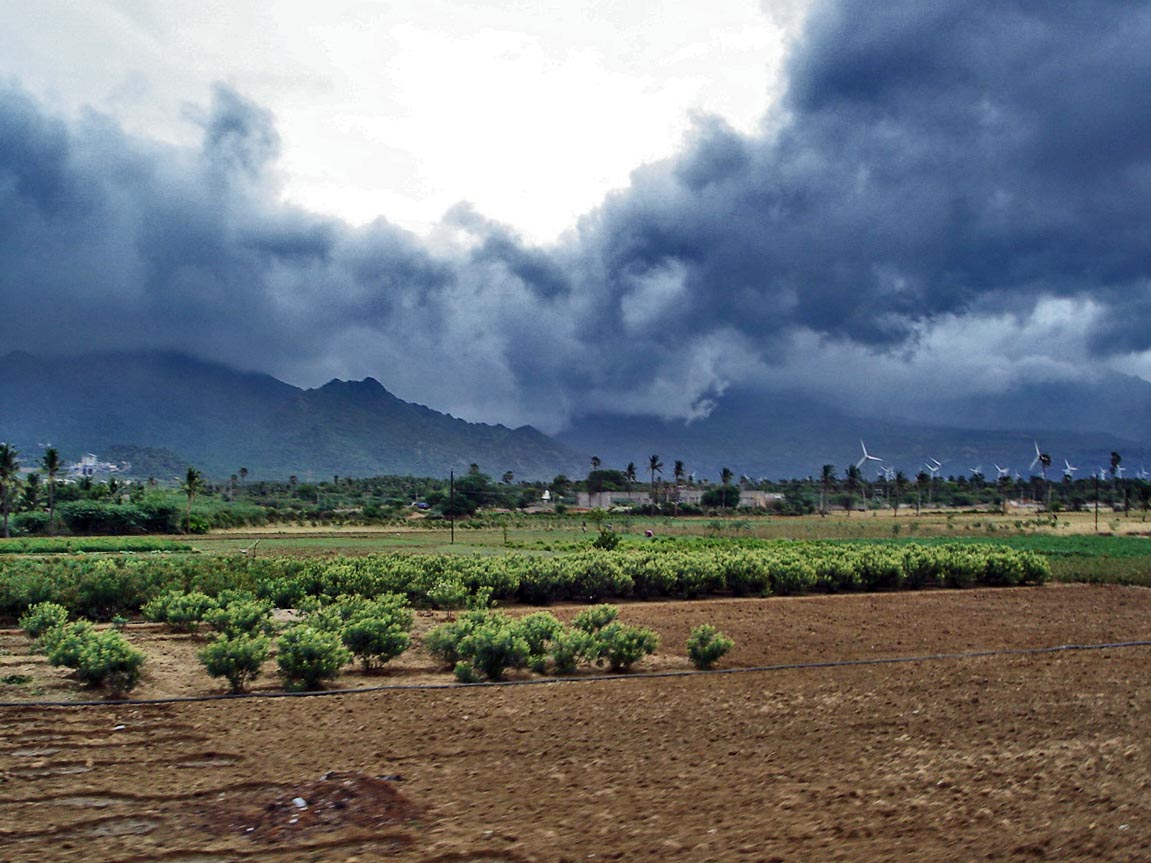
Overview of Monsoon Systems
A monsoon is defined by seasonal reversals in atmospheric circulation and precipitation patterns, driven by differential heating between land and sea [1]. This large-scale wind shift brings distinct wet and dry seasons to affected regions.
Global Distribution
While the term often refers to the South Asian system, monsoons occur worldwide where suitable temperature contrasts exist. The Asian monsoon domain encompasses multiple subsystems that operate on similar physical principles but with regional variations in timing and intensity.
Seasonal Cycle
The annual cycle begins with differential heating: land warms faster than ocean in summer, creating low pressure that draws moist maritime air inland. In winter, the reverse occurs as land cools rapidly, establishing high pressure and offshore flow. This cycle repeats regardless of regional specifics.
The Asian Monsoon Framework
South Asian Monsoon Components
The South Asian monsoon system comprises two primary types: the Southwest monsoon and the Northeast monsoon. These seasonal wind patterns govern precipitation across the Indian subcontinent and surrounding regions [1].
Southwest Monsoon
The Southwest monsoon is the dominant summer precipitation system for South Asia, typically arriving with an onset and withdrawal criteria defined by the India Meteorological Department [4]. This system delivers the majority of annual rainfall to India and surrounding countries.
Northeast Monsoon
The Northeast monsoon operates as the winter precipitation system for South Asia, bringing rainfall to southeastern India and Sri Lanka during October through December. It complements the summer Southwest monsoon cycle.
East Asian Monsoon Distinction
Separate Dynamical System
The East Asian monsoon constitutes a distinct monsoon system from the South Asian monsoon, operating under different atmospheric dynamics and affecting China, Korea, and Japan [1]. While both involve seasonal wind reversals, their underlying mechanisms and precipitation patterns differ significantly.
Rainband Structure
The East Asian monsoon features a mei-yu rainband in summer and a winter monsoon pattern, distinct from the Southwest and Northeast monsoon types of the South Asian system. This separation reflects the independent evolution of monsoon systems across Asia.
Monsoon Onset and Withdrawal Mechanics
IMD Criteria for Southwest Monsoon
The India Meteorological Department monitors the Southwest monsoon progression using specific onset and withdrawal criteria. These operational definitions track the northward advancement of the monsoon trough and subsequent retreat [4]. The onset typically occurs over Kerala in late May or early June.
Progressive Northward Movement
Once established, the Southwest monsoon progresses northward across India in a predictable sequence, covering the peninsula, central India, and eventually reaching northwest India by July. Withdrawal begins in northwest India in September and completes by October.
Interannual Variability
The timing of onset and withdrawal varies from year to year, influenced by large-scale climate patterns. These variations affect agricultural planning and water resource management across the monsoon domain.
Key Climate Indices Influencing Monsoon Rainfall
Indian Ocean Dipole (IOD)
The Indian Ocean Dipole (IOD) Index influences Indian Summer Monsoon Rainfall, with positive IOD phases typically associated with enhanced precipitation over India [4]. This ocean-atmosphere interaction modulates the spatial distribution of monsoon rainfall.
El Niño Southern Oscillation (ENSO)
The El Niño Southern Oscillation (ENSO) Index influences Indian Summer Monsoon Rainfall, with El Niño years often associated with deficient monsoon rainfall and La Niña years with excess precipitation [4]. This teleconnection links Pacific Ocean conditions to Asian monsoon performance.
Combined Index Effects
When IOD and ENSO phases align constructively or oppose each other, the resulting monsoon rainfall anomalies can be amplified or suppressed. Understanding these combined influences improves seasonal forecasting skill.
Indian Summer Monsoon Rainfall Measurement
Percentage Departure from Normal
The Indian Summer Monsoon Rainfall is measured in percentage departure from normal, providing a standardized metric for comparing monsoon performance across years [4]. A positive departure indicates above-average rainfall, while negative departure indicates deficiency.
Agricultural Implications
Rainfall departure percentages directly impact kharif crop sowing patterns, reservoir levels, and water availability across India. Farmers and policymakers monitor these metrics closely for drought or flood preparedness.
Forecasting Challenges
Despite advanced monitoring of IOD, ENSO, and other indices, seasonal rainfall forecasting remains challenging due to the nonlinear interactions between these climate drivers and internal atmospheric variability.
Climate Change and Monsoon Intensification
Extreme Rainfall Events
Monsoon rainfall that caused floods in Pakistan was made more intense by climate change [2]. This attribution demonstrates how background warming elevates the probability of extreme precipitation events within the monsoon system.
Thermodynamic Amplification
Warmer atmospheres hold more moisture following the Clausius-Clapeyron relationship, meaning that when monsoon systems do produce rainfall, events tend to be more intense. This thermodynamic effect operates on top of dynamic changes in circulation patterns.
Future Projections
Climate models project changes in monsoon onset timing, spatial distribution, and extreme event frequency. These projections carry significant implications for water resource management, agriculture, and disaster preparedness across monsoon-affected regions.
Historical Monsoon Failures and Floods
Notable Monsoon Failures
Historical records document numerous monsoon failure years associated with El Niño events, drought conditions, and widespread agricultural distress. These failures have shaped regional adaptation strategies and infrastructure development over centuries.
Catastrophic Flood Events
Beyond Pakistan, other monsoon regions have experienced devastating flood events linked to extreme rainfall episodes. These events often result from monsoon low-pressure systems interacting with other weather systems, producing prolonged heavy precipitation.
Monsoon and Regional Water Security
Dependency Patterns
Across South Asia, monsoon rainfall constitutes the primary water source for agriculture, drinking water supply, and hydroelectric power generation. Approximately 70 percent of India's annual rainfall occurs during the monsoon season, making the system critical for national water security.
Storage and Management
Monsoon-dependent regions have developed extensive water storage infrastructure, including reservoirs, tanks, and groundwater extraction systems. The seasonal nature of monsoon rainfall necessitates careful management to bridge the gap between wet and dry periods.
Atmospheric Mechanics of Monsoon Formation
Land-Sea Temperature Gradient
The fundamental driver of monsoon circulation is the land-sea temperature gradient. During summer, the Asian landmass heats significantly while the Indian and Pacific oceans remain relatively cooler, creating a pressure differential that drives onshore flow. This pressure gradient force forms the dynamical core of monsoon systems.
Hadley Cell Connection
Monsoon dynamics connect to the broader Hadley circulation, with rising motion over the heated continent feeding into the subtropical high-pressure systems. This vertical motion component influences the overall atmospheric stability and precipitation efficiency of the monsoon.
Societal and Economic Dimensions
Agricultural Calendar
The agricultural calendar across monsoon regions revolves around the Southwest monsoon planting season. Kharif crops are sown with the monsoon onset and harvested post-monsoon, making rainfall timing critical for food security and farmer livelihoods.
Economic Impact
Monsoon variability directly affects gross domestic product in agrarian economies, inflation through food price movements, and rural employment patterns. Both monsoon excess and deficiency carry significant economic consequences that ripple through national economies.
Monitoring and Forecasting Infrastructure
India Meteorological Department Role
The India Meteorological Department operates extensive monitoring networks including radars, satellites, and surface stations to track monsoon progression. Their operational forecasts guide state governments, disaster management agencies, and the public on expected monsoon timing and intensity.
Remote Sensing Advances
Satellite-based rainfall estimation, atmospheric moisture tracking, and oceanic index monitoring have dramatically improved monsoon observation capabilities. These tools provide real-time data on monsoon development and help validate dynamical forecast models.