
Overview
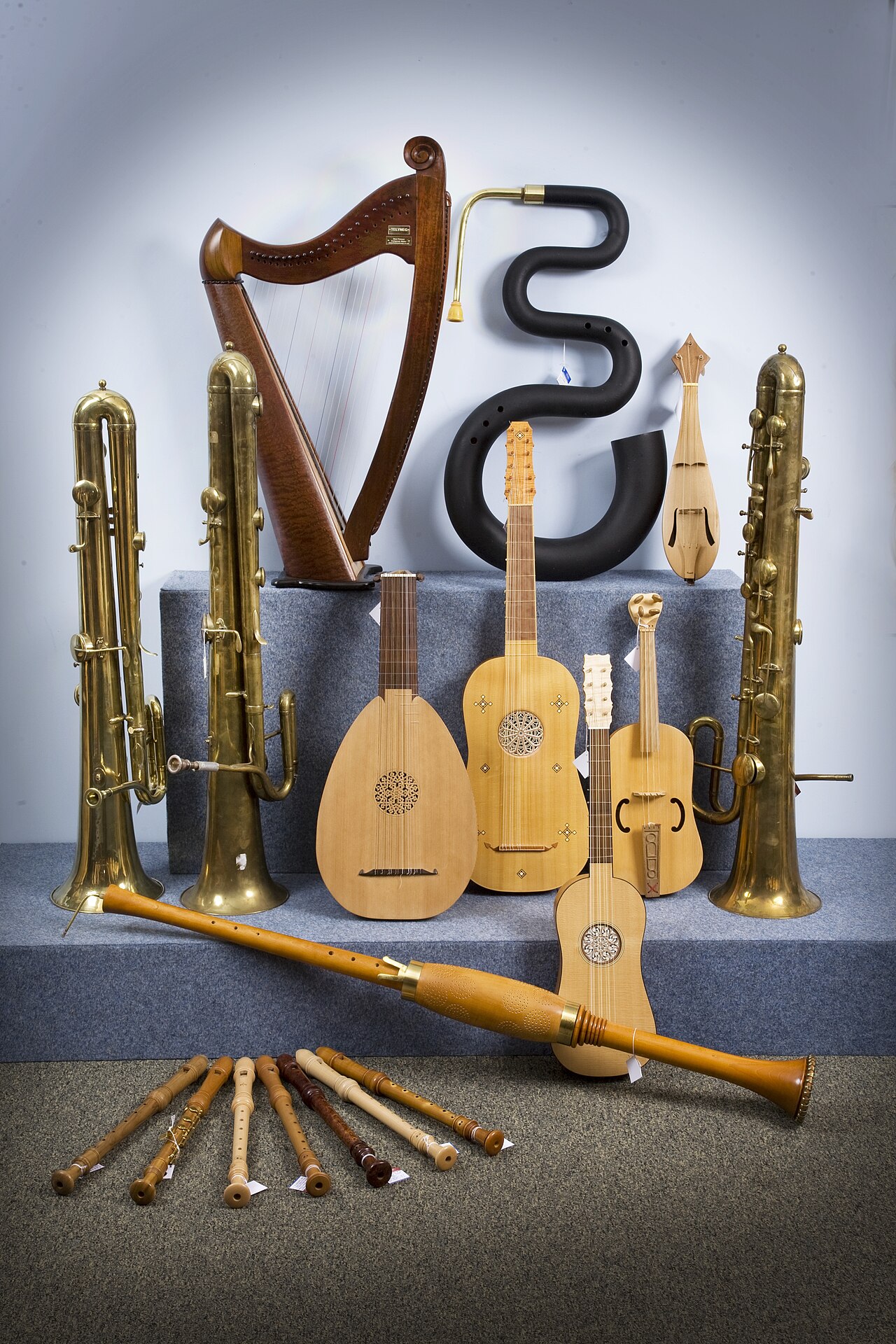
A musical instrument is a device created or adapted to make musical sounds; any object that produces sound can be considered a musical instrument through purpose [2]. Historical instruments date to the beginnings of human culture, with flutes being among the earliest known musical instruments [2].
Early History and Origins
The origins of musical instruments trace to the earliest phases of human culture, with archaeological evidence indicating that flutes represent some of the oldest known instrument types [2]. These early instruments demonstrate humanity's fundamental drive to create organized sound long before written history.
Archaeological Discoveries
Excavations across multiple continents have uncovered bone flutes dating to the Paleolithic period, suggesting that musical expression was integral to early human social and ritual life [2].
Cultural Development
As human societies developed, so too did their instruments, with each culture adapting available materials and technologies to create unique sonic identities [2].
Material-Based Classification
The Chinese developed a sophisticated system of classifying musical instruments according to the material from which they are made, creating one of the oldest documented classification frameworks [3].
Stone Instruments
Stone instruments include lithophones and other percussion devices carved from rock, representing some of the most durable ancient instrument forms [3].
Wood, Silk, and Metal
Wooden instruments encompass many string and wind traditions, silk materials characterize certain string families, and metal instruments include brass and other metallic wind and percussion families [3].
Greco-Roman Typology
Writers in the Greco-Roman world established a tripartite classification system distinguishing three main types of instruments: wind, stringed, and percussion [3]. This framework influenced European musical thought for centuries.
Wind Instruments
Wind instruments produce sound through the vibration of air columns, encompassing both flutes and reed-based traditions that require breath control from the performer [3].
Stringed and Percussion
Stringed instruments create sound through vibrating strings, while percussion instruments generate sound through striking, shaking, or scraping mechanisms [3].
Modern Classification Systems
The Hornbostel–Sachs system represents one of the most comprehensive taxonomic frameworks for classifying musical instruments, organizing them by their sound-production mechanisms [2].
Chordophones
Chordophones are instruments that produce sound through vibrating strings, including both plucked and bowed varieties that form the backbone of much Western classical and popular music [2].
Membranophones and Idiophones
Membranophones feature stretched membranes that vibrate when struck, while idiophones are instruments where the body itself vibrates to produce sound without strings or membranes [2].
Schaeffner System Perspectives
The Schaeffner system offers an alternative classification approach that distinguishes instruments based on whether they produce sound through vibrating solids, liquids, or gases [2].
Organological Analysis
This system provides organologists with tools to analyze instruments based on their physical state and vibration mechanisms, complementing the more widely known Hornbostel–Sachs framework [2].
Comparative Framework
While Hornbostel–Sachs focuses on sound production mechanics, Schaeffner's approach emphasizes the material state involved in sound generation, creating a useful comparative perspective for instrument study [2].
Performance and Players
A person who plays a musical instrument is known as an instrumentalist, representing the vital link between instrument and audience through technical skill and artistic expression [2].
Instrumental Techniques
Instrumentalists develop specialized techniques tailored to their specific instrument family, requiring years of practice to master the physical and musical demands of performance [2].
Ensemble Roles
Within musical ensembles, instrumentalists fulfill diverse roles ranging from melodic leadership to harmonic support and rhythmic foundation, depending on their instrument's position and function [2].
Instrument Families and Categories
Beyond the classical Greco-Roman division, modern categorization includes string instruments, wind instruments, percussion instruments, and electronic instruments, each with numerous subfamilies and variations [3].
String Instrument Diversity
String instruments encompass a vast family including bowed instruments like violins and cellos, plucked instruments like guitars and harps, and struck string mechanisms found in various traditions [3].
Wind Instrument Categories
Wind instruments divide into woodwinds and brass, with further distinctions based on whether the player blows across an edge or uses a reed to set the air column in vibration [3].
Construction and Design Principles
The construction of musical instruments involves careful consideration of materials, geometry, and acoustic properties to achieve desired tonal characteristics and playability [3].
Material Selection
Luthiers and instrument makers select materials based on their acoustic properties, density, and resonance characteristics, with different woods, metals, and composites producing distinct tonal qualities [3].
Acoustic Engineering
Modern instrument design incorporates principles of acoustics and physics to optimize sound projection, sustain, and frequency response, often using computer modeling alongside traditional craftsmanship [3].
Cultural and Social Significance
Musical instruments serve as cultural artifacts that reflect the values, beliefs, and technological capabilities of the societies that create and use them [2].
Ritual and Ceremonial Functions
Throughout history, instruments have played essential roles in religious rituals, ceremonial events, and community gatherings, often embodying spiritual or symbolic meanings specific to each culture [2].
Evolution of Musical Styles
The development of new instruments or modifications to existing ones frequently enables the emergence of new musical styles, genres, and expressive possibilities that shape cultural evolution [2].
Historical Timeline Overview
The historical trajectory of musical instruments spans from Paleolithic bone flutes through ancient Egyptian harps, Greek auloi, Roman tubae, medieval organs, Renaissance lutes, Baroque keyboards, to modern orchestral and electronic instruments [2][3].
Ancient Period
Archaeological evidence indicates that musical instruments existed in ancient Mesopotamia, Egypt, and China, with each civilization developing distinctive instrument types reflecting their cultural priorities [2][3].
Classical and Medieval Eras
The classical period saw the refinement of many instrument types still recognized today, while the medieval era introduced significant innovations including the development of keyboard instruments and the refinement of notation systems [2][3].
Reception and Academic Study
The academic study of musical instruments, known as organology, encompasses historical, cultural, technical, and performative dimensions, reflecting the interdisciplinary nature of the field [2][3].
Research Methodologies
Organologists employ various methodologies including historical research, material analysis, acoustic measurement, and performance practice study to understand instruments within their broader contexts [2][3].
Institutional Preservation
Museums, universities, and cultural institutions worldwide maintain collections of historical instruments, supporting research, education, and public appreciation of musical heritage [2][3].
Contemporary Developments
The 20th and 21st centuries have witnessed unprecedented innovation in musical instrument design, including electronic instruments, digital interfaces, and new materials that expand the possibilities of sound production [2][3].
Electronic and Digital Instruments
Synthesizers, samplers, and computer-based sound generation systems have transformed contemporary music production, allowing for sonic possibilities unavailable to acoustic instrument designers [2][3].
Future Directions
Emerging technologies including artificial intelligence, new material science, and interactive interfaces continue to push the boundaries of what constitutes a musical instrument and how it can be played [2][3].