
Overview
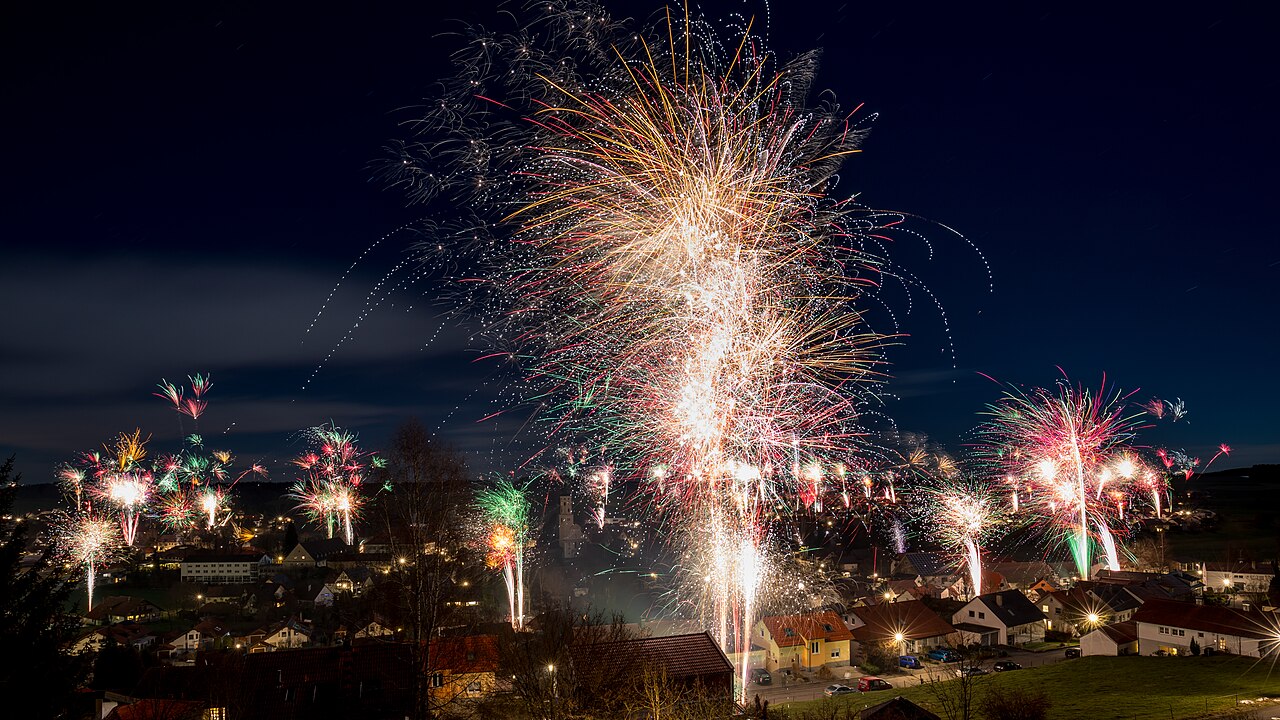
New Year's Eve has taken centre stage with firework displays and parties of friends and family to see in the New Year [3]. In cities like New York, more than one million people gather in Times Square to watch the ball drop, a tradition that has come to symbolise the countdown to midnight [3]. Beyond the spectacle, the period is marked by travel as people return to their hometowns to reconnect with loved ones [3].
Gregorian Calendar Observances
New Year's Day marks the first day of the Gregorian calendar, which is the internationally accepted civil calendar [3]. The shift of the New Year celebration from 25 March to 1 January occurred during Roman times, as the Roman calendar was reformed to align with the solar year [3]. Today, 1 January is observed as a public holiday in most countries, often marked by fireworks, concerts, and the making of personal resolutions [3].
Lunar New Year
The exact day of the Lunar New Year changes each year because the months of the year are marked by moon cycles, so New Year is celebrated on the date of the first new moon of the Lunar calendar [3]. Lunar New Year is most associated with Chinese New Year in the West, but it is widely celebrated across East Asia [3]. A common ritual is using this time to catch up with friends and family, with many people travelling long distances to do so over this period [3]. Fireworks are lit to ward away evil spirits during Lunar New Year, and houses are decluttered to mark the beginning of spring and the future of a New Year [3]. In many Chinatowns around the world, streets are closed off for parades and festivities, featuring lion dances and other cultural performances [3].
Nowruz and Spring Equinox Traditions
Nowruz commences on the spring equinox to celebrate the rebirth of nature, Nowruz (meaning 'new day' in Farsi) marks the first month of the Iranian solar calendar [3]. Like Lunar New Year, Nowruz is a time for thorough house cleaning, symbolising the removal of the old to welcome the new [3]. A platter of sweets, known as a Tray of Togetherness, is put out for house visitors, with all sweets carefully chosen to symbolise health, fortune and happiness [3]. The festival lasts for thirteen days, during which families gather, exchange gifts, and enjoy outdoor picnics [3].
Food and Symbolic Rituals
Food plays a central role in many New Year celebrations. During Lunar New Year, a platter of sweets called a Tray of Togetherness is offered to guests, where each sweet is selected for its symbolic meaning of health, fortune, and happiness [3]. In various cultures, specific dishes are prepared to attract prosperity; for example, eating circular foods such as grapes or ring-shaped cakes is thought to represent the cycle of the year coming full circle [3]. The act of sharing meals and sweets reinforces social bonds and the collective hope for a favourable year ahead [3].
Public Gatherings and Entertainment
New Year's Eve celebrations have become major public events, with firework displays lighting up skylines across the globe. In addition to the Times Square ball drop, many cities host their own firework shows, concerts, and street parties to mark the occasion [3]. These gatherings serve as a collective release, allowing communities to transition from the past year to the next in a shared atmosphere of anticipation and joy [3]. The scale of these events often requires extensive planning by local authorities to manage crowds and ensure safety [3].
Cultural Variations and Calendar Systems
The diversity of New Year celebrations reflects the different calendar systems used around the world. While the Gregorian calendar places New Year on 1 January, many cultures follow lunar calendars, resulting in dates that move each year relative to the solar cycle [3]. Solar calendars, such as the Iranian calendar used for Nowruz, anchor the festival to the spring equinox, ensuring it falls at the same seasonal point annually [3]. This variation means that for many people, the 'new year' can occur at different times, each carrying its own set of traditions and symbolic meanings [3].
Commercial and Media Influence
The global reach of New Year celebrations has been amplified by media coverage and commercial interests. Major events like the Times Square ball drop are broadcast to millions of viewers worldwide, turning local traditions into a shared global experience [3]. Advertising campaigns often associate the new year with themes of renewal, travel, and fresh starts, influencing consumer behaviour around gift-giving and holiday spending [3]. Social media platforms further amplify the reach of countdowns and festive content, creating a digital layer to the physical celebrations [3].