
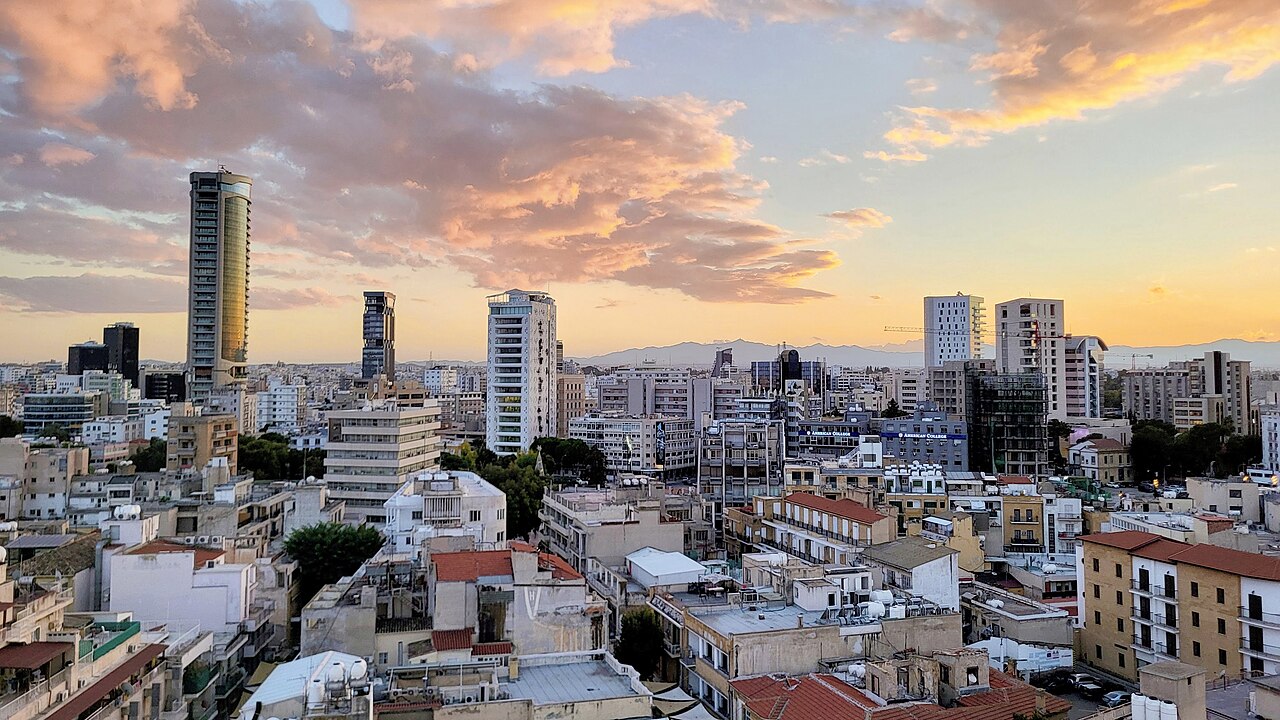
Historical Foundations and Capital Status
Nicosia's designation as Cyprus's capital is rooted in centuries of layered governance, though its modern prominence emerged clearly after 1974 [1]. As the island's administrative centre, it hosts government institutions that shape national policy, making its status non-negotiable in any discussion of Cypriot politics [1]. The city's selection as capital reflects both its central geographic position and its historical role as a commercial hub linking East and West [1].
Pre-1974 Political Landscape
Before the 1974 upheaval, Nicosia functioned as a unified municipal entity where Greek Cypriot and Turkish Cypriot communities coexisted, albeit with underlying tensions [2]. The city's markets, mosques, and churches stood in close proximity, creating a unique urban tapestry that defined daily life for decades [2]. This period of relative togetherness would later serve as the backdrop against which the 1974 events would be measured [2].
Administrative Institutions
Within the Greek Cypriot administration, Nicosia houses the Presidential Palace, the House of Representatives, and key ministries that govern the entire island [1]. On the Turkish Cypriot side, the city hosts parallel governmental structures under the Turkish Republic of Northern Cyprus, though this entity receives limited international recognition [2]. This dual administrative presence creates a complex bureaucratic landscape unseen in most other capital cities [2].
The 1974 Invasion and Its Immediate Aftermath
The trajectory of Nicosia changed dramatically in July 1974 when a Greek-backed military coup sought to enosis, or union, with Greece [2]. In response, Turkish forces launched a military operation that would fundamentally alter the city's demographic and physical landscape [2]. The invasion triggered a population exchange that reshaped Nicosia's social fabric overnight [2].
Displacement and Human Impact
The 1974 conflict produced the largest population displacement in Cyprus's modern history, with 150,000 Greek Cypriots fleeing north and 50,000 Turkish Cypriots moving south [2]. These figures represent roughly one-third of each community's population at the time, creating a generational impact still felt today [2]. The psychological wound of losing homes within a city one had lived in for generations runs deep across both communities [2].
Physical Transformation of the City
Buildings left abandoned in the wake of displacement became ghost structures within what would become the UN buffer zone [2]. The city's infrastructure, once integrated, was severed along ethnic lines, with roads, utilities, and services rerouted to serve separate administrations [2]. This physical restructuring created the conditions for the Green Line to solidify as a permanent feature of the urban landscape [2].
The Green Line and UN Buffer Zone
The Green Line, named for the green ink used to mark it on maps, emerged as the de facto border dividing Nicosia following the 1974 conflict [2]. This UN-patrolled buffer zone stretches across the capital, creating a no-man's-land that varies in width from a few meters to several hundred meters in different sections [2]. The zone's existence for over five decades makes it the world's last remaining divided capital situation [2].
Checkpoints and Crossings
Despite the division, several checkpoints allow controlled passage between the Greek Cypriot south and Turkish Cypriot north, with the Ledra Street crossing being the most famous [2]. These checkpoints operate under strict UN supervision, with crossing hours and procedures subject to political developments [2]. The existence of these limited crossings represents a fragile confidence-building measure between the two communities [2].
Abandoned Airport Legacy
Nicosia's only international airport, once a gateway to Cyprus, now sits abandoned within the UN buffer zone for 52 years [2]. The fate of this aviation hub symbolizes the broader stagnation of infrastructure development across the divided capital [2]. Efforts to reactivate or relocate air traffic have been repeatedly postponed due to the ongoing political deadlock [2].
Cultural Life Persists Across Divides
Cultural expression in Nicosia continues despite, and sometimes because of, the division [2]. Art exhibitions, music festivals, and literary events frequently cross the Green Line, using creativity as a bridge where politics has faltered [2]. The city's museums on both sides preserve shared heritage, often featuring artifacts that reflect Cyprus's multi-layered history [2].
Festive Revival and Christmas Celebrations
In a sign of normalcy returning to the capital, Nicosia's municipality launched a Christmas programme running from 12 November 2026, culminating in the switching on of Christmas lights on 29 November 2026 [4]. The festivities included parades, music performances, Christmas villages, and activities designed to bring residents together across communal lines [4]. This annual event represents one of the few occasions when the entire capital unites in celebration, transcending the Green Line division [4].
Art and Music as Bridge-Building
Local artists and musicians have embraced Nicosia's unique status, creating works that explore themes of division, memory, and reconciliation [2]. Cross-community concerts have become increasingly common, with performers appearing on both sides of the Green Line [2]. The city's cultural institutions often host events that deliberately bring Greek Cypriot and Turkish Cypriot audiences together, fostering people-to-people connections [2].
Real Estate Dynamics in a Divided Capital
Nicosia's property market presents a unique case study in real estate economics, driven by its status as the capital and the absence of seasonal downturns typical of coastal tourist regions [5]. The city's role as administrative centre provides steady demand for office space, government housing, and commercial properties [5]. This structural demand creates a different investment profile compared to resort towns that experience dramatic fluctuations [5].
New Residential Developments 2026
The property landscape in Nicosia saw significant activity in 2026, with new residential completions including 2-bedroom penthouses in Strovolos, 2-bedroom apartments in Aglantzia, and 3-bedroom penthouses in Strovolos [5]. These developments cater to both local families and international investors seeking capital stability [5]. The Strovolos district, in particular, has become a focal point for modern luxury housing projects [5].
Market Resilience and Investment Appeal
Real estate analysts note that Nicosia's market resilience stems from the city's enduring role as Cyprus's political and economic heart [5]. Unlike coastal properties that face seasonal vacancy rates, capital city housing maintains more consistent occupancy levels [5]. This reliability has attracted foreign investors, particularly from the Middle East and Europe, seeking secure long-term assets [5].
Infrastructure Challenges and Opportunities
The division of Nicosia has created significant infrastructure challenges that persist decades after 1974 [2]. Utility networks, transportation routes, and public services were partitioned along with the population, requiring complex coordination for maintenance and upgrades [2]. The abandoned airport within the buffer zone represents both a physical eyesore and a symbolic reminder of missed development opportunities [2].
Transportation and Connectivity
Road networks around Nicosia reflect the city's divided status, with many routes requiring passage through checkpoints or detours to cross from one administration to another [2]. Public transportation services operate separately on each side, with limited cross-border bus routes [2]. The UN continues to advocate for improved connectivity, viewing transportation links as confidence-building measures [2].
Utility Services and Resource Management
Water, electricity, and waste management services in Nicosia operate under separate administrative frameworks, creating duplication and occasional inefficiencies [2]. Cross-border cooperation on utility matters has increased in recent years, driven by practical necessity rather than political progress [2]. The shared aquifer beneath the city requires joint management to prevent over-extraction and contamination risks [2].
Psychological and Social Dimensions
The psychological impact of living in a divided capital extends beyond those who were physically displaced in 1974 [2]. Younger generations born after the conflict have grown up with the Green Line as a normalized feature of their urban environment [2]. Schools on either side teach largely separate histories, reinforcing distinct national narratives [2]. This educational divergence shapes how each community perceives the other and the conflict's origins [2].
People-to-People Initiatives
Civil society organizations on both sides have initiated numerous people-to-people projects aimed at bridging the psychological divide [2]. Joint cultural festivals, sports events, and academic exchanges provide opportunities for interaction outside official political channels [2]. These grassroots efforts have gained international support as tangible examples of coexistence potential [2].
Memory and Commemoration
Nicosia hosts various memorial sites and commemoration events that serve as reminders of the 1974 conflict's human cost [2]. Annual ceremonies mark significant dates, with participation from both communities, though often in separate segments [2]. The city's approach to memory reflects the broader Cypriot struggle to reconcile justice with peace [2]. Balancing remembrance with forward-looking cooperation remains a central challenge for civic leaders [2].
International Relations and Diplomacy
Nicosia's status as a divided capital places it at the center of international diplomatic efforts regarding Cyprus's future [2]. The UN Secretary-General's special envoy regularly visits the city, facilitating talks between Greek Cypriot and Turkish Cypriot leaders [2]. The city's unique status makes it a frequent topic in international forums, from the UN General Assembly to regional summits [2]. Diplomatic activity around Nicosia often fluctuates with broader regional developments [2].
Confidence-Building Measures
Various confidence-building measures have been implemented around Nicosia, ranging from technical committees to joint infrastructure projects [2]. The Committee on Missing Persons in Cyprus, based in Nicosia, works to account for those disappeared during the 1974 conflict and its aftermath [2]. Technical reunification talks have addressed issues such as property rights, water sharing, and security arrangements [2]. While progress has been incremental, these mechanisms represent the only ongoing framework for substantive dialogue [2].
External Guarantee Powers
The presence of guarantee powers—Greece, Turkey, and the United Kingdom—continues to influence Nicosia's political dynamics [2]. The UK retains sovereignty over two sovereign base areas near the city, affecting land use and military presence [2]. External powers' interests sometimes align with, and sometimes contradict, the aspirations of Cypriot communities [2]. The balance of these external influences shapes the political space within which Nicosia's residents operate [2].
Future Prospects and Ongoing Developments
Looking ahead, Nicosia faces the dual challenge of addressing legacy issues from 1974 while embracing contemporary growth opportunities [2]. The city's real estate market continues to expand, driven by its capital status and investment appeal [5]. Cultural initiatives persist in using creativity to bridge divides [4]. The path forward requires navigating complex political negotiations while sustaining daily life for residents on both sides [2].
Potential Reunification Scenarios
Various reunification models have been proposed for Nicosia, ranging from bi-zonal bi-communal arrangements to more flexible confederation approaches [2]. Each scenario would fundamentally alter the city's physical and administrative landscape [2]. Proponents argue that reunification could unlock the city's full economic potential, currently constrained by division [2]. Opponents caution that forced reunification risks disrupting the fragile status quo that has persisted for decades [2].
Sustainable Urban Planning
Urban planners in Nicosia increasingly focus on sustainable development that respects the city's divided character while addressing common challenges [2]. Green spaces, pedestrian zones, and mixed-use developments are being designed with input from both communities [2]. The goal is to create a city that functions effectively for all residents, regardless of which administration they fall under [2]. Balancing preservation of historical character with modern needs represents the central planning challenge [2].